REVIEW · VIENNA
Alternative Tour in Vienna Off the tourist track
Book on Viator →Operated by Wiener Nimmerland · Bookable on Viator
Vienna is never more real than on this walk. This off-the-tourist-track experience takes you through everyday places tied to homelessness, addiction, and squatting, guided by Martin from Wiener Nimmerland. You’ll hear his personal story and see how the city works for people living on its margins—right near major landmarks like Karlsplatz and the Secession.
What I like most is the way Martin talks: open, human, and practical, without turning the topic into a lecture. You also get sharp local detail, including anarchist culture and the striking tale of the pizzeria Anarchia evacuation. The big consideration: the subject matter can be emotionally heavy, so go in with the right mindset and expect some uncomfortable truth.
In This Review
- Key things that make this Vienna tour worth your time
- A 2-hour Vienna reality check with Martin from Wiener Nimmerland
- Meeting at Karlsplatz: subway passage, Secession views, then the first park stop
- Stop 1: Alfred-Grünwald-Park and what not to copy from the meadow
- Stop 2: Ilse-Pisk-Stiege stairs, Capistr Ascent, and the Anarchia evacuation story
- The route’s lesson: how Vienna looks when you stop using blinders
- Price and value: about $46 for a 2-hour reality-led story
- Who should book (and who should slow down first)
- Where you end: Esterhazypark by Haus des Meeres
- Should you book this off-the-track Vienna tour?
- FAQ
- How long is the tour?
- What’s the meeting point and where does it end?
- Who is the guide?
- What topics will the tour cover?
- How many people are in the group?
- Do I need a printed ticket?
- Are service animals or dogs allowed?
- What’s the cancellation policy?
Key things that make this Vienna tour worth your time
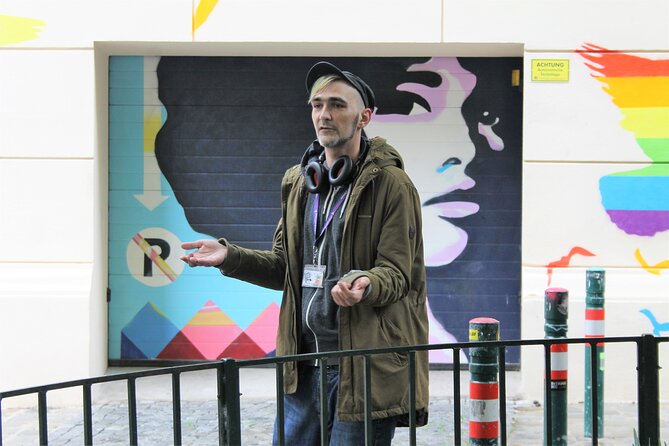
- Martin’s first-hand perspective on life on Vienna streets, plus what he learned and what he wants you to understand
- Short 2-hour format that still hits two meaningful stops and leaves you time to explore afterward
- Real locations tied to sleeping and squatting, from a park where Martin slept to stair access linked to punk culture
- Local anarchist history, including the Anarchia case with house occupation and police response
- Small group size (max 20), which makes it easier to ask questions
- Mobile ticket + group discounts, so it’s easy to plan and budget
A 2-hour Vienna reality check with Martin from Wiener Nimmerland
This is a compact tour—about 2 hours—built around one guide’s lived experience. Martin lived on Vienna’s streets for some time, and he shares how that happened, what daily life felt like, and what he thinks people misunderstand. The tone matters. Based on what you’ll hear on the route, it’s not dark-for-darkness’ sake. It’s honest, sometimes sad, sometimes funny, and aimed at changing how you look at people and problems.
You’ll also get a sense of the city as a system, not just a postcard machine. The stops are in public places you can reach quickly by transit, and the walk connects Vienna’s well-known areas to the realities happening just out of sight. If you enjoy tours that teach you how to read a city—why certain corners matter, how authorities respond, how communities form—this style fits.
One more practical note: with only up to 20 people, the guide can actually work with the group’s questions and reactions. That’s a big part of the value here, especially when the topic is personal.
You can also read our reviews of more tours and experiences in Vienna.
Meeting at Karlsplatz: subway passage, Secession views, then the first park stop
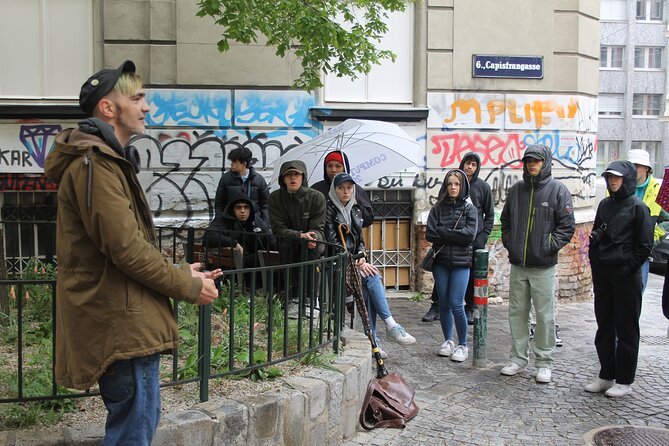
You start at Police Inspectorate Vienna – Kärntnertorpassage (Karlsplatz) at Kärntnertorpassage, 1010 Wien. From there, the route uses the subway passage at Karlsplatz, then you’ll exit near the Secession. Along the way, you pass the Secession on your way to the next station.
Why start with this kind of stretch? Because Karlsplatz is one of those Vienna hubs where different worlds touch. You get a sense of movement—people flowing through underground passages and out into the city—before the tour turns to the places where Martin’s story connects with real shelter and real risk. It’s a smart “setup” for what comes next: the contrast between a famous facade (Secession) and the human stories that sit beside it.
Expect a mix of walking through transit-linked corridors and then stepping into an open-air space. You’ll want comfortable shoes. You’ll be standing and moving enough that sneakers help, even if the tour is short.
Stop 1: Alfred-Grünwald-Park and what not to copy from the meadow
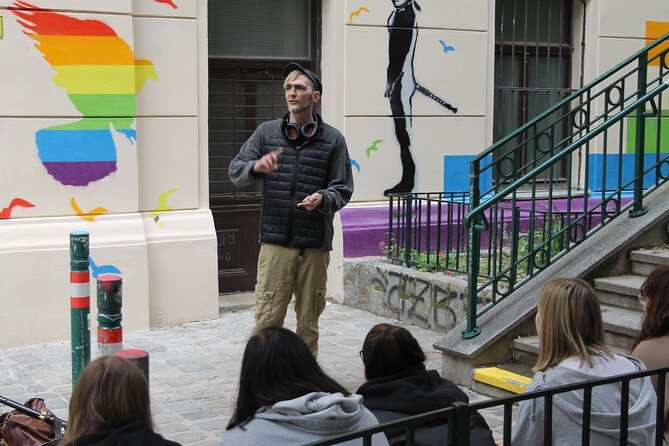
The first real pause is Alfred-Grünwald-Park. This is the 3rd station, and the park offers comfortable seating for the group—useful when you’re listening to heavy stories for the first time. The scheduled time here is about 20 minutes.
This stop is tied directly to Martin’s past. He explains why this park became his sleeping place, and he also shares why it’s not a simple choice for someone to just lie down on the meadow. That second part matters. It signals that this tour isn’t trying to shock you into pity. Martin is focusing on consequences, safety, and the practical reality behind what outsiders imagine.
Even if you’ve never thought about it, parks can seem like neutral space—benches, grass, trees, a way to rest. Martin’s story turns that idea into something more complicated. You’ll likely come away with a clearer sense of how “public” doesn’t automatically mean “safe.”
Stop 2: Ilse-Pisk-Stiege stairs, Capistr Ascent, and the Anarchia evacuation story
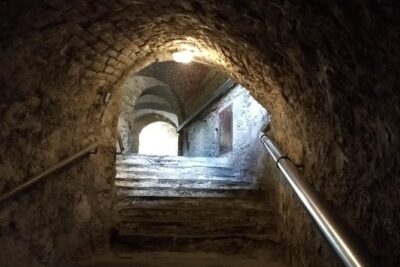
Your next and penultimate stop is Ilse-Pisk-Stiege, listed as the 4th station. After a bit more moving around, you get a “last breather” at the stairs of the Capistr Ascent. This part of the route is about 20 minutes, and it shifts from sleeping and survival into culture—squats and punks—and the kind of confrontations that can happen when occupied spaces become targets.
Here Martin shares insights into the world of squats and punks, and you’ll hear the story of the famous evacuation of the pizzeria Anarchia. The details are specific: a house occupied by 19 people was evacuated by about 1,700 police officers. That ratio lands hard. It gives you a concrete way to understand how the state can respond when alternative communities put down roots in a city.
This stop also changes the emotional tone. Where the park stop asks you to notice safety and vulnerability, this one asks you to notice ideology and power. You’ll likely see how “culture” and “conflict” aren’t separate categories for people on the edge—sometimes they’re tightly linked.
The route’s lesson: how Vienna looks when you stop using blinders
The biggest value of this tour is that it makes you practice seeing. You don’t just hear history or generalities—you’re pointed toward specific places and asked to think about what’s happening there and why. That’s why the walk includes both famous reference points (like the Secession) and everyday spaces (parks, stairs, transit passages).
You’ll also get a different kind of city literacy: how to hold two truths at the same time. Vienna can be beautiful and organized, yet also contain people pushed into survival mode. And institutions can enforce rules with huge force, even when a story is rooted in community life and political identity.
Martin’s presentation style is part of the point. People come away feeling challenged to rethink their attitudes—often with a mix of tolerance, realism, and a reminder not to judge too fast. There’s also a consistent emphasis on being able to ask questions. If you’re the type who likes to talk rather than just listen, this format gives you that chance.


Price and value: about $46 for a 2-hour reality-led story
At $46 for about 2 hours, this isn’t a bargain bargain, but it’s also not priced like a luxury experience. The value comes from the fact that you’re paying for lived experience, storytelling, and guidance through two carefully chosen location stops—not just a walk with generic facts.
A few value signals matter:
- Small maximum group size (20) helps the tour stay personal
- Mobile ticket makes it easy to show up with minimal friction
- Group discounts can reduce the cost if you’re coming with others
If you’re coming to Vienna wanting just museums and palaces, this tour is probably not the right priority. But if you want a city experience that changes how you understand what you’re seeing, the price starts to make sense. You’re buying perspective—and a guide who’s willing to talk plainly.
Also, if you’re planning tightly, the tour offers free cancellation up to 24 hours for a full refund, which helps you book without feeling trapped.
Who should book (and who should slow down first)
This tour suits you if you:
- want Vienna beyond the standard sights
- like tours led by someone with direct life experience
- want to understand homelessness, addiction, squatting, and punk culture through real human stories
- enjoy meaningful Q&A and a guide who doesn’t dodge difficult questions
It’s also a strong fit for teens and school groups, since the material is framed as educational and thought-provoking rather than sensational.
Now the “slow down” note: the subject matter is about homelessness and addiction. If you know you get overwhelmed by heavy realities, consider whether you’re ready for that tone today. And if you’re going to ask questions, bring curiosity and basic respect. Martin’s whole approach is about shifting perspective, not turning suffering into entertainment.
Where you end: Esterhazypark by Haus des Meeres
The tour ends at Esterhazypark G, 1060 Wien, right next to Haus des Meeres. Ending here is useful because you’re close to an easy landmark for reorienting yourself and continuing your day.
The route finishes after you’ve processed both sides of the story—survival and shelter on one end, occupied spaces and police response on the other. Then you’re dumped back into normal city life, which can feel like a reset. If you want a calm follow-up activity, you’ll be positioned well for it around this area.
Should you book this off-the-track Vienna tour?
I’d book it if your Vienna trip includes at least one experience that asks more than it shows. This tour gives you Martin’s personal perspective, plus real stop locations tied to sleeping and to squats and punk history. The tone is human and honest, and it pushes you toward tolerance and slower judgment.
Skip it if you only want sightseeing-light content, or if emotional topics like homelessness and addiction will feel too hard right now. This isn’t a “fun facts” walk.
FAQ
How long is the tour?
The tour lasts about 2 hours.
What’s the meeting point and where does it end?
You meet at Police Inspectorate Vienna – Kärntnertorpassage (Karlsplatz), Kärntnertorpassage, 1010 Wien. You end at Esterhazypark G, 1060 Wien, right next to Haus des Meeres.
Who is the guide?
The tour is led by Martin, associated with Wiener Nimmerland.
What topics will the tour cover?
You’ll hear about homelessness and addiction and also get insights into squats and punks, with local anarchist history such as the pizzeria Anarchia evacuation.
How many people are in the group?
The tour has a maximum of 20 travelers.
Do I need a printed ticket?
No. The tour uses a mobile ticket.
Are service animals or dogs allowed?
Yes. Service animals are allowed, and dogs are allowed.
What’s the cancellation policy?
You can cancel for a full refund up to 24 hours before the experience starts. Within 24 hours, the amount is not refunded.
If you want a Vienna that feels less curated and more human, this is one of the clearest ways to get it.