Vienna has a secret trail. This app-led riddle walk through the city center makes the stone and streets feel like a story you can solve as you go. I like that it’s timed and structured, so you’re not wandering aimlessly looking for the next interesting corner.
Two things I especially like: free-entry stops for most locations, and the way each stop has a clear theme (legend, architecture, street names, and memorial history) instead of random sightseeing. It’s a straightforward way to see more than the usual postcard hits.
One consideration: a few stops have admission not included, and the experience needs good weather, so it’s not the best pick for a rainy, all-day indoor plan.
In This Review
- Key highlights you’ll notice right away
- A 2-hour riddle walk that keeps Vienna from feeling too scripted
- Price and what you really get for $23.67
- Where you start and how the route finishes cleanly
- Stop-by-stop: Blutgasse to Judenplatz in one smooth chain
- Stop 1: Blutgasse and the Blood Alley riddle
- Stop 2: Basiliskenhaus and the mystery of the Basilisk
- Stop 3: St. Rupert’s Church (Ruprechtskirche) and the oldest-church lesson
- Stop 4: The Anker Clock and what it represents
- Stop 5: Rauhensteingasse and centuries-old street naming
- Stop 6: Backerstrasse No. 2 and a medieval story/legend
- Stop 7: Fleischmarkt District and the Augustin story
- Stop 8: Judenplatz Holocaust Memorial and Jewish community history
- Why the app-and-riddle format works so well in a historic city center
- Pace, walking reality, and who this suits best
- Weather and timing: plan for the day, not the perfect day
- So, should you book CityRiddler’s Vienna Hidden Gems?
- FAQ
- How long is the CityRiddler Hidden Gems of Vienna tour?
- What language is the tour offered in?
- Where do I meet for the tour?
- Where does the tour end?
- How much does it cost per person?
- Is the tour fully self-guided, or do I follow an app?
- Are admissions included at every stop?
- Are there limits on group size?
- Is the tour dependent on weather?
Key highlights you’ll notice right away
- Riddles built into the route so you’re actively reading and looking, not just listening
- Stops packed into about 2 hours without feeling rushed between major points
- A mix of legends and real memorial history, including Judenplatz
- Most admissions are free, which makes the $23.67 price feel more reasonable
- You can pause whenever you want, helpful if you need a quick break or photo stop
- Small-group cap (up to 50), which generally keeps the experience feeling manageable
A 2-hour riddle walk that keeps Vienna from feeling too scripted
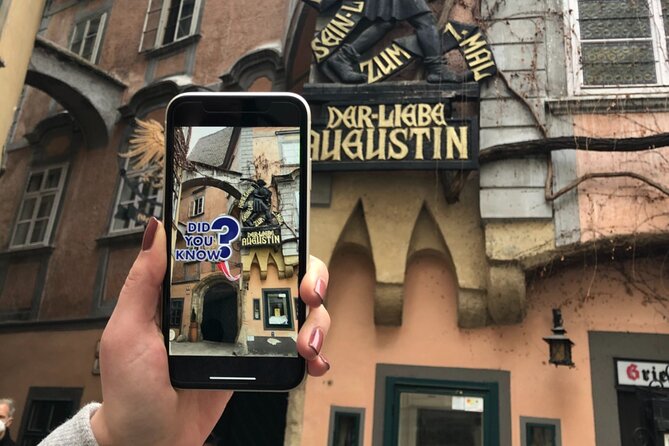
CityRiddler’s Hidden Gems style tour is basically a scavenger hunt with a history backbone. You follow the route on your phone, solve a riddle, and then get the explanation behind what you just saw.
The best part is how it changes your pace. You’re not just clocking sights. You’re slowing down to notice details—street names, small facades, and specific landmarks—because the next question depends on what’s in front of you.
And since it’s offered in English, you can keep up without that constant feeling of catching up. It’s also designed so that most people can join, which matters if you’re traveling with friends who don’t want a super long, exhausting day.
You can also read our reviews of more tours and experiences in Vienna.

Price and what you really get for $23.67
At $23.67 per person for about 2 hours, the value comes from two areas: the format and the number of stops.
First, the app-driven approach is meant to make short time count. You get frequent “mini moments” every ~15 minutes instead of spending the whole tour in one long lecture mode.
Second, most stops list free admission tickets. That’s a big deal for a city-center route—your tour price doesn’t get swallowed up by add-on entries at every step.
If you’re doing the math, a handful of locations are marked as admission not included. Still, the overall structure is practical: you’ll likely spend your time on the public areas around the sights, and then only deal with paid entries where the tour indicates they apply.
Where you start and how the route finishes cleanly
You start at Annagasse 10, 1010 Wien and end at Freyung, 1010 Wien. The ending at Freyung is useful because it leaves you close to an area where you can keep wandering or grab a late coffee without needing to “go somewhere else” to continue your day.
The meeting point is near public transportation, which helps on a city like Vienna where you may be moving between neighborhoods. Also, the tour runs daily during the listed period, so you can usually fit it into a sightseeing schedule without having to plan around one tiny time window.
Stop-by-stop: Blutgasse to Judenplatz in one smooth chain
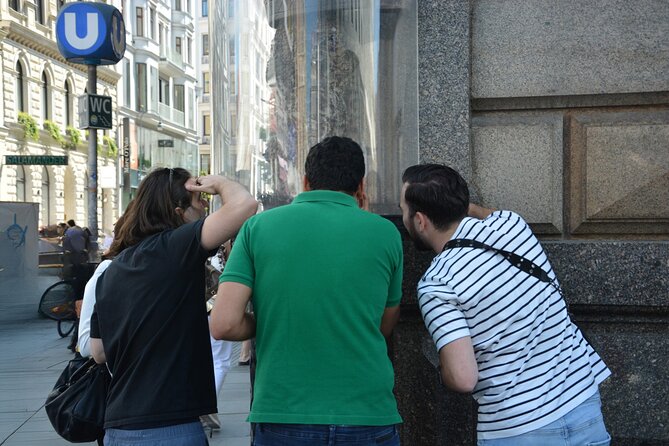
The tour is built around a sequence of themed stops. Each one is short—about 15 minutes—so you’re moving often, but not sprinting. Think: walk, solve, learn, reset, repeat.
Here’s what to expect from each location and why each one is worth your attention.
Stop 1: Blutgasse and the Blood Alley riddle
You begin with Blutgasse, known through the tour as the Blood Alley. The app guides you through the area and gives you a first puzzle to solve before it supplies the history and fun facts behind the alley.
This is a smart opener. It trains you to use the app on the spot—so the rest of the tour feels easier instead of “okay, now how does this work?”
A practical tip: when you arrive, pause for a second and look around the alley context. Even if the riddle feels abstract, the solution usually depends on what you can see nearby. Slow down early and you’ll enjoy the later stops more.



Stop 2: Basiliskenhaus and the mystery of the Basilisk
Next is Basiliskenhaus, where the tour focuses on who killed the Basilisk and the story behind it. This is the legend-and-local-color stop, and it helps break up the route so you don’t feel like you’re only moving through churches and memorial plaques.
You’ll likely appreciate this stop most if you like Vienna not just as architecture, but as a place where stories grew around buildings and neighborhoods. The “who did it” angle is also naturally memorable, which makes the learning stick after you move on.
The only downside here is that legends can vary depending on retellings. This tour is clear about centering its own version of the tale, but if you’re a super detail-orientated history person, you might want to cross-check later with a guidebook on your own time.
Stop 3: St. Rupert’s Church (Ruprechtskirche) and the oldest-church lesson
Then you hit St. Rupert’s Church (Ruprechtskirche), presented as the oldest church in Vienna. The route includes a key tip: it’s not Stephan’s Cathedral.
This stop matters because it resets a common mental map. A lot of visitors head straight for the famous cathedral areas, but this pushes you toward a quieter kind of significance—an older layer of the city’s spiritual history.
Give yourself a moment to look closely at the church setting rather than rushing inside. Since the stop is short, you’ll get more out of it if you decide in advance what you want to notice: entrance details, surroundings, or any standout features the app draws your attention to.
Stop 4: The Anker Clock and what it represents
After that, you’ll search for the Anker Clock. The tour frames it as the most beautiful clock in Vienna and focuses on what it represents.
This stop is great because clocks are one of those Vienna details that can feel small from far away. The app format helps you treat it like an intentional object instead of a background landmark.
If you’re the kind of traveler who normally walks past street-level curios, this is your nudge to stop. Even in a short 15 minutes, it’s enough time to understand the meaning behind the design—assuming you take the app moment seriously.
Stop 5: Rauhensteingasse and centuries-old street naming
Next comes Rauhensteingasse, where you learn how the streets of Vienna were named centuries ago. This is one of those stops that can surprise you, because it turns “street names” into “how the city organized itself.”
Why that’s valuable: once you understand naming patterns, Vienna becomes easier to navigate mentally. Streets stop being random labels and start acting like clues about time, people, trades, and neighborhood logic.
This is also a good “breather” stop. It’s still part of the puzzle flow, but it doesn’t require you to be intensely physically oriented like some monument hunts do.
Stop 6: Backerstrasse No. 2 and a medieval story/legend
You then reach Backerstrasse No. 2, tied to one of the more interesting stories and legends from medieval ages in Vienna. The tour notes that admission is not included here.
So plan for this as a location where you may need to think ahead. If the paid entry is required for the full experience, you might want to factor in extra time if there’s any waiting or if entry conditions apply.
Even if you don’t go inside, the “No. 2” address framing is a reminder that these tours often hinge on exact points. Stay close to the app’s indicated spot and don’t rely only on general vibes of a street.
Stop 7: Fleischmarkt District and the Augustin story
In the Fleischmarkt District, the tour focuses on one of the oldest restaurants in Vienna and the well-known story of Augustin. Here again, admission is not included.
This stop blends food history with a narrative you can carry into meal-time later. Even if you’re not planning to eat right away, you’ll better understand why this area is part of Vienna’s “story map.”
Tip for getting value out of this stop: watch for how the app connects the legend to the specific place. If you just look at the restaurant frontage without connecting the dots from the puzzle, the story won’t land as strongly.
Stop 8: Judenplatz Holocaust Memorial and Jewish community history
Finally, you end at the Judenplatz Holocaust Memorial. This part of the tour is about the important history of Vienna’s Jewish community.
This is the emotional anchor of the route. Earlier stops are legend, architecture, and city naming. Here, the focus shifts to remembrance and historical context.
Because this is memorial ground, I’d treat it with a slower pace than the rest of the tour. Let the learning sink in. Even if the stop is still around 15 minutes, you can often take a little personal time if you need it—especially since the tour format lets you pause.
Why the app-and-riddle format works so well in a historic city center
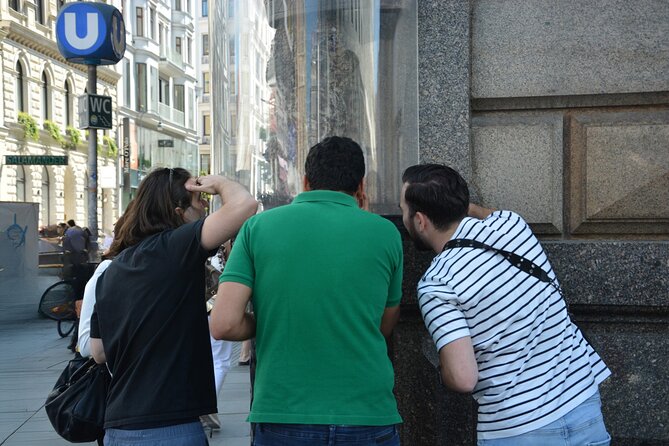
Vienna can be gorgeous, but it’s also easy to feel like you’re repeating the same sightseeing loop: palace, cathedral, museum, café, repeat. CityRiddler’s approach keeps you engaged because you have a job to do at each stop.
In plain terms, the riddle gives you a reason to look at the place. Then the explanation makes the looking meaningful.
The reviews also highlight how easy it is to use the app—download, enter the code, and go. That matters because the biggest annoyance in self-guided tours is often setup. Here, it’s designed to be quick, and you can pause at any time for a break or a photo.
Also, with a maximum of 50 travelers, you avoid the feeling of being one more face in a huge crowd. You’re still walking in a city, but the tour design tends to keep the experience from turning into noise.
Pace, walking reality, and who this suits best
This is a walk-and-learn format. Expect steady movement between points and short stops where you’re meant to read, solve, and then absorb.
It’s a strong fit if you:
- like puzzles and want something more active than a standard walking tour
- enjoy legends and city history in small doses
- want a flexible way to see central Vienna quickly
- travel with friends or a partner who have mixed interests (history plus story plus curios)
It might be less ideal if you:
- want a long, in-depth lecture at each location
- expect every stop to be fully hands-on without any extra ticketing
- dislike walking between close-by attractions for about 2 hours
If you’re traveling with someone who gets bored easily with museums and lectures, this kind of route often keeps both people satisfied because the “game” phase breaks up the “standing and listening” phase.
Weather and timing: plan for the day, not the perfect day
The tour requires good weather, which is a fair note for a city-center outdoor route. If conditions are poor, the experience may be canceled with an option for a different date or a full refund.
Timing-wise, it’s about 2 hours, with roughly 15 minutes per stop. That’s enough time to enjoy the learning without turning into a full afternoon commitment, which is handy when you have other Vienna must-dos planned.
If you’re sensitive to crowds, treat start time as part of strategy. Earlier in your day often feels calmer in Europe’s city centers, and you’ll have an easier time focusing on the puzzles.
So, should you book CityRiddler’s Vienna Hidden Gems?
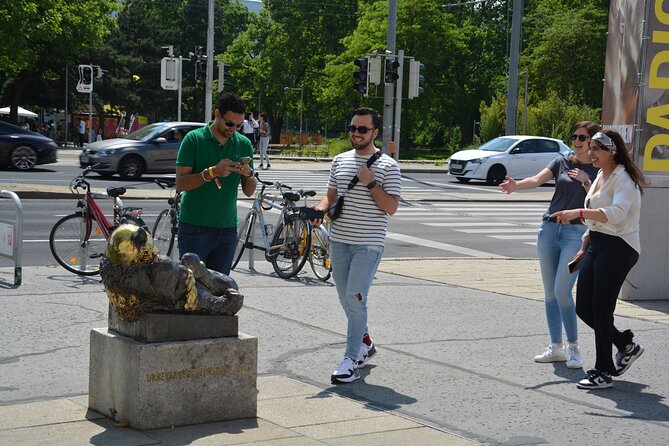
I’d book this if you want Vienna history that feels playful, not heavy. The combination of short stops, app-based riddles, and a mix of legends, churches, street history, and the Judenplatz Holocaust Memorial creates a tour that works even if you’ve seen a lot of Vienna before—or if you’re only seeing the center this trip.
You should think twice if you strongly dislike any paid-entry components, since a few stops have admission not included, or if you’re traveling during a stretch of unreliable weather.
If your goal is to spend two hours getting better acquainted with central Vienna in a way that sticks, CityRiddler is a very practical choice.
FAQ
How long is the CityRiddler Hidden Gems of Vienna tour?
It runs for about 2 hours.
What language is the tour offered in?
It’s offered in English.
Where do I meet for the tour?
The start point is Annagasse 10, 1010 Wien, Austria.
Where does the tour end?
The tour ends at Freyung, 1010 Wien, Austria.
How much does it cost per person?
The price is $23.67 per person.
Is the tour fully self-guided, or do I follow an app?
You use the app as part of the experience, including solving riddles as you go.
Are admissions included at every stop?
Most stops list admission ticket free, but some stops are marked as admission not included.
Are there limits on group size?
Yes, the tour has a maximum of 50 travelers.
Is the tour dependent on weather?
Yes, it requires good weather. If it’s canceled due to poor weather, you’ll be offered a different date or a full refund.