
REVIEW · VIENNA
Fun & mobile scavenger hunt through Vienna
Book on Viator →Operated by Fun Facts Rally · Bookable on Viator
Vienna turns into a game. This outdoor mobile scavenger hunt turns famous buildings into clue moments, where you play solo or compete as a team and chase a score. I like the mix of numbers and names with short background stories, and I like that there’s no download needed. One caution: you’ll want a charged phone, since you’re relying on it while you walk.
This is priced at $31.12 per person and runs about 2 hours 30 minutes when you keep a steady pace. You can play at any time for up to 1 year, even if you pause, and you’ll finish back at the start near public transit.
In This Review
- Key things I’d plan for before you play
- Price and value: $31.12 buys a flexible way to see downtown
- How the Vienna game works with your phone (and what you need)
- Where you start and how the route stays simple
- Stop 1: Albertina—why this is a great first checkpoint
- Stop 2: The Hofburg—turning a big complex into solvable moments
- Stop 3: Votivkirche—using clues to notice what you’d normally skip
- Stop 4: Wiener Staatsoper—score points near a major stage
- Stop 5: Kunsthistorisches Museum Vienna—museum storytelling without the museum fatigue
- Stop 6: Maria Theresien Square—finishing with open space and a final push
- The biggest strengths (and the one real watch-out)
- Who this scavenger hunt suits best
- Should you book Fun Facts Rally’s Vienna scavenger hunt?
- FAQ
- How long does the Vienna scavenger hunt take?
- Is it offered in English?
- Do I need to download an app?
- Where do I start and where does it end?
- Is it a private activity?
- Can I get a refund if plans change?
Key things I’d plan for before you play

- Phone-based, app-free gameplay so you can start without fuss
- Up to 1 year to play means you’re not locked into a tight schedule
- Six central landmarks give you a clear route through downtown Vienna
- Story clues, not just trivia help you slow down and notice details
- Private activity for your group keeps the vibe focused on you, not strangers
Price and value: $31.12 buys a flexible way to see downtown

At $31.12 per person for about 2.5 hours of game time, this hunt feels more like a low-cost way to create a self-guided outing than a traditional guided walking tour. The value is in the structure: you’re not just wandering. You have prompts, scoring, and a reason to check the names and numbers connected to each stop.
What makes that worth it is the flexibility baked into the ticket. You can play at any time for a year and resume after interruptions. That’s useful in Vienna, where weather changes fast and your energy level can change faster. If you start and decide you want a café break, you’re not “behind schedule.” You’re playing on your own tempo.
The only time the price feels less fair is if you hate walking or dislike puzzle-style tasks. This is a sightseeing game, so you should be into the idea of figuring things out with your phone.
You can also read our reviews of more tours and experiences in Vienna.



How the Vienna game works with your phone (and what you need)
You get a link to the scavenger hunt with your ticket. The key point is how you play: it’s mobile, but there’s no download required. You’ll want your cell phone charged before you begin, because you’re using it throughout the hunt.
You can play in different modes depending on how you buy the experience: alone, as a group, or competing against each other for higher points. That flexibility matters if your travel crew has mixed interests—someone who loves puzzles can run with it, while someone who just wants stories and structure can still enjoy the walk.
Because it’s an outdoor game, plan for real walking time. The activity also lists a moderate physical fitness level. If your group typically does a casual city stroll, you’ll likely be fine. If you want lots of sitting and short hops, this may feel like too much movement.
Where you start and how the route stays simple

You start at Schönlaterngasse 1, 1010 Wien, Austria. The activity ends back at the meeting point, so you’re not left trying to retrace your steps or figure out a new pickup location at the end.
It’s also described as near public transportation, which is a big deal for a mobile activity. You can arrive, start your hunt, and then leave easily once you’ve finished your final clue.
And because the activity is available across a wide daily window (it lists hours from midnight to late evening within the overall date range), you’re not forced into one rigid time slot for the outing itself. Your “when” can be travel-friendly.
Stop 1: Albertina—why this is a great first checkpoint
Your hunt begins at Albertina, and I like this as the opening stop. First stops can feel awkward—where do you start, what do you look for, how do you play? Starting here gives you a clear landmark anchor right away, so you can get the game rhythm quickly.
From a gameplay standpoint, the early tasks are usually the easiest way to learn the pattern: check the clue, find the relevant part of the scene, then answer in the phone interface. In places like this, you’re often working with visible details and names you can spot from the sidewalk.
A practical tip: treat Stop 1 like a warm-up. Don’t rush it. If you get the format right here, the rest of the route feels smoother and more fun.
Potential drawback: if your phone battery is already low when you start, this is where you’ll feel it first. So charge before you arrive.
Stop 2: The Hofburg—turning a big complex into solvable moments
Next up is The Hofburg. This is where the hunt becomes more than a list of sights. Hofburg-type landmarks tend to be busy places visually, which makes them perfect for a scavenger format: you’re not expected to “memorize.” You just need to follow the clue path.
This stop is also a good example of why the hunt includes stories along with names and numbers. The buildings around you can look impressive but hard to interpret at a glance. The game nudges you to connect what you’re seeing with a small piece of background, which makes the architecture feel more understandable.
What to watch for here: take your time to read what the clue is asking for on your screen. Many scavenger hunts reward calm attention, not speed.
If your group includes one person who always wants to rush ahead, this stop is where they’ll either learn the “slow is smart” rule—or get frustrated. Either way, it’s a good test of whether your group vibes with puzzle play.






Stop 3: Votivkirche—using clues to notice what you’d normally skip

Votivkirche is a stop that works well for the “look again” style of sightseeing. On a typical walk, you might glance at a church and move on. In a scavenger hunt, you have a reason to slow down and find whatever the clue is pointing to.
This is also where the phone-based format helps. The game can keep instructions clear and on your device. You’re not trying to manage paper sheets or hunt for a guide in a crowd. You look, you check the clue, you answer.
One consideration: churches and exterior façades can involve details at different heights and angles. So if you’re traveling with kids, have limited mobility, or just don’t like straining your neck, approach this stop gently and accept that you may not spot every small detail from every angle.
The good news is that the activity is designed for you to keep playing even with interruptions. If you need a pause, you can step out, reset, and continue.
Stop 4: Wiener Staatsoper—score points near a major stage

Then you move to Wiener Staatsoper. Even if you don’t attend a performance, it’s a powerful landmark to walk by because it has that “this is important” energy. In a scavenger hunt, that matters. You’re solving questions in the real environment instead of looking at a photo later.
This stop is a likely highlight for people who like dramatic spaces and strong visuals. But it’s also a good moment for anyone who prefers practical trivia over deep research. The game is built around quick answers—names, numbers, and short background prompts—so you keep momentum.
How to make the most of it: don’t stand in one place the whole time. If the clue seems to require a specific element, shift your position slightly to get the right perspective. A few steps can save you minutes.
Stop 5: Kunsthistorisches Museum Vienna—museum storytelling without the museum fatigue

Next is Kunsthistorisches Museum Vienna. A museum stop can go two ways on a walking day: you either push through the whole museum visit, or you skip it and feel like you missed something. This hunt gives you the “museum connection” without forcing a full indoor visit.
The game’s strength here is how it uses prompt-based learning. You’re still outside, but the clues guide your attention toward identity details and the kind of background that makes the place feel less anonymous.
A good way to enjoy this stop is to treat it like a short lesson. You’re not trying to “win” at the cost of missing the point. Reading the clue carefully and answering it correctly is how you turn the museum name into something you actually remember.
Possible drawback: if you’re expecting a seated, restful break, this stop probably won’t provide that. It’s still part of an outdoor walk. Plan a quick snack stop nearby before you feel too “game tired.”
Stop 6: Maria Theresien Square—finishing with open space and a final push
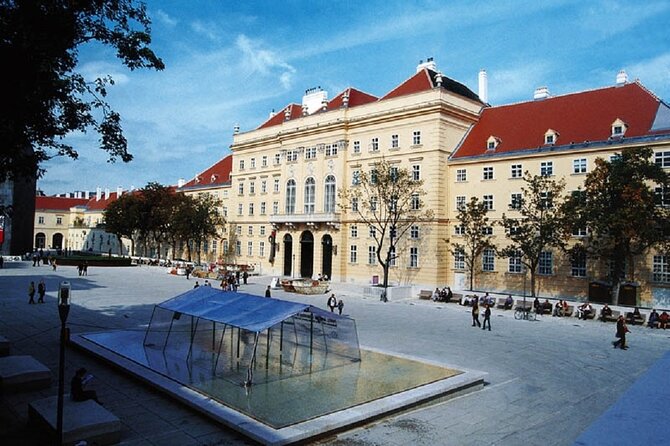
The final sightseeing stop is Maria Theresien Square. I like this choice because squares tend to give you breathing room at the end. When you finish a scavenger hunt, you don’t want a last clue that traps you in a tight corner. You want space to think, check your answers, and wrap up your score.
It’s also a natural place to regroup. You can compare scores among your group, talk through what you found interesting, and decide whether you want to keep wandering beyond the game.
The fact that the activity ends back at the meeting point adds an easy off-ramp. You don’t have to solve the logistics puzzle at the end. You follow the route back and then you’re done.
The biggest strengths (and the one real watch-out)
The best part of this experience is how it combines structure and freedom. You get a defined route and clue format, but you also get independence: you can play alone, as a group, or against each other, and you can pause and restart over time.
Second strength: it isn’t just rote sightseeing. The hunt includes story background connected to what you’re seeing. That’s the difference between walking past landmarks and actually leaving with something you can explain.
Now for the watch-out. One past issue mentioned a reservation number not being recognized on the provider site and a phone number that was no longer valid. The provider response also said they don’t have 24/7 customer service. The practical takeaway: double-check your confirmation details when you book, and if something doesn’t work on your device, contact the provider through their available channels as soon as you can. If the game doesn’t start smoothly, don’t wait until the last minute of your trip.
Who this scavenger hunt suits best
This is a strong match for:
- People who like self-guided play with just enough direction
- Small groups who want a shared activity with built-in scoring
- Travelers who prefer to learn through noticing details, not through long explanations
- Anyone who wants to see central Vienna without committing to a full-day guided program
It may not be ideal if:
- Your group hates puzzles or prefers passive sightseeing
- You’re traveling with limited walking tolerance
- Your phone battery usually dies quickly (bring a portable charger if you have one)
Should you book Fun Facts Rally’s Vienna scavenger hunt?
Yes—if you want a fun, mobile-first way to see downtown Vienna and you’re okay walking while solving clue questions. The value is in the app-free convenience, the ability to play over a long window, and the fact that the hunt pushes you to notice names, numbers, and story background tied to major landmarks.
I’d especially recommend it for groups who don’t all want the same pace. One person can hunt for answers; another can enjoy the stories; everyone shares the same walk.
If you’re prone to tech stress, make life easy: charge your phone, verify your booking details right after you book, and plan for a calm start at Schönlaterngasse. Then let the city turn into a game for a couple of hours.
FAQ
How long does the Vienna scavenger hunt take?
It runs about 2 hours 30 minutes, depending on how you play and how quickly your group answers the clues.
Is it offered in English?
Yes, the scavenger hunt is offered in English.
Do I need to download an app?
No download is necessary. You can play it using a charged cell phone, with a mobile ticket link.
Where do I start and where does it end?
You start at Schönlaterngasse 1, 1010 Wien, Austria, and the activity ends back at the meeting point.
Is it a private activity?
Yes. It’s private, and only your group will participate.
Can I get a refund if plans change?
Yes. You can cancel up to 24 hours in advance for a full refund.