REVIEW · VIENNA
Mozarthaus Concert in Vienna – Piano Trio
Book on Viator →Operated by Konzerte im Mozarthaus · Bookable on Viator
Mozarthaus concerts can feel like a private moment inside Vienna’s culture. Here you get a piano trio performance in one of the oldest concert spaces in the city, the Sala Terrena, tied directly to Mozart’s life in 1781. The lineup focuses on major names like Mozart, Beethoven, Schubert, and Chopin, and the small room style makes the music feel close.
I also like the straightforward setup: the ticket price includes admission to the Mozarthaus Concert, and you’ll have a German & English program so you can follow what’s going on without guessing. One thing to keep in mind is that drinks aren’t included, so plan on grabbing something before the show if you want it with you.
In This Review
- Key things to know before you go
- Why the Sala Terrena concert-hall vibe matters
- Inside Deutschordenshaus: Mozart’s apartment connection
- The piano trio program you’ll actually hear
- What the concert feels like in a small room
- Timing, ticket pickup, and getting there without stress
- Price and value: what $70.89 buys you
- Who this is best for (and who should think twice)
- FAQ
- FAQ
- What time does the Mozarthaus piano trio concert start?
- How long is the concert?
- Where does the concert take place?
- Is drinks included with the ticket?
- What language is the program in?
- Do I need to pick up my ticket at the venue?
- Are there different seating categories?
- Is the concert easy for most travelers to attend?
- Should you book the Mozarthaus Concert in Vienna?
Key things to know before you go
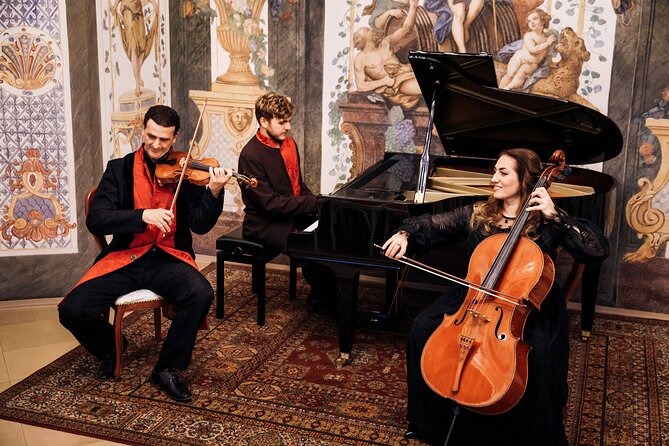
- Sala Terrena setting: a historic, older concert hall in Vienna that suits chamber music.
- Mozart-linked venue: you’re in Mozart’s first apartment area in the house connected with the German Teutonic Order.
- Piano trio focus: expect virtuoso chamber playing built around the classics.
- Big finale pieces: Haydn’s Rondo all’ Ongarese and Schubert’s trio op. 100 close things out.
- Small-group feel: the experience caps at 50 people, which helps keep it personal.
- Ticket categories matter: seating is labeled by rows (Category A vs Category B) and students can sit in all rows.
Why the Sala Terrena concert-hall vibe matters
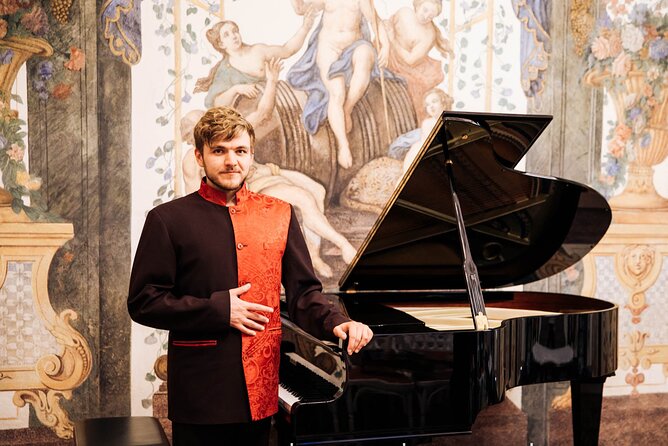
Vienna has plenty of classical options, but not all of them give you that “sit close, hear clearly” feeling. This concert takes place in the Sala Terrena, described as one of the oldest concert halls in Vienna, and that age shows in the room’s character and intimacy. In a small chamber setting, details like phrasing, balance between instruments, and the way musicians blend matter more—and they come through.
The other big advantage is the size of the group. With a maximum of 50 travelers, you’re less likely to feel like you’re in a big tourist block. Instead, it’s set up for a shared focus on the music. If you like concerts where you can watch the interaction between piano, violin, and cello (rather than just face the stage from far back), this format fits.
One practical note: because it’s a seated concert and drinks aren’t included, you’ll want to think about timing. If you arrive a bit early, you can settle in without rushing, then enjoy the performance without interruptions.
You can also read our reviews of more tours and experiences in Vienna
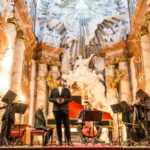
Inside Deutschordenshaus: Mozart’s apartment connection
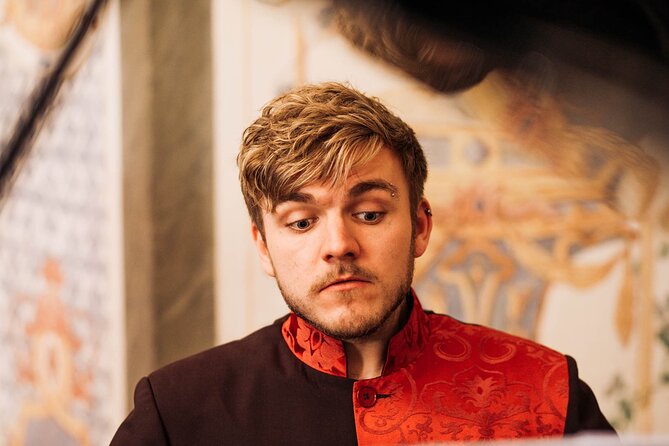
The venue is tied to Mozart’s working life in Vienna. This concert happens in the house connected with Mozart’s first apartment in Vienna, part of the monastery of the German Teutonic Order. The year given is 1781, when Mozart lived and worked there for Archbishop Colloredo.
That connection is more than trivia if you care about context. When you sit down in a place linked to the people who actually lived and composed in Vienna, the evening feels less like a generic “classical night out” and more like a specific slice of the city. It’s the kind of setting that can make the music’s style—Classical-era clarity, early Romantic feeling, and all the neat structural tricks—land more sharply.
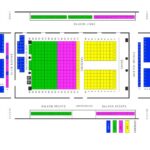
Also, the room layout is designed for viewing and listening rather than just filling seats. Even the category seating (rows 1–3 vs 4–6) is a reminder that proximity is part of the experience. If you’re the type who notices sound quality and sightlines, this is a good match.
The piano trio program you’ll actually hear
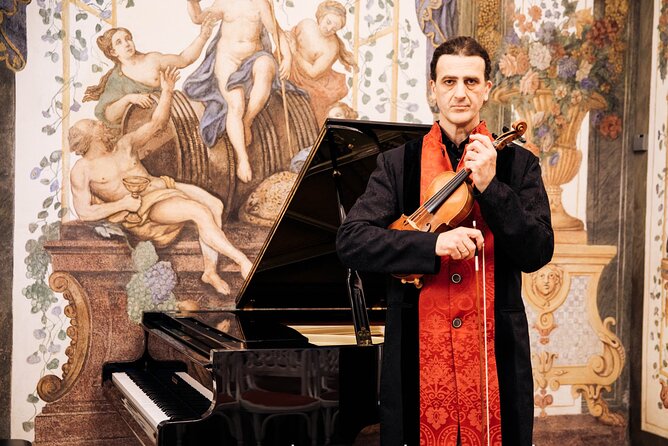
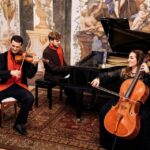
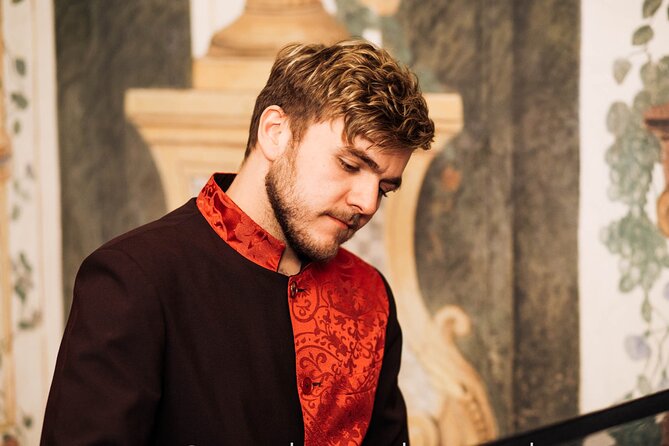
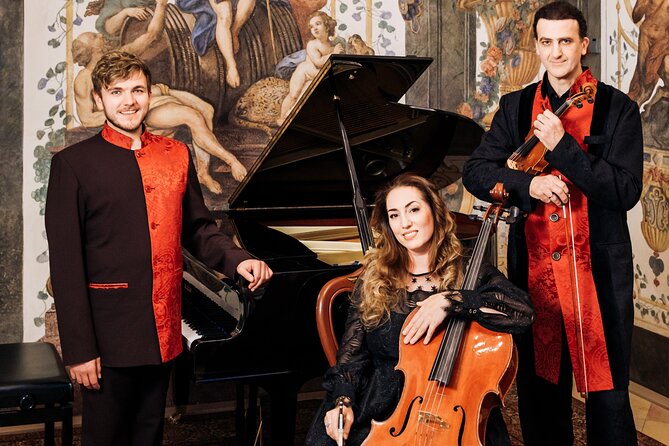
This is not a “one composer and done” show. It’s built around the most famous works connected with the Mozart Ensemble’s repertoire and includes major composers such as Mozart, Beethoven, Schubert, Chopin, and others. The performance lineup is specifically described as a piano trio, combining piano with solo-style writing for violin and cello, plus full trio works.
Here’s what that usually means for how the music feels:
- You get variety in texture because piano trio writing switches easily between lyrical lines and more conversational passagework.
- Pieces built for trio balance well in a small hall, so the piano isn’t swallowed and the strings aren’t buried.
- With composers like Mozart and Beethoven in the same evening, you’ll hear how musical style evolves without leaving the chamber format.
The most concrete “anchor” moment is the finale. The program highlights the end of the concert featuring Haydn’s piano trio Rondo all’ Ongarese and Schubert’s trio op. 100. If you like finales that have momentum, character, and a satisfying structural payoff, that closing set gives you a clear reason to stay to the end instead of treating the concert like background.
And you’re not stuck guessing what you’re listening to. The show includes a program in German & English, which helps you follow along with composer names and the flow of the pieces.
What the concert feels like in a small room
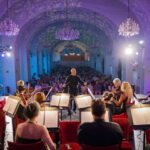
The most consistent theme in how people talk about this style of concert is closeness. In a compact space, the musicians’ body language matters. You’re more aware of when the ensemble locks into a shared rhythm, when the violin and cello trade roles, and how the pianist shapes dynamics from one moment to the next.
The seating categories also hint at this. With Category A (rows 1–3) and Category B (rows 4–6), the venue is set up so earlier rows are closer and typically more “in the action.” If you’re paying for a better view, you’re really paying for less distance to the sound source and better sightlines for the instrument interplay.
One small consideration: in a room with this kind of intimate setup, lighting angles can matter. One account mentions the violinist being backlit, which is exactly the kind of thing that can happen in older venues with fixed lighting positions. It’s not a deal-breaker if you’re mainly there to listen, but if you like to visually track bowing and finger work, it’s worth choosing your seat thoughtfully.
Timing, ticket pickup, and getting there without stress
The start time is 8:00 pm, and the concert runs about 1 hour 30 minutes. That’s an easy slot to plan into an evening in Vienna: you can do dinner, then show up with enough time to settle.
Ticket pickup is a key detail. Your tickets are held at the theater box office for collection on the day of the performance, and you’re asked to arrive 15 minutes early to collect them before the show starts. So even if you think you’re walking in with everything set, plan for that short stop at the counter.
For location, you can use this address: Deutschordenshaus, Singerstraße 7, 1010 Wien, Austria. The venue is described as near public transportation, which matters because you’re going at night and you don’t want your plans to depend on perfect walking conditions or late transit.
If you’re arriving from central sightseeing spots, give yourself a small buffer. The easiest plan is: grab food nearby, then head to Deutschordenshaus early enough to collect the ticket, find your row, and keep the pre-show window calm.


Price and value: what $70.89 buys you
At $70.89 per person, this isn’t the cheapest option in Vienna. But it also isn’t just paying for a name on a ticket. You’re paying for a combination that can be hard to recreate elsewhere:
- A Mozarthaus Concert included (not an add-on)
- A historic, small-hall setting suited to chamber music
- Admission and a structured program in German & English
- A focused performance format: piano trio with a finale that includes Haydn and Schubert
In other words, the value is less about volume and more about intimacy and the quality of the setting. If you’ve ever sat through a big-hall classical event where you can barely see details and the sound feels distant, then a small 50-person concert can be a better use of your evening money.
Seat category can also tilt the value. If you want the best view and easiest visual tracking, prioritize Category A (rows 1–3). If you just want a great sound and don’t care as much about seeing every hand movement, Category B may still work well.
Who this is best for (and who should think twice)
This concert fits classical music fans who specifically like chamber music formats. If you enjoy when composers’ ideas show up in clear lines—dialogue between instruments, controlled dynamics, and crisp phrasing—this piano trio setup is a strong match.
It also works well for people who want culture in a setting that isn’t overly staged. The program includes German & English guidance, but the room size keeps the tone from turning into a lecture. You get the music first.
Consider thinking twice if you’re mainly after a big “event” atmosphere with lots of spectacle. This is a concert in a small historic space. The payoff comes from listening closely, not from watching a theatrical production.
If you’re traveling with friends who want an evening that feels distinctly Viennese, this is the kind of plan that’s easier to agree on than picking between ten similar concert halls in a guidebook. The Mozart connection and the compact format make it easier to feel like your choice was intentional.
FAQ
FAQ
What time does the Mozarthaus piano trio concert start?
The start time is 8:00 pm.
How long is the concert?
It runs about 1 hour 30 minutes.
Where does the concert take place?
It takes place at Deutschordenshaus, Singerstraße 7, 1010 Wien, Austria.
Is drinks included with the ticket?
No. Drinks are not included.
What language is the program in?
You get a program in German & English.
Do I need to pick up my ticket at the venue?
Yes. Your ticket is held at the theater box office for collection on the day of the performance, and you should arrive about 15 minutes early to collect it.
Are there different seating categories?
Yes. Tickets are Category A (rows 1–3), Category B (rows 4–6), and Students can sit in all rows.
Is the concert easy for most travelers to attend?
The experience says most travelers can participate, and it’s near public transportation. The group size is also capped at 50.
Should you book the Mozarthaus Concert in Vienna?
If you want Vienna classical music in a small, historic room tied to Mozart’s life in 1781, book it. The price makes sense when you factor in the intimate setting, the included admission, and the specific finale pairing of Haydn and Schubert. It’s especially worth it if you care about chamber-music detail rather than big-hall spectacle.
If you’re sensitive to seat-view issues, pick Category A to maximize your chances of a great view and a close listening experience. And if you like to plan evenings smoothly, show up early for the box office ticket pickup so the night stays stress-free.