REVIEW · VIENNA
The best of Vienna – Exclusive Tour (Max 9 people)
Book on Viator →Operated by Prime Tours Vienna · Bookable on Viator
Nine people, two hours, and Vienna clicks.
This exclusive Best of Vienna tour is built for maximum impact in minimum time, with an art historian touch that turns big landmarks into a clear story. I especially like how the route jumps across eras fast, from the Memorial against War and Fascism to the Hofburg and Heldenplatz, then lands you in classic café Vienna. One thing to plan for: most major sights have entrance fees, and those tickets are not included.
What makes this one work is the flow. You’re not wandering randomly—you’re being guided, with stops that explain what you’re seeing and why it matters. You also get a small-group feel (max 9), so questions don’t feel like a line you’re waiting in.
The tour is offered in English, uses a mobile ticket, and runs about 2 hours from Helmut-Zilk-Platz to Stephansplatz near Stephansdome. The main consideration is pacing + cost: you’ll be walking between central sights, and you’ll likely want to budget extra for entries where they apply.
In This Review
- Key highlights you’ll feel right away
- Why this 2-hour Vienna highlights walk fits real schedules
- Meeting at Helmut-Zilk-Platz and ending by Stephansplatz
- Memorial Against War & Fascism: starting with meaning, not just monuments
- Albertina: art, opera, and a fast Vienna orientation
- The Hofburg story: Habsburg power, Sisi, Emperor Josef, and Austria today
- Heldenplatz: the Anschluss gate and WWII-era Vienna
- Café Landtmann: Melange, how locals drink it, and why coffee rules here
- Graben and Kohlmarkt: Demel’s royal-café presence and the old-town streetscape
- St. Stephen’s Cathedral and the Stefl legend on the way
- Price and value: what $211.19 buys in Vienna
- The guides: friendly, enthusiastic, and actually funny
- Who should book this exclusive highlights tour
- Should you book the Best of Vienna – Exclusive Tour?
- FAQ
- How long is the Best of Vienna – Exclusive Tour?
- Where does the tour start and end?
- Is this tour private?
- Are entrance tickets included?
- What language is the tour offered in?
- Is food or drink included?
- Can the route change based on your group’s needs?
Key highlights you’ll feel right away
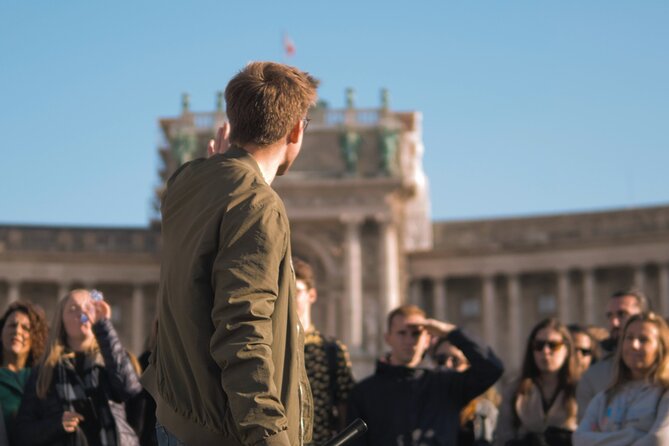
- Max 9 people: more conversation, less crowd noise.
- Professional guides: you’re led by a local guide plus an art historian and licensed Austria guide.
- History with contrast: war memory, Habsburg power, and WWII-era Vienna in one line.
- Coffeehouse culture stop: Melange explained at Café Landtmann, plus Demel on the Graben.
- Real landmark focus: Albertina, the Hofburg area, Heldenplatz, and St. Stephen’s Cathedral.
- Route can adapt: the path can be adjusted to guest needs.
Why this 2-hour Vienna highlights walk fits real schedules
Vienna is huge on symbolism. Even if you only have a couple hours, you can still get the “why” behind the city: who ruled it, what shaped it, and how people lived day to day. This tour is designed to give you that big picture quickly, without turning it into a museum marathon.
The time format matters. At roughly 2 hours, the tour keeps you moving through the central core, so you finish with orientation—not just photos. You’ll leave with mental labels for places you’ll see later: where the Habsburgs ruled from, what Heldenplatz represents, and why the coffeehouse is more than caffeine.
The group size is the second secret sauce. With up to 9 people, it’s easier for a guide to change pace, clarify details, or answer a question without derailing the whole group. If you’ve done large group “highlights” tours before, you know the feeling: you’re lucky if you hear your own guide. Here, you’re much more likely to actually connect with the story.
You can also read our reviews of more tours and experiences in Vienna.
Meeting at Helmut-Zilk-Platz and ending by Stephansplatz
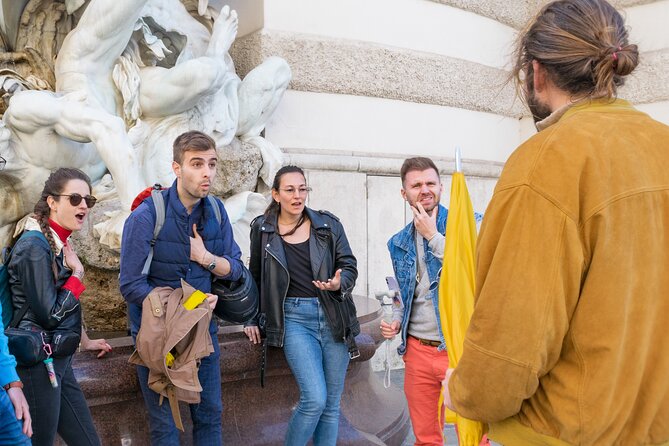
The start is Helmut-Zilk-Platz, 1010 Wien (right by the center). The end is Stephansplatz, finishing near Stephansdome. That means the tour drops you exactly where Vienna’s old-town energy is concentrated.
Why I like this layout for travelers: it’s easy to plug into the rest of your day. If you’re exploring after, you’re perfectly positioned for the cathedral area and the Graben street stroll. If you want an evening plan, you’re already in the right neighborhood instead of crossing town twice.
It’s also close to public transportation, which helps when your morning is late or your train runs behind. And it’s private—only your group participates—so you’re not stuck sharing the vibe with strangers who may or may not show up on time.
Practical tip: wear comfortable shoes. The tour is short, but it’s still a walking loop through busy central streets.
Memorial Against War & Fascism: starting with meaning, not just monuments
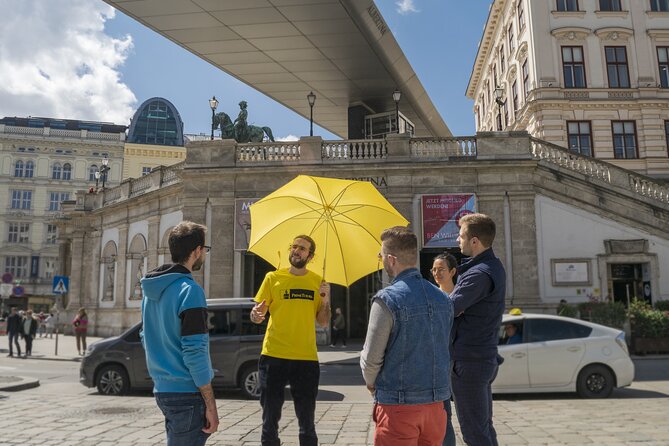
You meet at the Memorial against War and Fascism, where the tour begins. This is a free stop and lasts about 10 minutes. That opening choice is smart. It frames Vienna not as a postcard of palaces, but as a city shaped by real politics and real tragedies.
In a compact itinerary, this kind of start can feel unexpected—especially if you expected purely decorative sights. But it also helps you read what comes next. When the tour later touches the Nazi announcement of the Anschluss at Heldenplatz, you’re not jumping into WWII history cold. You’ve already been oriented to the theme: how power and ideology leave scars on public space.
Even if you’re not the type to linger at memorials, the guide’s role here matters. You’ll get context that turns the site from an object you pass by into a point of understanding for the rest of the day.
Albertina: art, opera, and a fast Vienna orientation
The next stop is Albertina, about 15 minutes. The guide sets up a larger Vienna picture here—opera connections, the Albertina Gallery, and an introduction to Vienna’s cultural identity. Admission is not included, so you’ll want to decide in advance whether you’re okay paying extra for entry.
This is a good pivot point. Albertina gives you a taste of Vienna’s reputation as an arts city, but it’s not treated like a random art stop. It’s used to connect themes: culture, patronage, and public life—things that keep resurfacing all the way through the Hofburg.
If you like tours that help you understand the city’s “systems” (who funded art, where music fit in, how buildings signaled status), this stop is right in your wheelhouse.
Downside to consider: because tickets aren’t included, you may need to factor in extra time and money depending on whether you choose to enter.
The Hofburg story: Habsburg power, Sisi, Emperor Josef, and Austria today
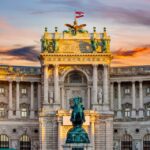
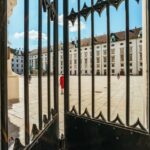
The Hofburg stop runs about 20 minutes and is one of the biggest payoff sections. The guide explains the Habsburgs, the royal palace setting, princess Sisi, and Emperor Josef. Then it doesn’t stop at old glory—it connects to Austria’s modern state.
That mix is valuable because it avoids the common Vienna trap: treating history like a frozen museum. You’ll get a sense of continuity, how the old imperial center still influences how people experience the city today.
This is also a “look longer” stop. You’ll be absorbing details around a complex site, not just passing a single facade. A good guide helps you see the layers—who lived here, what the palace symbolized, and how that power shaped daily life.
Admission is not included here either. If you’re hoping for a full interior visit, check what’s possible with the time you have. For many people, the exterior and guided context alone still lands well, because the guide is explaining the big narrative.
Heldenplatz: the Anschluss gate and WWII-era Vienna
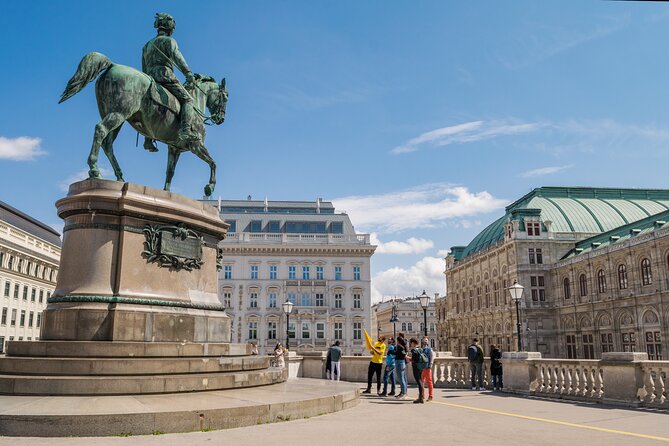
Heldenplatz is about 15 minutes. The tour focuses on the giant gate where the Nazi first announced the Anschluss and then connects it to what happened to Vienna during WWII.
This is where the tour becomes emotionally sharper. It’s not about dressing up the past. It’s about confronting how public spaces were used to broadcast ideology and how that echoed through the city.
If you’re the kind of traveler who wants meaning behind architecture and plazas, this stop usually hits hard—in a good way. The value is in the framing. Without that context, you might see a monumental square and move on. With it, the place becomes a key chapter in understanding 20th-century Austria.
Admission is not included here, but since it’s a plaza-style stop, you’re generally not dealing with ticket bottlenecks.
Café Landtmann: Melange, how locals drink it, and why coffee rules here
After the heavier history, you get a palate reset—Café Landtmann, about 10 minutes. This stop is built around coffee culture: the guide explains Melange, how to drink it, and why coffeehouses matter to locals.
This is one of the most enjoyable parts of the tour because it’s practical. Vienna’s coffeehouse culture can feel like a tradition you’re supposed to admire from afar. The guide helps you understand it as a ritual: what you order, what the drink means, and how locals treat café time as part of life.
And it’s quick on purpose. You’ll learn enough to make smart choices later at cafés you visit independently, even if you don’t sit down right there. Alcoholic beverages and food aren’t included, so you’re not being forced into a purchase—but you’ll walk away knowing what to ask for.
If you love small, human-scale stops (food habits, everyday traditions), you’ll appreciate this one.
Graben and Kohlmarkt: Demel’s royal-café presence and the old-town streetscape
The tour continues through Graben and Kohlmarkt for about 15 minutes. The guide points out the area around Place of Demel, the famous royal café.
This part works because it combines story with street-level walking. The Graben is the kind of street you’ll want to wander slowly later, but the guided explanation helps you understand why it carries that premium historic vibe. You’re not just shopping or sight-seeing—you’re reading the city.
It’s also a nice break from pure landmark stops. The tour transitions you into the shopping-and-culture spine of the center, where you can naturally continue exploring after the walk ends.
Entrance tickets don’t apply here in the way they do for museums or formal buildings. But you should still keep an eye on time, since you’ll have the cathedral finish later.
St. Stephen’s Cathedral and the Stefl legend on the way
The final major stop is St. Stephen’s Cathedral, about 20 minutes, and this one is marked as free. The guide covers Viennese highlights, including the legend and stories around Stefl, plus fantastic facts.
Then you also get a walk on Graben street, finishing at Stephansplatz. This combination is smart: you get the cathedral context, then you see how the cathedral fits into the surrounding old-town streets and your route after the tour.
The Stefl focus is a fun way to learn without turning the final stop into a lecture. Legends are memorable, and they give you something to carry with you as you explore. Even if you’ve seen St. Stephen’s from photos, you’ll likely notice details differently after the guide’s explanation.
Free admission here is a plus—less cost pressure at the end. And ending near Stephansdome means you can decide on the spot whether you want more time inside or you’d rather keep roaming outside.
Price and value: what $211.19 buys in Vienna
At $211.19 per person for a 2-hour exclusive tour, this is not a budget “wander with a map” deal. But it’s also not trying to be a full-day museum program.
So what are you paying for? You’re paying for small group time, professional guiding (including an art historian and a licensed Austria guide), and a tight itinerary that covers major historical themes plus coffeehouse culture in one go. You’re also paying for convenience: you start at Helmut-Zilk-Platz and end near Stephansdome, with an efficient line through central Vienna.
The main value-killer to watch for is that entrance tickets aren’t included for multiple stops (like Albertina and the Hofburg area). That doesn’t make the tour bad—it just means you should budget for the add-ons if you plan to go inside places.
The tour does include local taxes and your guide’s time, plus it’s offered in English with a mobile ticket. Those details matter when you want a smooth day without constant logistics.
The guides: friendly, enthusiastic, and actually funny
One thing that really comes through in the guide style for this tour is the mix of big-picture storytelling and a sense of humor. Guides associated with this experience—Rodrick, Michael, Florian, Anita, Sven, Stefen, Christopher, and Patrick—are often praised for enthusiasm and clear communication, with humor showing up alongside facts.
That matters more than people think. Vienna can be a lot if the guide speaks in a dry timeline. Here, the guide approach tends to make the city feel alive: coffee culture after WWII-era context, palace history after art references, and legends at the finish.
If you want a tour that teaches you without sounding like a textbook, this is the kind of pacing that usually works.
Who should book this exclusive highlights tour
This tour is a great fit if you:
- want a fast, coherent intro to Vienna in about two hours
- like a mix of art, politics, and everyday traditions (history plus Melange)
- prefer small group guiding rather than crowd management
- enjoy questions and short explanations you can build on later
It’s also a good choice early in your trip. You’ll walk away with the city’s main “anchors,” so future self-guided wandering makes more sense.
If you hate paying extra for entrances or you’re only interested in one or two museums, you might prefer a different format. Here, the itinerary covers several sights where separate entry may apply.
Should you book the Best of Vienna – Exclusive Tour?
Book it if you want a structured highlights walk that hits the big eras and then finishes with the kind of Vienna details people actually remember—coffee culture and cathedral legend. The small group size and the professional art historian style make the time feel efficient, not rushed.
Skip or reconsider if you:
- want all entrances fully included (many aren’t)
- are hoping for a long interior-heavy tour instead of a short walking overview
- don’t want to spend extra money on sites as you go
If you’re balancing your days and you want Vienna to feel understandable fast, this is a strong way to start.
FAQ
How long is the Best of Vienna – Exclusive Tour?
It runs about 2 hours.
Where does the tour start and end?
You meet at Helmut-Zilk-Platz, 1010 Wien, Austria and finish near Stephansdome at Stephansplatz, 1010 Wien, Austria.
Is this tour private?
Yes. It’s a private tour/activity, and only your group will participate. The tour size is capped at a maximum of 9 people.
Are entrance tickets included?
No. Entrance tickets are not included in the tour price. Some stops are listed as free (like the Memorial against War and Fascism and St. Stephen’s Cathedral), but other major stops require tickets.
What language is the tour offered in?
The tour is offered in English.
Is food or drink included?
Food and drink are not included. Alcoholic beverages are also not included.
Can the route change based on your group’s needs?
Yes. The route can be adapted to the guest needs.