REVIEW · VIENNA
Street Art Tour in Vienna
Book on Viator →Operated by Prime Tours Vienna · Bookable on Viator
Graffiti has a map in Vienna. This 2–2.5 hour English tour takes you from the chimney zone at Spittelau to the Danube Canal, Friedensbrücke, and Schottenring, with a guide who knows how to read street art like a local. I like how it nudges you into Vienna neighborhoods off the main tourist trail, and I also like the mix of big-name stops (Das Werk and the Danube Canal) with smaller spots where things change often. One consideration: if you only want large, polished mural art and dislike tagging-style street writing, the Danube Canal section may lean more text-heavy than you expect.
You’ll learn names, styles, and the street-art logic behind what you see. The walk also includes time to pick up real-world context about the global street art scene, plus a chance to stop for Austrian on-the-go favorites like sausage, beer, and wine (food and drinks are not included, but the tour is set up for it).
Practical note: it runs in all weather, you’ll walk for a couple hours with a moderate level of fitness, and it caps at 20 people—small enough that you can actually ask questions instead of just moving as a group. It starts at Spittelau (1090 Vienna) and ends near Schottenring U-Bahn on the Danube canal side, so you can easily roll into dinner after.
In This Review
- Key highlights to look for
- How this Vienna street art tour works (and why the format matters)
- Spittelau (District Heating Plant) and the chimney zone: where Vienna gets specific
- Das Werk: Vienna’s street art hall of fame (and names you’ll remember)
- Danube Canal (Donau Kanal): the world’s longest open-air gallery, with legal and nonlegal walls
- Friedensbrücke: TS90 crew pieces and Manuel Muriel’s octopus (and why overpainting is part of the point)
- Schottenring and the Flex nightlife area: learning to recognize styles and signatures
- Who this tour suits best (and who might want a different angle)
- Price and value: what you get for about $46.96
- What to expect from the guide (and why the route can shift)
- Should you book this Vienna street art tour?
- FAQ
- FAQ
- How long is the street art tour in Vienna?
- Where does the tour start and end?
- What is the price?
- Is the tour in English?
- Is there a mobile ticket?
- Are there included admissions to the stops?
- Are food and drinks included?
- Do I need hotel pickup?
- How many people are in a group?
- Does the tour run in bad weather?
- Is there public transportation nearby?
Key highlights to look for
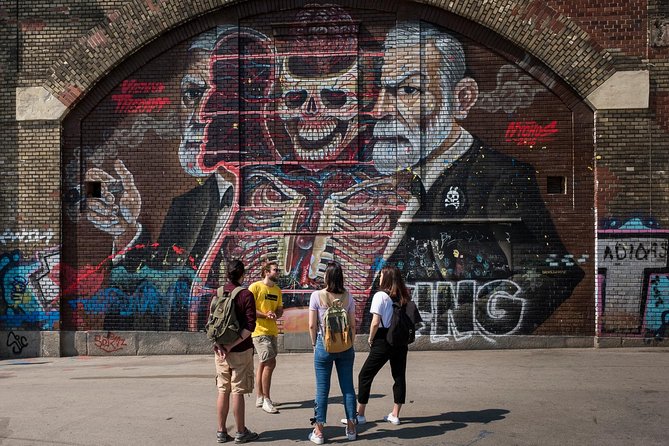
- Five street-art stops, laid out like a lesson: from Spittelau’s chimney area to Schottenring’s final wall spots.
- Artist names you can recognize later: you’ll see (and learn about) famous work by people like Roa, Nycos, Stratton, and Manuel Muriel.
- Legal and nonlegal pieces in one route: the Danube Canal section is a mix, so you’ll learn the difference in context as you go.
- Local crews and changing walls: TS90 shows up at Friedensbrücke, where overpainting means no two visits look exactly the same.
- Small group energy: maximum 20 people keeps questions and close-looking realistic.
- Value at about $46.96: admission is free for the stops, and the guide/team time is the real cost.
How this Vienna street art tour works (and why the format matters)
This is a guided walking tour that clocks in around 2 hours to 2.5 hours. That time window is important: it’s long enough to slow down and actually look at details (signatures, lettering styles, paint style, placement), but not so long that you feel like you’re shuffling for hours without a payoff.
The price—$46.96 per person—covers the guided experience and “all activities,” while the tour stops themselves have free admission. What you’ll pay extra for is mostly personal stuff: food and drinks aren’t included, and you’ll also need to cover your own public transport (the note mentions a one-way fare around 2.20€). In plain terms, the value here comes from having someone interpret what you’re seeing, not from access to a ticketed museum.
Language is English, and the tour uses a mobile ticket. It’s also designed to run in all weather, so you’ll want weather-appropriate shoes and a layer that won’t ruin your view or your mood.
One more smart detail: the group size is capped at 20, which means you can get answers fast when you spot something you don’t understand. That matters on a street art tour, because the whole point is learning how to look.
You can also read our reviews of more tours and experiences in Vienna
Spittelau (District Heating Plant) and the chimney zone: where Vienna gets specific
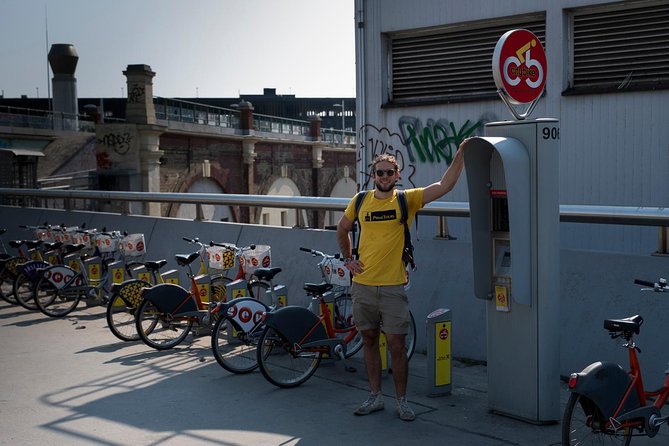
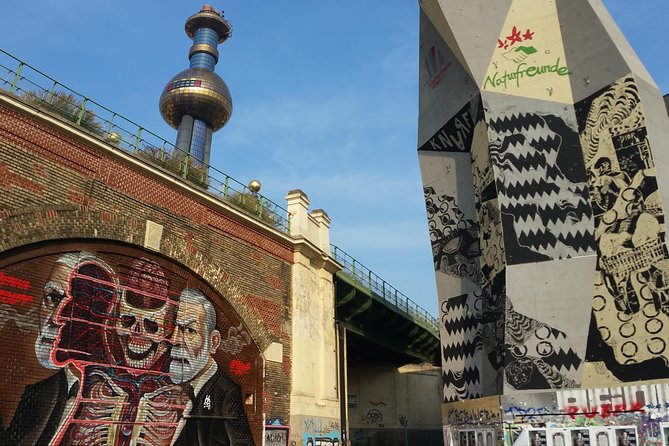
The walk starts around the Spittelau area (meeting at Spittelau 1090 Vienna). This stop is built for two things: contrast and context. You’re not beginning at a postcard spot. You’re in an industrial-feeling zone where you’ll see a few famous illegal pieces, hear how the street art scene works globally, and get a sense of how the city’s edges can become an art space.
The chimney location is the visual anchor, but what sticks is the guide’s framing. Street art isn’t just decoration; it’s part of how cities talk to each other. Starting here helps you understand why the rest of the route isn’t random. Even if you’re new to street art, you can start learning the basics: how artists claim space, how style signals identity, and why certain spots attract certain types of work.
Possible drawback at this stage: if you’re expecting a nonstop parade of instantly famous murals, this first leg can feel more about atmosphere and learning than about jaw-dropping reveal after reveal. Still, it sets up the rest of the tour really well.
Das Werk: Vienna’s street art hall of fame (and names you’ll remember)
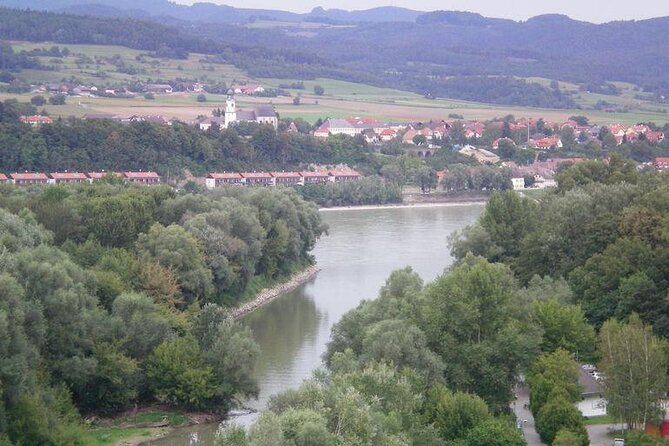
Next comes Das Werk, which is described as a hall of fame for the Viennese street art scene. This is one of those stops where the tour shifts from learning-the-system to learning-the-players.
Here, you’ll encounter work associated with names like Roa, Nycos, Stratton, and Lugosi’s—plus other legends painted there. This matters because it’s how you avoid the “I saw a cool wall, but I don’t know what I just saw” problem.
A good guide will point out how different artists use different visual language—lettering shape, character style, color choices, and placement. The benefit for you is that you’ll start spotting patterns on the rest of the route, instead of only noticing isolated pieces.
Time at this stop is around 30 minutes, which is enough to look closely without feeling rushed. Also, because it’s a well-known art location, it often helps people who don’t know much street art feel oriented fast.
Danube Canal (Donau Kanal): the world’s longest open-air gallery, with legal and nonlegal walls
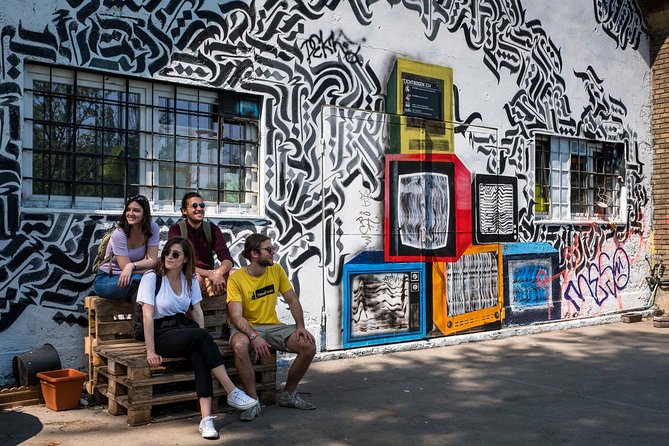
The biggest portion of the tour is the Danube Canal stretch—about 1 hour—and yes, it’s called the longest open-air street art gallery in the world. The important part for your expectations is that you’ll pass both legal and nonlegal walls.
That mix is what makes this stop educational. You’re not only seeing art; you’re learning how street art ecosystems work:
- some pieces exist with permission (legal walls),
- some exist without it (nonlegal pieces),
- and the culture of tagging and signature styles interacts with both.
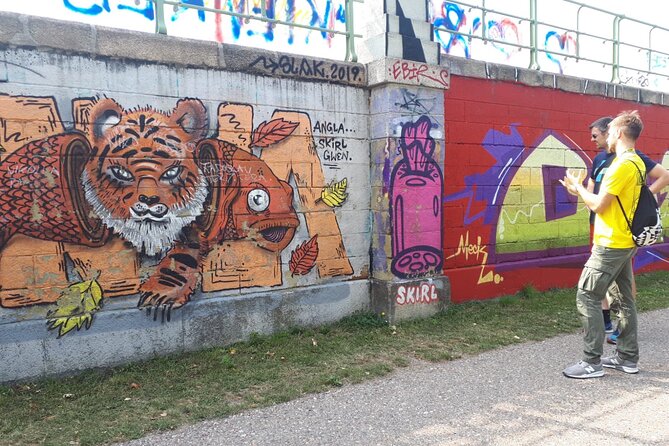
The tour also highlights tagging—like how it’s done, why it’s done, and how it functions as identity. That’s where some people can feel a mismatch. If what you love most is huge painterly murals, you might want to remind yourself: this canal stop is also about street writing and crews, not just big-format paintings.
At the same time, this is usually the most rewarding part if you’re willing to slow down. The Danube Canal is an outdoor “lesson plan,” and a good guide helps you learn how to tell a quick tag, a signature, and a more developed piece apart.
One more factor to keep in mind: walls change. Pieces don’t stay forever, and the tour can’t cover every single surface in one walk. That’s not a flaw—it’s the nature of outdoor art.
Friedensbrücke: TS90 crew pieces and Manuel Muriel’s octopus (and why overpainting is part of the point)
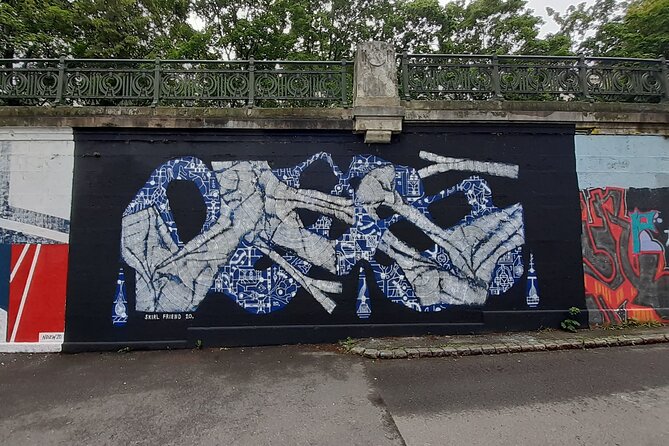
Then you reach Friedensbrücke, a stop that’s often the “wait—what is that?” moment of the walk. You’ll look for pieces from the TS90 local crew and a standout mentioned on the route: an octopus by Manuel Muriel.
This stop also comes with a built-in twist: the pieces here are often overpainted, so every visit can look different. For you, that’s actually a good thing. It means the art isn’t a fixed attraction; it’s a living wall. If you like seeing art with movement—what’s new, what got replaced, what survived—that’s the energy Friedensbrücke brings.
Time here is about 30 minutes, so you’ll have enough time to find the key mentioned pieces and still wander a little without your feet screaming. Wear shoes you can stand in. The canal-side terrain isn’t designed for fancy footwear.
If you’re worried you’ll miss the famous pieces: don’t stress too much. That’s partly the point of overpainting. Instead of hunting for one exact photo match, treat the stop like a snapshot of today’s wall culture.



Schottenring and the Flex nightlife area: learning to recognize styles and signatures
The final stretch heads toward Schottenring, ending near Schottenring U-Bahn station and on the Danube canal side. The tour notes that you’ll get close to the famous night club Flex, and it finishes with good vibes—plus more pieces to look at.
This last stop is built for recognition. The guide’s goal is that you’ll leave able to spot and recognize:
- different styles,
- recurring visual habits,
- and the unique signatures of artists.
That might sound abstract, but it becomes practical fast when you’ve seen the route’s variety. By the time you’re here, you’re comparing letterforms and paint styles across stops. You’re starting to “read” street art instead of just looking at it.
It also helps that this is a natural end point for the rest of your day. The finish zone has restaurants and cozy cafés, so you can keep your art-mood going without needing a second transit plan.
Who this tour suits best (and who might want a different angle)
This tour is a great fit if you want street art with context—history in the sense of how the scene works, not in the museum sense. I’d also recommend it if you like learning to identify artists and styles, not just collecting photos.
It’s especially good for groups because the walking style works for a range of ages and attention spans. One instance from the tour’s experience involved a group spanning ages 18 to 80, and the key theme was that people stayed engaged for the full 2 hours.
It may not match your vibe if you’re mainly chasing one thing:
- very large, paint-by-numbers murals only,
- or purely photo-perfect “postcard” street art.
In that case, consider going in with the mindset of street art culture. Tagging and overpaint are not detours; they’re part of the system.
Price and value: what you get for about $46.96
Here’s the value breakdown that actually matters:
What’s included
- A local guide and a professional guide (plus a tour escort/host)
- All activities
- Stop admissions are free
What’s not included
- Food and drinks
- Hotel pickup/drop-off
- Transportation to and from the attractions (the note gives a typical one-way fare of about 2.20€)
For $46.96, you’re paying primarily for interpretation and time with a guide who can connect pieces to artists and styles. If you’re the type who loves outdoor walking but hates reading plaques, this kind of guided street art tour often pays off faster than you expect.
Also, the tour runs with a small cap (max 20). That keeps the “guided” part real.
One more practical note: the tour is often booked around 38 days in advance on average. If you’re traveling in peak season or on popular weekdays, book earlier rather than playing roulette.
What to expect from the guide (and why the route can shift)
A street art tour can’t be perfectly scripted, because walls change. Still, guides help you by making smart choices about what’s worth your attention that day.
One example shows how a guide named Tobi stepped in when another guide couldn’t make it, and the result was a smooth, engaging walk with lots of tips for other things to see and do in Vienna. Tobi also adjusted the exact wall route—so even if you hear a “Danube canal” emphasis, you might see the guide’s personal favorites show up instead.
That flexibility is a plus if you like insight over rote checklists. It’s a drawback only if you’re the type who needs strict route predictability.
Either way, the takeaway for you is simple: the tour is designed to teach you how to notice and interpret. The exact mix of pieces may vary, but the learning stays consistent.
Should you book this Vienna street art tour?
Book it if you want a walkable, guided way to understand Vienna’s street art scene from the city edge to the canal, while learning names and styles you can recognize later. It’s also a strong choice if you’ll enjoy a bit of tagging culture, not just museum-style murals.
Skip it or choose another option if your street art tolerance is low—meaning you only want big, clean mural work and would be annoyed by the realities of outdoor walls (legal/nonlegal differences and overpainting).
If you do book, go prepared for real walking, layer up for weather, and bring a curious mindset. This tour isn’t about chasing one perfect shot. It’s about learning the city’s street art language—and leaving with eyes that work.
FAQ
FAQ
How long is the street art tour in Vienna?
It runs about 2 hours to 2.5 hours.
Where does the tour start and end?
It starts at Spittelau (1090 Vienna) and ends near Schottenring U-Bahn station, close to Franz-Josefs-Kai L (1010 Wien).
What is the price?
The tour costs $46.96 per person.
Is the tour in English?
Yes, it’s offered in English.
Is there a mobile ticket?
Yes, the tour uses a mobile ticket.
Are there included admissions to the stops?
Yes. The stops have free admission for this tour.
Are food and drinks included?
No. Food and drinks are not included, though the tour highlights local on-the-go staples.
Do I need hotel pickup?
No. Hotel pickup and drop-off are not included.
How many people are in a group?
The tour has a maximum of 20 travelers.
Does the tour run in bad weather?
It operates in all weather conditions, so dress appropriately.
Is there public transportation nearby?
Yes. The tour is near public transportation.