REVIEW · VIENNA
Vienna: Bus Tour with Virtual Reality Experience
Book on GetYourGuide →Operated by Future Bus Tours · Bookable on GetYourGuide
Vienna history comes with a visor. This 1-hour ride pairs an air-conditioned minibus with VR glasses for four guided moments that bring famous people to life. I like the mix of street-level sights and the wow factor of virtual scenes, and I also like how the audio guide keeps the pace moving so you cover major landmarks fast. One thing to consider: it is not suitable for people with mobility impairments or for visually impaired guests.
You start and end in the same easy spot: Albertinaplatz, right behind the Opera house. The setup is simple, too—show your voucher, then look for the purple minibus and a driver in a purple shirt, and get seated. If you hate waiting around, this works, but you still need to arrive about 10 minutes early so the minibus can roll on time.
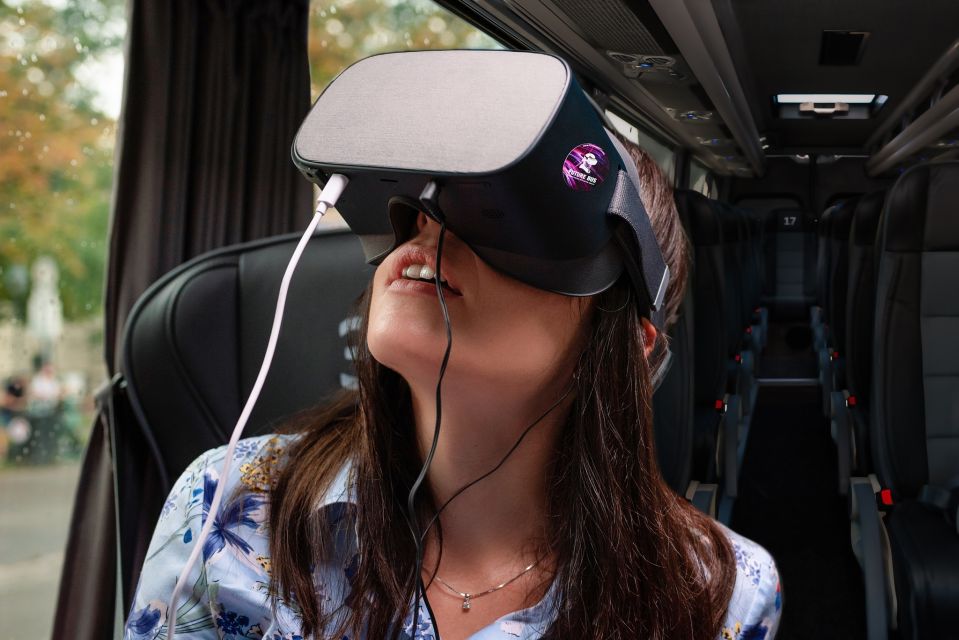
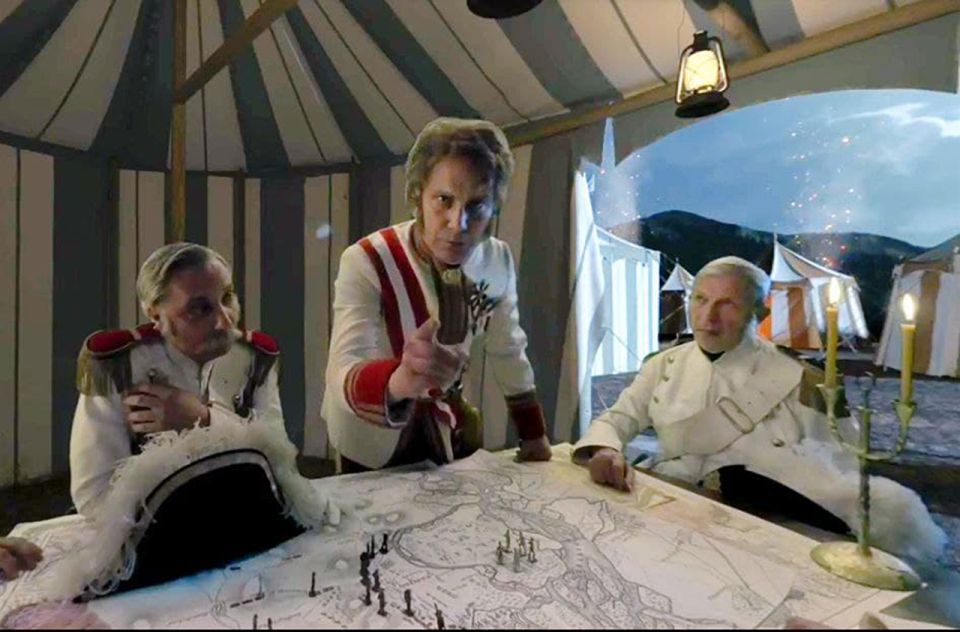
After a quick briefing, you get earphones and follow a professional audio guide while the Future Bus threads through the city. Then you hop off at each of the four VR stops, put on the glasses, and follow instructions to meet figures like Eugene of Savoy, Archduke Charles, and Maria Theresia before returning to the ride.
In This Review
- Key highlights to know before you go
- Starting at Albertinaplatz: the Future Bus setup
- The comfortable minibus ride and audio guide pace
- VR Stop 1: Opera views and meeting the Habsburg characters
- VR Stop 2 near City Hall: Burg Theatre vibes without the ticket line
- VR Stop 3 at the Votive Church: the Franz Joseph and Maximilian story
- The long window view: Museumsquartier, Secession, Naschmarkt, and Karlskirche
- VR Stop 4 on the Ringstraße: finishing near the Opera area
- Price and value: what you get for about $32
- Who should book this (and who should skip it)
- Final verdict: should you book the Vienna Future Bus with VR?
- FAQ
- How long is the Vienna bus tour with VR?
- Where does the tour start and end?
- What’s the meeting point like?
- What’s included in the price?
- What languages are available for the audio guide?
- What should I bring?
- Are drinks and food allowed during the ride?
- Is this tour suitable for children and everyone with mobility needs?
Key highlights to know before you go
- Albertinaplatz start behind the Opera makes it easy to connect with other sightseeing
- 4 VR stops in about 1 hour gives you a fast, structured experience
- Audio guide with multiple languages keeps you from missing the story while watching the streets
- Major Ringstraße landmarks like the City Hall area and Votive Church show up in a tight route
- Comfort matters with a minibus that’s described as comfortable and air conditioned
- Better than a slow building visit if you want history without paying entry fees
Starting at Albertinaplatz: the Future Bus setup
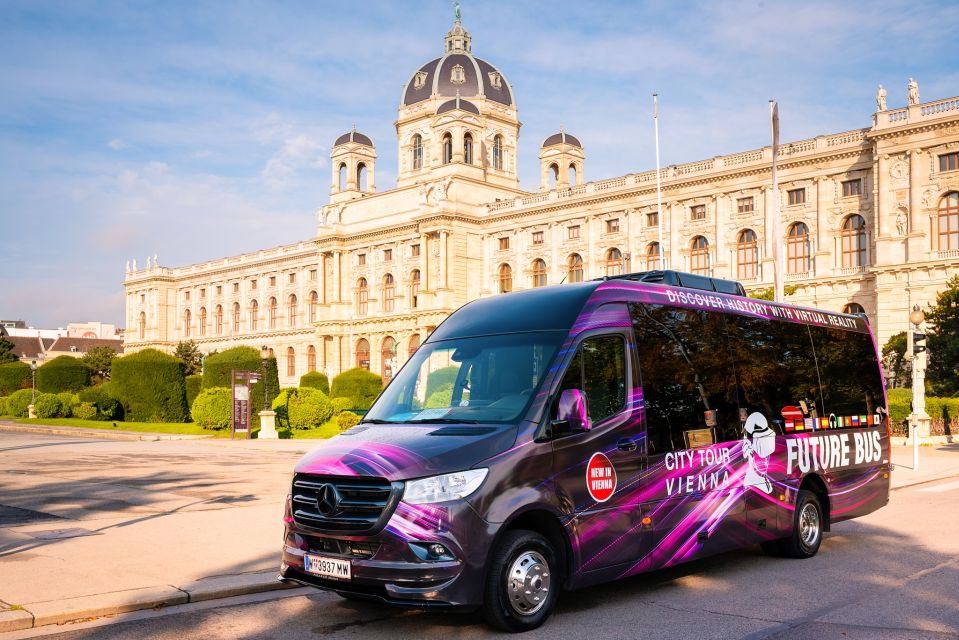
This tour begins and ends at the same place, at Albertinaplatz just behind the State Opera. That matters more than it sounds. If you’re trying to keep your Vienna day from turning into a chaotic scavenger hunt, a fixed start point you can walk back to is a gift.
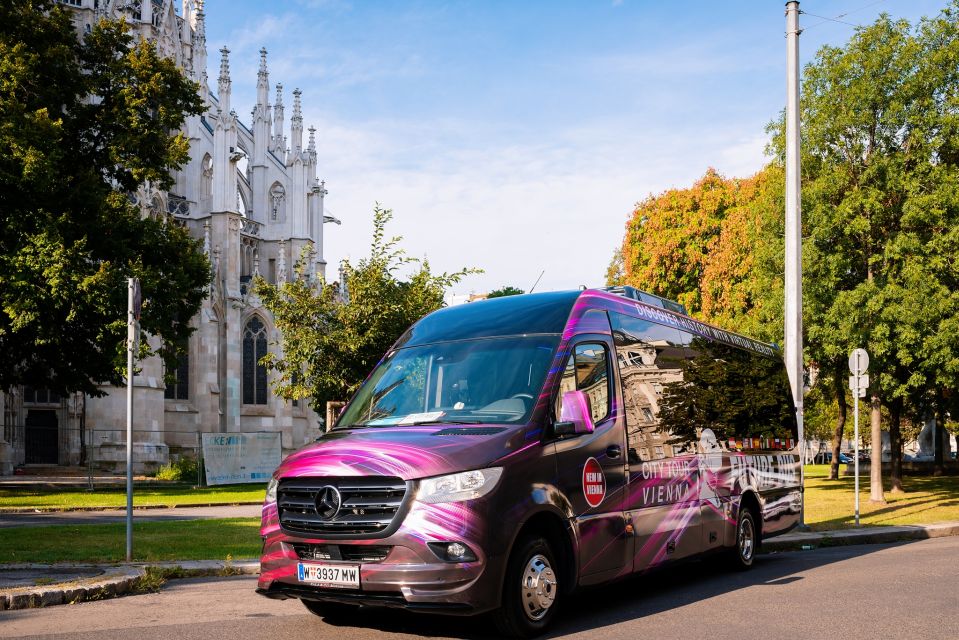
Once you arrive, your job is straightforward: be there at least 10 minutes early and present your voucher to the driver or representative. The vehicle is a purple minibus, and the driver wears a purple shirt, so it should be hard to miss. You’ll get a quick briefing, then you’ll be handed earphones so you can hear the audio guide clearly while you’re moving.
The language options also help if you’re traveling as a mixed group. The driver speaks English, German, and Russian. The audio guide includes English, German, Spanish, French, Italian, Japanese, Chinese, Russian, Portuguese, and Arabic. In practice, this means you’re likely to find a language track that you can follow without guessing.
You can also read our reviews of more tours and experiences in Vienna.

The comfortable minibus ride and audio guide pace
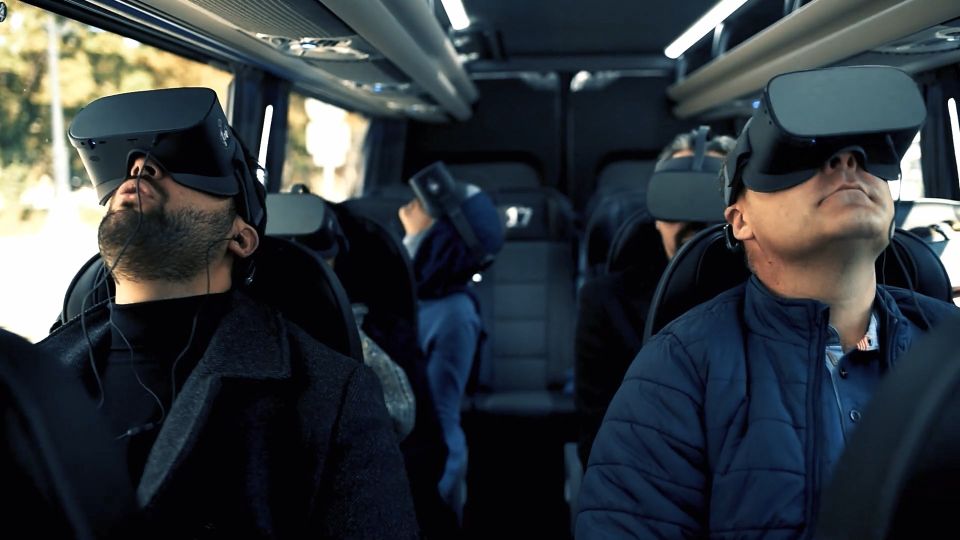
The core idea here is efficient sightseeing. You’re on the bus for a 1-hour loop through Vienna’s main highlights, and the audio guide fills the gaps between buildings so you’re not just staring out the window.
I like this approach because it matches how most people actually tour Vienna. You can’t linger at every palace façade or museum doorway in one day. A bus route with a running commentary lets you understand what you’re seeing while your feet rest.
The minibus setup also makes the “small group” feel easier to manage. You’re in a comfortable vehicle and you can admire sights from large windows. You’re not packed like a sardine in a big bus, and the ride stays practical in all kinds of weather. One nice detail from real-world experience with this format: the VR moments and overall experience tend to feel warm and dry, which is a big deal in Vienna when the weather decides to do a dramatic plot twist.
One practical note: drinks and food are not allowed in the vehicle, and the tour doesn’t include entrance fees to buildings. That’s part of the value equation—what you’re paying for is transit, commentary, and the VR program, not a stack of admissions.
VR Stop 1: Opera views and meeting the Habsburg characters
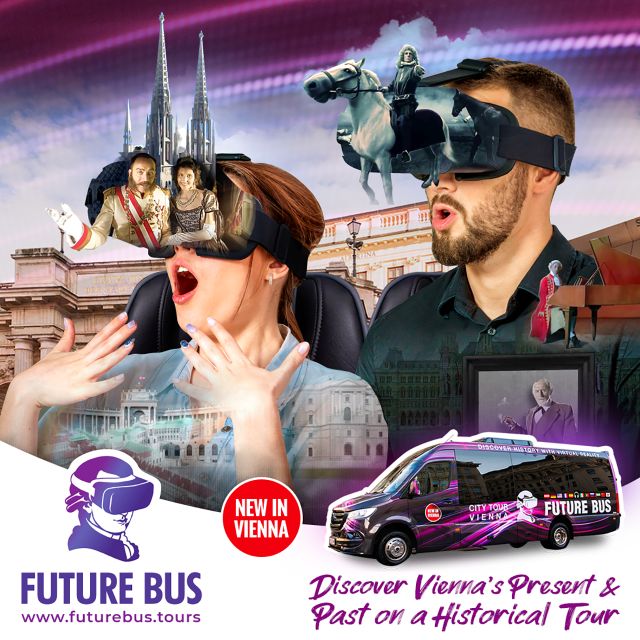
The tour starts you rolling past some of Vienna’s most recognizable architecture, and the first VR moment is designed to capitalize on that energy early. You’ll see the State Opera, the Neuburg area, Heroes Square, and Maria Theresia Square as the route begins.
Then comes the first VR stop. This is where you hop off and put on the virtual reality glasses. From there, the experience guides you through encounters with Vienna’s historical figures, including Eugene of Savoy, Archduke Charles, and Maria Theresia. The point isn’t just to look at a 3D scene—it’s to connect the people to the places you’re already seeing around you.
I love VR like this when it does something simple: it gives you context fast. By the time you remove the glasses and rejoin the minibus, the landmarks feel less like postcards and more like parts of an actual story line. You also get a clearer mental map, because the VR stop happens right after a cluster of major sights.
The only downside of a format with timed VR stops is that you can’t slow down whenever you’re most curious. If you’re the type who wants to stare at details for 20 minutes, this tour will feel like it moves. For most people, that’s a feature, not a bug.
VR Stop 2 near City Hall: Burg Theatre vibes without the ticket line
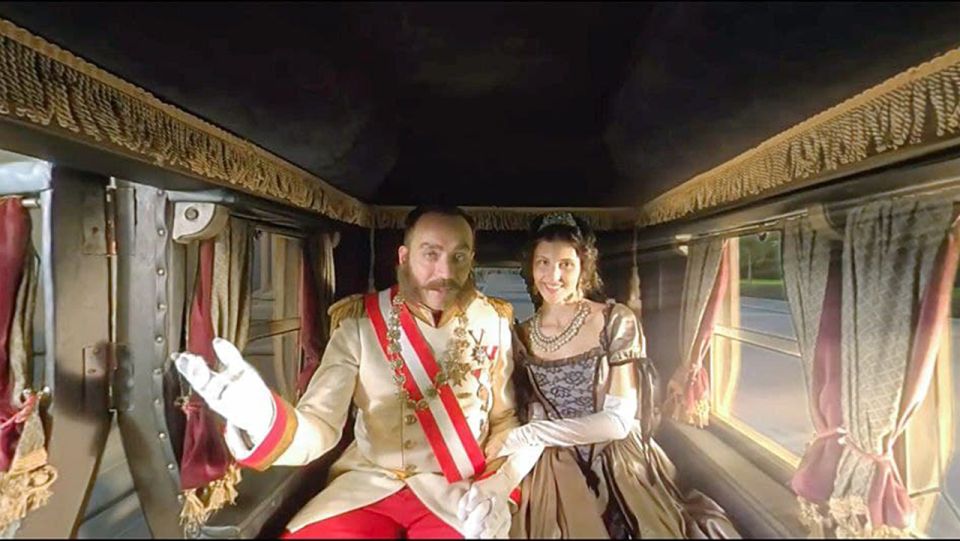
After the first VR stop, the bus keeps threading through central Vienna. You pass by the Volksgarten and the Austrian Parliament, and you arrive at the area in front of Vienna’s City Hall. It’s right near the Burg theatre, which helps explain why this area looks so ceremonial—this is the kind of space where Vienna likes to put on a show.
You get a second virtual stop here. Again, you follow the VR instructions and experience another guided segment before rejoining the road. This is one reason I think the VR add-on works well: you’re not stuck with history that lives only in museums or on plaques. You’re pairing it with the street layout and the monumental architecture around you.
One practical benefit: you’re not dealing with building hours or entry lines. Since entrance to buildings is not included, you won’t get sidetracked into extra costs. Instead, you’re using the city’s public spaces as your stage, and VR fills in the blanks for the era and personalities involved.
VR Stop 3 at the Votive Church: the Franz Joseph and Maximilian story

The third VR stop is tied to a striking piece of architecture: the Neo-gothic Votive Church. As the bus heads toward Schottentor, you get your next themed moment, and the narrative centers on an assassination attempt involving Emperor Franz Joseph and his brother Maximilian.
This is a good example of how the VR format can improve your understanding. Vienna has plenty of beautiful buildings, but stories like this give the city an edge. It’s not just admiration. It’s cause and effect, and the kind of drama that helps history stick in your brain.
When you finish the VR portion, you’re back on the minibus while the audio guide keeps rolling. That continuity matters. You’re not switching modes constantly. You have clear segments: ride, hop off, glasses on, story moment, glasses off, ride again.





The long window view: Museumsquartier, Secession, Naschmarkt, and Karlskirche
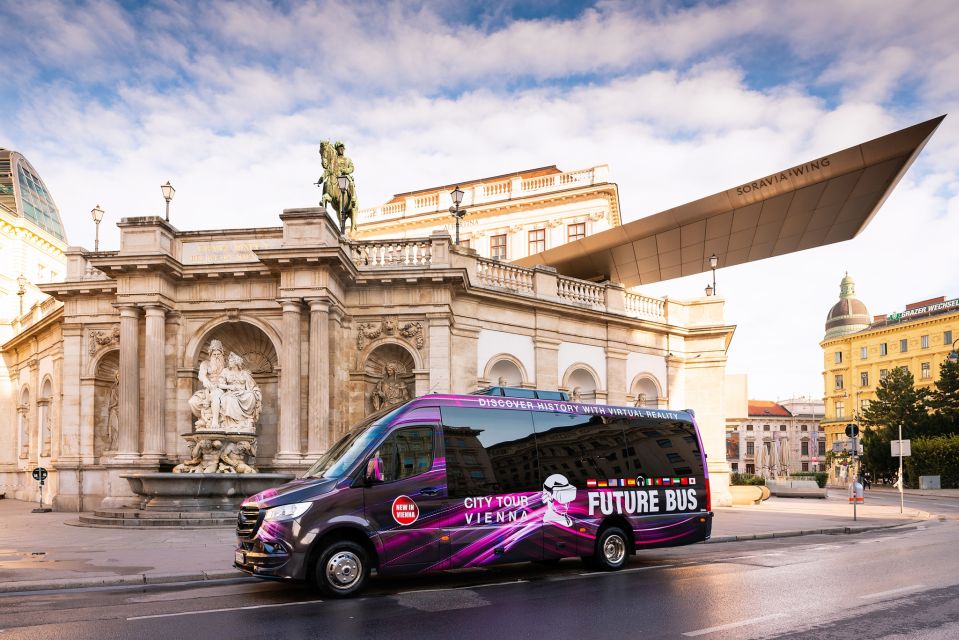
Between VR stops, you’ll keep seeing major landmarks from your seat. The route is designed to keep the visual payoff high, and the audio guide helps you connect what you see to what you just learned.
You’ll pass by (among others) Volkstheatre, Museumsquartier, the Secession building, Naschmarkt, and Karlskirche. The big windows next to you are part of the experience, because they make the route feel like sightseeing rather than just transportation.
A small tip if you’re trying to get the most out of this: choose one or two stops that you personally care about and pay extra attention during those ride segments. For example, if you love architecture, focus on the Secession and church exteriors you pass. If you prefer city life, keep an eye out around Naschmarkt while the audio guide explains what you’re seeing.
Since the tour is only about an hour, you’ll never feel like you’re doing too much. It’s more like a smart sampler platter. You’ll leave wanting to return on foot for the details that caught your eye.
VR Stop 4 on the Ringstraße: finishing near the Opera area
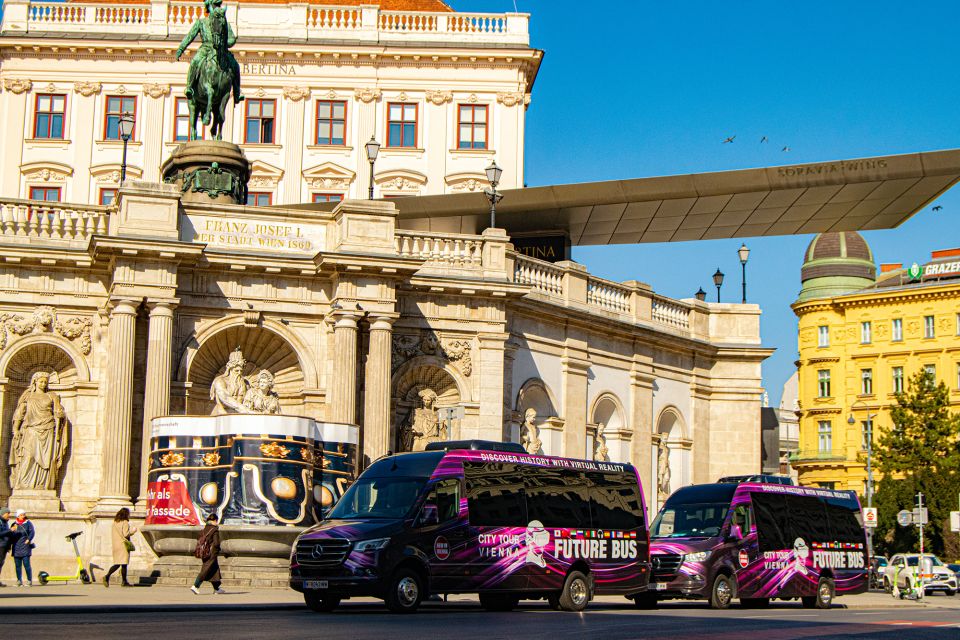
As the tour heads toward the famous Ringstraße, it’s basically setting up your finale with Vienna’s grandest boulevard energy. You’ll get driven back toward the Ringstraße area, and then—once the last VR segment is included—you’ll return to the starting point behind the Opera.
The fourth VR stop ties the whole loop together. By the time you reach it, you’ve already connected people (like Eugene of Savoy and Maria Theresia) and events (including the Franz Joseph and Maximilian assassination attempt) to locations you’ve passed all morning or afternoon.
I like how this ending works. You’re not “lost at sea” in some distant neighborhood. You finish back where you started, so you can keep your day simple. Grab a coffee nearby. Walk to another highlight. Or just call it early if you’re on a tight schedule.
Price and value: what you get for about $32
At about $32 per person for a 1-hour experience, the value depends on what you want from Vienna.
If you’re expecting this to replace a museum day or an expensive ticketed attraction, you might feel a little short. Entrances to buildings are not included. This is a transit-and-story product: bus ride, professional audio guide, and a VR experience with four stops.
Where it feels like good value is when you want three things at once:
- A guided loop through major landmarks without navigating transit
- A storytelling audio guide so you don’t miss the meaning of what you see
- VR moments that help you visualize historical figures and events without waiting in line or paying entry fees
Also, it’s built for efficiency. In one hour, you cover a lot of Vienna’s key sights that normally take more time to reach, arrange, and read about. For solo travelers, couples, and families (with the minimum age of 7), that’s a real advantage.
One more value point: the VR experience is described as fantastic and better than physically entering buildings for some visitors. If you’re traveling with kids or you want history in a faster, more interactive package, this tour hits a sweet spot.
Who should book this (and who should skip it)
This tour is a strong match if you:
- Want an easy way to see big Vienna landmarks without a lot of walking
- Like learning while you’re traveling, not after you’ve already moved on
- Are curious about VR storytelling and historical characters
- Need a 1-hour plan that doesn’t turn into a whole day commitment
It may not be the best fit if you:
- Need accessibility accommodations not supported here; it is not suitable for people with mobility impairments
- Are visually impaired; it is not suitable for visually impaired people
- Prefer long stops for photos and browsing inside buildings, since entrances are not part of the deal
- Travel with lots of snacking needs; drinks and food aren’t allowed in the vehicle
On family fit: it can work well for kids over age 7. The format is active, and the VR moments add something visual that holds attention better than a standard audio-only bus ride.
Final verdict: should you book the Vienna Future Bus with VR?
I’d book this if you want a smart, time-efficient way to get your bearings in Vienna and still feel like you learned something. The pairing of bus views plus four VR moments gives you a structured route, strong visual storytelling, and a payoff that you can’t get from a plain audio bus tour.
Skip it if your priority is slow, in-depth museum wandering or step-free accessibility needs you have to guarantee. Also, if you hate any “put on the glasses and follow the script” activities, this may feel a bit too programmatic.
If your goal is to see the Opera area, the City Hall zone, and the Ringstraße corridor while meeting famous figures like Eugene of Savoy, Archduke Charles, and Maria Theresia in a short window, this is a solid choice for a Vienna day.
FAQ
How long is the Vienna bus tour with VR?
The tour lasts about 1 hour.
Where does the tour start and end?
It starts at Albertinaplatz, behind the Opera building, and ends back at the same meeting point.
What’s the meeting point like?
You should arrive at the meeting point at least 10 minutes early. Look for the purple minibus, and the driver will be wearing a purple shirt.
What’s included in the price?
The price includes the bus tour through Vienna’s main sights, an audio guide with commentary, and the virtual reality experience using high-quality VR glasses.
What languages are available for the audio guide?
The audio guide is available in English, German, Spanish, French, Italian, Japanese, Chinese, Russian, Portuguese, and Arabic.
What should I bring?
Bring a passport or ID card.
Are drinks and food allowed during the ride?
No. Drinks and food are not allowed in the vehicle.
Is this tour suitable for children and everyone with mobility needs?
It is not suitable for children under 7 years old. It is also not suitable for people with mobility impairments or for visually impaired people.