REVIEW · VIENNA
Grand Schoenbrunn Palace and Carriage Museum Tour Small Group
Book on Viator →Operated by Dace Schaerf · Bookable on Viator
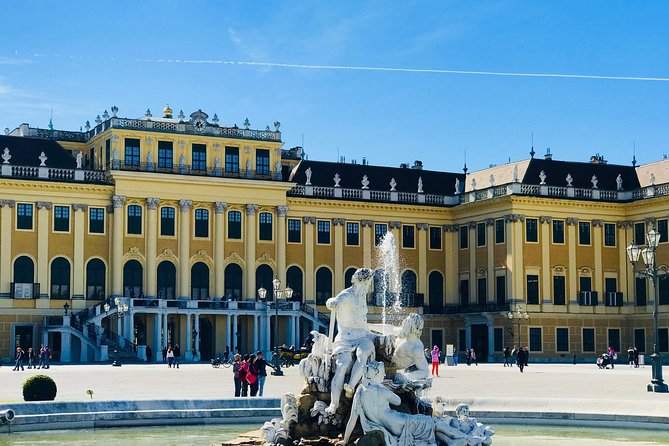
Schönbrunn hits different when you get the story. This 2.5-hour small-group tour pairs palace rooms and formal gardens with Vienna’s big emotional flex: Empress Elisabeth (Sisi) and her carriages. You’ll see the famous Napoleon and Marie-Antoinette rooms, then shift outdoors for fountains, ruins, and photo time at Gloriette—all with a guide keeping the pace tight.
I love two things right away: you get reserved priority access to the palace (so you’re not stuck waiting around), and you travel with audio headsets so you can actually follow the details. Guide Dace Schaerf also keeps the tone clear and conversational, including the Great Gallery, which was used as a lavish ballroom, plus the Sisi carriage highlights at the Wagenburg.
One consideration: this is a garden-and-palace walk with uneven surfaces, so moderate mobility helps. Also, not everything on the estate is included—if you want the Zoo, trains, or other conservatory stops, you’ll need separate tickets and time.
In This Review
- Key points
- Meeting at Schönbrunn: start time, small group size, and what to bring
- Schönbrunn Palace interiors: Napoleon, Marie-Antoinette, and the Great Gallery
- Gardens in short stops: Neptune Fountain, Roman Ruins, and the Great Parterre
- Kaiserliche Wagenburg Wien: Sisi’s carriages and the story they tell
- Continuing the estate: exotic plants, orangery concert hall, and garden viewpoints
- Price and value: what $44 covers, and what it doesn’t
- Who this tour fits best (and who should think twice)
- Should you book the Grand Schönbrunn Palace and Carriage Museum Tour?
- FAQ
- How long is the Grand Schönbrunn Palace and Carriage Museum Tour?
- What time does the tour start, and where do I meet?
- What’s included in the tour price?
- Does the tour include Schönbrunn Palace admission?
- Is there a small group limit?
- What isn’t included if I want to add other activities?
- What happens if weather is bad?
- Can I cancel for a full refund?
Key points
- Priority entry to Schönbrunn Palace saves time and stress at the start
- Audio headsets make it easy to hear your guide even in busier spots
- Great Gallery + Napoleon and Marie-Antoinette rooms give you the palace “wow” in a focused way
- Kaiserliche Wagenburg (Sisi carriages) turns history into a visual timeline
- Garden stops include Neptune Fountain, Roman Ruins, and the Great Parterre with Greek sculptures
- Gloriette photo viewpoint is built into the garden wandering
Meeting at Schönbrunn: start time, small group size, and what to bring
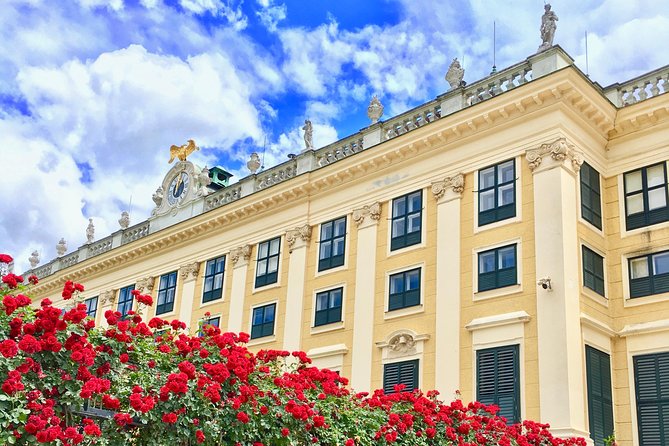
The tour meets at the Museum Shop at Schönbrunner Schloßstraße 47, 1130 Wien, Austria, with tours starting at 2:00 pm. It ends back at the same meeting point, which is handy because you don’t have to figure out a new pickup spot after you’re done.
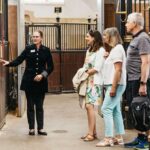
This runs as a maximum of 10 people, so you’re not stuck behind a wall of strangers or competing to ask questions. The pacing is built for moving between indoor palace rooms and outdoor garden areas without turning the afternoon into a long grind.
You’ll also have a mobile ticket, which is convenient if you’re already bouncing between museums and transit apps. Bring a small water bottle if you can, and dress for the weather. The tour is described as operating in all weather conditions, and if conditions are poor enough to cancel, you’ll be offered another date or a refund—so don’t bet your outfit on perfect sunshine.
For comfort, plan on shoes with grip. The route includes palace grounds and garden paths, and the guidance notes uneven surfaces. If you have limited walking ability, this is the one to think about carefully.
You can also read our reviews of more museum experiences in Vienna

Schönbrunn Palace interiors: Napoleon, Marie-Antoinette, and the Great Gallery
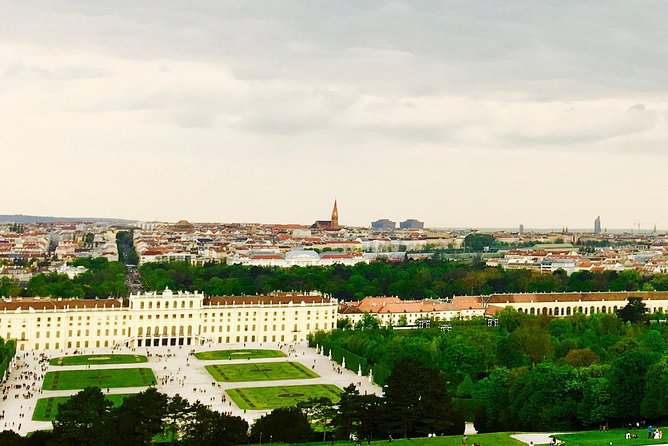
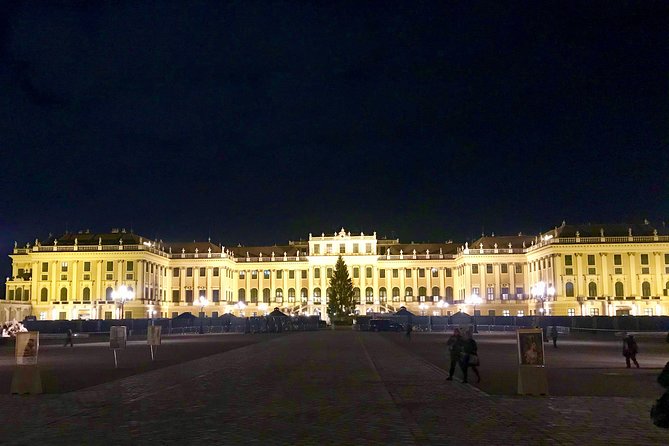
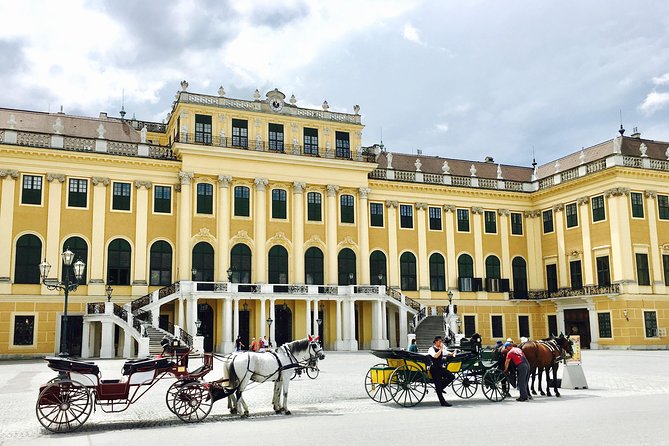
Schönbrunn Palace is one of Austria’s most important cultural sites, and it sits inside a UNESCO-listed ensemble with the French-style park and fountain settings. On your visit, the palace portion is around 45 minutes, with admission included and reserved priority access built in.
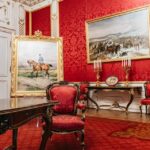
The focus isn’t “see every room.” It’s the rooms that teach you how power worked—then look like they’re still doing it. You’ll go through the Napoleon Room and the Marie-Antionette Room, plus other key interiors that explain how the Habsburg world liked to stage itself: in furniture, portraits, and architectural drama.
One highlight that’s worth showing up for is the Great Gallery, used as a lavish ballroom. Even if you’re not a ballroom person, the scale makes sense once someone points out how these spaces were designed for display—moving guests through light, symmetry, and polished ceremony. It’s the kind of room where a guide’s framing changes your experience from pretty-to-catch-to actually understanding why it was built that way.
You’ll also use audio headsets throughout, which is more helpful than it sounds. Palace rooms can be echo-y, and garden areas can be noisy; headsets keep the narrative readable while you look up, move, and take photos.
Practical tip: if you’re carrying a bag, keep it small and ready. You’re moving between rooms quickly enough that large backpacks can slow you down.
Gardens in short stops: Neptune Fountain, Roman Ruins, and the Great Parterre
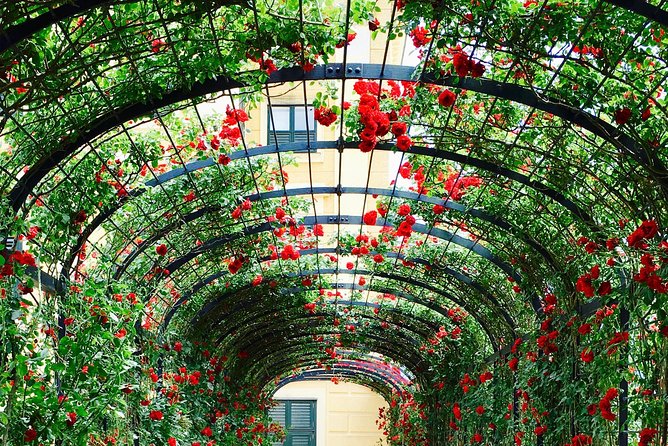
After the palace interiors, you shift outdoors to a set of garden moments that are quick, visual, and easy to photograph. Some stops are free, and you’ll spend only a few minutes at each, so you get variety without losing the thread of the tour.
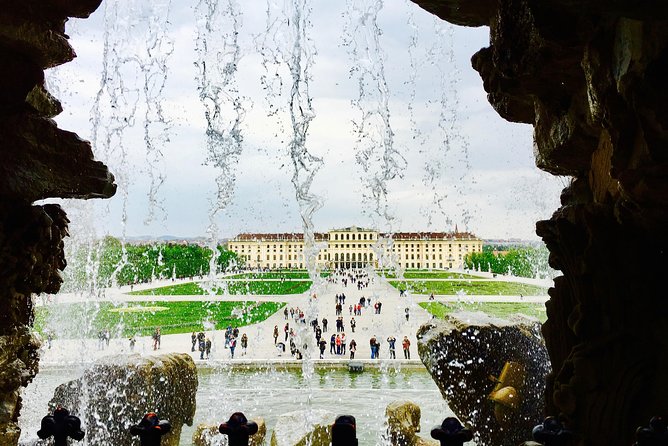
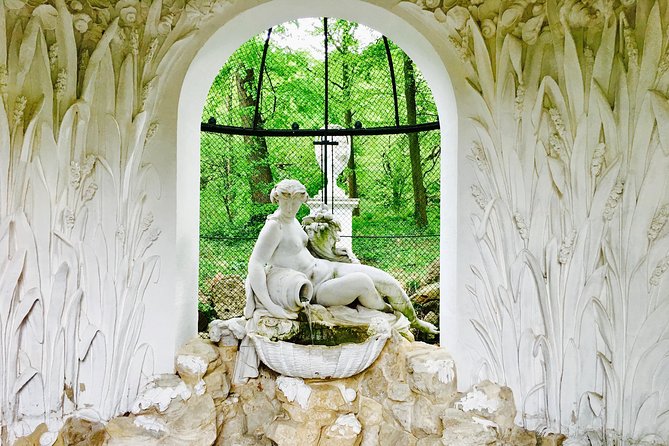
First up is the Neptune Fountain, a major fountain feature in the Schönbrunn gardens. It’s the kind of place where you can glance once and still get the idea, but you’ll get more from the guide’s explanation of why these sculptures and waterworks were part of the palace’s public face.
Next, you’ll see the Roman Ruin—a picturesque architectural ensemble integrated into the parkland around it. The point isn’t “Roman ruins in Austria” as a travel trivia fact. It’s what the ruin symbolizes: a nod to a heroic past tied to the Habsburg dynasty.
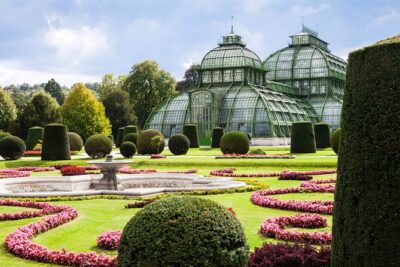
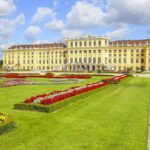
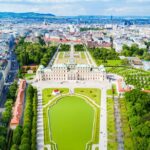
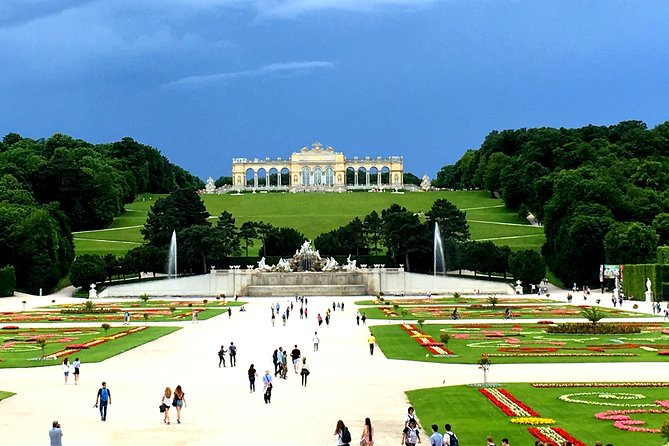
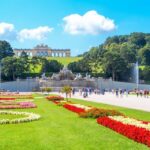
Then you’ll walk toward the Great Parterre, described as a French garden decorated with Greek sculptures, located between the palace and the Neptune Fountain. Even if you’ve seen formal gardens before, this one tends to hit differently because it’s so structured. Straight lines, planned views, and sculpture clusters make the garden feel like a designed stage set. You get enough time to look carefully and not feel rushed.
Photo-minded travelers should take advantage of these short garden stops. The tour gives you just enough time to frame shots, not enough time to drift. That works in your favor if you’re visiting on a limited schedule.
There’s also time on the route that can include the Christmas market seasonally, depending on when you go. If the market is running, you’ll likely get a pleasant change of pace—more street energy mixed into the estate atmosphere.
Kaiserliche Wagenburg Wien: Sisi’s carriages and the story they tell
This tour’s most emotional shift is at Kaiserliche Wagenburg Wien, with about 20 minutes here. The theme is Empress Elisabeth’s life as a trail you can see in carriages—starting from her wedding entry as the imperial bride, continuing through her children’s carriages, and then moving into the larger ceremonial moments.
What makes this stop special is how specific it is. You’ll see:
- the entry carriage used for Sisi as the imperial bride
- the carriages connected to her children
- the golden imperial carriage used to drive her to her coronation in Budapest
- the carriage she used in Geneva immediately before her assassination
- and at the end of the row, the imposing black hearse used to carry her to her grave
That lineup turns history into a visual timeline, and it’s exactly the kind of museum stop that sticks in your brain afterward. You’re not just looking at old vehicles; you’re watching a life’s arc, framed through what the court considered fitting at each stage.
If you tend to skip carriage museums because you think it’ll be dull, this is the exception. The way the exhibits are arranged forces a narrative reading, and the guide’s job is to connect that story to what you just saw in the palace.
Continuing the estate: exotic plants, orangery concert hall, and garden viewpoints
After the Wagenburg, the tour keeps moving through garden features and estate highlights. There’s a stop labeled the imperial collection of exotic plants, though the details here are brief—so don’t expect a long, ticketed conservatory experience unless you’re told otherwise on the day.
One outdoor structure you do get a clear sense of is the Orangery at Schönbrunn Palace. The orangery was once a winter quarter for royal citrus plants. Nowadays, it’s used as a magnificent concert hall. Even if you’re not catching a performance, the idea is fun: the building served power and comfort in different ways—first for plants, then for music and events.
This is also where you’ll notice how the tour balances formal with fun. The gardens include ruins, fountains, and tree-lined avenues, and you’ll get time to wander with purpose rather than just wandering.
And then there’s the viewpoint moment: Gloriette. The tour explicitly calls out having your camera ready to capture the view from there. Even if you’ve seen Vienna from viewpoints before, this one matters because it’s tied to the estate layout. It’s not just “pretty view”; it’s a look back at how the palace and garden design fits together.
If you’re traveling with someone who loves photos, this is a good stop to let them be in charge for a few minutes. The tour pacing won’t chew up the time, and you’ll come away with shots that actually make sense for the place.
Price and value: what $44 covers, and what it doesn’t
At $44 for about 2 hours 30 minutes, this tour is priced like a “smart package” rather than an all-in day. Here’s what you do get:
- a local professional guide
- reserved priority access to Schönbrunn Palace
- audio headsets so you can hear clearly
- carriage museum admission fees
In other words, you’re paying for the guide to connect palace rooms, garden symbolism, and Sisi’s carriage timeline. You’re also paying for fewer headaches at the palace through priority access.
What you don’t get is also important:
- admission to other activities in the Schönbrunn area (like trains)
- Zoo entry (Tiergarten Schönbrunn is listed, but not included)
- any conservatory-type stops not specifically covered
- food and drinks
So the value depends on your style. If you want a short, high-impact Schönbrunn experience that hits the main palace rooms, gives you the garden structure, and includes the Wagenburg Sisi story, this package makes sense.
If you want to spend most of the day inside the estate—Zoo, more conservatories, extra timed stops—then you’ll treat this as the “foundation tour,” and plan to add on separately after.
Who this tour fits best (and who should think twice)
This is a good match if you:
- want a small group pace with time for questions
- enjoy a focused set of palace rooms instead of a full self-guided marathon
- care about the personal stories behind royal history—Sisi is the emotional engine here
- like garden design and want a structured way to see it fast
- want help with hearing and timing thanks to audio headsets
It’s a tougher match if:
- you have trouble with uneven surfaces or longer walking on garden grounds
- you need fully accessible routes and minimal stepping/terrain changes
- you’re expecting the tour to include everything on the Schönbrunn estate (it doesn’t)
Also consider your trip rhythm. The tour starts at 2:00 pm. If you prefer mornings for photos or want to pair it with another morning museum, you might feel rushed. If, however, you like the idea of late-day palace light and then a relaxed finish, this timing can work nicely.
Should you book the Grand Schönbrunn Palace and Carriage Museum Tour?
I’d book this if you want an efficient, story-driven Schönbrunn day without turning it into a complicated self-planned route. The combination of priority palace access, audio headsets, and the Sisi-focused Wagenburg stop makes it more than a basic palace walk. You’re also getting garden stops that show the design logic, plus a real photo moment at Gloriette.
If you’re the type who hates set schedules, you might find the fixed time at each stop a bit limiting. And if walking uneven paths is an issue for you, take that seriously and look for a more accessible option.
Bottom line: for most people, this is a solid value package for Vienna—especially if you want the palace + gardens to mean something, not just look impressive.
FAQ
How long is the Grand Schönbrunn Palace and Carriage Museum Tour?
It’s about 2 hours 30 minutes.
What time does the tour start, and where do I meet?
The tour starts at 2:00 pm. You meet at the Museum Shop, Schönbrunner Schloßstraße 47, 1130 Wien, Austria.
What’s included in the tour price?
Included are a local professional guide, reserved priority access to Schönbrunn Palace, audio headsets, and carriage museum admission fees.
Does the tour include Schönbrunn Palace admission?
Yes. Admission ticket(s) for Schönbrunn Palace are included as part of the tour stops.
Is there a small group limit?
Yes. The tour has a maximum of 10 travelers.
What isn’t included if I want to add other activities?
Admission fees to other activities are not included, including options like the Zoo (Tiergarten Schönbrunn), trains, and Palmenhouse. Food and drinks aren’t included either.
What happens if weather is bad?
The tour operates in all weather conditions, but the cancellation terms also say that if it’s canceled due to poor weather, you’ll be offered a different date or a full refund.
Can I cancel for a full refund?
Yes. You can cancel up to 24 hours in advance for a full refund. If you cancel less than 24 hours before the start time, the amount paid won’t be refunded.