REVIEW · VIENNA
Vienna by Bike 3-Hour All-In-One City Bike Tour in English
Book on GetYourGuide →Operated by Vienna Explorer · Bookable on GetYourGuide
Vienna on two wheels feels like a shortcut to seeing more of the city, fast. This 3-hour ride knits together Vienna’s imperial boulevard look—Ringstrasse architecture and major civic buildings—with a breezy finish in Prater Park and the giant Ferris wheel. I like that the route is built for comfort: modern city bikes, safe surfaced paths, and frequent photo stops that keep it fun rather than frantic.
The two things you’ll probably love most are the sights you hit in one loop (Opera House to Rathaus to Karlskirche, plus Hundertwasserhaus), and the guide energy that turns the ride into a moving history lesson. One consideration: it’s a 3-hour highlight tour, so you won’t get time for long museum-style stops inside buildings—this is about seeing, listening, and getting back in the saddle.
In This Review
- Quick hits before you pedal
- Getting oriented fast on Franz Josefs Kai
- Ringstrasse: the imperial boulevard you actually get to ride
- Opera House and Rathaus: look close at the façade styles
- Parliament-era Vienna and Heroes Square: big history, handled on the move
- Hundertwasserhaus and the playful side of Vienna
- Karlskirche on Karlsplatz: domes and columns from the saddle
- Along the Danube canal: when Vienna slows down
- Prater Park and the Ferris wheel finale
- Bikes, helmets, and pace: what the ride feels like
- Rain and weather: ponchos beat planning chaos
- Price and value: is $55 worth it for 3 hours?
- Who should book this Vienna by Bike tour?
- Should you book it?
- FAQ
- How long is the Vienna by Bike tour?
- What language is the tour guide?
- Where is the meeting point?
- What should I wear or bring?
- Does the tour run in bad weather?
- What are some of the main sights on the route?
- Is there a cancellation option if my plans change?
Quick hits before you pedal
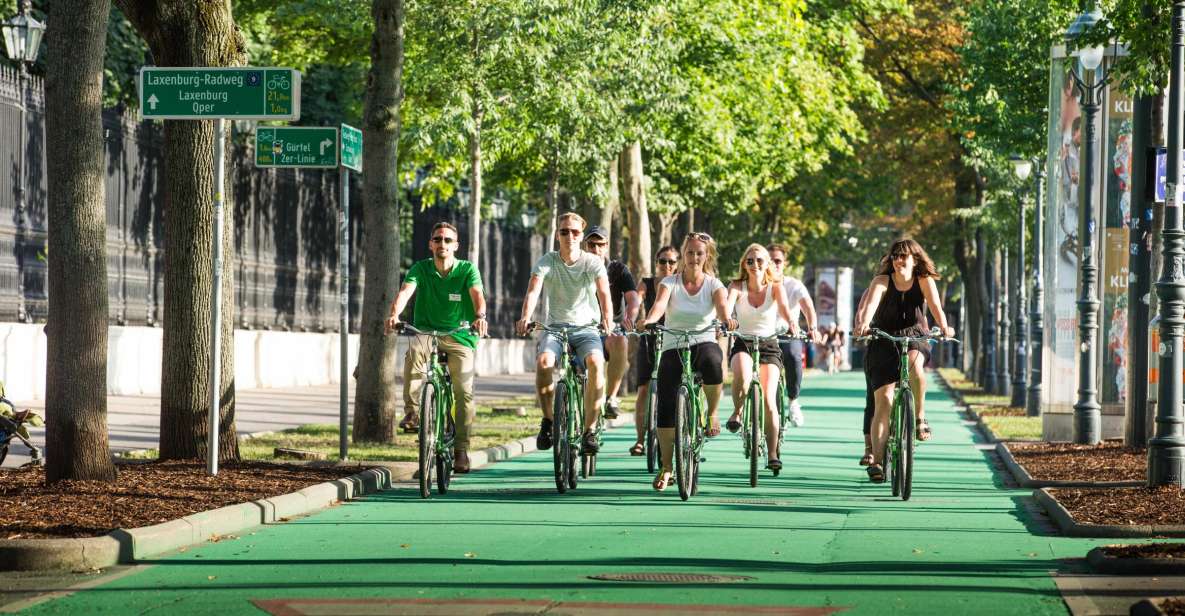
- Ringstrasse first: Ride down the grand boulevard that ties together Vienna’s imperial identity.
- Photo stops by design: You’ll pause often so the landmarks aren’t just a blur from the bike lane.
- A mix of styles: Neo-Renaissance (Opera), Gothic (Rathaus), and baroque classicism (Karlskirche) in one flow.
- Hundertwasserhaus curveball: The funky apartment building gives the tour a playful middle beat.
- Danube canal side ride: You get a calmer stretch away from the biggest tourist crush.
- Prater Ferris wheel finish: A classic Vienna finale that feels like a reward.
Getting oriented fast on Franz Josefs Kai
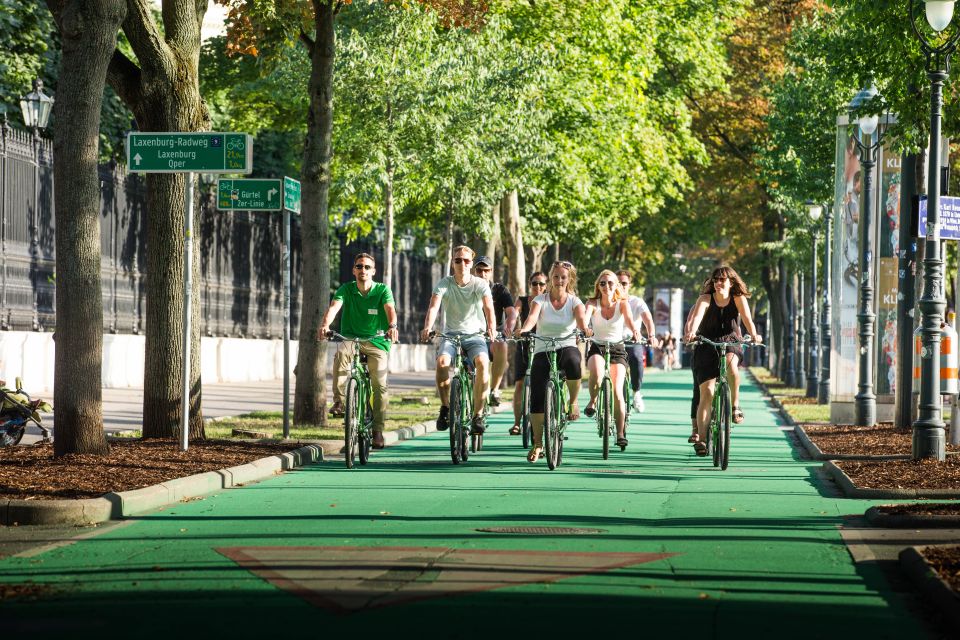
The tour starts at Franz Josefs Kai 45, just outside the most central “everything” zone, which is handy because you’re not stuck in a maze of tiny streets before you even begin. If you’re coming by subway, Schottenring (U4 and U2) is the nearest option listed, so it’s a simple connection for many visitors.
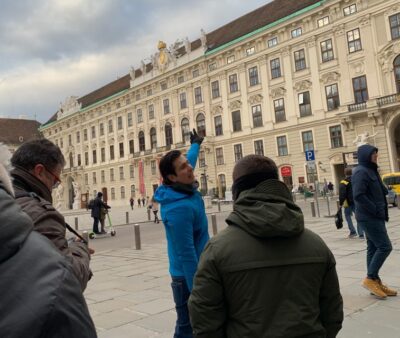
Once you roll out, the first goal is not speed. It’s orientation. I like that you’re guided along routes that feel built for bikes, not vehicles, and that the guide keeps the group together at a steady pace. In practical terms, that means you can focus on the buildings—rather than constantly checking traffic or braking hard at every corner.
If you’re visiting Vienna for the first time, this is also a smart way to understand how the city is laid out. You go from the grand imperial stretches to civic landmarks, then you swing toward the Danube canal zone and end in Prater. That mental map helps you later when you decide where to wander on your own.
You can also read our reviews of more cycling tours in Vienna
Ringstrasse: the imperial boulevard you actually get to ride
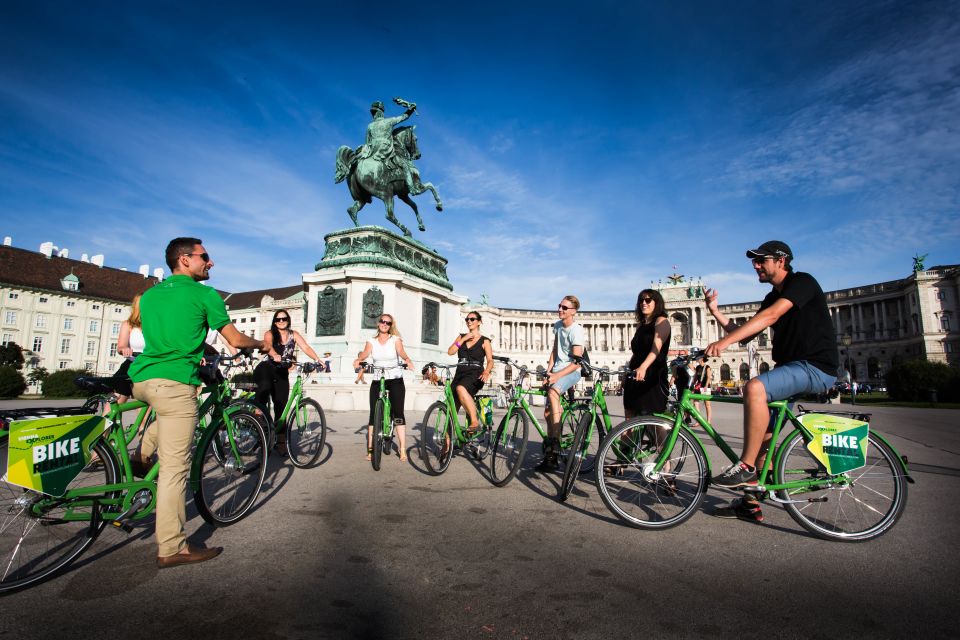
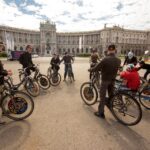
The headline ride is down the Ringstrasse, Vienna’s famed ring road lined with monumental architecture. You don’t just hear about it. You glide through it, which makes a huge difference. From the bike lane, you can see how the buildings relate to each other—how the boulevard’s rhythm is designed to make the city feel powerful, formal, and planned.
This is where the tour gives you a big payoff for your 3 hours. The guide points out major anchors you’ll recognize from postcards and guidebooks, including the Opera House area, the Rathaus (City Hall), Vienna University, and the Austro-Hungarian-era parliament buildings. The stops are set up so you can look close enough to notice details like facade style and scale, not just location.
One small drawback to expect: because the Ringstrasse is a major artery, you’ll be sharing the feeling of a central city road. The tour claims safe, well-surfaced routes and that tracks with the overall feedback—people repeatedly note feeling safe and the ride being easy—but you should still expect moments where the street energy is higher than in quieter parks.
Opera House and Rathaus: look close at the façade styles
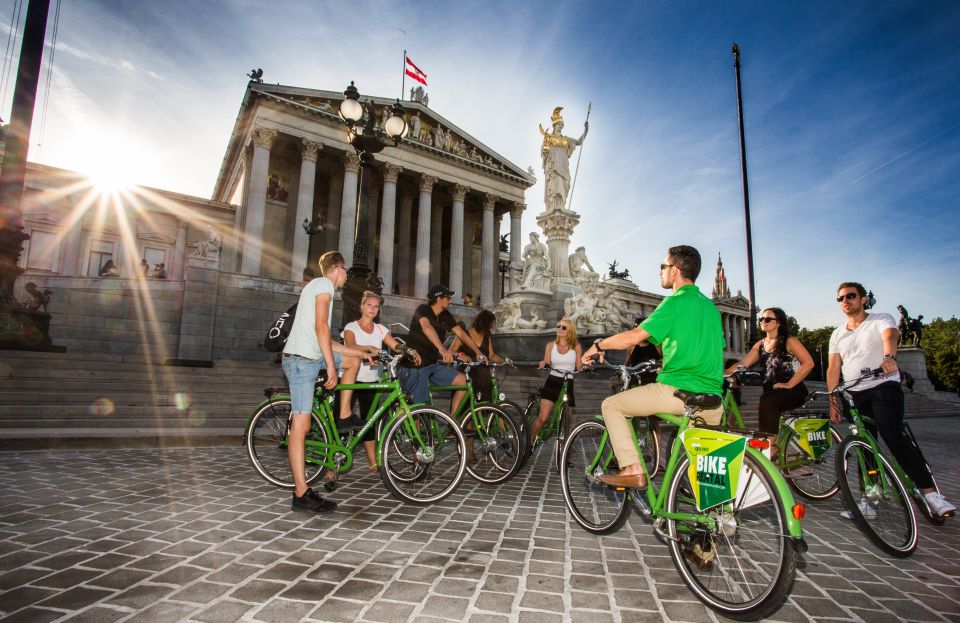
Two of the most visually satisfying stops come from the tour’s focus on architecture style.
First up is the Vienna Opera House, highlighted for its Neo-Renaissance architecture. Even if you’ve seen photos before, seeing it up close from a bike-friendly viewing angle helps the building make sense. You get a better feel for symmetry, massing, and how the opera fits into the grand boulevard scene.
Then you move to the Rathaus (City Hall), called out for its Gothic façade. This is a good moment on the tour because Gothic and Neo-Renaissance are such different languages. One building reads more classic and balanced; the other adds vertical drama and ornament. Put together, they show how Vienna uses style as message.
What I like here is that the stops are short enough to keep momentum, but long enough that you can actually take pictures without playing dodge-the-crowd. The guide is also actively guiding your attention—so you don’t end up with the usual “that was a building” feeling.
Parliament-era Vienna and Heroes Square: big history, handled on the move
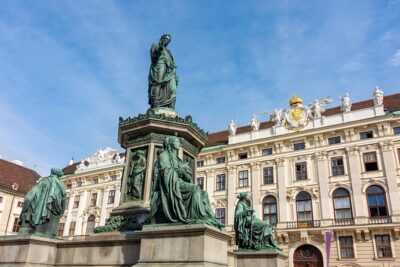
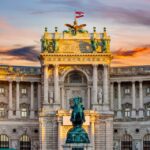
The tour doesn’t shy away from the political geography of Vienna. You cycle past 19th-century parliament buildings tied to the Austro-Hungarian Empire, and later you reach Heroes’ Square, where Hitler made his infamous Anschluss speech in 1938.
This part matters because it reframes the boulevard-and-stone vibe. The Ringstrasse feel can seem like pure elegance, but Vienna’s central landmarks sit on top of real, complicated European history. A good guide here doesn’t just recite dates. The aim is context you can carry with you while you keep moving.
From the tour description and the guide approach highlighted in feedback, the emphasis is on being sensitive and clear. Some guides named in feedback—people like Lisa, Marco, Wenke, Clemens, and Robert—are singled out for mixing facts with a thoughtful tone. You should still go in prepared for a heavier historical moment, even though it’s delivered during a fun bike ride.
Hundertwasserhaus and the playful side of Vienna
After the more formal civic stretch, the tour pivots toward the Hundertwasserhaus, Vienna’s funky apartment building. This is one of those stops that changes the mood in a good way. If the imperial sites make you think in straight lines and planned symmetry, Hundertwasserhaus is a reminder that Vienna also loves imagination and rule-breaking.
You don’t need to know the whole architectural backstory to enjoy it. The building’s odd charm works instantly: you see textures, color, and the sense that nothing was meant to look perfectly controlled. It’s a nice contrast to what you just rode past.
It also helps pacing. In a 3-hour tour, you want at least one moment that feels like a breather—something you can react to emotionally rather than absorbing more facts. This stop does that.
You can also read our reviews of more city tours in Vienna
Karlskirche on Karlsplatz: domes and columns from the saddle
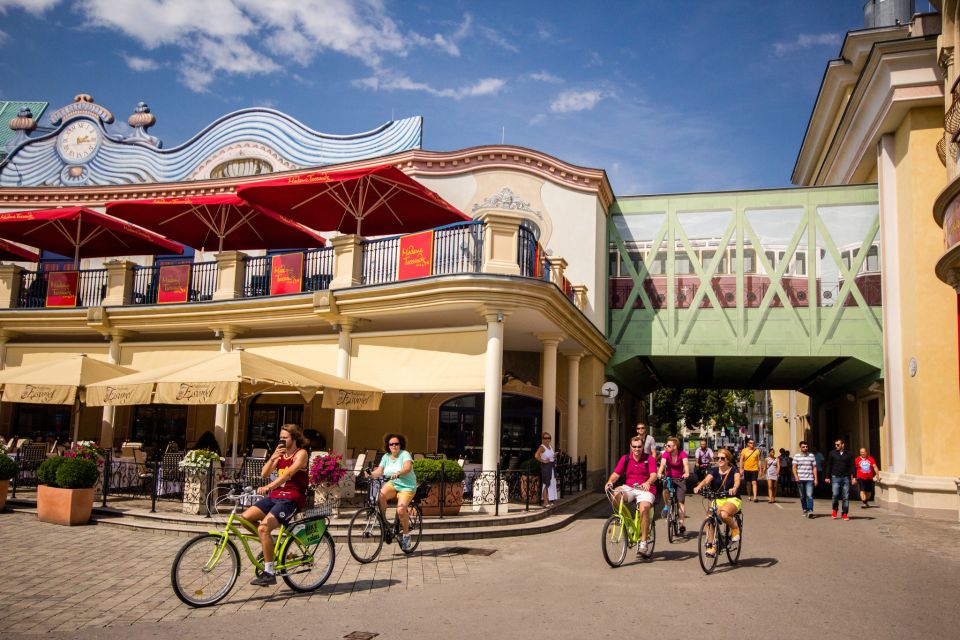
Then you roll to Karlskirche on Karlsplatz, where the tour spotlights the church’s columns and domes. This is a great match for bike travel because Karlskirche is built to be seen from multiple angles. From a bike lane, you get that “whole building at once” view better than you might on foot in a tight street grid.
What I like about this stop is the variety it brings. Earlier you had Gothic and Neo-Renaissance cues. Here, you get a more dramatic classical church look with strong vertical features and an imposing presence. It feels like Vienna can flip styles without losing confidence.
A practical note: churches often attract quick photo clusters, so keep your expectations flexible. The tour structure—safe routes, timed stops, and the guide calling out the best angles—usually helps you get the photo moment without prolonged waiting.
Along the Danube canal: when Vienna slows down
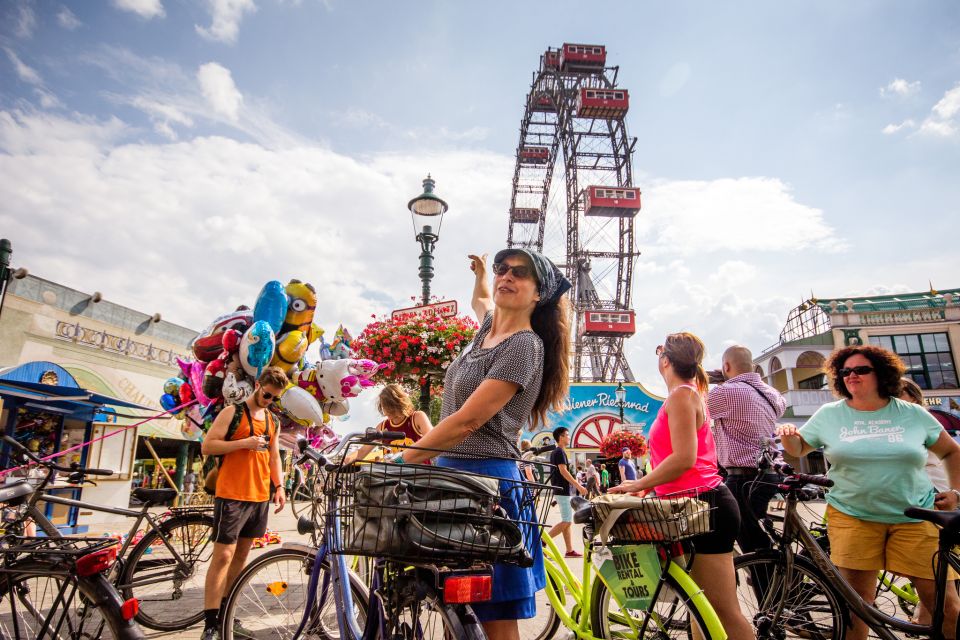
After Karlsplatz, the tour heads toward calmer scenery: you’ll ride along the banks of the Danube canal and, by the end, you pedal back along a sidearm of the River Danube.
This stretch is more than a scenic break. It’s where the bike tour earns its health-and-comfort reputation. Instead of the constant “look at that building” sprint, you get a smoother rhythm: ride, breathe, look at the water, and let the city’s scale sink in.
In the feedback, people also mention that the route feels designed for easy biking and safe lanes. That matters because you don’t want your legs to be fighting the road the whole time. The canal side ride is where it feels like the city is letting you enjoy the trip, not just covering sights.
Prater Park and the Ferris wheel finale
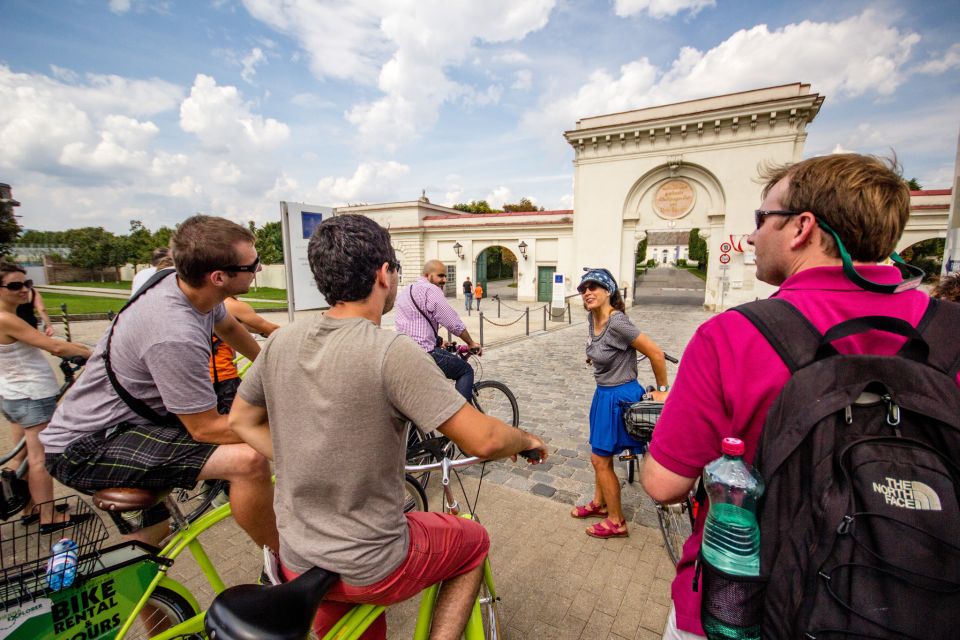
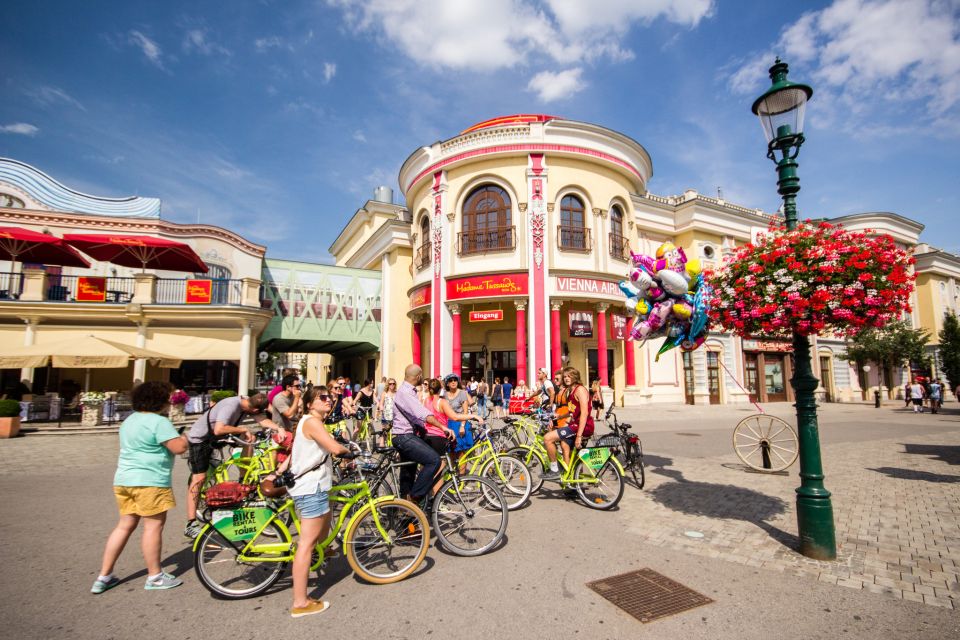
The last big highlight is Prater Park, where you get to marvel at the giant Ferris wheel. Ending here makes sense for a few reasons.
First, it’s a visual landmark you can hold in your memory. A Ferris wheel is a clear end point, and you’ll likely feel the tour’s arc from imperial city center to amusement-park Vienna.
Second, it gives a change of scenery. Prater’s open park environment feels different from the dense architecture zone. Even if you’re only there briefly, it’s a chance to stretch your eyes out.
Finally, it’s a satisfying payoff. In a 3-hour tour, you want a finishing moment that feels like a reward for doing the work up front. The Ferris wheel works as that moment.
Bikes, helmets, and pace: what the ride feels like
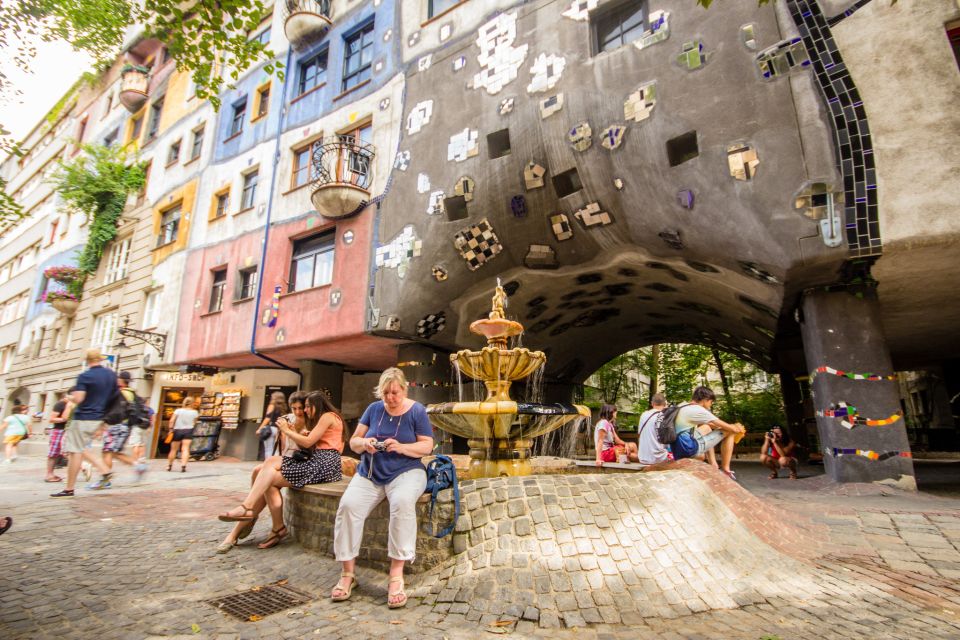
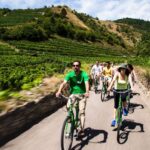
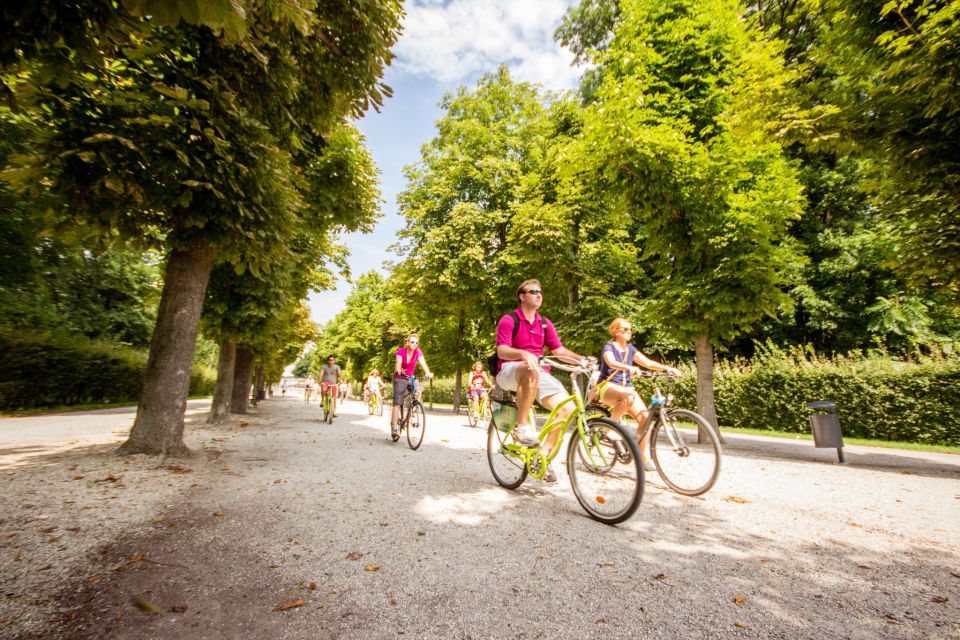
This tour uses comfortable, easy-to-ride modern city bikes. That’s not fluff. With Vienna’s layout, you want a bike that lets you relax and steer with confidence, because the big sightseeing value comes from looking around at buildings, not white-knuckling handlebars.
Helmets are mentioned as available in feedback, and multiple riders emphasize how safe and leisurely the pace feels. People also praise how stops are balanced with enough pedaling time—one of the most common frustrations on bike tours is when the stops dominate and you feel like you barely rode. Here, the ride time is part of the point.
Guide quality is a major part of the experience. In feedback, guides such as Lisa, Wenke, Marco, Clemens, Horst, Jan, Jon, Peter, Karl, and Marko are repeatedly named for enthusiasm, humor, and clear explanations. You won’t control who you get, but you can take comfort in the fact that the guides tend to match the tour format: talk enough to make landmarks meaningful, then get you moving again.
If you have someone in your group who’s less comfortable biking, there’s also mention of eBike options. Since the route is mostly flat, it may not be essential for everyone—but it can help you keep the group together without someone stuck at the back.
Rain and weather: ponchos beat planning chaos
This tour operates in all weather conditions, and rain ponchos are provided if it’s wet. That’s a big deal in Vienna because weather can flip fast, and a bike tour is only fun if you’re not constantly worrying about getting soaked.
From feedback, one tour was even stopped mid-way during a downpour, then handled in a way that aimed to support people who couldn’t continue as planned. I’d treat that as an example of how they respond when conditions shift, not a promise of what will happen every time. Still, the overall setup suggests you’re not left out in the cold—figuratively or literally.
What to bring is simple: comfortable clothes. You’ll be in motion for hours, and you’ll feel better if you dress for movement rather than for a museum day.
Price and value: is $55 worth it for 3 hours?
At $55 per person for 3 hours, you’re paying for a specific kind of value: less time figuring out where to go, more time seeing major highlights in a connected route.
Here’s what that price includes based on the provided info:
- Modern city bikes
- A guide in English (and a guide who can also speak German)
- Multiple stops for photos and close-up viewing
You’re also getting a route design that combines distance with sight-focused pacing. In feedback, people mention the tour can cover over 10 km, which is exactly what you want on a short trip. If you tried to recreate this on your own, you’d need a bike rental, route planning, and still you’d miss some of the guide-led context that turns landmarks into stories.
Is it the cheapest way to see Vienna? No. But it’s also not trying to be. You’re buying efficiency plus interpretation—two things that help you get more from fewer days.
Who should book this Vienna by Bike tour?
This is a strong match if you:
- Want a first-day orientation to central Vienna
- Like seeing architecture without committing to long indoor visits
- Prefer getting exercise while still keeping the trip structured
- Travel with mixed energy levels (especially if eBike options help, if offered on your date)
- Care about historical context but still want a fun pace
It’s also a good choice for families. One parent mentioned a guide who handled a 12-year-old patiently and kept the experience moving in a safe, supportive way. If you’re traveling with kids, this kind of guided biking can be easier than self-guided cycling—just know kids still need focus in intersections and busy stretches.
If you’re the type who wants museums as the main event, you may feel this is too short and too outdoors. But if your goal is to get the shape of Vienna quickly, this tour fits the bill.
Should you book it?
Yes, I’d book it if you want a compact Vienna experience that actually uses the city’s bike-friendly strengths. The route hits major landmarks—Opera House, Rathaus, parliament-era buildings, Heroes Square, Hundertwasserhaus, Karlskirche, and Prater—without turning the day into a checklist of far-apart destinations.
Before you commit, think about what you want most:
- If you want close-up sights plus guidance in a short window, this is a great value at $55.
- If you need long indoor time or want a deeper museum day, plan separate activities and treat this as your “big overview” ride.
For most visitors, the payoff is simple: you get your bearings fast, you see Vienna’s signature styles in one outing, and you finish with a memorable Prater moment you can share later.
FAQ
How long is the Vienna by Bike tour?
The tour lasts 3 hours.
What language is the tour guide?
The tour offers an English live guide (with a German-speaking guide available as well).
Where is the meeting point?
Meet your guide at Franz Josefs Kai 45, 1010 Vienna. The nearest subway is Schottenring (Lines U4 and U2).
What should I wear or bring?
Wear comfortable clothes for riding.
Does the tour run in bad weather?
Yes. It operates in all weather conditions, and rain ponchos are provided if it’s wet.
What are some of the main sights on the route?
You’ll cycle along the Ringstrasse and see stops including the Vienna Opera House, Rathaus, parliament buildings, Heroes’ Square, Hundertwasserhaus, Karlskirche, Prater Park, and the Ferris wheel, plus Danube canal scenery.
Is there a cancellation option if my plans change?
Yes. Free cancellation is available up to 24 hours in advance for a full refund.