REVIEW · VIENNA
Vienna by bike in small groups max 12pax
Book on Viator →Operated by Velopold Vienna · Bookable on Viator
Vienna moves fast on two wheels. This small-group bike tour in English turns a short visit into a real circuit of major landmarks, Danube Canal views, and quick photo stops, all in about three hours. You start at Velopold Vienna, get a bike and water, and roll out with a guide who keeps the pace friendly and the information clear.
I especially like two things: the ride itself feels smooth thanks to high-quality bikes and lots of bike-lane comfort, and the guiding style is packed with practical city context, not just names and dates. One thing to consider: the stops are brief, and a few sights you might want to go inside (like the big music and museum options) have admission not included, so plan to treat this as an overview, then choose where to go deeper.
In This Review
- Key highlights
- Why This 3-Hour Bike Intro Works So Well
- Meeting Velopold Vienna: Bikes, Water, and a Quick Setup
- Prater: Ferris Wheel Photos and the Amusement-Park Side of Vienna
- Urania Sternwarte by the Danube Canal: Watching the City Shift
- Michaelerplatz: Old Buildings and the City-Center Feeling
- Wiener Staatsoper and Karlskirche: Music and Church Stories on the Route
- Danube Canal Graffiti and Hundertwasser House: The Art Vienna Often Misses
- Burggarten, Stadtpark, and the Natural History Museum Stop
- Kunsthistorisches Museum: How to Read a Major Art Stop
- Museum Judenplatz: Holocaust History in a Short, Serious Stop
- Rathaus Photo Time and Your Final Rollback
- Price, Pace, and Real Value for $56.72
- Who This Bike Tour Fits Best (and Who Might Need a Different Plan)
- Should You Book This Vienna by Bike Tour?
- FAQ
- How long is the Vienna by bike tour?
- How big is the group?
- Is the tour offered in English?
- What does the ticket include?
- Do I need admission tickets for the stops?
- Where does the tour start?
- Is the route suitable for beginners?
- What happens if the weather is bad?
Key highlights
- Small group size (max 10): less waiting, quicker movement between stops.
- Easy, city-friendly cycling: routes take advantage of Vienna’s bike infrastructure.
- Short, targeted stops: you get photos and explanations without losing the whole afternoon.
- Danube Canal + Prater combo: art/graffiti along the water and a Ferris wheel viewpoint.
- Mix of imperial, modern, and Jewish history: from classic squares to Museum Judenplatz.
- Top sights plus useful follow-up tips: you’ll know what to revisit on your own.
Why This 3-Hour Bike Intro Works So Well
If you’re only in Vienna for a day or two, this kind of tour is a smart way to get your bearings fast. In about 3 hours, you cover a lot of ground without the fatigue of nonstop walking. The whole idea is orientation: you see where the big chapters of the city sit, then you decide what deserves your next visit.
This also helps you avoid the most common Vienna mistake: spending hours traveling between scattered sights. Here, you roll through a logical loop—squares, canals, parks, and major cultural landmarks—so your time stays efficient.
You can also read our reviews of more cycling tours in Vienna
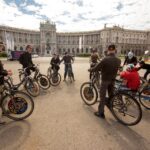
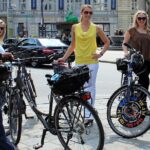
Meeting Velopold Vienna: Bikes, Water, and a Quick Setup
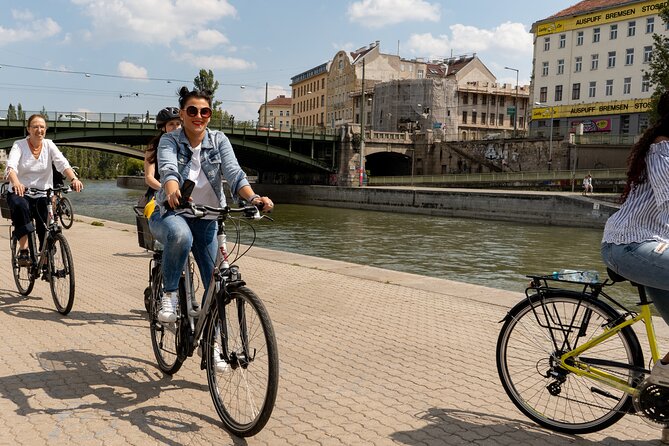
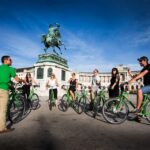
The tour starts at Obermüllnerstraße 11, 1020 Wien, right at Velopold Vienna. You’ll get your bike and a bottle of water for the ride, and the group gathers before you head out.
Practical note: you only need to be comfortable riding a bike and feel confident in city traffic. The tour is designed so most people can participate, but it’s still cycling in an active European city, so show up ready to ride.
Also, there’s a small but meaningful comfort factor here. In at least one case, the operator worked with a rider who had trouble biking by letting them test an electric bike. If you think you might need that kind of support, ask in advance rather than waiting until you’re on the street.
Prater: Ferris Wheel Photos and the Amusement-Park Side of Vienna
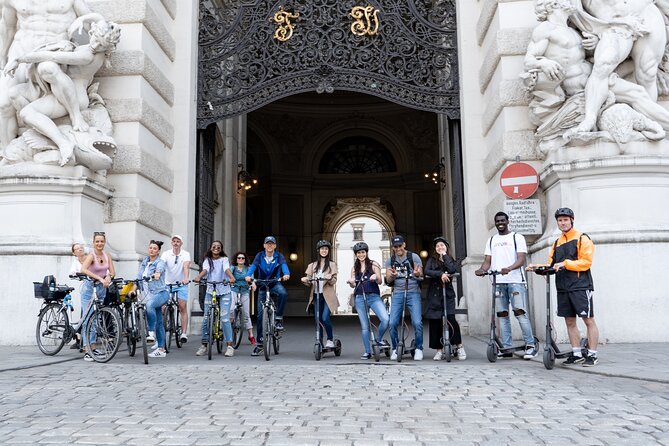
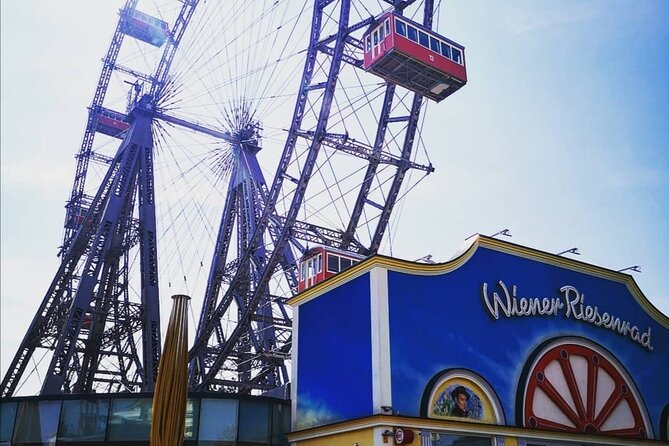
The first real sightseeing stop is Prater, a quick moment for pictures and explanations of the Ferris wheel area and the amusement park surroundings. Even if you don’t go inside, the viewpoint context helps you understand why Prater is a Vienna landmark, not just a generic park.
This is the kind of stop that works best for photos. You’ll get the story of what you’re seeing, then you’re back on the bike rather than getting stuck in lines or ticket decisions. If you want to ride the Ferris wheel later, you’ll now know exactly where to go.
Urania Sternwarte by the Danube Canal: Watching the City Shift
From Prater you move toward the Urania Sternwarte, right beside the Danube Canal. This stop is short—think quick look, a few key explanations, and then onward—but it changes the feel of the tour because the canal environment is a different Vienna mood.
The Danube Canal area also sets up what comes next: street art and neighborhoods that feel more lived-in. It’s a good reminder that Vienna isn’t only grand facades and palace tours.
Michaelerplatz: Old Buildings and the City-Center Feeling
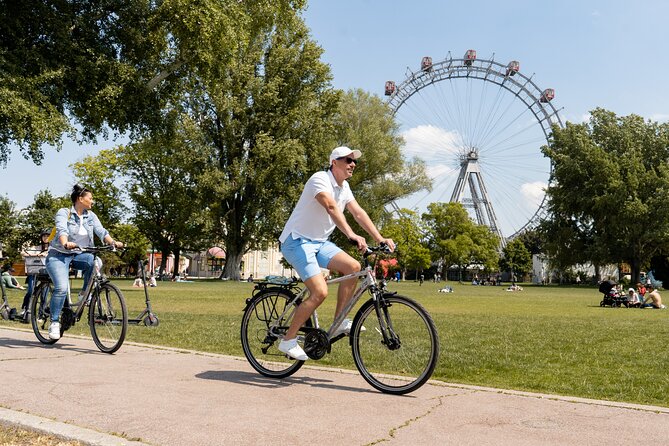
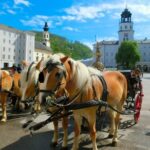
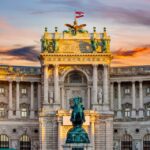
At Michaelerplatz, you’re back in the classic center vibe. The guide points out old buildings and explains what makes the location special, all with a quick photo window.
This stop is useful even if you’ve seen Vienna from afar. It shows you how the city’s main identity wraps around squares, courtyards, and the streets that connect them. After a few stops, the streets start making sense like a map you can actually use.
Wiener Staatsoper and Karlskirche: Music and Church Stories on the Route
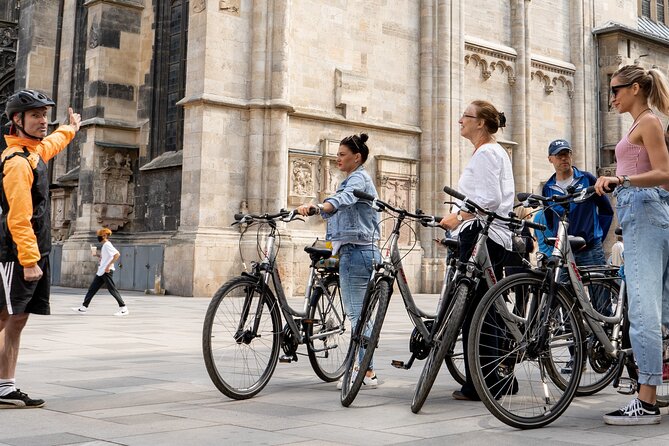
Two landmarks in particular bring big cultural weight to the ride.
At Wiener Staatsoper, you learn about the history of music in Austria. This is the kind of stop that gives you context, so later, when you see posters or hear names tied to opera and classical performance, you understand why those names matter.
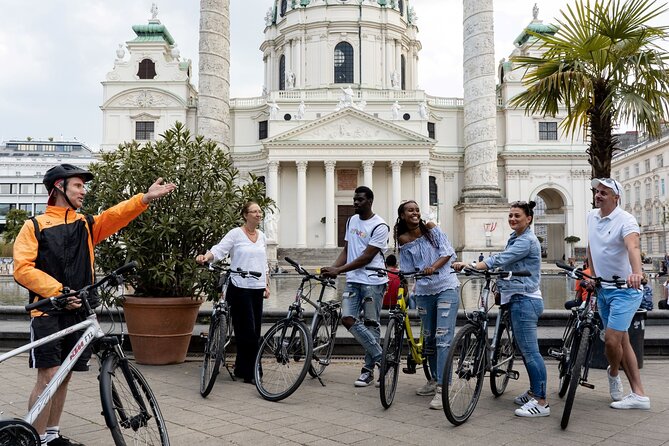
Then comes Karlskirche, a stunning church where the guide shares what to notice about its history and creation. The stop is brief and admission is not included, so don’t assume you’ll have time to go inside fully. Treat it as a stop for orientation and exterior appreciation—then decide if you want your own follow-up visit.
Danube Canal Graffiti and Hundertwasser House: The Art Vienna Often Misses
One of the most fun stretches is the ride along the Danube Canal (Donau Kanal). You stop for photos and explanation of the area, including graffiti artwork that adds color and personality to the waterfront.
This matters because it gives you a Vienna you might not chase on your own. You see how art shows up outside galleries, and you notice how the canal functions as a corridor, not just scenery.
Soon after, you’re at the Hundertwasser House area. The guide shares information about the Austrian artist Hundertwasser, and you get a short look that helps you understand what makes the building style so recognizable. This is the perfect stop for anyone who likes design quirks and wants to know the story behind them.
Burggarten, Stadtpark, and the Natural History Museum Stop
Back toward the center, the tour includes a mix of parks and big institutions.
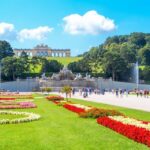
At Burggarten, you get a short stop to go inside and enjoy views, plus background on what makes the garden notable. It’s a small pause that helps you reset between more intense cultural stops.
Then there’s Stadtpark, a shorter stop where you can take it in and keep moving. These green stops aren’t about slowing down; they’re about giving your brain a break so the city stays enjoyable instead of overwhelming.
The Museum of Natural History Vienna stop is also short. Admission is not included, so this is mostly about photos and a bit of guided framing. Still, the context matters—natural history museums can feel intimidating if you visit without any sense of what to watch for.
Kunsthistorisches Museum: How to Read a Major Art Stop
Next up is the Kunsthistorisches Museum Vienna, another major cultural heavyweight. Again, admission is not included, and the stop is designed for quick photos and guiding context rather than a full museum visit.
If you want to go deeper later, this stop helps you decide what direction to take. You’ll leave with a better idea of why this museum matters and what you might want to focus on if you return for a longer time on your own.
Museum Judenplatz: Holocaust History in a Short, Serious Stop
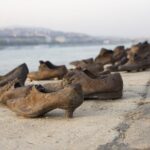
The route includes a stop at Jewish Museum Vienna – Museum Judenplatz. It’s brief, but the guide covers the historic context, including learning about Holocaust history.
This part of the tour calls for a different mindset than the photo stops. I’d treat it as a moment to slow down, listen, and absorb. Even if you don’t go inside on your own time, the guided explanation makes the stop feel grounded and important.
Rathaus Photo Time and Your Final Rollback
The final sightseeing stretch includes Rathaus, with a stop for information and photo time. Admission is not included, and the point here is the architecture and the city-center symbolism rather than a long interior visit.
Then you ride back to where you started at Obermüllnerstraße 11. Ending at the same meeting point is practical—you don’t have to solve transportation at the end of the tour.
Price, Pace, and Real Value for $56.72
At $56.72 per person for about 3 hours, the value comes from three things working together.
First, you’re paying for transportation plus a guide. You’re not just seeing the city; you’re learning how to interpret it while covering a lot of ground quickly.
Second, the tour uses a small-group setup—max 10—which is the difference between a fun ride and a slow shuffle. With fewer people, you spend less time waiting at curbside and more time actually moving.
Third, the tour is structured around short “hit the highlights” moments. Many stops are outside or marked as admission ticket free, and you only need to pay for optional entrances where indicated as not included. If you want museums, operas, or church interiors, this tour doesn’t pretend to replace that. It sets you up to choose your best follow-up.
One more practical value point: bike touring makes Vienna feel reachable. A lot of people come in nervous about riding in city streets, and when you see how bike-friendly the routes are, it clicks quickly.
Who This Bike Tour Fits Best (and Who Might Need a Different Plan)
This tour fits you if:
- You like seeing many sights quickly without wearing yourself out.
- You’re comfortable enough to ride in a city setting and you want a guided route.
- You want the best overview of central Vienna: canals, squares, parks, and big-name cultural stops.
You might want a different plan if:
- You’re hoping for long museum time or a deep interior experience at multiple stops. This tour keeps stops short by design.
- You’re very sensitive to any kind of cycling anxiety. The ride is easy for many people, but it’s still on a bike.
A small note on comfort and communication: there was one unhappy experience tied to how a guide handled a sensitive moment. If you have allergies or strong concerns (about anything that might affect your comfort on the day), say it clearly at the start so everyone stays on the same page.
Should You Book This Vienna by Bike Tour?
Yes, if you want a fast, friendly small-group Vienna overview with easy riding and real context at each stop. It’s also a strong choice for first-timers because it helps you understand where everything sits—so later you can pick the sights that match your interests.
I’d book it especially if your schedule is tight or you’d rather spend your energy exploring on your own after the tour. For the $56.72 price point, you’re buying a guided shortcut through the city’s highlights, delivered with bikes that feel ready to ride. Just keep your expectations aligned: this is about getting oriented and leaving with a smart shortlist for what to do next.
FAQ
How long is the Vienna by bike tour?
It runs for about 3 hours.
How big is the group?
The tour is capped at a maximum of 10 travelers.
Is the tour offered in English?
Yes, it’s offered in English.
What does the ticket include?
You receive a bike and a bottle of water at the meeting point. A mobile ticket is provided.
Do I need admission tickets for the stops?
Many stops are listed as free, but some sights are marked as admission not included (for example, Wiener Staatsoper, Karlskirche, Museum of Natural History, Kunsthistorisches Museum, and Rathaus).
Where does the tour start?
The meeting point is Obermüllnerstraße 11, 1020 Wien, Austria, and it returns to the same meeting point.
Is the route suitable for beginners?
Most travelers can participate, as long as you feel comfortable riding a bike and know you can handle the ride.
What happens if the weather is bad?
The tour requires good weather. If it’s canceled due to poor weather, you’ll be offered another date or a full refund.