REVIEW · VIENNA
Vienna: Time Traveling Virtual Reality Sightseeing Tour
Book on GetYourGuide →Operated by VR Tours Vienna · Bookable on GetYourGuide
A hundred minutes. Six time stops. That is the hook: you’re not just seeing Vienna, you’re watching it change. The 360-degree VR scenes are set right on the city route, so you get a quick history hit without getting stuck in a museum queue.
I especially like the mix of virtual reality plus a live guide who can connect the stories to what you’re standing next to. I also love that the tour runs with a multilingual audio guide (English, Spanish, Dutch, French, Italian, Russian) while the guide speaks English and German, so you’re not locked into one language track.
One possible drawback: the VR can vary in sharpness, and the 1920s scene in particular may feel less detailed on some headsets. If you’re very picky about image clarity, keep that in mind.
In This Review
- Key things that make this Vienna VR tour worth your time
- A 360-Degree Time Machine Starting at Neuer Markt
- The Walk Matters: Flat Route, Real Stops, and Sensible Timing
- Six VR Scenes That Track Vienna’s Big Turning Points
- White Sunday in 1483 and a Medieval Vienna Moment
- Ottoman Siege During the 1683 Crisis
- Plague Darkness and Augustin’s Humor Through Hard Times
- Hofburg Court Life: Sisi and Franz Joseph on a Hunting Trip
- The Opera and the Golden 1920s Atmosphere
- St. Stephen’s Square in WWII: Cathedrals, Fire, and Soviet Forces
- Live Guide + Audioguide: How the Story Lands in Your Language
- Price and Value: Is $45 Worth It?
- Comfort and Practical Stuff You’ll Actually Care About
- Weather Realities: Why Timing Can Shift
- Who Should Book This Vienna VR Tour
- Should You Book This Vienna Time-Travel VR Tour?
- FAQ
- FAQ
- How long is the Vienna VR sightseeing tour?
- Where does the tour start and where does it end?
- What should I look for at the meeting point?
- Is anything included with the ticket?
- Do I need to bring food or drinks?
- What languages are available?
- Is the tour wheelchair accessible?
- What should I know about the route?
- Who should not take this tour?
Key things that make this Vienna VR tour worth your time
- Six VR scenes that jump across centuries, from procession days to wartime disaster
- Live guiding in English and German, plus headphone audio in multiple languages
- Flat 3.2 km walk that’s built around major old-town landmarks
- Neuer Markt to Albertina route, so the story actually moves with the city
- Short time commitment (about 100 minutes) that still covers big turning points
- Wheelchair accessible, but the experience still includes walking segments
A 360-Degree Time Machine Starting at Neuer Markt
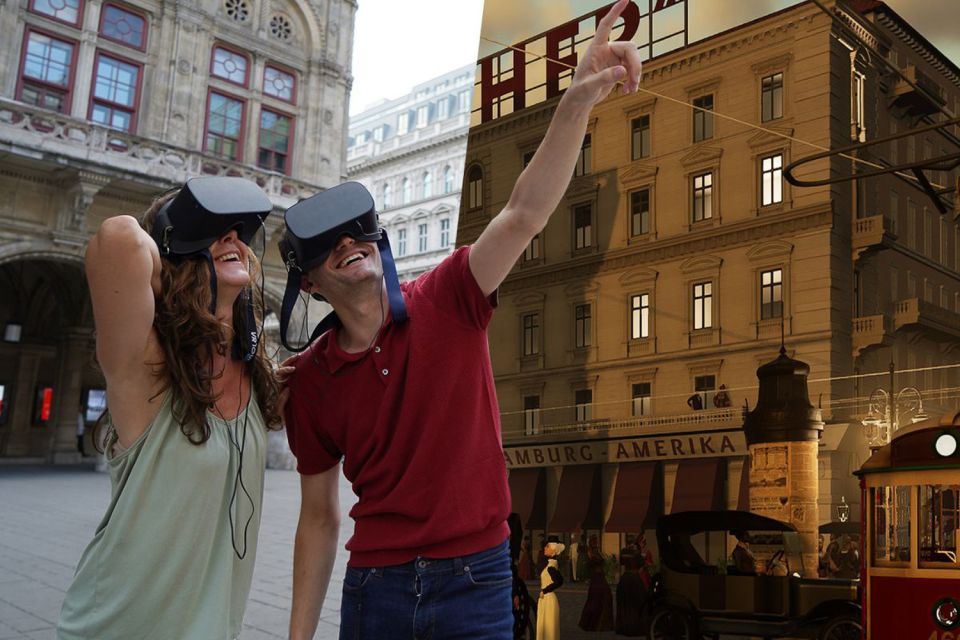
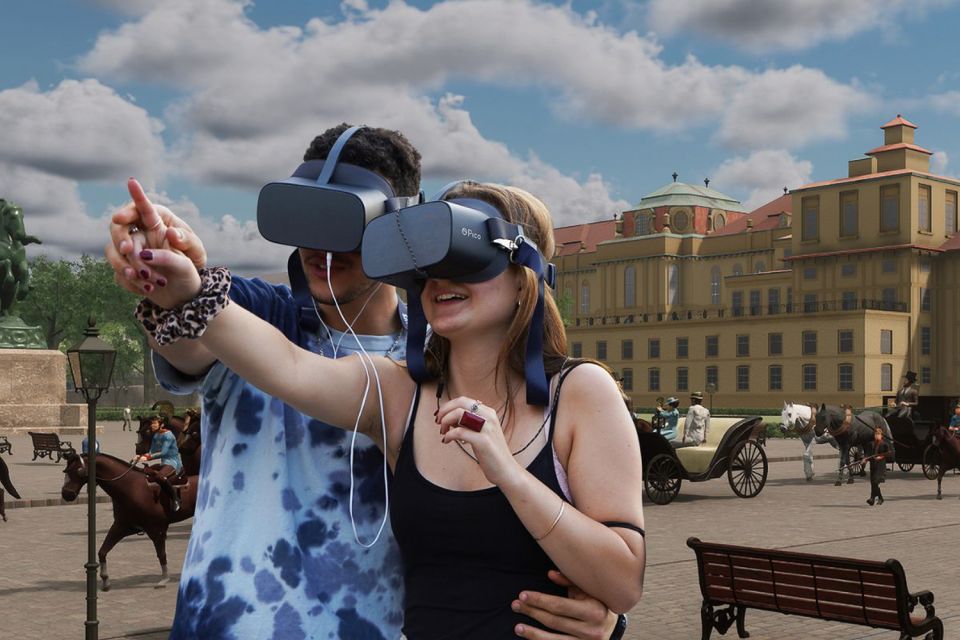
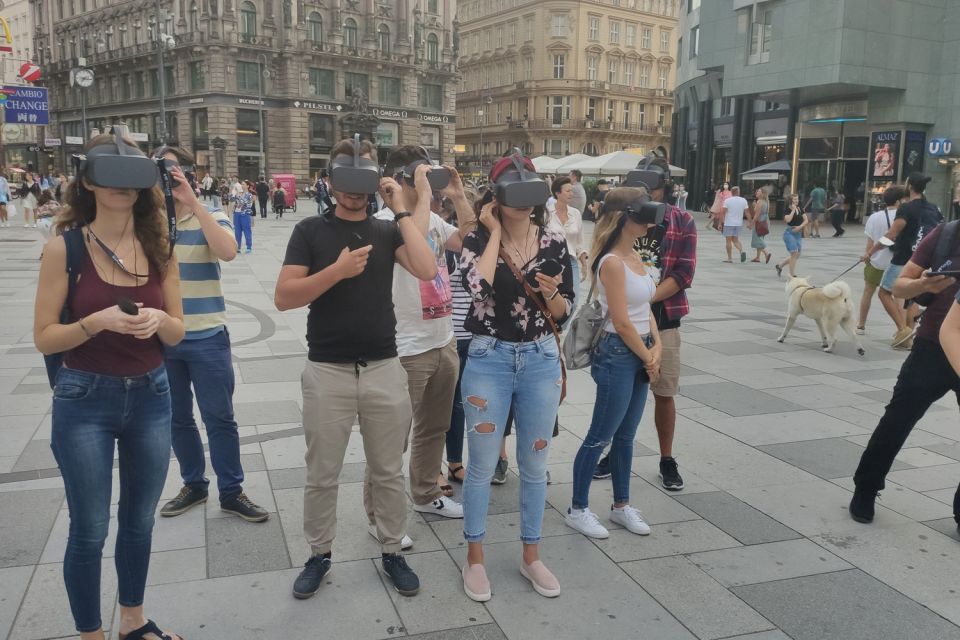
This is a “history you can look around” tour. You start near Neuer Markt 6, then spend about an hour and a half moving through the old core of Vienna on flat ground. At set moments, you pause, put on the VR glasses, and the past pops into your view with a full all-round look.
The format is simple: you get a walk-and-listen route, and the VR scenes land like chapters. That’s the big value here. Instead of reading plaques or just hearing a lecture, you watch key moments play out while you’re physically near the places they happened.
When it works, it’s a fast way to understand how Vienna became Vienna. You see how religion, war, disease, empire, and culture all left marks that still show up in the street plan and famous buildings today. It’s also a great first-day move, because it helps you learn your way around without guessing.
You can also read our reviews of more tours and experiences in Vienna.

The Walk Matters: Flat Route, Real Stops, and Sensible Timing
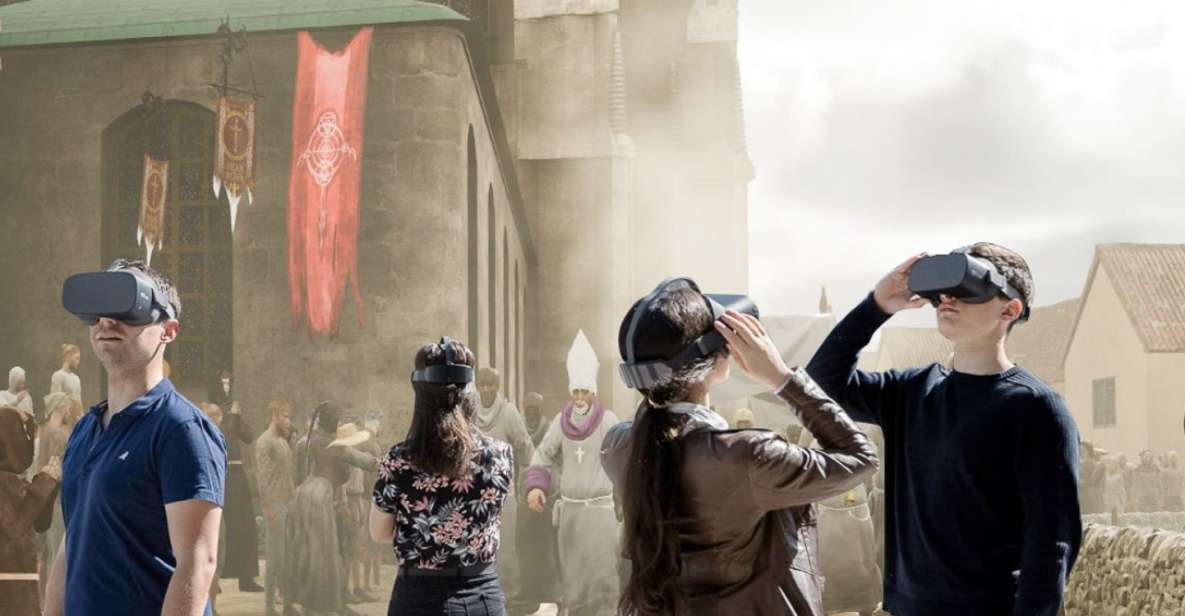
You’re walking about 3.2 kilometers over flat terrain and finishing at the Albertina. That means you can usually keep a steady pace without feeling like the tour turns into a cardio class.
Plan to arrive 15 minutes early and look for the turquoise-colored entrance at the start point. Getting there early pays off because you’ll be ready for the headset handoff and audio setup, and you won’t lose time when the group begins.
The tour also comes in at about 100 minutes to around 105 minutes, so it fits well between heavier sightseeing days. If you’re trying to balance iconic sights with at least one “different” activity, this is a clean compromise.
Six VR Scenes That Track Vienna’s Big Turning Points
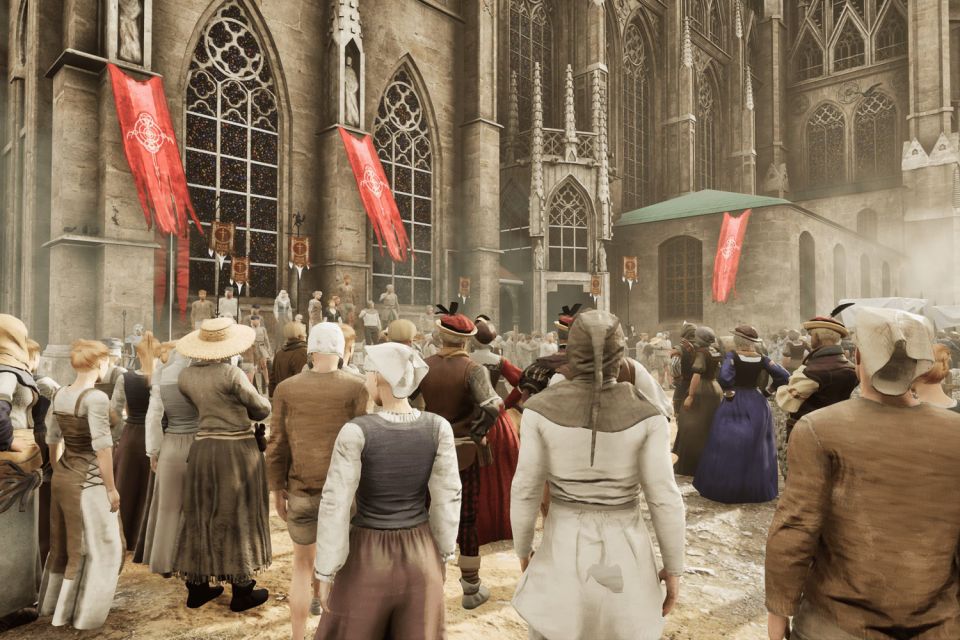
The VR scenes are the heart of the experience, and they’re spread out across the route so you learn the city’s logic as you go. You also get a guided story thread, not random clips. Here’s what you’ll encounter.
White Sunday in 1483 and a Medieval Vienna Moment
One scene takes you to White Sunday in 1483, when special ornaments were brought out and shown to the public. It’s one of those moments that sounds niche until you realize it’s about everyday power: who gets to display meaning, and where the crowd gathers.
You’re not just seeing costumes. You’re seeing public ritual as a way cities teach people what to believe. That’s a theme Vienna repeats over and over, from church life to state ceremonies.
Ottoman Siege During the 1683 Crisis
Next comes danger on a much larger scale. You’ll experience the Ottoman siege during the major 1683 conflict, including the sense of the city under threat.
This kind of VR storytelling helps you understand why fortifications, walls, and military strategy mattered so much here. It also explains why later Vienna treated survival like a cultural identity, not only a military one.




Plague Darkness and Augustin’s Humor Through Hard Times
Then the tour turns to the darker side of Europe: the plague, with the grim note that it killed about half of Europe. In the middle of that, you learn about Augustin, a singer who showed Vienna could keep going with humor and music.
That’s an important angle. It’s easy to treat history like a chain of wars and dates. This scene reminds you that people lived through it with art, jokes, and sound. You come away with a more human sense of how Vienna endured.
Hofburg Court Life: Sisi and Franz Joseph on a Hunting Trip
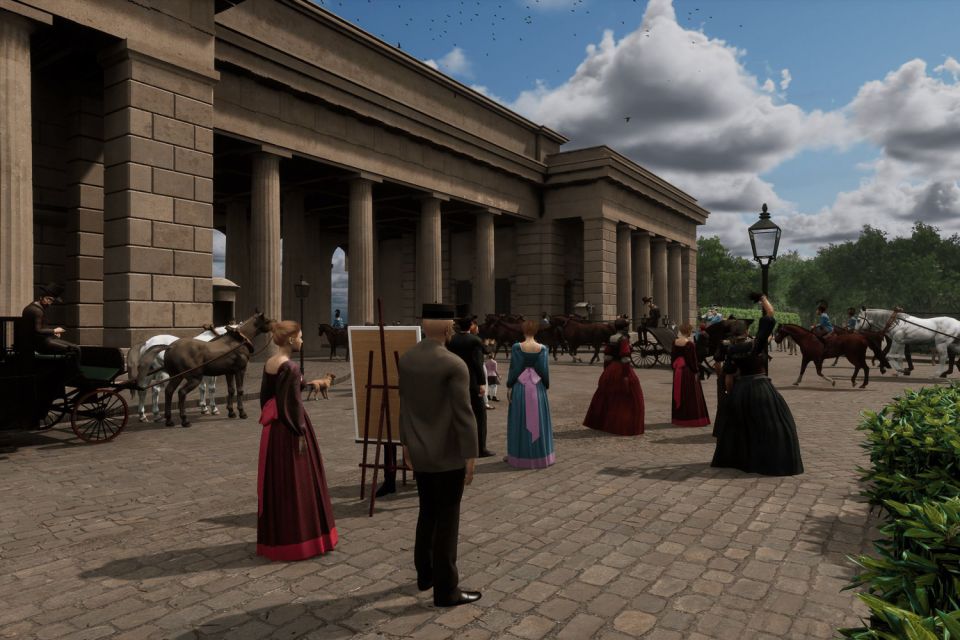
On a sunny-day styled scene, you “walk” around the Hofburg and meet Empress Sisi and Emperor Franz Joseph II, set during a hunting trip. The little detail you’re encouraged to remember—standing very close to the road and giving a quick wink—turns a royal moment into something you can actually play along with.
It’s fun, but it also teaches you a real-life takeaway: court life wasn’t just glamour. It was schedule, movement, and public presence. That’s why Hofburg and the surrounding streets still feel like an operating center of power.
The Opera and the Golden 1920s Atmosphere
You end up at the opera area for a 1920s scene, focusing on what people do around the performance—how they prepare and how the night feels before the curtain. This is Vienna culture as a whole system, not just the building.
One practical note: the 1920s VR visuals may not be as crisp as other scenes on some headsets. Still, even if the image softens, the story context helps you understand how opera fits into Vienna’s social life.
St. Stephen’s Square in WWII: Cathedrals, Fire, and Soviet Forces
The final VR stop hits hardest. In St. Stephen’s Square, you witness the cathedral burning in the last month of World War II and the moment the Soviet army drives the last German soldiers out.
That’s heavy material, but it’s placed at one of Vienna’s most recognizable anchors. Standing there (before or after the headset moment), you can feel why the city treats religious monuments as both spiritual centers and historical ones.
Live Guide + Audioguide: How the Story Lands in Your Language
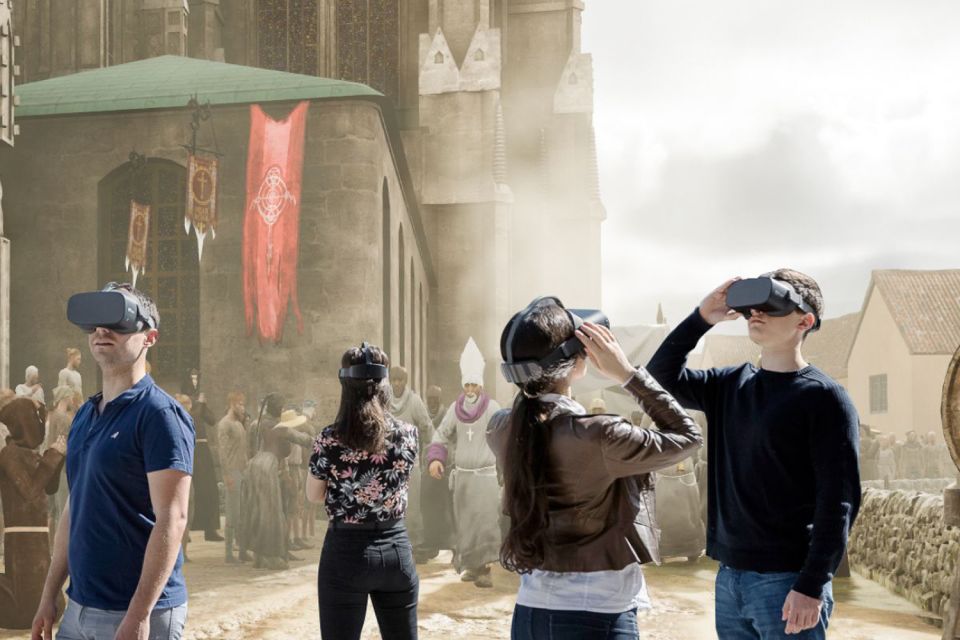
You’ll have a live tour guide on the route, with English and German spoken in person. I like this setup because it keeps the pacing under control while still letting the audio guide handle the facts.
Guides also seem to be a strong point. One guide named Julian is noted for speaking both German and English fluently, which matters if you’re with a mixed-language group. Another guide named Dr. Reiner comes up as knowledgeable and helpful, and you can feel that in how the story is timed to your stops.
On top of that, you get earphones for the audio guide in several languages: English, Spanish, Dutch, French, Italian, and Russian. So even when the live guide is speaking to the group, you can still follow the core narrative clearly.
Price and Value: Is $45 Worth It?
At $45 per person, this isn’t a budget activity. You’re paying for three things at once: the VR glasses, the audio system, and a guided route that strings the scenes together.
Here’s why it feels worth it for the right traveler. If you like history but don’t want to spend half a day in a museum, VR scenes tied to real streets can compress a lot of learning into a short window. The walking distance is manageable, and the content spans medieval life, empire warfare, plague survival, court culture, and WWII—without you needing to line up multiple tours.
But if you mainly want deep, old-school narration with minimal tech, the VR component might feel like a “nice add” rather than the main event. And if image sharpness matters most to you, consider that VR quality can be inconsistent.
Comfort and Practical Stuff You’ll Actually Care About
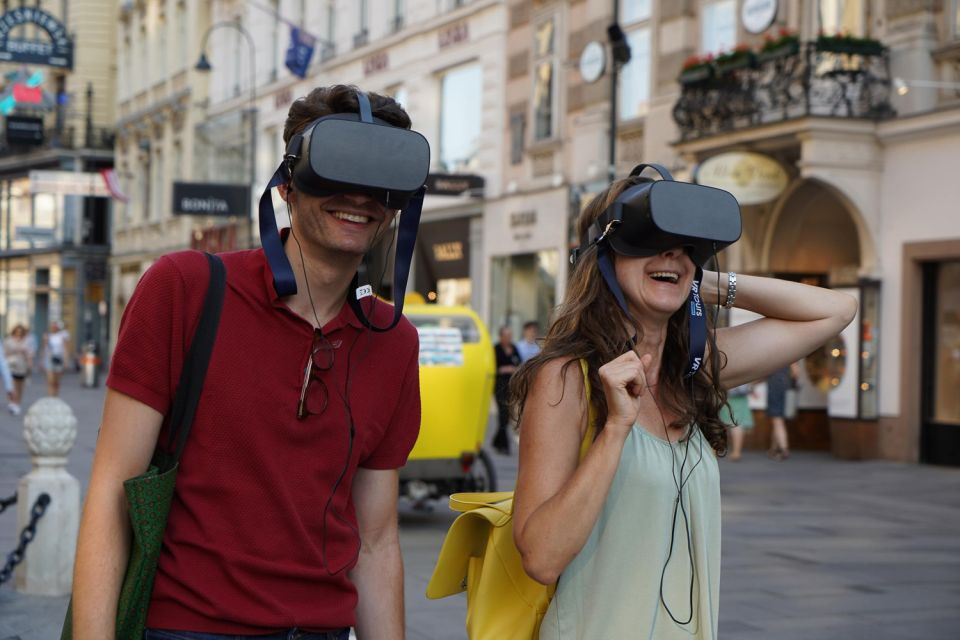
You’ll wear a headset at several points, so expect brief interruptions in walking while you put it on and take it off. Your route is flat and relatively short, but it’s still a walking tour—this is not a sit-and-watch show.
It is wheelchair accessible, which is a huge plus, but accessibility doesn’t mean zero physical effort. You should still check your comfort with the overall walking segments.
Also keep in mind it’s not suitable for children under 8 and it’s not suitable for people with epilepsy. If either applies, skip this one and choose a standard guided tour instead.
Weather Realities: Why Timing Can Shift
This tour can be canceled due to poor weather such as heavy rain or a storm, and the decision can happen at the last minute. That’s the main downside to a sightseeing format that relies on being outside.
If you’re traveling during storm season, I’d treat this as something you schedule flexibly rather than as a fixed anchor. The content is great, but Vienna weather can be moody.
Who Should Book This Vienna VR Tour
This tour fits best if you want:
- A first-day orientation to old Vienna without heavy planning
- A way to understand big historical turning points fast
- A hands-on history format that uses VR rather than only your ears
It can also be a good choice if you like stories that connect culture and survival—plague, music, court life, and public ritual—because the tour keeps reminding you that people lived through events, not only recorded them.
I’d steer other people toward different options if:
- You hate headsets or you’re sensitive to VR effects
- You only want museum-style facts and don’t like walking between stops
- You’re extremely picky about video clarity and need crisp visuals at every moment
Should You Book This Vienna Time-Travel VR Tour?
If your ideal Vienna day includes a short walk, a live guide, and a way to see multiple eras without bouncing between separate attractions, this is a smart buy. The strongest part is how it ties major historical moments to the city you’re already walking through, plus the language support so you don’t lose the thread.
If you’re okay with the occasional VR softness and you can handle rain-related cancellations, I’d book it—especially as a first or second-day activity. It helps Vienna click faster, and you’ll come away with clearer mental pictures than you’d get from a plain audio-only tour.
FAQ
FAQ
How long is the Vienna VR sightseeing tour?
The tour is listed at about 100 minutes, and the guided sightseeing time is about 105 minutes.
Where does the tour start and where does it end?
It starts at Neuer Markt 6 and finishes at the Albertina.
What should I look for at the meeting point?
Arrive 15 minutes early and look for the turquoise-colored entrance.
Is anything included with the ticket?
Yes. You get virtual reality glasses and earphones for the audio guide.
Do I need to bring food or drinks?
Food and drinks are not included. You’ll want to plan for your own snacks or skip food since the tour is about 100 minutes.
What languages are available?
The live tour guide speaks English and German. The audio guide is available in English, Spanish, Dutch, French, Italian, and Russian.
Is the tour wheelchair accessible?
Yes, it is listed as wheelchair accessible.
What should I know about the route?
The route is about 3.2 kilometers and is described as flat terrain.
Who should not take this tour?
It’s not suitable for children under 8 and not suitable for people with epilepsy.