REVIEW · VIENNA
Vienna: Imperial Carriage Museum in Schönbrunn Palace Ticket
Book on GetYourGuide →Operated by Kunsthistorisches Museum · Bookable on GetYourGuide
Vienna’s carriage collection tells power stories. At the Imperial Carriage Museum in Schönbrunn Palace, you get a smooth one-day visit that focuses on the royal vehicles behind major reigns. I like that the ticket package is simple: entrance is included, and there’s an optional audio guide if you want help reading the displays.
What I love most is the focus on the Baroque imperial coach, treated like the centerpiece, and the separate Sisi Trail, which adds Empress Elisabeth’s personal objects to the carriage story. One consideration: you’ll need a printed voucher to enter, and that can add stress if you plan to rely on your phone.
In This Review
- Key highlights at a glance
- Imperial Carriage Museum at Schönbrunn: what your ticket really covers
- The Baroque imperial coach: Vienna’s carriage showstopper
- Carriages of Maria Theresia, Napoleon, and Franz Joseph
- State, travel, and the charming Habsburg kids’ carriages
- The Sisi Trail: Empress Elisabeth’s saddle, riding chapel, and dresses
- Audio guide choices and how to use them well
- Price and value of a $14 Vienna carriage museum ticket
- One-day planning: how to fit this museum into your Schönbrunn day
- Who should book this Imperial Carriage Museum ticket
- Should you book this Vienna carriage museum ticket?
- FAQ
- Where is the meeting point?
- How long is this ticket valid?
- What is included in the price?
- Do I need to print anything?
- Is a guided tour included?
- Are there rules for free entrance for tour guides?
Key highlights at a glance
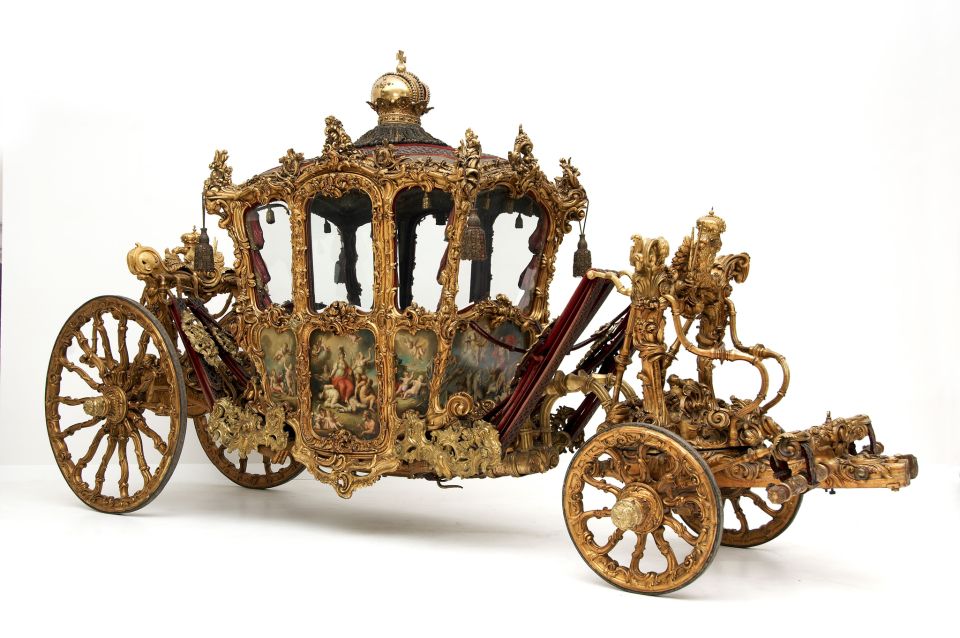
- Baroque imperial coach as the main “wow” moment
- Sisi Trail with Empress Elisabeth’s rare, personal items
- Carriages connected to Maria Theresia, Napoleon, and Franz Joseph
- A mix of state coaches, travel coaches, and Habsburg children’s carriages
- Optional audio guide (and the Italian version is reported as clear and functional)
Imperial Carriage Museum at Schönbrunn: what your ticket really covers
This is an entrance ticket for the Imperial Carriage Museum located at Schönbrunn Palace in Vienna. With a 1-day validity window, it’s ideal when you want something cultural that still feels specific and visual. You’ll walk through the carriage collection at your own pace, with the option of an audio guide if you choose it.
The museum is run under the Kunsthistorisches Museum umbrella, which fits the venue: it’s the kind of place where objects are treated carefully, not rushed. The overall theme is how royals moved through the world—by stagecoach, state carriage, and ceremonial vehicle—so you’re not just looking at fancy furniture. You’re looking at status, protocol, and taste, built into wood, metalwork, and upholstery.
If you’re traveling with a guide of your own, you can bring them. There’s also a specific rule about free entrance for tour guides: only one tour guide per group booking gets a free ticket if accompanying the group, and a group is defined as at least 10 persons. (If you’re not traveling as a group, you can ignore this, but it’s useful to know for organized tours.)
There’s one practical snag to plan around: a printed voucher is required. If you’re the type who saves time by skipping paperwork, build in a buffer to print or exchange your voucher before you arrive.
You can also read our reviews of more tours and experiences in Vienna
The Baroque imperial coach: Vienna’s carriage showstopper
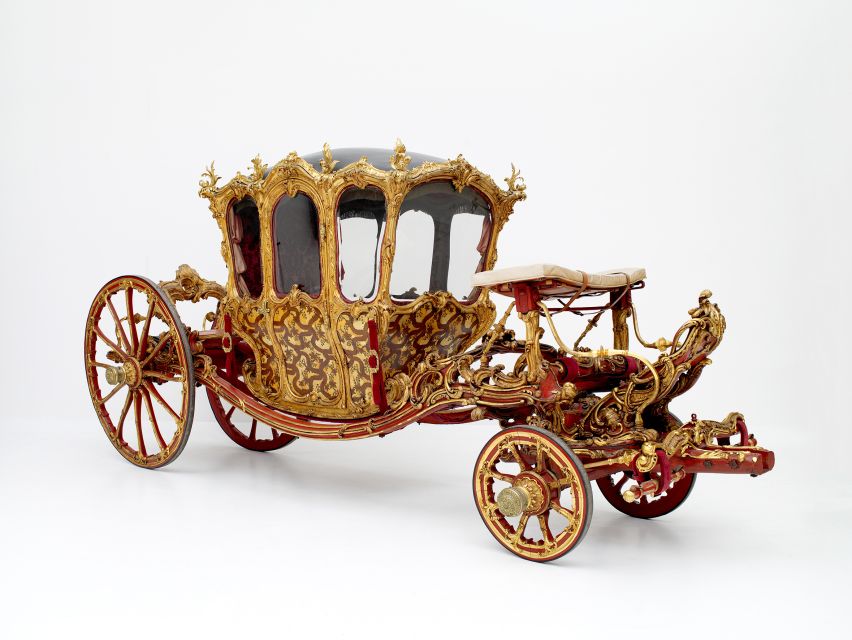
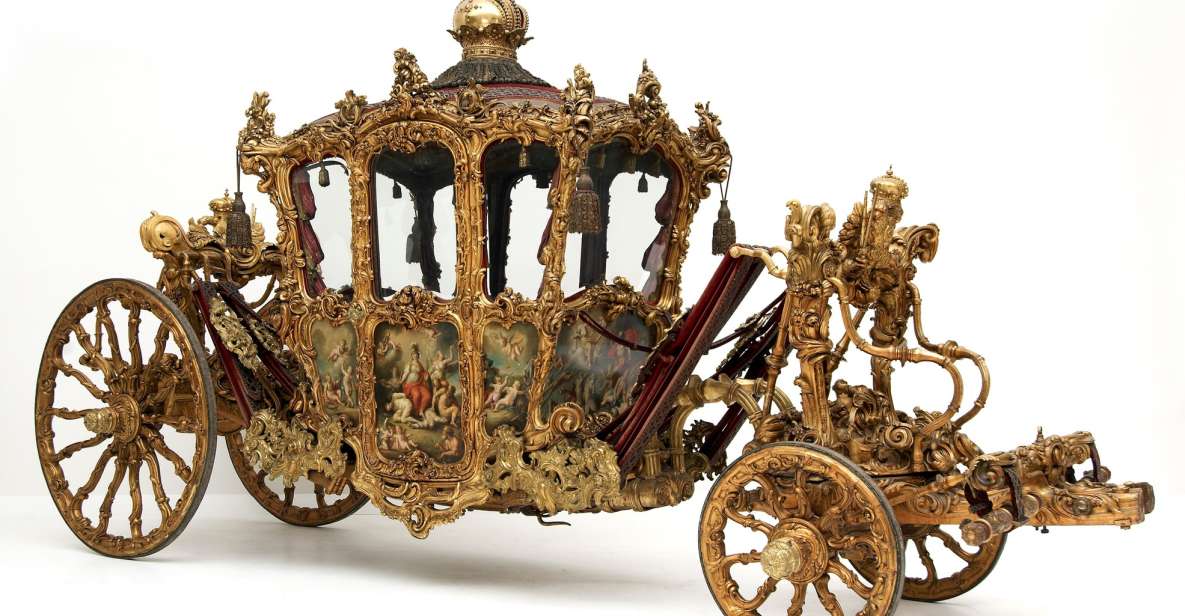
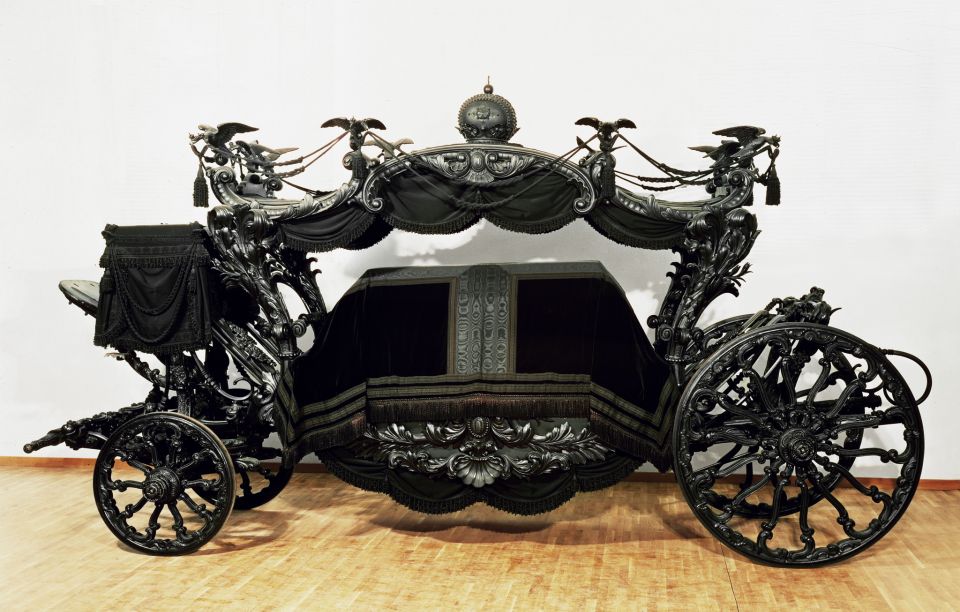
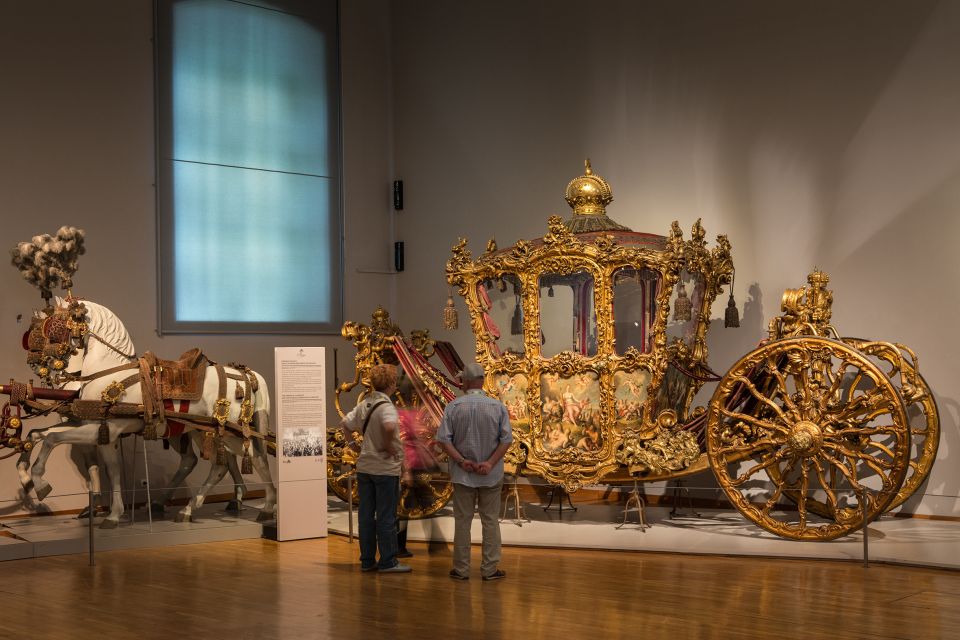
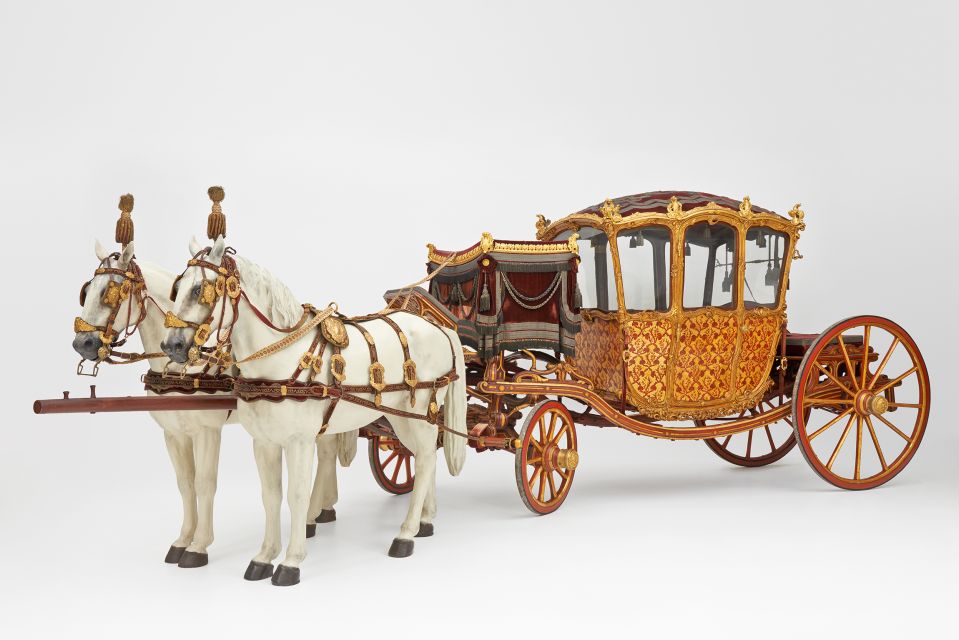
The biggest highlight here is the Baroque imperial coach. That wording matters because it signals the museum’s approach: this isn’t just another carriage in a row. It’s treated as the star exhibit, the one that frames what makes the collection worth your time.
What you’ll notice right away is that “Baroque” typically means drama—ornament, theatrical styling, and a strong sense of ceremony. Even if you don’t know the technical vocabulary, you can still read what it was designed to do: look impressive at a distance, feel formal up close, and reinforce the idea that the rider represented something bigger than themselves.
In practical terms, the Baroque imperial coach is the easiest exhibit to connect with. It sets the tone for everything else you see afterward—state coaches look more restrained by comparison, travel coaches feel more functional, and the later sections begin to show personality and daily ritual rather than only display.
Carriages of Maria Theresia, Napoleon, and Franz Joseph
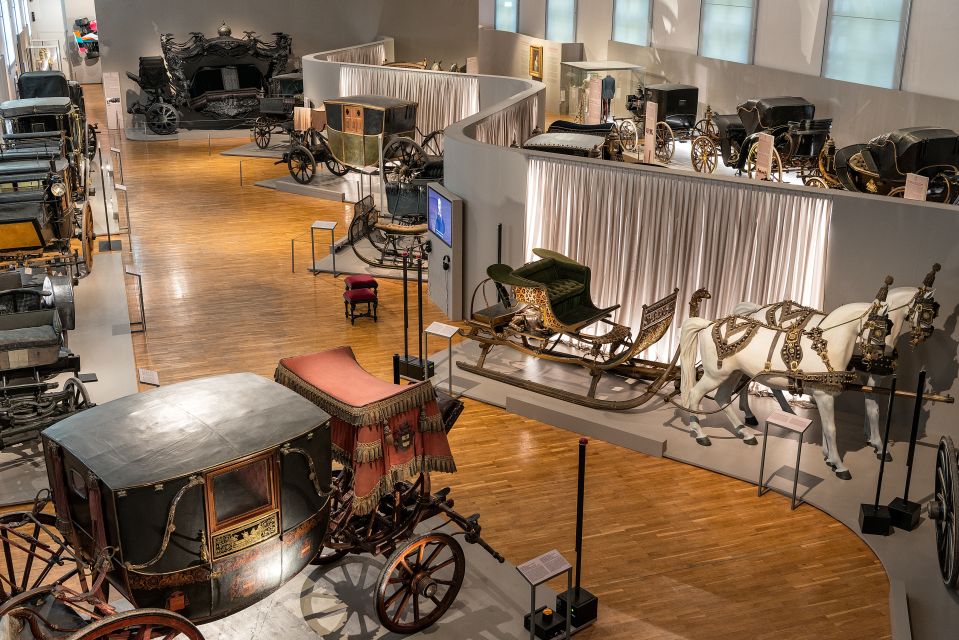
One reason people book this museum ticket is the lineup of historical rulers you can connect to the collection. The museum centers on famous names—Maria Theresia, Napoleon, and Franz Joseph—and shows you their carriages as part of their eventful lives.
Here’s the value for you: these aren’t just isolated “cool artifacts.” The collection lets you compare how leadership style can show up in transportation.
- With Maria Theresia, you’re looking at a model of monarchy tied to court culture and ceremony. You’ll see vehicles framed for official presence—built for status, not comfort alone.
- With Napoleon, the story shifts toward a different kind of power. It’s a reminder that carriage design and public image were tools of politics, and leaders of different eras left different visual signatures behind.
- With Franz Joseph, the focus returns to long, recognizable imperial symbolism—where continuity and protocol matter. The carriages give you a concrete way to imagine that world: motion as governance.
The museum keeps the tone accessible. You’re not required to be a carriage expert to enjoy the contrast. If you’re the sort of traveler who loves “how things worked,” this part pays off because the objects act like evidence: you can look at the form and sense how the vehicle supported the role.
State, travel, and the charming Habsburg kids’ carriages
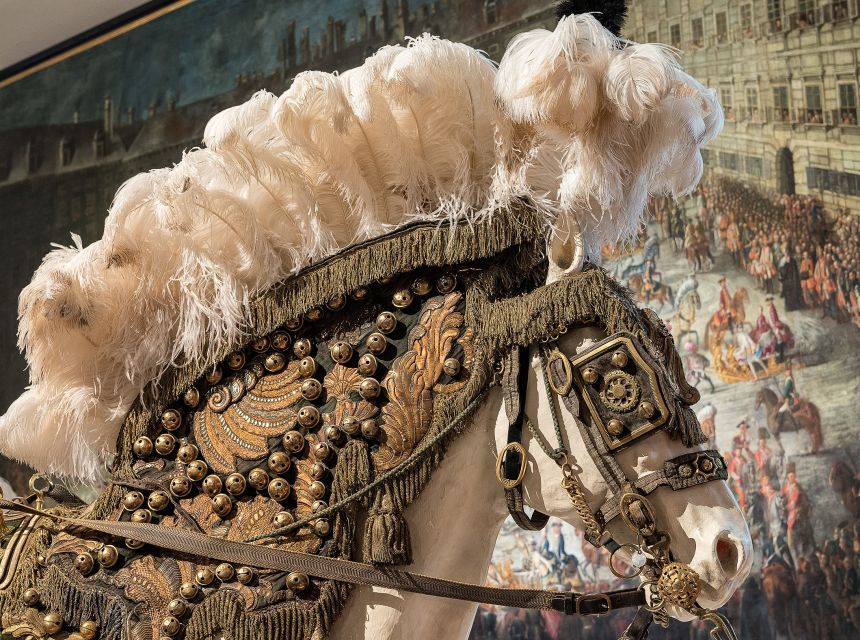
After the headline exhibits, the collection expands into several categories: state carriages, comfortable traveling coaches, and the charming children’s carriages for Habsburg princes and princesses.
This is one of the best “balance points” in the museum. The fancy ceremonial pieces can start to blur together if you only focus on decoration. The introduction of traveling coaches and children’s carriages resets your perspective.
Children’s carriages are especially useful because they make the imperial world feel less abstract. You get a sense of how even young members of the court were shaped by the same visual language of rank and court life. It’s a gentle human angle in an otherwise grand, formal setting.
And the travel coaches matter because they remind you that rulers and courts weren’t only doing parades. People had to move between residences, meetings, and duties. Even without extra interpretation, you can usually tell which vehicles were meant for spectacle and which were meant to carry someone more practically.
If you enjoy museum experiences where you don’t have to choose between “important” and “interesting,” this mix is a smart design.
The Sisi Trail: Empress Elisabeth’s saddle, riding chapel, and dresses
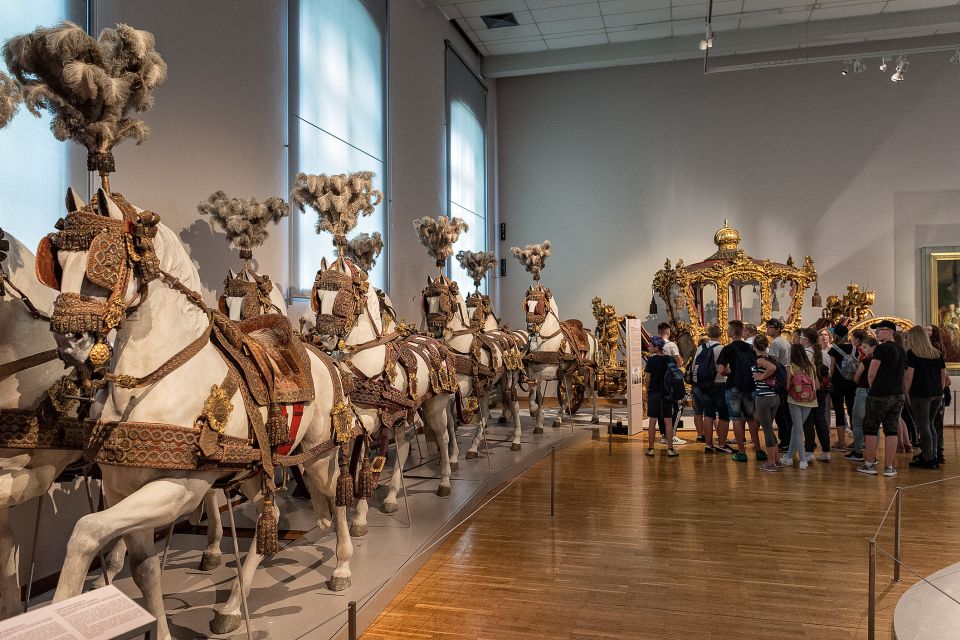
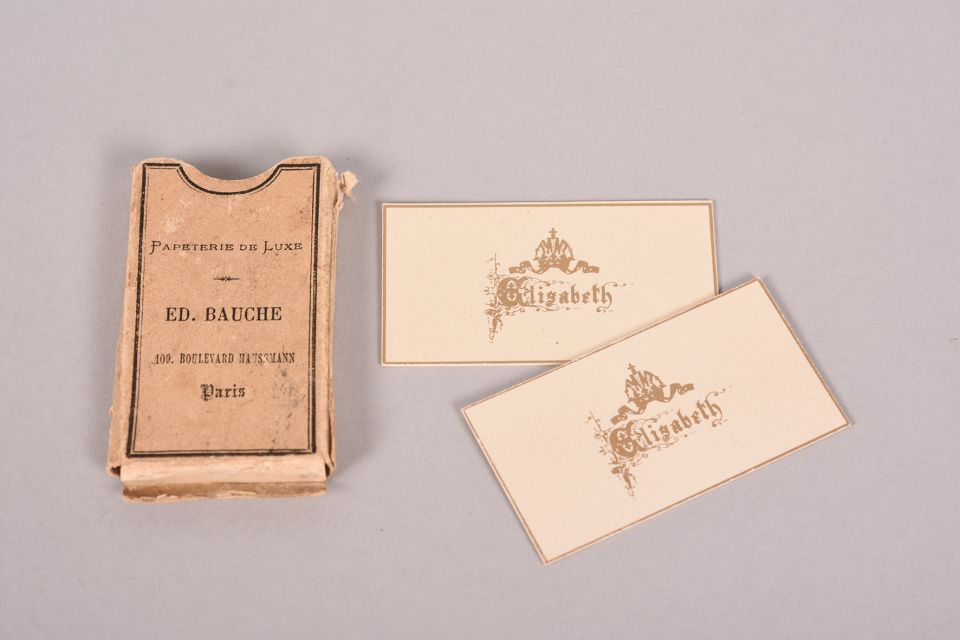
Now for the part that makes this ticket feel more than just a standard museum visit: the Sisi Trail. This route highlights Empress Elisabeth’s carriages, but it goes further by showing related personal items and mementos.
From the museum description, you can expect to see items such as:
- her only extant saddle
- her riding chapel
- sumptuous original dresses
That list is exactly why the Sisi Trail works. Carriages are one thing. Personal objects connect you to a person’s habits and tastes. Elisabeth wasn’t just a figurehead sitting in a grand vehicle—she’s presented here through what she used and wore, down to objects tied to her riding routines.
For you, the practical takeaway is simple: if you do only one “structured” part of your visit, make it the Sisi Trail. It creates a narrative thread. Instead of walking through separate displays, you follow a storyline: carriage life plus personal ritual, shown through rare items.
And if you’re a fan of Elisabeth, this section is also your best shortcut to understanding why she remains memorable. The museum doesn’t rely only on fame; it shows you how her choices and possessions reflected her life.
You can also read our reviews of more museum experiences in Vienna



Audio guide choices and how to use them well
The ticket includes entrance fees, and an audio guide is included only when that option is booked. If you add the audio, you’ll have a better chance of catching what makes each carriage distinct—especially when you’re comparing multiple royal vehicles back-to-back.
One small tip that can make audio guides feel less like homework: use the audio for the tricky parts and save your eyes for the dramatic ones. In other words, let the guide help you interpret what you’re seeing, but don’t feel forced to listen to every word the moment you arrive.
Language note: an Italian audio guide is reported as concise and functional, so if you’re traveling with Italian as your working language, this option should be usable rather than frustrating.
If you’re traveling without the audio guide, you can still enjoy the visit. The collection is visual first. The audio is best treated as a bonus layer, not a requirement.
Price and value of a $14 Vienna carriage museum ticket
At $14 per person, this can be good value if you want a focused museum day rather than an all-day, room-hopping marathon. It’s also reasonably priced for what you get: entrance to a specific collection plus an optional audio experience.
The key is expectation-setting. This is not a guided tour with a person leading you through the exhibits. There’s no guided commentary included, though you can bring your own guide. So if you love museums most when you have live context, you’ll either want the audio or plan to do a bit of pre-reading so you know what to look for.
That said, the museum’s structure helps you. The centerpiece Baroque coach gives you a hook, the ruler-linked carriages give you comparison points, and the Sisi Trail gives you a storyline. That combination is why the experience tends to land well. It’s rated 4.7 with 339 reviews, which is a sign that most people feel they got what they came for.
If you’re the budget-focused traveler, one-day tickets are especially attractive because they fit into a bigger Vienna plan without demanding a whole day of sightseeing. In a city full of big-name attractions, a targeted museum ticket like this can be a smart use of time.
One-day planning: how to fit this museum into your Schönbrunn day
This activity is valid for 1 day, with starting times you should check based on availability. That means you’ll want to decide when you want to enter and then build your visit around that window.
Here’s the best approach I recommend for a low-stress day:
- Treat the visit as two parts: the main carriage collection, then the Sisi Trail segment.
- Give yourself time to slow down around the Baroque imperial coach and then move on with fewer distractions.
- Wear shoes you can stand in, since museums like this are designed for walking and looking, not quick sprints.
Also plan around the voucher requirement. A printed voucher is required, and a common frustration is arriving expecting phone entry or instant exchange. To avoid losing time, print ahead of departure if you can. If you can’t, at least build in extra time for printing or exchanging.
The museum itself is your meeting point: Imperial Carriage Museum in Schönbrunn Palace. That’s convenient because you’re already in one of Vienna’s most organized sightseeing zones.
Who should book this Imperial Carriage Museum ticket
This ticket is a great fit if:
- you like museums that are visual and object-focused
- you’re interested in the Habsburg world and want a physical connection to Elisabeth
- you’re curious about how politics and royalty show up in everyday tools like travel vehicles
- you want a contained, one-day experience that doesn’t swallow your whole schedule
It’s also a strong option if you’re traveling with mixed ages. The children’s carriages section brings a lighter note, and the overall collection is easy to enjoy even if you’re not an expert in European history.
Where it may not be the best fit:
- If you strongly prefer live guided interpretation and want a person to explain everything, you might find the audio option less satisfying than a full guide-led experience.
- If paperwork stresses you out, the printed voucher requirement is a real factor—solve that before you go.
Should you book this Vienna carriage museum ticket?
I’d book it if you want a smart, single-ticket museum stop in Schönbrunn that delivers big visual impact and a clear storytelling thread through the Sisi Trail. The centerpiece Baroque imperial coach gives you the headline moment, and the comparison across rulers and categories keeps it from becoming repetitive.
Skip it only if you’re looking for a guided narrative led by a person, or if you know you’ll struggle with the printed voucher requirement and don’t want to plan ahead. If you handle that one logistics detail, this is a worthwhile way to see a side of imperial Vienna that you can’t get from statues and palaces alone.
FAQ
Where is the meeting point?
The meeting point is the Imperial Carriage Museum in Schönbrunn Palace.
How long is this ticket valid?
The ticket is valid for 1 day. You should check availability to see starting times.
What is included in the price?
The ticket includes the entrance fees for the Imperial Carriage Museum. An audio guide is included only when that option is booked.
Do I need to print anything?
Yes. A printed voucher is required.
Is a guided tour included?
No. This ticket includes museum entrance, not a guided tour. You can bring your own guide.
Are there rules for free entrance for tour guides?
Yes. Only 1 tour guide per group booking (voucher booking) gets a free entrance ticket if accompanying the group to the museum. A group consists of at least 10 persons. Under 10 persons, the rule does not apply, and an additional tour guide or accompanying person counts as a paying member. A state certified guide has free entrance.