REVIEW · VIENNA
Vienna Private City Tour: Palaces, Churches & Sacher Cake Option
Book on Viator →Operated by Local CoolTour · Bookable on Viator
Vienna can feel like a movie set, and this tour starts pulling the scenes together fast, with palaces and churches in one smart walk. You’ll hit classic monuments, then get the stories that explain why they matter—especially the Habsburg-era power moves and the city’s long memory.
I especially liked the small-group pace, because you can ask questions and actually hear the answers. And the optional Sacher cake stop is a fun way to end the tour with something you can taste right after learning the background.
One thing to consider: the route ends in a different location, so you’ll want to check your exact finish point ahead of time so you don’t have to guess while you’re hungry.
In This Review
- Key things to know before you go
- Vienna in 3 hours: why this private walk works
- Starting at Albertinaplatz and the State Opera area
- Augustinian Church: Gothic grandeur plus imperial secrets
- Spanish Riding School: Lipizzaners and the tradition behind them
- Roman Ruin: seeing Vienna’s layers in plain sight
- Hofburg Palace and Empress Sissi’s orbit
- Plague Column (Pestsaule): Vienna remembers its losses
- St. Peter’s and St. Rupert’s: Baroque interiors with included entry
- Anker Clock and Hoher Markt: old-meets-everyday Vienna
- Mozart stop plus St. Stephen’s Cathedral: big culture, big scale
- Sacher cake at Demel and SLUKA: dessert with a story
- Price and value: is $94.92 worth it?
- Guides and pacing: what to expect from the person leading you
- Who this tour suits best
- Should you book this Vienna Private City Tour?
- FAQ
- How long is the Vienna Private City Tour?
- What is the group size for this private tour?
- What language is the tour offered in?
- Where does the tour start?
- Is hotel pickup included?
- What does the price include?
- Is the Sacher cake included in every option?
- Is there free cancellation?
Key things to know before you go
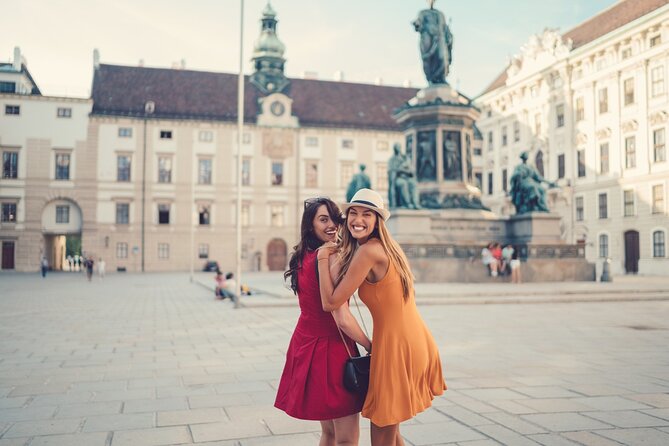
- Private small group (up to 8) means less waiting and more back-and-forth with your guide
- Most stops are free to enter, so you’re paying for guidance and time, not ticket math
- Habsburg connections are a theme, from royal church traditions to Hofburg and Sissi
- Church interiors are part of the deal, including St. Peter’s and St. Rupert’s with included entry
- Timing works for cold or heat, with frequent opportunities to pause and warm up or find shade
- Sacher cake is optional, but the tour builds toward that sweet finish
Vienna in 3 hours: why this private walk works
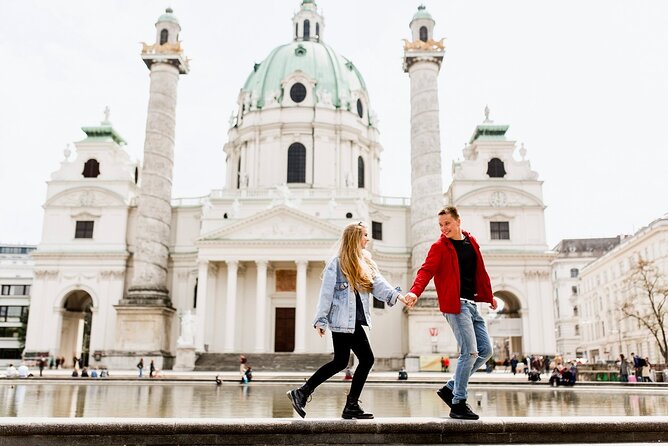
If you only have a short window in Vienna, you need two things: the right stops and the right order. This tour hits a classic arc through the center. You start at Albertinaplatz, then work your way through Habsburg landmarks, old religious sites, and the kind of “Vienna details” that most people walk past without noticing.
What makes it feel worth it is how the guide ties places together. You’re not just seeing buildings. You’re getting the thread that explains the pattern—who ruled, what changed, and how Vienna protects stories in stone, artwork, and even timepieces.
And because it’s a private tour for a small group, the pace stays human. I like that. You can slow down if something catches your eye, or speed up if you’re more “show me the next photo-worthy view” than “tell me the full backstory.”
You can also read our reviews of more city tours in Vienna

Starting at Albertinaplatz and the State Opera area
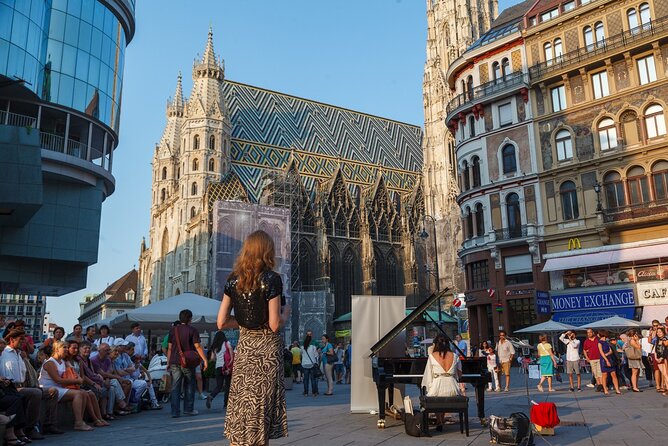
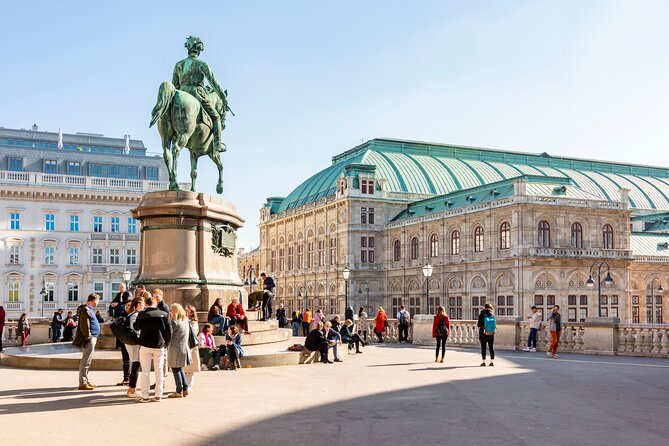
Your tour begins at Albertinaplatz, which is a solid choice for a first meeting point. It’s central, easy to recognize, and close enough to major sights that you’re not spending your precious hours in transit.
From here, the walk naturally leads to the Vienna State Opera area. Even if you don’t go inside, the exterior gives you context for Vienna’s obsession with performance and prestige. The guide can help you read the building like a clue: what it signals about the city’s culture and why classical music and grand architecture grew up together here.
A practical tip: if you’re visiting in winter, early morning can be cold. This route gets you to frequent indoor or sheltered stops fairly quickly, so you’re not trapped outside for the whole trip.
Augustinian Church: Gothic grandeur plus imperial secrets
One of the stops I find most memorable on this kind of Vienna walk is a place where the architecture feels dramatic, but the story is quietly specific. The Augustinian Church is exactly that mix.
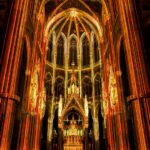
It’s described as a 14th-century church with Gothic style. But the real attention-getter is the Habsburg connection. The church served as a royal court church, including for imperial weddings, and it holds a particularly unusual relic: the hearts of Austrian emperors preserved in silver urns. That detail turns a normal church stop into something that feels oddly personal—like Vienna storing family history in a very public way.
If you like history that isn’t just dates, this is a good anchor stop. It also helps you understand why the tour keeps returning to imperial themes later at Hofburg.
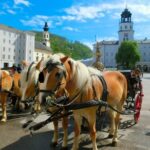
Spanish Riding School: Lipizzaners and the tradition behind them
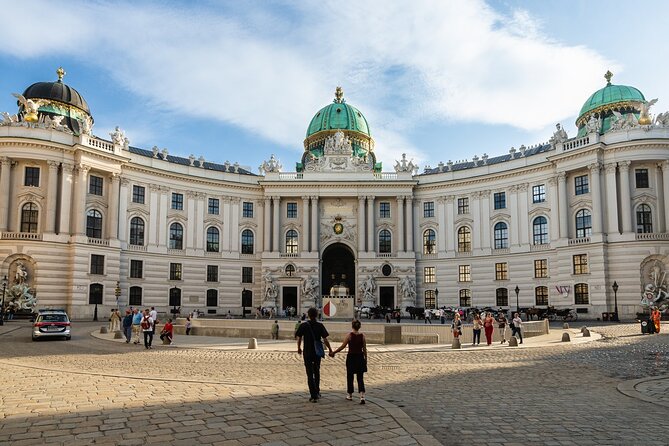
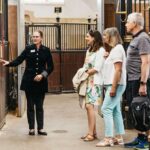
The Spanish Riding School stop is a great change of pace. Instead of another monument, you get the story of equestrian excellence and the Lipizzaner tradition.
This is one of those Vienna topics that sounds niche until your guide explains why it became such a symbol. You learn what the horses are famous for and where the Lipizzaner name fits into the bigger narrative. Even if you’re not a horse person, the cultural angle makes it click.
If you want photos, the area around the Riding School gives you the right “Vienna” visual vibe without requiring a ticketed event. Still, it’s worth treating it as a story stop, not just a pose stop.
Roman Ruin: seeing Vienna’s layers in plain sight
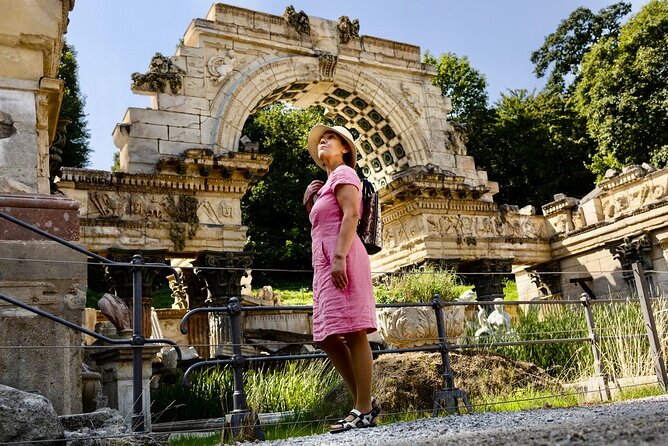
Vienna is usually framed as imperial and Baroque. The Roman Ruin stop is the reminder that the city has older roots than most people expect.
Here you’re walking among archaeological remnants and trying to picture the people who lived there long before the palaces and churches took over the skyline. For me, this kind of stop is the difference between “I saw monuments” and “I understand how cities evolve.”
It also gives your legs a useful break. The walk tends to slow here because you’re absorbing what you’re looking at rather than rushing to the next big façade.
You can also read our reviews of more private tours in Vienna


Hofburg Palace and Empress Sissi’s orbit
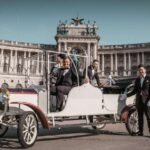
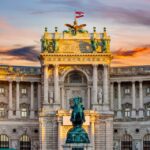
Hofburg is the kind of place that can overwhelm you if you only see it from outside. This stop works because the guide frames it as lived imperial power, not just a background for tourism.
You get time to appreciate the palace’s grandeur and then connect it to the royal family. Empress Sissi comes up directly, which helps you translate the building into character. If you’ve read or watched anything about Sissi, hearing her woven into the architecture makes the place feel less like a frozen museum and more like a machine that ran people’s lives.
This is also a turning point in the tour’s tone. After Hofburg, you start moving through sites that feel more symbolic—plague memory, sacred art, and small urban corners—rather than only grand statements of rule.
Plague Column (Pestsaule): Vienna remembers its losses
Then you pause at the Colonna Della Peste, also known as the Pestsaule. It’s a poignant symbol of resilience, tied to the pandemics and people’s survival instinct.
This isn’t the kind of stop that sells the loudest photos. But it lands emotionally, because it shows how Vienna marks tragedy without pretending it was glorious. The guide gives context so you don’t just see a monument—you understand why it’s there.
If you like architecture with a purpose beyond decoration, this stop is a quiet win. It also keeps the tour from turning into a nonstop parade of “biggest-ever” sights.
St. Peter’s and St. Rupert’s: Baroque interiors with included entry
The tour includes time in St. Peter’s Church and St. Rupert’s Church. Those two stops are ideal if you like art and interiors rather than only exteriors.
At St. Peter’s, you’re looking at Baroque beauty and tranquil atmosphere, plus intricate frescoes and ornate altars. The point isn’t to rush. This is a “look up and notice” type of stop, and having included entry makes it easier to plan without extra ticket steps.
St. Rupert’s is another architecture-forward church stop. You’ll see the Baroque style and interior decor, plus details like the organ and stained glass windows. There’s enough time here to actually take in the craftsmanship rather than just snapping a quick picture and moving on.
Between these two churches, you start to see a pattern: Vienna’s faith spaces are also art spaces, and the art often carries status, money, and meaning.
Anker Clock and Hoher Markt: old-meets-everyday Vienna
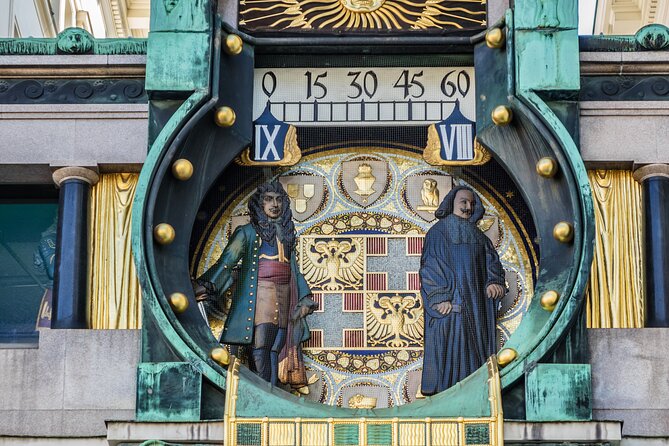
A stop at the Ankeruhr clock is a fun one. It’s a working timepiece with intricate mechanics, and it’s built to show off. When the figures come to life, the city’s theatrical side shows up again, this time in miniature.
After that, the tour heads toward Hoher Markt, Vienna’s oldest market square. Here you get a different flavor of “how people lived,” with market stalls for local delicacies and handicrafts. And there’s also a history lesson tied to the Jews in the city, which is the kind of context that makes an urban square feel real rather than just scenic.
I like that this part of the route keeps Vienna human-scaled. You’re not only surrounded by palaces and churches. You’re also seeing the daily rhythm that always existed underneath the grand story.
Mozart stop plus St. Stephen’s Cathedral: big culture, big scale
Vienna’s Mozart connection is handled in a dedicated stop at his former residence area. That’s a smart choice, because it shifts from political and architectural stories into artistic legacy. You learn about Mozart’s life and work in a way that’s meant to help his music feel more grounded, not floating in a textbook.
Then you finish with St. Stephen’s Cathedral, with included entry. This is one of the city’s main markers, and the guide gives you time to appreciate its Gothic interior and the impressive works of art and medieval relics.
If you’ve ever stood inside a cathedral and felt like you were missing half the meaning, this stop helps. The guide gives you a path for what to look at—so you leave with images you can actually explain.
Sacher cake at Demel and SLUKA: dessert with a story
This tour doesn’t treat dessert like an afterthought. It builds toward it.
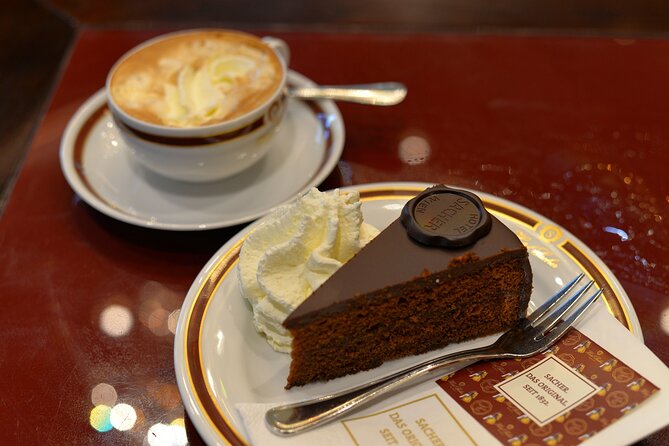
You get a stop at Demel to learn about the history of the famous Sacher cake and the artisans who preserve older techniques. Then the tour’s optional end stop at Conditorei SLUKA includes coffee and the Sacher cake as the full option.
Here’s how to think about it: you’re paying for a guided walk first, but the Sacher stop is a cultural finish. Chocolate in Vienna isn’t only sweets. It’s part of how the city brands memory—like a edible footnote to the empire and the people who served it.
If you choose the standard option, you’ll still get the main sights, but you’ll skip the coffee-and-cake part. If you’re a foodie or you want the full Vienna experience, the full option is the easiest way to avoid hunting for the right place after a long walk.
Price and value: is $94.92 worth it?
At $94.92 per person for about 2.5 to 3 hours, the biggest value isn’t the landmarks. It’s the fact that you’re paying for a private guide in English with a tight route through major sights that otherwise take planning.
A few value signals from the experience:
- Private small group up to 8: you’re not squeezed into a crowd where questions get lost.
- Most entries are free at the stops where entry is noted as free, so your money goes to interpretation, not only admissions.
- Included entry at key churches and cathedral: you get access without having to coordinate separate ticket purchases in the middle of walking time.
- Practical local guidance is part of the package, meaning you can leave the tour knowing where to go next for food and coffee.
If you compare this to doing everything on your own, you’re also buying time. Vienna can be easy to navigate, but it’s harder to navigate with meaning unless you have a guide who can connect the dots quickly.
Guides and pacing: what to expect from the person leading you
Across the tour, the guide can make a big difference in how the whole day feels. Names that come up often include Aida, Elisabetta, Anna, Ana, and Jacob—frequently praised for clear English, friendly humor, and the ability to keep the story flowing without turning it into a lecture.
You may also notice that the pacing is flexible. In colder months, the tour tends to mix indoor and outdoor moments so you can warm up. In hotter weather, there’s attention to shade and comfort. If anyone in your group has walking limits, the private format gives more room for adjustments.
That’s another quiet value point: private tours aren’t automatically better just because they’re private. They’re better when the guide adapts.
Who this tour suits best
This is a great fit if you:
- Want a high-impact first day in Vienna without spending hours researching
- Like hearing how monuments connect to real people (especially Habsburg family life and court culture)
- Want church interiors, not only exteriors
- Appreciate a foodie moment that ties into the stories you just heard
It’s also ideal for couples and small groups because the tour size keeps the experience conversational. If you’re traveling solo, it can feel more personal than a big group walk.
Should you book this Vienna Private City Tour?
I’d book it if you want a focused Vienna orientation with palaces, churches, and cathedral time packed into one walkable route. The price makes sense when you factor in private guiding, included entries at major stops, and the optional Sacher cake finale that turns your learning into something memorable you can taste.
Skip it (or at least think twice) if you hate walking or prefer to build your own exact route from day one. This tour is built for structure. It works best when you’re happy to follow the guide’s order.
If you do book, do yourself one favor: be at the meeting point on time at Albertinaplatz, and check your confirmation for the exact ending location. That way, you’ll enjoy the walk instead of doing detective work right at the end.
FAQ
How long is the Vienna Private City Tour?
The tour runs about 2 hours 30 minutes to 3 hours.
What is the group size for this private tour?
It’s a private tour with a small group of up to 8 people.
What language is the tour offered in?
The tour is offered in English.
Where does the tour start?
The meeting point is Albertinapl. 2, 1010 Wien, Austria.
Is hotel pickup included?
Hotel pickup is not included.
What does the price include?
It includes a private tour with a local guide, plus practical information and suggestions. If you choose the full option, it also includes coffee and a typical Sacher cake per guest in a traditional Viennese coffee house.
Is the Sacher cake included in every option?
No. The coffee and Sacher cake are included only with the full option. The standard option does not include coffee and Sacher cake.
Is there free cancellation?
Yes. You can cancel up to 24 hours in advance for a full refund. If you cancel less than 24 hours before the start time, you won’t get a refund.