REVIEW · VIENNA
Vienna: Private Music Tour
Book on GetYourGuide →Operated by Austria Tours & Travel · Bookable on GetYourGuide
Opera and history in one tidy walk. You start at the Vienna State Opera for behind-the-scenes context, then shift into a guided stroll that ties together Beethoven, Mozart, and Johann Strauss in places you can’t really “figure out” on your own. I especially like that you get the big-name landmarks and the real music connections, including how the Vienna Boys Choir tradition fits into the city’s rhythm. The only real consideration: you’ll be outdoors for part of the route, so pick comfortable shoes and be ready for a steady pace over 150 minutes.
What makes this tour work is the private-group feel. When guides like Lisa or Giselle are at the front, the tone stays lively, and you can steer the emphasis toward what you care about most (more listening details, more building context, or extra time to adjust the route). One potential drawback to keep in mind is that the exact start time can shift based on State Opera opening hours and tour availability, so you’ll want to be flexible that day.
If you want a high-impact musical evening’s worth of Vienna in a morning/afternoon block, this is a smart way to do it—especially for first-timers who want names, dates, and buildings all working together.
In This Review
- Key highlights you’ll feel right away
- Vienna State Opera: the kind of entry you can’t DIY
- The inner-city stroll: how 150 minutes stays satisfying
- Palais Lobkowitz: where Beethoven’s Eroica made noise
- Hofburg Imperial Chapel: Vienna Boys Choir tradition in context
- Mozart Memorial and Strauss’s dance salon: the romance side of Vienna
- Pasqualati House, Mozart’s links, and the St. Stephen’s crescendo
- Price and value: $541 per group up to 15, and what you should watch
- Private guide quality: energy, responsiveness, and making it fit your day
- Who this tour suits best (and who might want something else)
- Should you book this Vienna Private Music Tour?
- FAQ
- How long is the Vienna Private Music Tour?
- Where does the tour start?
- Where does the tour finish?
- Is the State Opera entrance fee included?
- Can you skip the ticket line?
- What languages is the tour available in?
- Is the tour wheelchair accessible?
- Is it a private group?
- Is free cancellation available?
Key highlights you’ll feel right away
- State Opera House, with priority access to get inside faster and learn what makes it tick
- Gustav Mahler included, so the opera story isn’t just about famous names on plaques
- Beethoven’s Eroica link at Palais Lobkowitz, built into the walking route
- Hofburg Imperial Chapel stop connected to the Vienna Boys Choir performing every Sunday
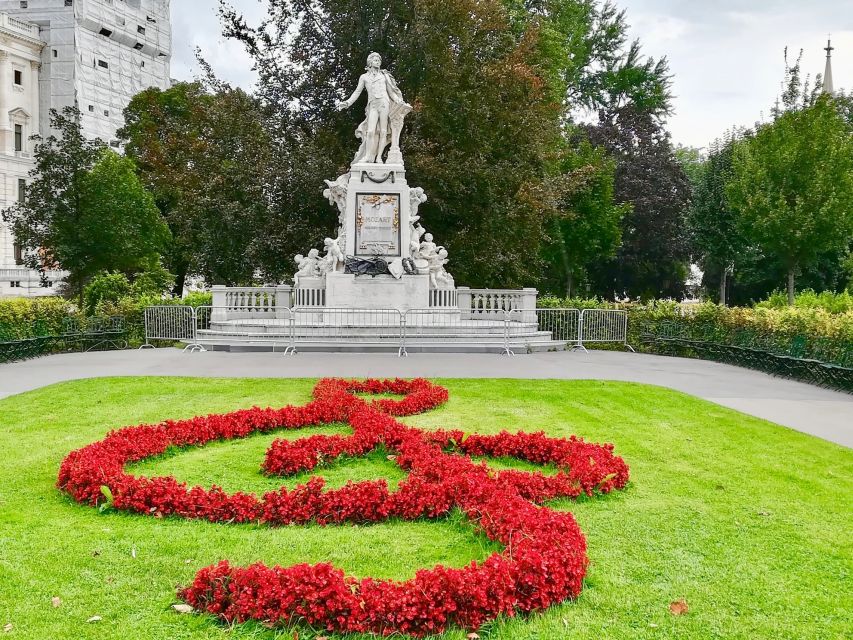
- Mozart Memorial and Strauss’s dance salon for the romance-and-music angle in Vienna
- St. Stephen’s Cathedral plus key Mozart connections to close the story with a wow moment
Vienna State Opera: the kind of entry you can’t DIY
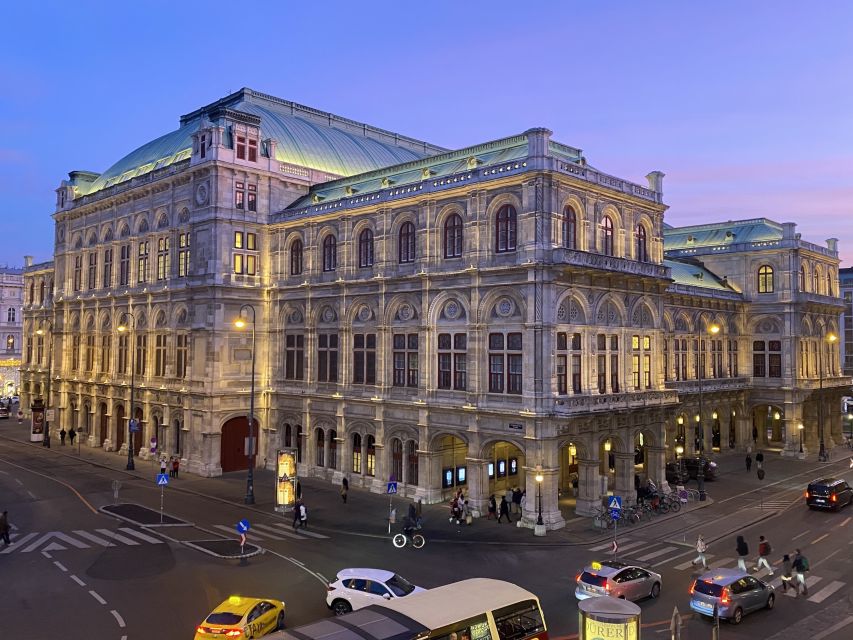
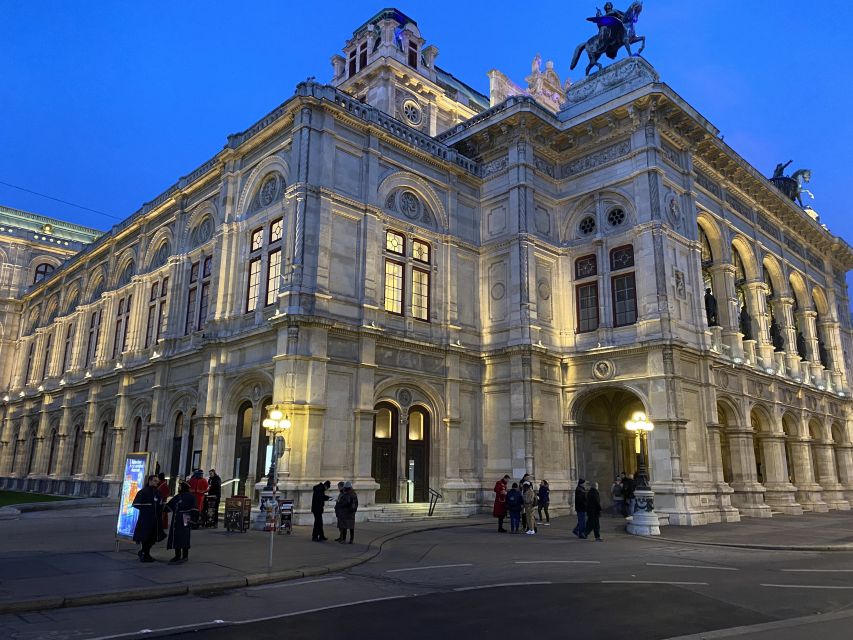
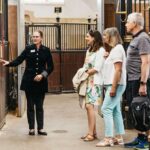
The tour’s center of gravity is the Vienna State Opera, where you meet your state-certified guide by the fountain on the left-hand side of the opera house. From the start, it’s clear this isn’t just a look-at-the-building stop. You get a guided visit of the inside spaces tied to how opera actually happens—who shaped it, what the hall represents, and why this place became a magnet for major composers and conductors.
This is where the music history gets practical. You’re not only hearing that the building is famous; you’re learning how it earned that reputation. The tour specifically points you toward key figures like Gustav Mahler, which helps you connect the opera house to the larger story of Viennese music—not just the glossy reputation.
Also, you’ll be skipping the ticket line. That detail matters in Vienna. The city is popular, and time disappears fast when you’re waiting. Skipping that friction buys you more “inside-the-music” time and less time standing in place.
One more plus for comfort: the tour is described as wheelchair accessible. So if you need that, you’re not stuck with the usual old-city tradeoff of stairs versus access.
You can also read our reviews of more private tours in Vienna

The inner-city stroll: how 150 minutes stays satisfying
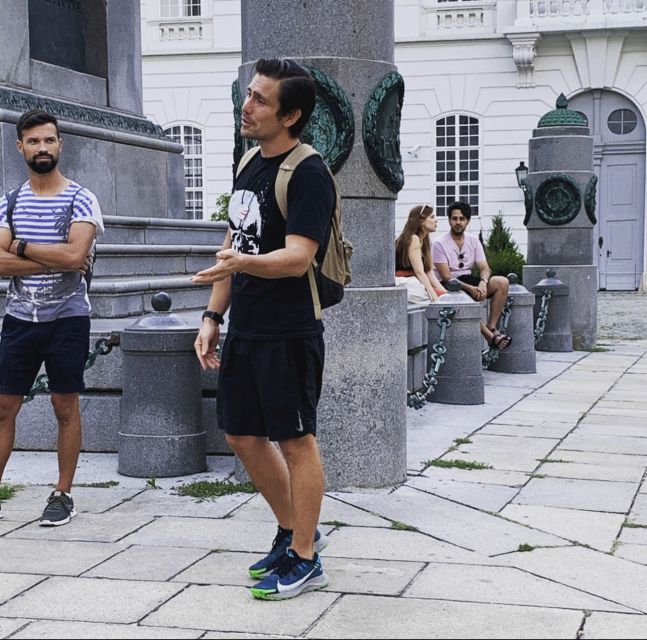
After the opera visit, you transition into a leisurely musical walk through Vienna’s historic center. The duration is 150 minutes total, so you should expect a plan that balances walking with short, high-value stops. This is the kind of route where your guide uses the city itself like a textbook: each building you pass has a composer or musical connection, and you learn what to look for.
This portion works best when you treat it like a conversation, not a checklist. In one example from the guide experience, the group adjusted during the tour so they could end near a metro stop, and the guide even found a small moment that helped kids get some play time on a nearby playground. That’s a good sign: the tour isn’t locked into one rigid pace if something important comes up.
Your walking tour finishes at 1010 Vienna, Austria, which is a useful detail. It helps you imagine your next step—breakfast, museum hopping, or just getting back to transit without stress.
Practical tip: if you have specific needs (mobility issues, a kid’s stamina limit, or a preference for where you end up), tell your guide early. Guides who stay responsive tend to make the whole experience smoother.
Palais Lobkowitz: where Beethoven’s Eroica made noise
One of the most satisfying stops is Palais Lobkowitz, tied to Beethoven’s Symphony No. 3, the Eroica. The tour frames this location as a premiere place and a meeting point for influence—especially the role of Beethoven’s main patron. That matters, because it explains why Vienna mattered so much for composers beyond pure fame. Vienna wasn’t only a stage; it was a system of support.
If you’ve heard the Eroica as music but never understood why it would have landed like a statement, this is the missing piece. You’re shown how the context around a work—patrons, halls, the people commissioning and promoting new music—shapes how a composer’s career moves. It makes Beethoven feel less like a distant “genius statue” and more like a person navigating real power and real opportunities.
What to do here: listen with your eyes. Look at the building setting as part of the story. A premiere site changes your perspective on what you’re hearing when you recognize references later on.
Hofburg Imperial Chapel: Vienna Boys Choir tradition in context
Another anchor stop is the Hofburg Imperial Chapel, where the Vienna Boys Choir perform every Sunday. Even if you’re not there on Sunday, the stop still has value because it connects you to a living tradition of music in Vienna.
Why this matters: the choir isn’t just a charming cultural detail. It’s part of how Vienna keeps music in the public world, not only in concert halls. The tour’s way of placing the choir within the walking route makes it feel like something that belongs to the city, not a separate museum exhibit.
This stop also gives the tour a nice emotional variety. After the grandeur of the opera house and the composer-heavy stops, the choir connection shifts the mood toward continuity—music as something that keeps going.
If you’re planning your day around choir performances, this is the one detail you’ll want to double-check for the day you’re actually booking.
Mozart Memorial and Strauss’s dance salon: the romance side of Vienna
The Mozart Memorial is described as a former dance salon connected to Johann Strauss, the so-called Waltz King. This is a clever stop because it targets what a lot of people miss when they only think of Vienna as solemn classical history. Vienna also ran on social life—balls, dances, and the kind of cultural energy that turned music into a social magnet.
The tour frames Strauss’s salon as the place where he made the ladies swoon. Even if you take that as colorful storytelling, it points you toward the real takeaway: the waltz wasn’t just music to listen to. It was a social event generator.
This is also a great stop for photos and for reading small details at street level. The setting helps you picture how music functioned in everyday life. And that, for me, is one of the biggest reasons to do this kind of guide-led route: it gives the city a “scene” instead of just a list of names.



Pasqualati House, Mozart’s links, and the St. Stephen’s crescendo
The tour also includes the Pasqualati House, described as the former residence of Ludwig von Beethoven. That’s a different kind of connection than a performance site. A residence stop helps you think about routine, working, writing, and living with the realities of a composer’s life.
You’ll also see St. Stephen’s Cathedral, including the reference that Mozart was married there. That’s a heavyweight fact that changes how the cathedral feels. It stops being just architecture and starts feeling like a hinge point in a personal life story tied to the city’s music legacy.
The tour also mentions Mozart’s former home, adding one more layer so you get both public and private Vienna: where music was performed, and where composers lived. When you put those together—opera house, premiere setting, residence, cathedral—you end up with a more complete picture of how Vienna shaped careers and personal milestones.
What’s the drawback? These stops include famous names and well-known sites. If you crave deep, technical music analysis, this tour is more about the “where it happened” and “why it mattered” than a lecture. But if you want a coherent, guided route that makes Vienna’s musical story click, this is exactly the right balance.
Price and value: $541 per group up to 15, and what you should watch
The price is $541 per group for up to 15 people, with a 150-minute duration. That’s not cheap in total. But for a private group, it can be good value depending on who you’re bringing.
Here’s how I’d judge the value:
- If you’re 3–6 people, private access plus a guided route through multiple major sites often feels reasonable compared to booking separate guides or paying for individual timed entry plus transit time wasted.
- The tour explicitly includes the guided visit to the State Opera, with the entrance fee not included, and it includes skip-the-ticket-line benefits. That skip can save you meaningful time.
- Hotel pickup and drop-off are available only if you select that option. If you’re staying near transit and walking is fine, you might not need it.
The best value usually lands when your group wants interaction, flexibility, and a single guide tying everything together. This is the kind of tour where the guide matters as much as the stops.
One more thing: the local partner will let you know the start time based on State Opera opening hours and tour availability. So make sure your day can flex slightly.
Private guide quality: energy, responsiveness, and making it fit your day
In the best tours, the guide can read the room. This one’s guide-driven, and the evidence shows. Lisa is called out for being outstanding—responsive about timing, energetic, and full of history without turning into a dry lecture. Giselle is described as lovely and full of information in an opera-house-only context.
What I take from that for your booking decision: you’re not just buying access to sites. You’re buying the ability to ask questions, request small adjustments, and shape the pacing.
So do this:
- Tell your guide what you care about most: opera, composers, the choir tradition, or the Strauss/romance angle.
- If you’re traveling with someone who needs accommodations, mention it early. One group had the route and ending adjusted so it worked better for their mom.
- If you have kids, note that the guide can sometimes create a short diversion for downtime. It won’t turn into a theme park day, but small practical moments can make a big difference.
Also, the tour languages are English and German, so you should match your comfort level with the tour’s language.
Who this tour suits best (and who might want something else)
This tour fits best if you want:
- A first-time Vienna introduction that feels musical, not random
- A route where big names connect across several locations
- A private group experience with a guide who can respond to needs
- A compact plan that ends in central Vienna at 1010
It may not be your best pick if you’re looking for a deep, music-theory seminar or a super-long, slow crawl through every cathedral detail without time pressure.
Still, for most people—especially people who love classical music but don’t want to spend a day piecing together logistics—this is a smart, efficient option.
Should you book this Vienna Private Music Tour?
I’d book it if you want the most famous opera house in the world plus composer stopovers in a single guided loop, without wasting time sorting tickets or route planning. The price makes sense when shared across a group and when you value a guide who can keep energy up and adapt the route.
Don’t book it last-minute if you’re the kind of person who needs your day locked at specific times, because the State Opera start depends on opening hours and tour availability. And if you strongly prefer solitary exploring, you may find the guided structure limiting.
If you’re aiming for a memorable Vienna “music story” day—this one is built for that.
FAQ
How long is the Vienna Private Music Tour?
The tour duration is 150 minutes.
Where does the tour start?
Meet your guide by the fountain on the left-hand side of the Vienna State Opera.
Where does the tour finish?
It finishes at 1010 Vienna, Austria.
Is the State Opera entrance fee included?
The guided tour of the State Opera is included, but the entrance fee is not included.
Can you skip the ticket line?
Yes, the tour includes skip-the-ticket-line access.
What languages is the tour available in?
The live tour guide offers English and German.
Is the tour wheelchair accessible?
Yes, the tour is listed as wheelchair accessible.
Is it a private group?
Yes, it’s a private group with a maximum group size of up to 15 people.
Is free cancellation available?
Free cancellation is available up to 24 hours in advance for a full refund.