REVIEW · VIENNA
Vienna: The Great Plague Exploration Game
Book on Viator →Operated by Questo · Bookable on Viator
Vienna turns into a puzzle trail. This smartphone-led exploration uses audio stories and clue-solving to guide you from medieval churches to major landmarks without a traditional tour. I like that it feels private and flexible, so your group sets the pace instead of marching on someone else’s schedule. One thing to consider: you’re doing this with your phone, so if you hate apps or struggle with tech setup, you’ll want to plan a little extra time.
The route is built around stops where you can pause, look closely, and then move on when you’ve answered the puzzle. You’ll walk past famous names like Mozart-era dining lore and then cut into quieter streets where the details are the point. Families often enjoy it because it keeps kids engaged without constant explanations.
In This Review
- Key things to know before you play
- Vienna as a game: why this format works
- Price and value: $7.23 per person isn’t the whole story
- Start at Ruprechtskirche: your first clue in the oldest lanes
- Ruprechtskirche to Griechenbeisl: music legends and everyday history
- Bäckerstraße’s mural: wolf, cow, and the odd logic of old street art
- Stephansplatz puzzle to Stock im Eisen: two quick detours with payoffs
- St. Stephen’s Cathedral (Stephansdom): the one paid choice you might want
- Café Frauenhuber: the coffeehouse pause that keeps it human
- Albertina and the Hofburg finish: museums and power center at your pace
- Who this tour suits best (and who might bounce)
- Smartphone setup: the only real risk
- How long it takes in real life
- My practical take: a smarter way to see Vienna, if you’re in the mood
- Should you book it?
- FAQ
- How long is the Great Plague exploration game in Vienna?
- Is there a live guide with this experience?
- What languages is the game offered in?
- Do I need to reschedule if I want to play later?
- Is this private for my group?
- Are tickets included for St. Stephen’s Cathedral, Albertina, or Hofburg?
- Are kids free?
- Where do we start and end the game?
- Can I cancel for free?
Key things to know before you play
- Private for your party: it’s just you, not a big mixed crowd.
- No physical guide: the game runs you, your smartphone, and your curiosity.
- Self-paced flexibility: play any hour after booking and take breaks.
- Audio stories included: you don’t just get questions, you get narration.
- Mostly free stops: many key sights are admission-free, with a few paid options later.
- Kid-friendly setup: kids are free, which helps when you’re traveling as a family.
Vienna as a game: why this format works
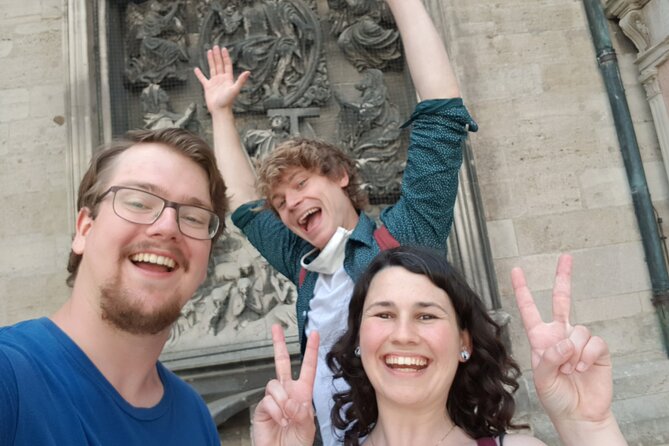
This experience turns Vienna into a “look harder” walk. Instead of listening to a lecture and hoping you remember it, you’re asked to find an answer at each location, then follow the next clue. That small shift changes everything: you notice doorways, roof tiles, inscriptions, old murals, and the way buildings sit inside courtyards.
I also like the vibe: it’s not trying to replace sightseeing tours. It’s a different way to see the city, especially when you’ve already done the big-ticket checklist and want something more personal and slightly mischievous.
You can also read our reviews of more tours and experiences in Vienna
Price and value: $7.23 per person isn’t the whole story
At $7.23 per person, the price is low enough that you can justify it as an “activity layer” on top of normal exploring. You’re paying for structure, audio guidance, and puzzles that steer you into the parts of Vienna you might otherwise skip.
The real value is the time you gain. The walk is about 1 hour 30 minutes on average, but the format is flexible, so you can stretch it when you find something you want to photograph longer. If you’ve got kids, teenagers, or even adults who get restless on tours, self-paced pacing can be worth more than a low ticket price.
Start at Ruprechtskirche: your first clue in the oldest lanes
Your game starts at St. Rupert’s Church (Ruprechtskirche), Ruprechtspl. 1, 1010 Wien. This church is described as 13 centuries old, built with stone taken from an ancient Roman settlement—a great opening because it signals the theme: the past is stacked, literally in the walls.
You’ll look around to find the answer to a question that moves you to the next stop. It’s quick (about 10 minutes here), but it’s a smart start because it teaches you how the game works: slow down, search the details, then commit to the clue.
What you should keep in mind: churches often have multiple spots worth staring at. If you rush, you’ll miss what the puzzle is pointing toward. If you enjoy “spot the clue” games, you’ll feel at home right away.
Ruprechtskirche to Griechenbeisl: music legends and everyday history
Next up is Griechenbeisl, a historic tavern tied to famous composers. The big hook is that Mozart, Beethoven, and Schubert are associated with having dined there at one point. You can also look for framed signatures in the Mark Twain room area, where additional celebrity names are listed.
This stop is near the Holy Trinity Greek Orthodox Church, and the name is tied to Greek tradesmen and Levant travelers who settled nearby—basically, it’s a place where Vienna’s mix of communities shows up in a very human way.
The game continues the same way: you search for an answer or challenge inside the tavern area, then you’re off. The practical upside is that you’re mixing famous names with a real atmosphere, not just a plaque outdoors.
Bäckerstraße’s mural: wolf, cow, and the odd logic of old street art
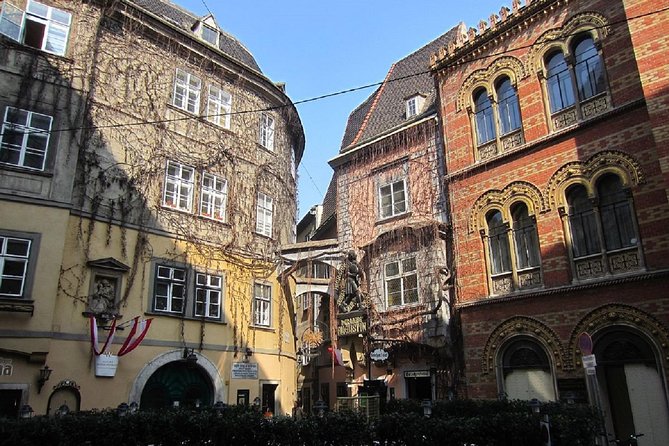
Then you head to Bäckerstraße, a street known for charming interior courtyards and older façades. One standout here is a quirky mural connected to Bäckerstrasse No. 2 at the Hasenaus (Hare House).
The mural features a wolf and a cow wearing spectacles playing backgammon. Some interpretations say it links to an older painting of medieval life, while another theory treats it like an allegory about conflict between Protestants and Catholics. Either way, it’s the kind of image that makes you stop and look again, which is exactly what a clue-driven walk needs.
You’ll spend only a short stretch here (around 5 minutes), but it’s a valuable breather from the big landmark energy. It also works well for families because it’s visual and a little silly.


Stephansplatz puzzle to Stock im Eisen: two quick detours with payoffs
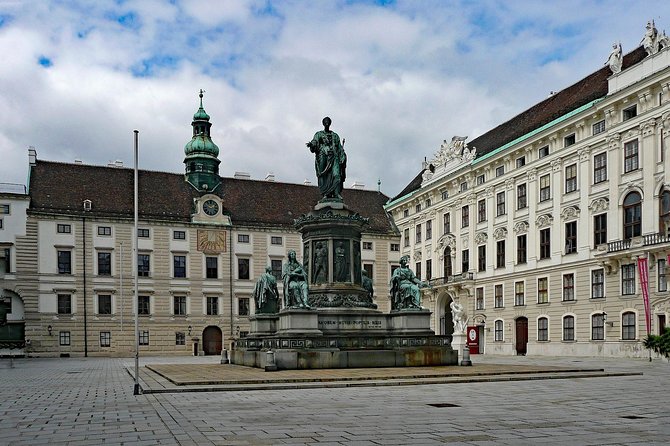
From Stephansplatz, you’ll move by solving a clue and getting directions to what comes next. This stop is about 10 minutes, but the main point is workflow: you learn how to read the city with the game’s guidance.
Then comes Stock im Eisen on the corner of Karntner Strasse. This is often described as the legendary Nails Tree. It’s rumored in some stories to be Satan’s handiwork, but the practical explanation is simpler: generations hammered nails into the trunk for good luck.
What makes it fun is the physical detail. You’ll see the tree trunk mounted on a pedestal about 1.5 meters high, plus an iron ring with a lock dummy. The game pulls you here by clue, and once you arrive, you can linger until you’re ready to follow the next step. That freedom to stop and stare is one of the underrated benefits of this format.
St. Stephen’s Cathedral (Stephansdom): the one paid choice you might want
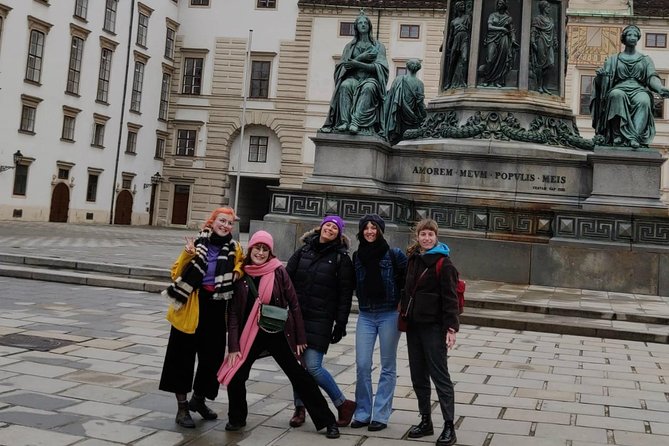
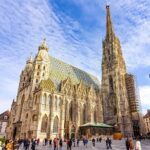
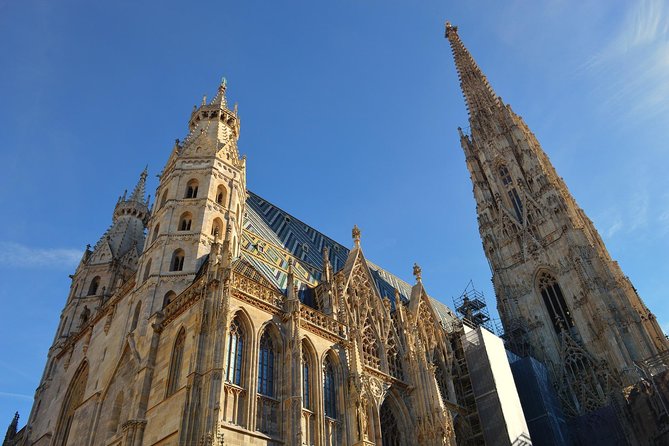
Eventually you’ll hit St. Stephen’s Cathedral (Stephansdom). The cathedral dates back to the 12th century and is a major Gothic landmark in Austria. If you like views and visual details, this is the stop where you’ll really feel you’re in “icon Vienna.”
You can explore the tower room for an impressive view over the city, and it’s described as including 13 bells. The roof is another wow moment: it’s about 230,000 glazed tiles forming patterns, and the mosaics include a double-headed eagle symbol tied to the Austrian empire during Habsburg rule.
Here’s the tradeoff: the game includes the puzzle time (around 15 minutes), but admission for the tower room isn’t included. So if you want the viewpoint, you’ll want to budget extra for that part.
Quick advice: if you’re traveling with kids or you’re time-limited, you can still enjoy the outside and the church areas without turning this into a long ticket line day. Let the game do the routing, then choose how deep you go.
Café Frauenhuber: the coffeehouse pause that keeps it human
Right near Stephansdom, there’s a chance to stop at Café Frauenhuber on Rauhensteingasse for a taste of Viennese coffeehouse culture. This place is described as the oldest coffeehouse in Vienna (dating back to 1746).
It’s also linked to music history: Mozart and Beethoven supposedly played table music for guests between 1782 and 1791. Even if you don’t go for a big sit-down, this is a perfect reset. A snack or a coffee can turn a puzzle walk into a full-on relaxed afternoon.
Since this is a coffeehouse stop rather than a ticketed attraction, you control the cost and the tempo. This matters because the game is flexible, and having a comfort stop in the middle keeps everyone happy.
Albertina and the Hofburg finish: museums and power center at your pace
Later on, you’ll reach Albertina Museum in the Hofburg Palace complex. The Albertina is known for over 50,000 drawings and over 1 million master prints, shown in a rotational display. It’s also a good match for people who like variety: the collections cover modern art, graphic art, architecture, and photography.
One named highlight is Monet’s The Water Lily Pond. If you’re into the Habsburg setting too, the Albertina Museum is in the palace context, so you’re not just looking at art—you’re moving through an imperial frame.
The caution here is practical: admission for Albertina isn’t included. You can still enjoy the atmosphere outside and decide if you want to purchase entry once you see the space and your energy level.
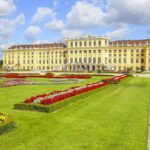
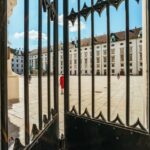
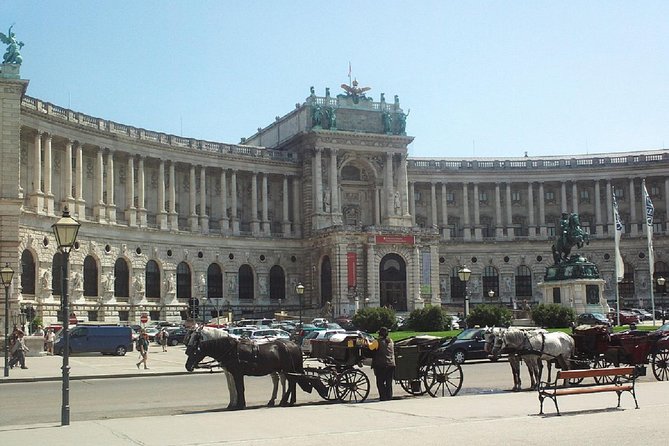
Finally, the game ends at the Hofburg, where Austria’s President works and where the Habsburgs once held power. The palace has imperial apartments, a Sisi Museum, and described silver collections. There’s also a National Library in the complex, and a Hall of Ceremonies still used for balls.
The game ends here as your story closes, and you can continue exploring on your own. Like the Albertina, admission isn’t included, so this is where you decide whether you want to pay to go in deeper.
Who this tour suits best (and who might bounce)
This works especially well if you want structure without a lecture. If you like walking, noticing details, and solving clue-style prompts, you’ll likely enjoy the “hunt” energy.
It’s also a strong option for families with easily distracted children. The puzzles keep attention moving, and the stops are short enough that kids don’t melt down waiting for a long speech.
On the other hand, if you’re the type who wants constant historical explanations and straight facts, you might feel like it’s light on narrative density. The upside is that you can spend extra time at each stop once you know what you’re looking for.
Smartphone setup: the only real risk
Because there’s no physical guide, your smartphone becomes the conductor. One review mentioned that the app installation and unlocking can be a little tricky, and the fix required support. That’s a useful reminder: don’t start this on a tight timeline with zero room for hiccups.
If you plan to play at a busy moment, give yourself a small buffer right after you arrive at Ruprechtskirche. Once it runs, it’s flexible. You can also take a break and come back later without needing a reschedule.
How long it takes in real life
The route is about 1 hour 30 minutes on average, but “average” is doing a lot of work here. The game is designed so you can spend as much time as you wish at stops—especially places like Stock im Eisen where you’re allowed to pause until you’re ready for the next clue.
If you move fast, you may finish quicker. If you stop for a coffee at Café Frauenhuber or you want cathedral tower views, plan more time. The game runs within broad daily hours (early morning to late evening), so you can fit it into a full day of exploring.
My practical take: a smarter way to see Vienna, if you’re in the mood
I like this because it gives you a reason to look. Vienna can feel like a lot of big façades unless you slow down, and this game forces you to slow down in a fun way. It also mixes major sights with quieter streets, so the day doesn’t feel like one long sightseeing factory line.
Just go in with the right expectation. This isn’t about a guide’s talking points. It’s about you finding answers, watching how Vienna tells its stories through small details, and then using that to guide your next step.
Should you book it?
Book it if:
- You want a self-paced Vienna walk with audio stories and puzzles.
- You’re traveling with kids and want them occupied without constant babysitting.
- You’d rather explore side streets and details than stay only on the usual routes.
Skip or reconsider if:
- You strongly dislike apps or you’ve had trouble with app check-in before.
- You want nonstop, deep historical commentary from a live person.
- You hate hunting for clues and would rather just read or listen.
If your ideal day is hands-on and a little playful, this is a solid use of time in Vienna—especially at $7.23 when you compare it to the cost of a standard guided add-on.
FAQ
How long is the Great Plague exploration game in Vienna?
It’s listed at about 1 hour 30 minutes on average, though you can spend more time at locations you want to linger at.
Is there a live guide with this experience?
No. You won’t have a physical guide. You’ll use your smartphone with audio stories to follow the game.
What languages is the game offered in?
It’s offered in English.
Do I need to reschedule if I want to play later?
No. You can play it any time after booking without rescheduling.
Is this private for my group?
Yes. It’s a private experience, meaning only your group participates.
Are tickets included for St. Stephen’s Cathedral, Albertina, or Hofburg?
Not all admissions are included. The game notes that St. Stephen’s Cathedral, Albertina, and the Hofburg have admission not included, so you may need tickets if you want to go inside those parts.
Are kids free?
Yes. Kids are free.
Where do we start and end the game?
It starts at Ruprechtskirche, Ruprechtspl. 1, 1010 Wien and ends at the Hofburg, 1010 Vienna.
Can I cancel for free?
You can cancel for a full refund up to 24 hours in advance. If you cancel less than 24 hours before the start time, the amount paid isn’t refunded.