Mozart in Vienna, with live music nearby. The Mozarthaus Vienna ticket bundles museum time in Mozart’s apartment setting with an intimate chamber concert where each piece gets a short, helpful lead-in. I especially like the way the presenter adds quick context before the music starts. One watch-out: the performance space is small, and if you get claustrophobic, you may want to plan your seating carefully.
What makes this evening feel different is how close you are to the musicians. You’re not stuck in the back row. You can see hands and bows, and the sound lands in a way that suits classics by Mozart, Strauss, Haydn, and Beethoven (with variations by program). For a value check, you’re paying for both the concert and museum admission, which means your evening is more than just a show.
In This Review
- Key highlights to plan around
- Mozarthaus Vienna plus a chamber concert: why it works
- Price and what you actually get for $71.38
- Entering Mozart’s apartment museum before the music starts
- The concert setup: intimate, close, and surprisingly powerful
- The pre-concert introductions that turn listening into understanding
- The schedule you’ll actually follow on the day
- When things change: a realistic note on performers and start times
- What to do nearby after your concert
- Who this suits best (and who may prefer something else)
- Practical tips that make the evening easier
- Should you book Concerts at the Mozarthaus Vienna?
- FAQ
- What is included with the concert ticket?
- Where does the experience start?
- What time does the concert start?
- How long is the concert?
- How much does it cost?
- How big is the group?
- Is public transportation nearby?
- Can service animals join?
- Is there a free cancellation option?
Key highlights to plan around
- Mozarthaus museum entry included in the same ticket, letting you connect composer life to the music you hear
- Short introductions before each piece, designed to make familiar classics easier to follow
- Small audience size (max 70), with many programs feeling more like 50–75 than a big concert hall
- Close-up chamber-music setup, often in a basement-style recital room with strong acoustic
- Classics from the Vienna canon, with selections that can include staples like the Blue Danube and Radetzky March
Mozarthaus Vienna plus a chamber concert: why it works
Vienna is full of impressive music venues. This one adds something extra: it starts with Mozart as a real person in real rooms. The Mozarthaus Vienna is dedicated to Wolfgang Amadeus Mozart’s life and work, and it’s in the building where he lived during the last year of his life. That matters because the concert isn’t floating in space. It’s tied to place.
After you’ve spent time with exhibits like original manuscripts, letters, and personal belongings, the music lands differently. You’re not only listening for melodies. You’re listening with a sense of the man, the era, and the environment.
The concert itself is built around the idea of classic Vienna. Expect a program that can move through Mozart, Strauss, Haydn, and Beethoven, with other famous composers sometimes showing up depending on the night. Chamber music is also the right format for this setting: it’s detailed, personal, and it benefits from a room that doesn’t swallow nuance.
You can also read our reviews of more tours and experiences in Vienna

Price and what you actually get for $71.38
At $71.38 per person, you’re not just buying a ticket to a one-hour concert. You’re also getting free admission to the Mozarthaus Vienna as part of the package. That’s a big part of the value, especially if you’re trying to make your days feel efficient without turning the trip into a checklist.
The concert runs about 1 hour 10 minutes (approx.). With chamber music, that length usually feels satisfying rather than rushed. Add museum time and your evening becomes a complete cultural block, not a quick pit stop.
Also notice the planning rhythm. This experience is commonly booked about 32 days in advance on average. That’s a useful sign: it’s popular enough that you shouldn’t wait for last-minute decisions if you want a specific date.
Entering Mozart’s apartment museum before the music starts
Your evening begins at Wien Museum Mozart apartment Mozarthaus, Domgasse 5, 1010 Wien, Austria. The start time listed is 6:30 pm, and you’ll redeem your ticket at the same spot. The big idea is simple: show up, get your admission lined up, and use that museum time to build context.
Once inside, the Mozarthaus museum experience is all about seeing Mozart in detail. The exhibitions cover his life and work, and you’ll be moving through rooms connected to his late-life environment. You’ll also find original documents such as manuscripts and letters, plus personal items tied to him.
Here’s a practical way to use that time: don’t try to speed-run every display. Instead, spend time on the items that help your ear. If you spot a manuscript or letter that connects to the era the program will cover, you’ll likely find yourself recognizing structure and style when the musicians play.
There’s also a “how to navigate” element built into the visit. One guest described using 2D barcodes for Wi‑Fi and an audio guide, following instruction boards, and using an elevator route down to the concert level. You won’t need to memorize the steps, but it’s smart to arrive with enough cushion to follow signage without rushing.
The concert setup: intimate, close, and surprisingly powerful
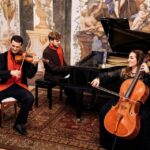
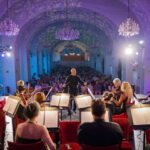
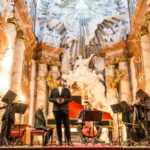
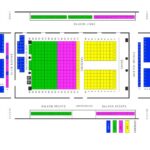
This is not a stadium experience. The experience is limited to a maximum of 70 travelers, and in practice it can feel like a small recital. Many people describe a cozy room where you can see the musicians up close.
The venue for the performance can feel more like a basement recital space than a traditional hall. One guest called out that the recital room is below ground level with excellent acoustic. That kind of room can be a plus for chamber music. Sound doesn’t have to travel far, so you often get clarity in the lines—especially strings and piano balance.
A typical concert format you might encounter includes a small ensemble such as:
- a piano trio (piano plus violin and cello), or
- a string trio plus piano, depending on the program
The program concept stays Vienna-friendly, with well-known works by Mozart, Strauss, Haydn, and Beethoven. In at least one described set, you could hear crowd-pleasers such as the Blue Danube and Radetzky March (along with other pieces). Another described program ranged from Mozart and Schubert to more later classical composers, so don’t assume every night is the same exact lineup.
If you’re sensitive to tight spaces, treat the room size as a real factor. A guest specifically mentioned feeling claustrophobic in the concert hall. That’s not about the music. It’s about your body in the space.
The pre-concert introductions that turn listening into understanding
One of the most consistently praised parts of this experience is the narration. Before each piece, there’s a short introduction that gives a bit of history and points out what you’ll hear or why it matters.
This is where the “classical music for first-timers” pitch becomes believable. If you’ve never been to a formal concert, it can help to get your bearings in plain language. The introductions reported here aren’t long lectures. They’re quick, organized, and made for a small-room audience.
You may also notice a lighter touch. One description mentions the presenter using humor as part of the lead-in. If you like your culture night with a human voice (not a stiff script), that’s a plus.
In terms of performers, people mention different musician lineups on different dates, including names such as Rodrigo, Manon, and Eunju in one account. Another description lists performers like Julian Yoh Hedenbork (piano), Gergely Kolozsvari (cello), and Jovana Raljic (violin). Use those names as examples of what’s possible—lineups can vary by concert date.




The schedule you’ll actually follow on the day
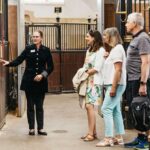
With only one main stop, the evening is mostly about a smooth flow from museum to concert. Here’s the practical rhythm based on what’s described:
- Arrive and redeem at the Mozarthaus meeting point by 6:30 pm start time.
- Exchange your voucher for museum admission.
- Take time to use the museum rooms and exhibitions at your own pace.
- Follow signs down to the concert level (some people described an elevator route and hall flow).
- Head to the event space when prompted.
Because the concert room is small, I’d rather you arrive ready than “on the edge.” Giving yourself a little extra time makes the difference between enjoying the museum details and just grabbing seats.
When things change: a realistic note on performers and start times
Most evenings run on schedule. Still, live music is live music. On one occasion, a performance started about 20 minutes later because a musician didn’t show up as expected, and the ensemble played with fewer members. The provider response says guests were offered a full refund option and many chose to stay, and the remaining performance still received praise.
So what should you do with that information? Plan your evening like a grown-up: don’t schedule a hard-to-make dinner reservation right at showtime. If you’re the type who hates uncertainty, give yourself buffer time around the concert start.
What to do nearby after your concert
The Mozarthaus location is in the city center at Domgasse 5 (1010 Wien). That’s a big advantage. After the concert ends, you’re back at the meeting point area, and you can keep exploring without needing extra transit planning.
If you like walking, this part of Vienna is made for it. If you prefer a calmer wind-down, pick a nearby café and let the music settle in your head before you head back to your hotel.
Who this suits best (and who may prefer something else)
This experience is a strong match if:
- you want a short, high-quality classical evening with no heavy prep
- you like intimate settings and clear sound
- you want to connect Mozart’s life with the music you’re hearing
- you’re traveling with someone who’s curious, not necessarily a classical expert
It may be less ideal if:
- you feel uneasy in tight spaces (the hall can be described as small, with one specific mention of claustrophobia)
- you need a perfectly rigid schedule with no allowance for delays
- you prefer very large venues with lots of anonymity (this one is the opposite)
Practical tips that make the evening easier
A few small moves help a lot:
- Wear layers. You’ll be moving between museum spaces and the concert hall. If you’re dressed for a warm museum but it’s cooler in the recital room, you’ll feel it.
- Arrive with a buffer. Even with a 6:30 pm start and a smooth flow, small venues can require tight timing.
- Keep your bag simple. One account complained about coat-handling manners and table placement for coats. The fix is simple: travel light and be ready to manage your coat quickly if needed.
- Use the museum time to listen better. Before the first notes, think: what composer is coming next, and what might you notice in the phrasing or style once you’re inside the music?
Should you book Concerts at the Mozarthaus Vienna?
If you like classical music but don’t want the experience to feel intimidating, I think this is a smart booking. You get Mozarthaus museum entry plus an intimate chamber concert in a setting tied to Mozart’s life. The piece-by-piece introductions are a major part of the value because they help you follow along without homework.
At $71.38 for about 1 hour 10 minutes, it can be a better deal than many “concert-only” tickets, especially when you also want museum time. Just plan for the realities of a small venue: it’s close, which is great for engagement, and it’s compact, which can be uncomfortable for some people.
If you want to combine Vienna’s music identity with something hands-on, this is one of the easier ways to do it.
FAQ
What is included with the concert ticket?
The ticket includes free admission to the Mozarthaus Vienna museum. Catering is not included.
Where does the experience start?
The meeting and ticket redemption point is Wien Museum Mozart apartment Mozarthaus, Domgasse 5, 1010 Wien, Austria.
What time does the concert start?
The start time is listed as 6:30 pm.
How long is the concert?
The duration is approximately 1 hour 10 minutes.
How much does it cost?
The price is $71.38 per person.
How big is the group?
This activity has a maximum of 70 travelers.
Is public transportation nearby?
Yes. The location is near public transportation.
Can service animals join?
Yes. Service animals are allowed.
Is there a free cancellation option?
Yes. You can cancel up to 24 hours in advance for a full refund. If you cancel less than 24 hours before the experience starts, the amount paid will not be refunded.