REVIEW · VIENNA
Vienna: 1.5-Hour Underground Walking Tour
Book on GetYourGuide →Operated by Vienna Walks & Talks · Bookable on GetYourGuide
Vienna has a literal underworld beneath your feet. This 1.5-hour Underground Walking Tour takes you below the streets around Michaelerplatz to see Roman-era remains, cellars, and the famous Baroque crypt at St. Michael’s. It’s history you can point to with your own shoes on the ground, not just facts on a sign.
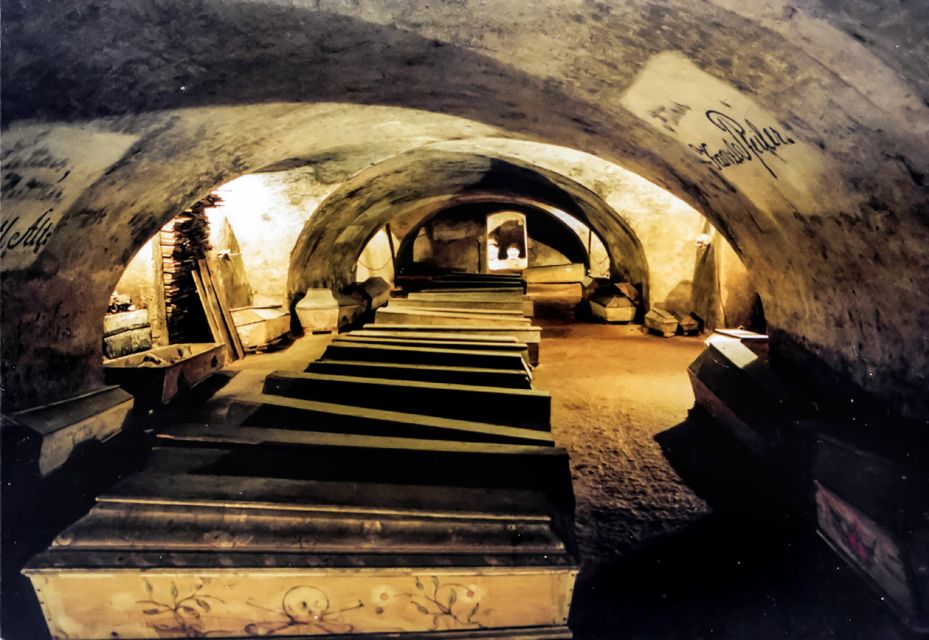
I especially like two things. First, the St. Michael’s crypt is the star: thousands of burials and beautifully preserved mummies tied to prominent Viennese citizens. Second, the tour’s guided storytelling is a big part of the value, with guides such as Christopher and Bridgett bringing humor and context to what you’re seeing down there.
One thing to consider: the tour guide is German-language, and there isn’t an English tour listed as the standard option. If German isn’t your strength, you’ll still get something out of it, but you’ll work a bit harder to follow.
In This Review
- Key highlights worth knowing
- Why Vienna’s underworld feels different from other city tours
- St. Michael’s Church meeting point and the Michaelerplatz setting
- Roman layers and the 17th-century cellar you can actually see
- Inside the Baroque crypt: mummies and the scale of burial at St. Michael’s
- The basements and extra underground stops that keep the tour moving
- German-led guidance: how to follow the stories without getting lost
- Price and value: what $32 really covers
- Rules, weather, and what to bring (or leave behind)
- Who this underground tour suits best
- Should you book this Underground Vienna Walk?
- FAQ
- How long is the Vienna underground walking tour?
- How much does the tour cost?
- Where do I meet for the tour?
- What language is the live tour guide?
- Are cameras allowed inside the underground areas?
- Is the tour wheelchair accessible?
- What’s the cancellation policy?
- Is there a group-touring option for larger parties?
Key highlights worth knowing
- Michaelerplatz start point: Roman foundations show up right where you gather.
- Baroque crypt with preserved mummies: more than 4,000 people are buried in St. Michael’s crypt.
- Medieval archaeological excavation areas: you walk through exposed layers of older Vienna.
- See cellars and wall remains: a 17th-century cellar and a stretch of the old city wall are part of the route.
- Underground basements, not a single room: you get multiple below-street stops in about 100 minutes.
- German-led guide with occasional support: some guests report extra English help, but German is the main language.
Why Vienna’s underworld feels different from other city tours
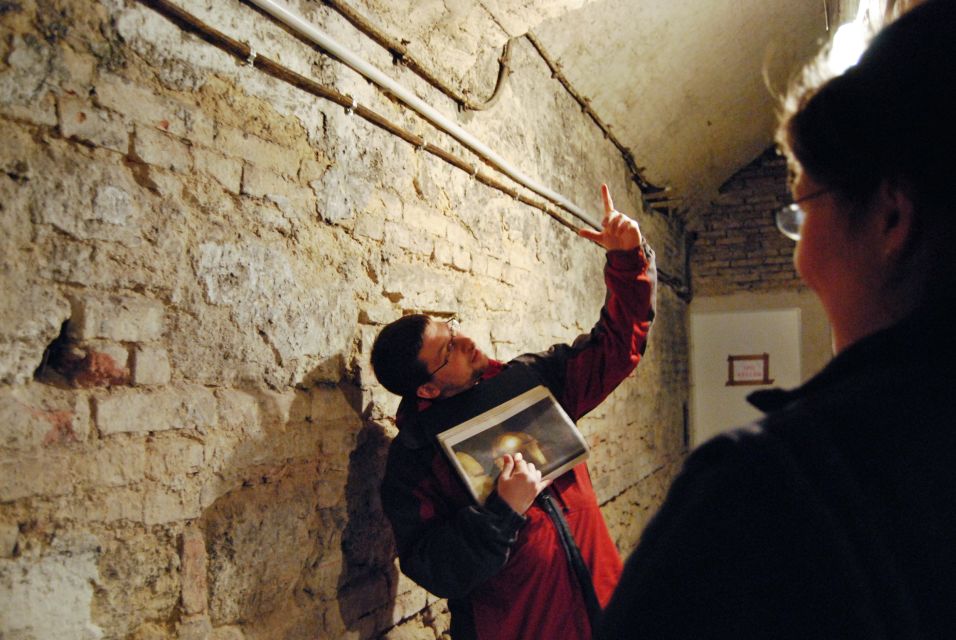
Vienna is famous for palaces and churches above ground. This tour gives you the other side of the coin: the working spaces, burial spaces, and the archaeological layers that got preserved under streets and buildings.
What makes it feel genuinely special is that you’re not just looking at one attraction. You start in a central public square area, then you move from one underground space to another. Each stop helps explain how the city grew and where people lived, worked, and were laid to rest.
It also has the right kind of atmosphere. It’s the sort of tour where you’ll notice small details: stonework, the way corridors change, and the feeling that you’re inside a preserved slice of the city rather than in a staged exhibit.
You can also read our reviews of more walking tours in Vienna


St. Michael’s Church meeting point and the Michaelerplatz setting
You meet in front of St. Michael’s Catholic Church, at the main entrance. From there, the tour ties you quickly to Michaelerplatz, the central area where building work has exposed older remains.
This start matters because it anchors what you’ll see underground in something you can actually locate on a map. Even if you’re not a history buff, you’ll appreciate that Vienna’s “2,000-year history” isn’t floating in the abstract. The physical city layers are present right around where you’re standing.
Here’s what you can expect right away: you’ll hear how construction and building changes exposed parts of an older Roman city, plus additional remains in nearby areas. You also learn that there’s more here than just one crypt. This is a small underground network connected to the way the city was built over time.
If you’re the type who likes to orient fast, this tour does that early. You’ll get your bearings before you step into the underground spaces.
Roman layers and the 17th-century cellar you can actually see
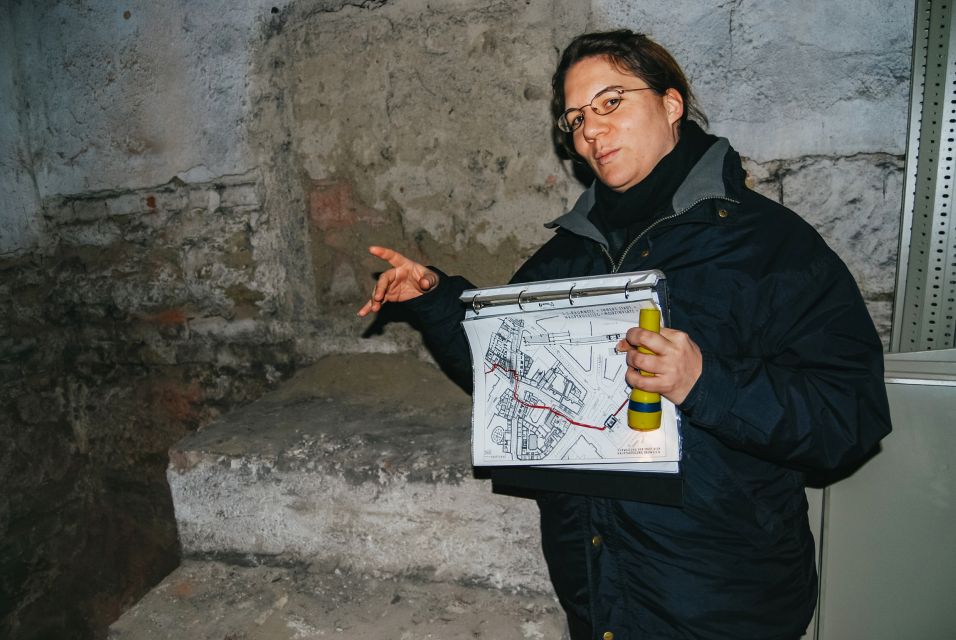
A big part of the appeal is the “how did this end up here” feeling. At Michaelerplatz, you’ll see exposed evidence of earlier Vienna, including Roman-era remains. The tour also points out a 17th-century cellar and a portion of the old city wall.
What makes these details worth your time is that they explain the mechanics of a city, not just its dates. A wall fragment tells you about boundaries and defense. A cellar tells you about daily life and storage, and how people used space before modern plumbing, heating, and construction methods existed.
You’ll walk through a sequence of underground stops, so these early layers set expectations for how the rest of the tour will “connect” the dots. The guide’s job is to make you see the underground spaces as parts of one story, not separate rooms with unrelated trivia.
Practical note: underground walking can feel slower than you expect because you’re navigating steps and passageways. That’s one reason the tour’s 100 minutes feels like the right length. You get enough time to see multiple spaces without turning the experience into a long slog.
Inside the Baroque crypt: mummies and the scale of burial at St. Michael’s
Then comes the centerpiece: St. Michael’s Church Baroque crypt. This is the moment the tour earns its reputation.
The crypt is described as containing burial places for more than 4,000 people. That scale is hard to fully grasp until you’re standing there with your guide explaining what you’re looking at.
You’ll also get to see the preserved mummies of prominent Viennese citizens. This isn’t presented as a spooky jump-scare. It’s framed as a window into how the city treated burial and remembrance, and why certain remains ended up so well preserved.
A couple of helpful ways to experience the crypt better:
- Look at the way the crypt is organized, not just the mummies themselves.
- Listen for the “why this matters” parts: the guide’s stories are what turn the scene into understanding.
One more reason the crypt visit feels like strong value: it’s the kind of site most people won’t stumble into on their own. Even if you’re good at exploring independently, crypt access and interpretation generally require a guided approach.
The basements and extra underground stops that keep the tour moving
After St. Michael’s crypt, the tour continues through additional basements and underground rooms. The key is that you’re not only visiting one famous stop and calling it done. You’re walking through multiple underground areas tied to Vienna’s older layers.
Some guests have noted that the tour may feel like it offers more than the bare minimum once you’re actually underground. The pacing is designed to keep you moving while giving you time for the guide’s explanations between spaces.
A practical benefit: these extra stops make the experience feel like a true “underground walk,” rather than a quick add-on before or after something else. The underground part stays central.
That said, you should plan for the underground environment itself. Many descriptions point out that it can be a bit chilly, so bring a sweater or layer you’re comfortable wearing close to your body. Even if the weather outside is mild, the temperature down there can surprise you.




German-led guidance: how to follow the stories without getting lost
This tour lists German as the language for the live guide. That’s the biggest thing to plan around in advance.
Here’s what you can do to make it work:
- If you understand basic German, you’ll likely catch more than you think once you’re surrounded by context.
- If you don’t, focus on listening for recurring concepts: locations, time periods, and what each room is connected to.
- Some guests report their guides provided a bit of English to clarify key facts. You might get some extra support, but don’t count on full translation.
Because you’ll be underground, phone-based help can be less reliable if connectivity drops. One practical strategy is to use short pre-trip prep: even learning a handful of German words for places like crypt, church, and cellar can help you follow faster once you’re there.
Also, don’t underestimate body language. The guides often point things out physically: where remains are, how the spaces connect, and what you should notice as you move deeper into the route.
Price and value: what $32 really covers
At $32 per person for about 100 minutes, this tour is priced like an access-and-interpretation experience, not a sightseeing bus ride.
Two value boosters are clear from the details:
- Entrance fees are included, so you’re paying for access to the underground areas rather than just paying for a walk with no admission.
- The route gives you multiple underground locations connected to Vienna’s excavation and burial sites, which is more substantial than a single-room visit.
One reason it can feel like strong value: you’re seeing areas that are unlikely to be accessible or understandable if you tried to figure them out alone. Even if you do find an underground space on your own, you won’t have the guide’s explanation tying together Roman remains, cellars, crypt organization, and what mummies represent in context.
If you’re choosing between a standard city walk and something slightly more unusual, this is the kind of “pay a bit more for access you can’t DIY” decision that often works out well.
Rules, weather, and what to bring (or leave behind)
This tour has a clear set of restrictions. Based on the information provided, pets aren’t allowed, cameras aren’t allowed, smoking isn’t allowed, and you shouldn’t bring luggage or large bags.
That camera rule is worth planning for. If you love photographing architecture or museum objects, you’ll need to adjust. Think of it as a tour you experience with your eyes and your memory, not as a “collect images” session.
What to wear:
- Bring a layer or sweater. Underground stops can feel cooler than expected.
- Wear comfortable shoes designed for uneven or narrow passages.
What to bring:
- Just what you can carry easily, since large bags aren’t part of the experience.
If you’re sensitive to crowd flow, note that the walk is organized around multiple underground spaces. You may find yourself pausing at chokepoints while the guide explains, so leave time to move calmly between areas.
Who this underground tour suits best
This is a great match if you like:
- Real places with real layers, not just names and dates.
- Darker, stranger corners of city life (burial sites, crypts, and archaeological remains).
- A guide who uses stories to connect spaces.
It’s especially good if you want a unique Vienna experience that doesn’t require you to choose between history and entertainment. The humor shows up in guest accounts, and the guide’s personality seems to matter here.
It’s not a fit if:
- You need wheelchair access. The tour is not wheelchair accessible.
- You rely on bringing large bags or prefer to film and photograph everything.
If you’re traveling with friends and want something that feels different from the usual palace-and-cathedral rhythm, this tour can give your itinerary a memorable change of pace.
Should you book this Underground Vienna Walk?
Book it if you want a centrally located, time-efficient way to understand Vienna through the parts most people never see. You get the anchor at St. Michael’s crypt, plus additional underground stops tied to the excavation at Michaelerplatz. At $32 with entrance fees included, it’s a solid value when you factor in access and interpretation.
Skip it (or rethink it) if German is a dealbreaker for you or if you’re counting on taking photos. Also, if you need wheelchair accessibility, this one won’t work based on the provided info.
If you go, plan for cool air, wear comfy shoes, and treat it as an experience-first tour. When you’re underground, the best souvenirs are what you understand and what you notice as you walk through the city’s older layers.
FAQ
How long is the Vienna underground walking tour?
The tour duration is listed as 100 minutes.
How much does the tour cost?
It costs $32 per person. Entrance fees are included.
Where do I meet for the tour?
Meet in front of St. Michael’s Catholic Church at the main entrance.
What language is the live tour guide?
The tour guide language is listed as German.
Are cameras allowed inside the underground areas?
No. Cameras are not allowed.
Is the tour wheelchair accessible?
No. The tour is not wheelchair accessible.
What’s the cancellation policy?
Free cancellation is available up to 24 hours in advance for a full refund.
Is there a group-touring option for larger parties?
The info provided says that for group tours of 15 or more people, you should contact them with your details so a different day or time can be arranged based on group criteria.