Vienna clicks into place in 2.5 hours.
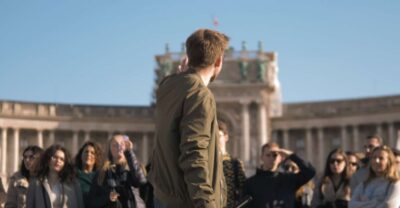
This small-group tour (capped at 15 people) uses audio devices so the guide’s story stays easy to follow, even in busy squares. I like how it strings together Vienna’s big visual hits, from Maria-Theresien-Platz to the finish near St. Stephen’s Cathedral, without wasting time. One thing to weigh: it’s built to stay mostly outdoors, so you will see a lot from the outside and you should not expect museum entrances.
Where it really shines is pacing and clarity. I also like that the guides bring the city’s political and cultural story together in plain language, with humor and lots of Q&A time for people who want to ask about the Habsburgs, the Ringstrasse, or what to do next in Vienna.
If you hate walking, or you need low-impact routes, this is not your best match. The tour is around 2 hours 30 minutes and can feel like a long hop between sights, with one review describing about 14,000 steps.
In This Review
- Key highlights worth choosing this tour for
- Why this Vienna walk works so well for first-timers
- Maria-Theresien-Platz: the museum face-off and Empress Maria Theresa
- Ringstrasse: Vienna’s 19th-century makeover in one walk
- Burgtor and the Hofburg “power complex” feeling
- Heldenplatz and the stories behind the open spaces
- St. Michael’s Church and Vienna’s church-in-the-street atmosphere
- Rathaus and Burgtheater: civic stage and performance stage
- Volksgarten: Theseus Temple, coffee culture, and a break for your feet
- Beethoven Pasqualatihaus and Palais Ferstel: art, banking, and intellect on the move
- University of Vienna: Freud and Lise Meitner on a single stop
- Freyung, Graben, Kohlmarkt: the lanes where Vienna feels intimate
- Stephansplatz and St. Stephen’s Cathedral: finish strong
- Price and value: what $72.56 buys you in real terms
- Pacing, weather, and who should pick it or skip it
- Should you book this Vienna Historic Center Small Group Walking Tour?
- FAQ
- How long is the Vienna Historic Center Small Group Walking Tour?
- How many people are in the group?
- Is this tour offered in English?
- Do you visit the inside of museums?
- Where does the tour start and end?
- Are audio devices included?
- Is the tour suitable for people with walking disorders?
Key highlights worth choosing this tour for
- Max 15 people means you can actually ask questions
- Audio devices keep the commentary clear in crowded areas
- Ringstrasse gives you a high-level map of Vienna’s “grand boulevard” era
- Hofburg and Heldenplatz connect imperial power to modern Austria
- You avoid museum lines since there’s no museum interior visiting
- You finish at Stephansplatz, so you can keep exploring on your own
Why this Vienna walk works so well for first-timers
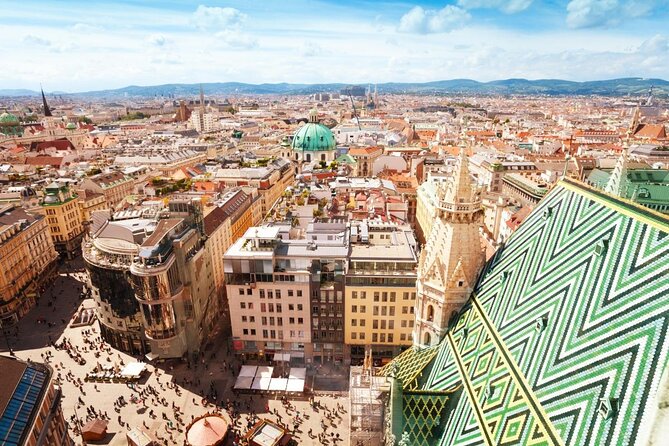
This tour is designed for the day when you want Vienna to make sense fast. You start in the museum district and move outward in a logical arc, then end at Vienna’s most famous landmark area. The result is not just a checklist of monuments. It’s a route that helps you connect names, neighborhoods, and eras, so your next stops feel less random.
The small-group size matters more than you’d think. With only 15 people, the guide can keep the group tight through traffic, doorways, and crowded intersections. You also get more chance to ask the practical questions that come up mid-walk, like where to eat, what to prioritize if you have only one more day, or how Vienna’s layout works.
Audio devices are another underrated win. When you’re standing near big buildings and busy streets, voices can disappear fast. Here, you get a clear feed of the guide’s commentary, which means you can actually follow the story without craning your neck or falling behind.
You can also read our reviews of more walking tours in Vienna

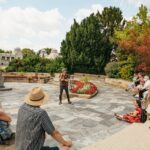
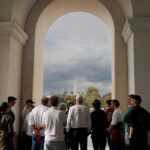
Maria-Theresien-Platz: the museum face-off and Empress Maria Theresa
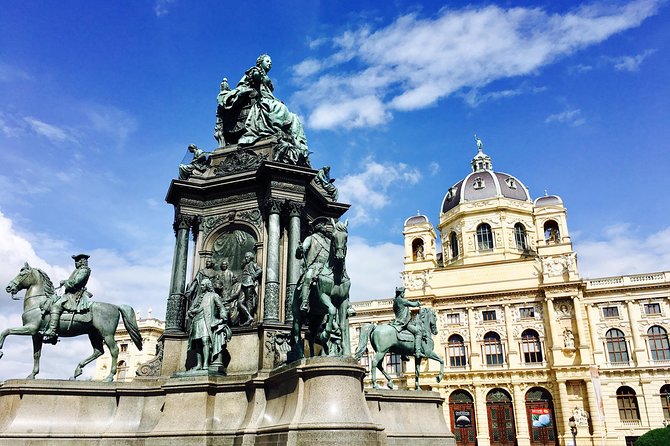
You begin at Maria-Theresien-Platz, a wide square that sits between the Ringstrasse and the Museumsquartier. Facing each other across the open space are the two twin buildings you’ll hear about right away: the Natural History Museum and the Art History Museum. Even without going inside, their scale gives you that immediate Vienna “set piece” feeling.
Then the story pivots to the grand statue of Empress Maria Theresa. This is one of those stops where the guide can explain why she mattered and how her era shaped the city you’re walking through. It’s also a helpful warm-up: you’re not rushed yet, and the group usually settles quickly because the square is open and easy to orient in.
A short step later comes the Maria Theresia Denkmal on the Ringstrasse side. It’s described as the most impressive monument on the boulevard, with Maria Theresa and other key figures linked to her time, including W.A. Mozart. This is a good moment to start noticing Vienna’s habit of building grand public statements. Even when you’re just outside, the city is telling you who it thinks is important.
Ringstrasse: Vienna’s 19th-century makeover in one walk
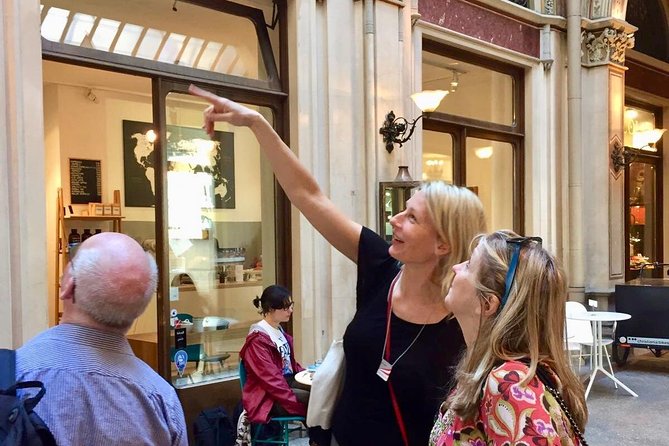
After the square stops, the tour moves onto Ringstrasse, the circular boulevard that replaced old fortifications. This is the Vienna you often see on postcards: long stretches, big civic buildings, and architectural styles mixed side-by-side. The tour specifically frames the Ringstrasse as part of a UNESCO-recognized World Heritage setting, which helps you understand it as more than just a pretty road.
You’ll pass major landmarks that you can later look up on your own time, including the neo-Gothic town hall and the Austrian Parliament Building. The guide’s job here is to connect the architecture to politics and culture, so the walk feels like a guided timeline rather than a set of photo stops.
One practical benefit: Ringstrasse is relatively straightforward to navigate compared to Vienna’s smaller lanes. If you want a fast way to mentally map where things are, this boulevard section does the heavy lifting. It’s also one of the best parts of the day to ask questions, because the group isn’t weaving through tiny streets.
Burgtor and the Hofburg “power complex” feeling
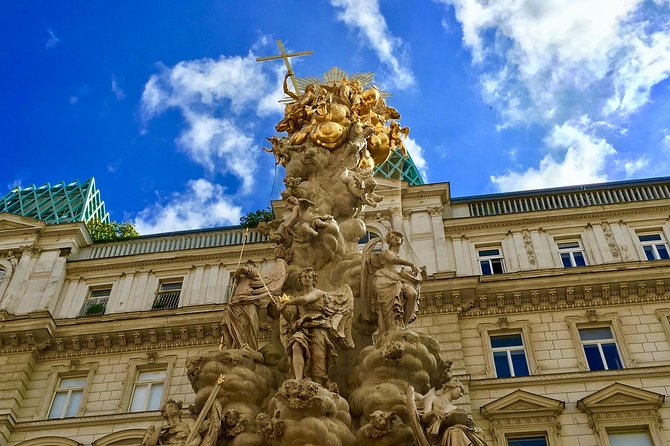
As you continue, you reach Burgtor, a neoclassical gate associated with the post-Napoleonic rebuilding phase. It works as a visual transition. You’re moving from the civic Ringstrasse zone into the realm of imperial court buildings.
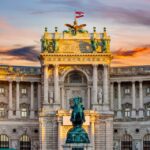
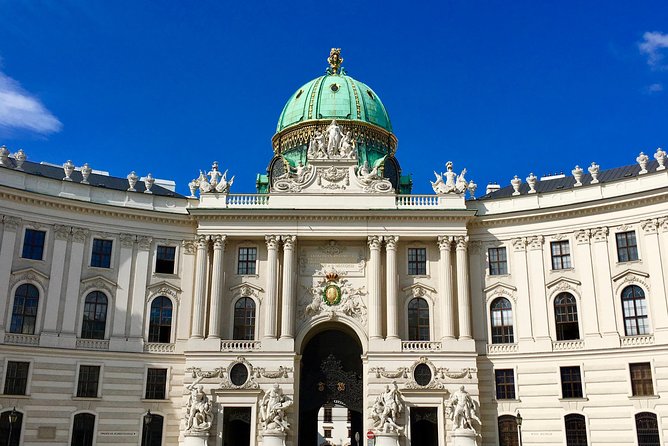
Then comes Hofburg, the former Habsburg imperial palace complex and the center of power for centuries. You’ll hear how the complex developed over time, plus stories tied to court life and the role it played in modern Austria. Even if you don’t enter any museums, you can still get a strong sense of scale from the outside views: courtyards, façades, and that “this is where decisions were made” atmosphere.
The tour highlights the New Castle area and connects it to multiple institutions tied to the empire, including references to museums and the national library. It also makes a direct historical point connected to the Anschluss, describing that Adolf Hitler proclaimed the annexation from a balcony at the Neu Castle. The moment is heavy, so you’ll want to pay attention to how your guide frames it and keep the focus on history rather than spectacle.
Heldenplatz and the stories behind the open spaces
Heroes Square (Heldenplatz) sits attached to the Hofburg area, and it’s more than just an open green patch. The tour explains why it looks the way it does and what happened to the old bastion area nearby when Napoleonic-era changes hit Vienna. You get the sense that even open space has layers.
This is also where the walk starts feeling like a “Vienna of events,” not just buildings. One second you’re learning about empires; the next you’re standing in a place that has hosted public moments for modern life. That jump helps a lot if you’re trying to understand Vienna as both historical and current at the same time.
You can also read our reviews of more historical tours in Vienna
St. Michael’s Church and Vienna’s church-in-the-street atmosphere
You get a religious architecture stop at St. Michael’s Church, with dates traced back to around 1220. The tour notes it for its special atmosphere, which is easy to understand when you’re in the middle of a busy city block and the church feels like a pocket of quiet.
You won’t be there long, but it’s a nice change of pace from the large boulevard buildings. It also fits the tour’s broader rhythm: mix monumental exteriors with a few human-scale stops so you don’t feel like you’re only looking at stone and statues.
Rathaus and Burgtheater: civic stage and performance stage
Two more major stops keep the “Vienna in action” idea going.
First is Rathaus, the neo-Gothic city hall. It’s described as an excellent event location and as the seat of Vienna’s government. Standing outside, you can still feel why the building is used for big moments, even if you don’t go in.
Next is Burgtheater, positioned as one of the best theaters in the world. This is another one of those exteriors that tells you how seriously Vienna takes culture. If you’re wondering whether the city’s arts scene is a real part of daily life or just a brand, this kind of stop answers that quickly.
Volksgarten: Theseus Temple, coffee culture, and a break for your feet
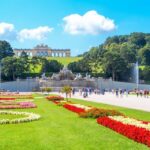
Now the route shifts into a park area at Volksgarten. The tour notes a Theseus Temple at the center, described as a small replica of the Hephaisteion from Athens. It’s also tied to sculpture ideas linked to Antonio Canova, which gives you a fun cross-connection between cities and art trends.
The guide also points out Cortisches coffee house in the park as a popular music hangout, connected to Johann Strauss. This is the kind of detail that helps you picture Vienna as a city where composers and writers lived in the same social circles as everyday culture.
And yes, there’s a coffee moment built into the experience. One review specifically called out a coffee break at Café Demel, which matters because Vienna’s café culture is not just a treat. It’s part of how locals slow down. Even a short break here makes the rest of the walk feel less punishing.
Beethoven Pasqualatihaus and Palais Ferstel: art, banking, and intellect on the move
You then hit a stop connected directly to Ludwig van Beethoven: Beethoven Pasqualatihaus. The tour describes it as a former residence positioned on the ramp of the old town fortifications. That detail is useful because it shows you how Vienna layered private life over older defenses, and how the city’s “past infrastructure” still shapes what you see today.
After that comes Palais Ferstel. The tour explains its historic role as housing the Austro-Hungarian National Bank and the Stock Exchange. That’s a meaningful shift from composer fame to financial power. Vienna’s story isn’t only artists and emperors. It’s also the institutions that made culture possible.
University of Vienna: Freud and Lise Meitner on a single stop
The route includes a stop at the University of Vienna. Here you get a science and ideas angle with names like Sigmund Freud and Lise Meitner (including the note that her work changed modern science). If you’re the type of traveler who loves how places shaped thinkers, this stop is a strong reminder that Vienna wasn’t only an imperial capital.
The guide’s point is to connect Vienna’s academic legacy to global breakthroughs. Even without entering any building, you leave with a better sense of why Vienna became a magnet for intellectual life.
Freyung, Graben, Kohlmarkt: the lanes where Vienna feels intimate
Next you move to Freyung, described as one of the oldest squares in Vienna’s city center, with an intimate and picturesque feel. This section is useful because it slows the scene down after the big monumental stretches.
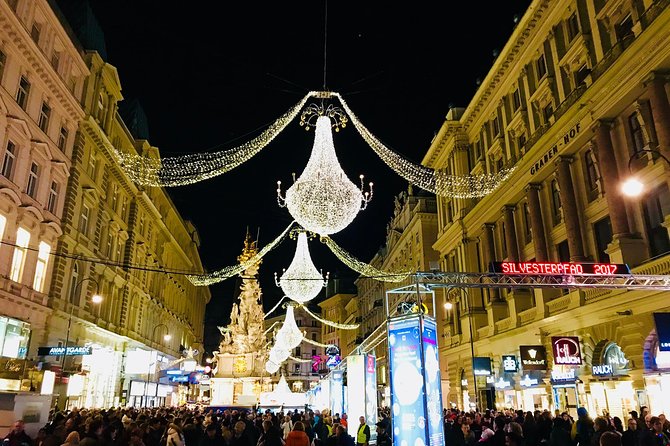
Then you reach Graben and Kohlmarkt, presented as Vienna’s most elegant pedestrian street area. It’s a good moment to switch gears mentally. After a morning of empires and institutions, you’re now in the zone where you’ll likely shop, snack, and people-watch on your own.
You’ll also hear the guide set you up for the finish area so you can keep control of your time. Ending here means you’re already in the right location for dinner options and evening wandering.
Stephansplatz and St. Stephen’s Cathedral: finish strong
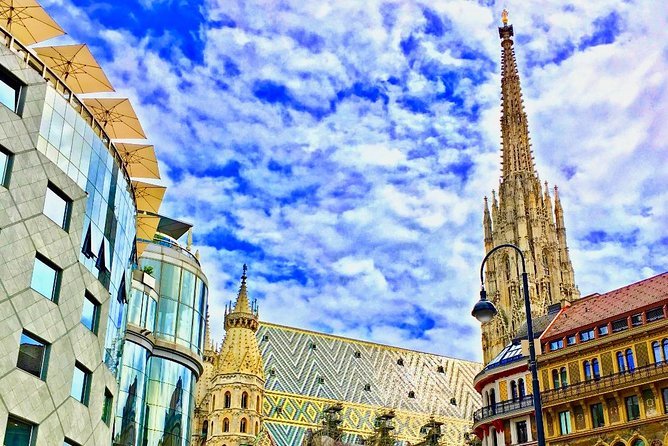
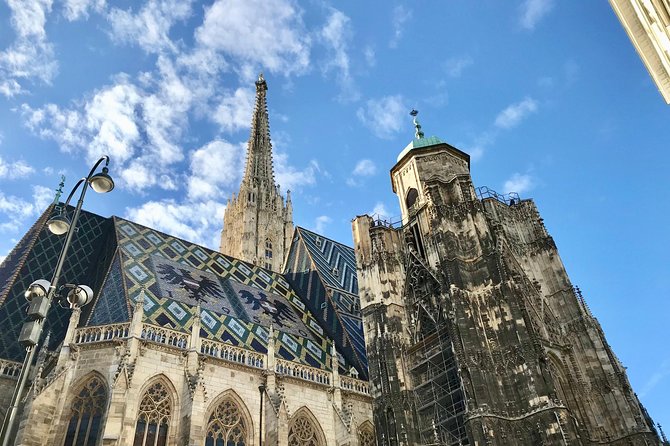
You end at Stephansplatz, described as the heart and soul of Vienna, and then move into the St. Stephen’s Cathedral area. The tour frames the cathedral as Vienna’s symbol and most famous landmark, which is exactly why finishing here is smart.
Even if you don’t go inside on this walk, finishing near the cathedral puts you at the start of Vienna’s easiest self-guided loop. From there, you can choose what to do next based on your energy. Need a longer wander? You’re positioned for it. Prefer a quick route to your next activity? You’re also set up.
This ending is also a small mercy. Walking tours can end in random parking lots. Here, you finish somewhere that feels like a destination.
Price and value: what $72.56 buys you in real terms
At $72.56 per person for about 2.5 hours, the value depends on your priorities.
You are not paying for entry tickets. The tour specifically does not visit inside any museum. That choice saves money and, more importantly, saves time. Vienna is full of places where the day gets eaten by lines and timed tickets. This tour aims to deliver orientation and context instead.
You are paying for three things you can feel during the walk:
- A route that connects the city’s big eras in a logical arc, from imperial to modern
- A certified local guide who can answer questions and keep the group moving
- Audio devices, which make the commentary usable rather than background noise
For first-timers, this is a strong price-to-time tradeoff. If you already plan to do museum interiors later, this walk helps you decide which museum fits your interests. If you hate walking and want only indoor sightseeing, it becomes less good value because the format is mostly outdoor.
Pacing, weather, and who should pick it or skip it
This is not a slow sightseeing stroll. Even with short stop times, you’ll cover a lot of ground in a short period. One review described about 14,000 steps over 2 hours, which tells you the pace can be brisk.
So wear comfortable shoes. Dress for weather. The tour notes it requires good weather, and it makes sense: this is a walking-first experience.
The tour is also aimed at people with moderate physical fitness. It’s not recommended for travelers with walking disorders. If that describes you, you might want to look for a shorter or less continuous option.
Indoor moments can happen, but don’t plan on museum entrances. The tour notes it does not visit inside any museums, and that some churches and other indoor locations might happen depending on weekday, such as palaces, the university, or a café. In practice, treat any indoor stop as a bonus, not the main plan.
Guide style is another part of the pacing. Reviews highlight guides like Dace and Giselle for humor, clear explanations, and keeping the group on track in crowded spots. That kind of guiding helps you stay warm and comfortable rather than just rushing from stop to stop.
Should you book this Vienna Historic Center Small Group Walking Tour?
Book it if you want your first day in Vienna to feel organized and meaningful. This walk is especially good for:
- First-time visitors who want the big sights tied together into one story
- Travelers who enjoy learning context as they walk, not only taking photos
- People who want a small-group experience capped at 15, with audio devices that keep the guide audible
Skip it if your idea of sightseeing is mostly indoor time, or if you need a low-walking route. Also skip if you’re expecting museum interiors, because the tour is intentionally built around outside views and short stops.
If you’re on the fence, I’d use a simple rule: if you can do 2.5 hours of solid walking comfortably, this is one of the best ways to get oriented without spending your day trapped in ticket lines.
FAQ
How long is the Vienna Historic Center Small Group Walking Tour?
It’s about 2 hours 30 minutes.
How many people are in the group?
The tour is capped at a maximum of 15 travelers.
Is this tour offered in English?
Yes, it’s offered in English.
Do you visit the inside of museums?
No. The tour does not visit inside of any museums. Some churches and other indoor locations may happen depending on the weekday.
Where does the tour start and end?
It starts at Maria-Theresien-Platz, Vienna, Austria, and ends at Stephansplatz / the St. Stephen’s Cathedral area.
Are audio devices included?
Yes. The tour uses audio devices so everyone in the group can hear the guide.
Is the tour suitable for people with walking disorders?
The tour says it’s not recommended for travelers with walking disorders, and it’s best for people with moderate physical fitness.