REVIEW · VIENNA
Vienna: Guided Walking Tour
Book on GetYourGuide →Operated by Prime Tours · Bookable on GetYourGuide
Vienna’s story starts under your feet. This 2-hour guided walk strings together Celtic and Roman roots, imperial-era power, and Vienna’s music legacy, with St. Stephen’s Cathedral as a key stop. It’s a simple way to turn a first pass through the center into a real understanding of how this city became this city.
I especially like the focus on human storytelling: how wars and tragedies show up in streets and buildings, not just in a textbook. And the guides seem to bring the history down to earth, with examples including Christina, Katerina, and Michael known for clear pacing and strong command of the big picture.
One thing to consider: it’s built for an overview. If you want inside access to major palace rooms and a long list of ticketed sites, you’ll likely feel the limits of a 2-hour walking format.
In This Review
- Key things you’ll notice on this Vienna walk
- What this tour is really for: fast bearings with serious context
- St. Stephen’s Cathedral: the medieval landmark that ties it together
- From Celtic and Roman beginnings to imperial Vienna: learning the city’s timeline
- War, triumph, and tragedy: how the darker chapters fit the walking route
- Vienna and music: more than concert tickets
- The guide quality is the difference-maker: what to expect from the people leading the walk
- Timing, walking pace, and what to wear for a 2-hour overview
- Meeting point and practical wayfinding (so you don’t waste time)
- Language options: English, Spanish, or German
- Price and value: is $22 a fair deal for what you get?
- Who should book this Vienna walking tour (and who might skip it)
- Pair it with your next day: smart ways to use the tour knowledge
- Should you book this Vienna walking tour?
Key things you’ll notice on this Vienna walk
- St. Stephen’s Cathedral gives you a medieval anchor before the tour moves forward
- Celtic and Roman foundations help you read the city’s layout with fresh eyes
- Imperial Vienna and the modern city are shown as one continuous story
- Music heritage becomes part of the explanation, not an afterthought
- Licensed guides in English, Spanish, and German make it easy to follow the thread
- A comfortable, guided pace is a common theme, even with bad weather around
What this tour is really for: fast bearings with serious context
At $22 per person for a 2-hour walking tour, this is priced like a practical “do this early” activity. That matters, because Vienna works best when you get your internal map sorted out. After the walk, you’re not just saying you saw the highlights. You’ll know why they mattered, and how the city’s identity changed over centuries.
The structure is built around story arcs. You start from the beginnings (Celtic and Roman settlements), then move through medieval Vienna with St. Stephen’s Cathedral, and onward into imperial power. From there, the tour doesn’t avoid the hard parts of the 20th century, including the Nazi era. That’s a lot to fit into 2 hours—but that’s also the point. You get a clear backbone for your own sightseeing later.
You can also read our reviews of more walking tours in Vienna


St. Stephen’s Cathedral: the medieval landmark that ties it together
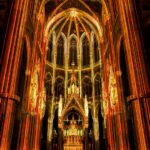
St. Stephen’s Cathedral is the most specific, clearly named highlight. On this kind of walking tour, that’s not just a photo stop. It’s the moment where the medieval city stops feeling abstract.
Why it works: Vienna’s later grand monuments can make it easy to forget that this place had a long, older life before the empire. Seeing the cathedral as the medieval anchor helps you understand the timeline. It’s the kind of place you walk past in guidebooks, but on a guided walk it becomes a reference point. You’ll be thinking about what people believed, built, and fought over long before the imperial era rolled in.
A small practical note: cathedral areas can be crowded and weather can be unpredictable. Wear comfortable shoes because you’ll be on foot the whole time, and you’ll want one less thing to deal with.
From Celtic and Roman beginnings to imperial Vienna: learning the city’s timeline
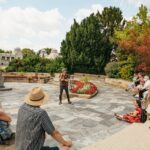
The tour’s big promise is historical sweep, and it starts where many visitors never look: the foundations. You’ll time travel back to early settlements connected to Celtic and Roman periods. Even if you can’t see ancient ruins at every corner, the guide’s job is to help you connect dots—how a city like this develops, why certain areas matter, and how later rulers built on earlier ground.
Then comes the imperial era and beyond. Vienna’s “big” look can feel like it appeared all at once: grand squares, monumental streets, and the feeling of organized power. The guided framing helps you see that the empire didn’t just decorate the city. It shaped institutions, culture, and even how people moved through town.
One benefit of this approach: it gives you something to look for on your own after the tour. When you return to the center later, you’ll spot references to the empire and the shifts that came after, instead of seeing only architecture.
War, triumph, and tragedy: how the darker chapters fit the walking route
Vienna isn’t only palaces and concert halls. The tour includes stories about wars and tragedies, including the Nazi era. That inclusion is valuable, as long as it’s handled with care and clarity, because it keeps you from turning the city into a postcard.
In practical terms, this kind of storytelling helps you understand what you’re standing near. History is easy to dismiss when it’s only dates. A guide turns it into cause-and-effect: why certain events mattered, how the city changed, and what the long shadows look like today.
Is it heavy? Yes, on the subject matter side. But that’s also why the guided format helps. You’re not trying to piece together complicated events while you’re tired, hungry, and juggling transit. The guide gives you a readable path through difficult material.
Vienna and music: more than concert tickets
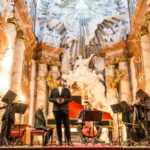
One of the most repeated themes in the tour description is music heritage. Vienna’s music reputation is so famous that it can feel like marketing. On this walk, the music angle is treated as part of the city’s history, not just a slogan.
You’ll connect the dots between cultural power and the way Vienna defined itself. And you’ll get context that makes it easier to choose what to do next. For example, after a good guided overview, you can pick a concert or a museum visit with more purpose, because you’ll understand what forces shaped the scene.
Even if you’re not a hardcore classical fan, it helps. Music becomes a lens for seeing why certain eras mattered and why the city’s identity got so tightly linked to composers and performance culture.
You can also read our reviews of more guided tours in Vienna

The guide quality is the difference-maker: what to expect from the people leading the walk
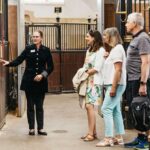
Licensed guides lead the tour, and that shows in how the experience moves. The strongest feedback points to guides who keep the pace steady, explain clearly, and make the walk fun without turning it into nonsense.
Names that came up repeatedly include Christina, Katerina, Michael, Jozef, and Harald. There were also mentions of guides like Stefan and Ricky. A few common strengths show up across these different guides:
- They tend to keep the walking pace comfortable for groups.
- They use humor to stay engaging, even when weather isn’t cooperating.
- They check in with the group so the tour doesn’t feel like a one-way lecture.
There’s also a practical angle: several comments point out that guides help with next steps—like suggesting where to eat after the walk. That’s real value in a city where you can easily overpay near the most obvious tourist corners.
Timing, walking pace, and what to wear for a 2-hour overview
The tour runs for 2 hours, and starting times vary by availability. That makes it ideal as an early orientation activity, especially if you only have a few days.
Because it’s a walking tour, your biggest variable isn’t the schedule—it’s your comfort level in weather and on cobblestones. Bring weather-appropriate layers. Even when it’s cold or rainy, the tour is still doable; the key is being dressed for real street time.
For best results:
- Wear shoes you can walk in for 60–90 minutes without thinking about it.
- Bring a small umbrella or rain layer if the forecast looks shaky.
- Keep a little curiosity for the guide’s historical “why” explanations. That’s where the tour pays off.
Meeting point and practical wayfinding (so you don’t waste time)
You meet at the location where you can look out for the yellow Prime Tours umbrella. The tour ends back at the meeting point, which is convenient. You don’t have to mentally map your route afterward.
This matters because Vienna can swallow time quickly. One wrong turn with jet lag can snowball into missed plans. A walk that returns you to the same point keeps your day calmer and easier to manage.
Language options: English, Spanish, or German
This tour is offered with live guides in English, Spanish, and German. If your group has mixed language comfort levels, this is a big plus—you can still all follow the same core story without gaps.
Even if you’re traveling solo, language availability can shape your decision. In a city full of independent self-guided options, being able to choose your guide language reduces friction.
Price and value: is $22 a fair deal for what you get?
At $22 per person, you’re paying for three things: a licensed guide, a guided route through the key parts of central Vienna, and a structured explanation that takes you from early foundations to later imperial and modern eras.
The value shines when you fall into one of these categories:
- You want an overview before you pick museums and concerts.
- You like history that connects to what you see outside.
- You’d rather pay for clarity than spend your limited time figuring out timelines on your own.
There’s also a fair caution. One concern that showed up is confusion about whether this is a tip-based free-tour setup. Since the price is clearly listed, I’d treat it as a standard paid tour and plan accordingly. If you prefer a strict tip-only format, double-check what’s included before booking so expectations match.
Who should book this Vienna walking tour (and who might skip it)
I’d recommend it if you:
- Are new to Vienna and want context fast
- Care about history that includes both cultural glory and difficult 20th-century chapters
- Enjoy learning while walking instead of sitting in one place
I’d consider skipping or pairing it with something else if you:
- Want long inside visits at major attractions (this is a 2-hour walk)
- Already know Vienna’s timeline well and mainly want monument-by-monument details
- Expect a very specific style of tour format like tip-only free walking tours (because the price model here is not that)
Pair it with your next day: smart ways to use the tour knowledge
After you walk the route once with the guide, your own day gets easier. Use the tour to decide what to revisit and what to go deeper on.
Here are a few practical follow-ons that fit the themes of the walk:
- If the music stories click for you, look for a concert or museum that connects directly to that era.
- If the empire explanations made you curious, plan a longer stop in the same general areas later so the architecture lands better.
- If the 20th-century material stayed with you, seek out a focused museum or guided visit that goes more detailed than a walking overview can.
Think of this tour as your map for where to spend time next.
Should you book this Vienna walking tour?
If your goal is to get your bearings fast and understand Vienna’s story from early foundations through imperial power and into modern identity, this is a solid choice. At $22, you’re not paying for a complicated logistics puzzle—you’re paying for a licensed guide who turns major sights and big themes into something you can remember.
Book it especially if you like guides who stay engaging and keep the walk moving, with real humor and clear explanations. Skip it if you need a long list of inside stops or you want a deep, ticket-heavy itinerary. For most first-time Vienna visitors, this is a smart start.