REVIEW · VIENNA
Vienna: Private Guided Walking Tour
Book on GetYourGuide →Operated by Viennatour Herbert Stojaspal · Bookable on GetYourGuide
Vienna can feel too big. This private walking tour turns the big sights into a readable route, from Stephansplatz to the Hofburg and beyond. I love how the guide can tune the pace for your group, and I love the mix of official grandeur with side streets and courtyards. One heads-up: it’s not suitable for mobility impairments and you’ll be on your feet for a good stretch, rain or shine.
You’ll cover famous names and real stories, with time to pause for photos outside. The tour runs in German or English, and it’s priced per group (up to 10), so the value gets sharper when you travel with friends or colleagues. If you want a movie-trailer style experience, note that the storytelling can lean more straightforward than dramatic.
In This Review
- Key takeaways before you book
- Private, Up to 10: What You Actually Get for $270
- Starting at Stephansplatz: The City’s Layout in One Walk
- Graben and Kohlmarkt to Michaelerplatz Excavations: Street-Level Royalty
- Hofburg, Heldenplatz, and Josefsplatz: Sisi, Heroes, and Josef II
- Albertina Museum Area and the Monument Against War and Fascism
- Hotel Sacher, the State Opera, and Vienna’s Talent for Reinvention
- Neuer Markt and the Imperial Crypt: Habsburg Rituals and Mozart’s Name
- St. Stephen’s Cathedral Area Plus Old University Streets
- Jesuit Baroque, Greek Quarter Streets, and St. Rupert’s Old Vienna
- Food History Walks: Demel, Sachertorte, and Wiener Schnitzel
- Practical Tips: Meeting Point, Timing, and How to Make the Walk Enjoyable
- What Kind of Guide Style You Should Expect from Herbert Stojaspal
- Should You Book This Private Walking Tour?
- FAQ
- How long is the private guided walking tour?
- Is this tour private?
- What languages are available?
- What’s included in the price?
- Where do we meet?
- Can I take photos and record audio during the tour?
Key takeaways before you book
- Private group, up to 10 means more personal questions and less herding.
- Habsburg landmarks like the Hofburg, Heldenplatz, Josefsplatz, and the Imperial Crypt shape the whole walk.
- Courtyards and side streets help you see Vienna beyond the main postcard route.
- Architecture plus culture stories connect buildings to people like Empress Sisi and Josef II.
- Art stops include the Albertina and the Monument Against War and Fascism.
- Food history gets a turn via Demel, Sachertorte at Hotel Sacher, and Wiener Schnitzel at Figlmüller.
Private, Up to 10: What You Actually Get for $270
At $270 per group (up to 10 people) and a 2–4 hour window, this tour is built for families, friend groups, and small teams that want control over what they see. The price only really feels “high” if you’re coming solo or as a couple without sharing, because your cost doesn’t drop based on headcount. But if you split it with 6 to 10 people, the per-person math gets a lot friendlier fast.
The biggest value isn’t just that it’s private. It’s that your guide can respond to your pace and interests while you walk through a concentrated stretch of Vienna’s power center—Hofburg, the grand ceremonial squares, and the streets that feed into them.
You can also read our reviews of more walking tours in Vienna


Starting at Stephansplatz: The City’s Layout in One Walk
The tour begins around Stephansplatz, a logical starting point because it puts you near St. Stephen’s Cathedral and right in the historic street grid. From there, the walk moves from major streets into smaller lanes, which helps you understand how Vienna grew outward from its old core.
This is one of those tours where you don’t just “see stuff.” You start noticing the city’s rhythm: wide boulevards where ceremonies happened, and tighter streets where daily life played out. Even if you’ve visited before, walking the route with an interpretive guide helps you re-sort what matters and why.
Graben and Kohlmarkt to Michaelerplatz Excavations: Street-Level Royalty
One of the most enjoyable early sections is the walk through Graben and onward to Kohlmarkt. You’ll get picture stops and explanations along the way, tied to monuments and names most people only learn from signs and maps.
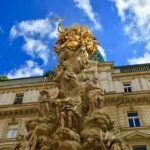
On this part of the walk, it’s the details that do the work. The tour includes the Baroque Pestsäule on the Graben and stories connected to King Richard the Lionheart as you move toward the shopping streets around Kohlmarkt. Then it lands on the culinary-history angle with stops near Demel, where Vienna’s pastry culture connects to the same streets that once served courtiers and diplomats.
Next comes Michaelerplatz, a real shift in tone. It’s not just another “grand facade” stop—this area is linked to Roman and medieval excavations, and the tour includes the chance to see inside St. Michael’s Church (when the schedule allows). That kind of stop is useful because it shows Vienna as layered, not frozen.
Practical note: photography inside isn’t allowed, so if you’re hoping to take interior photos of churches or crypt spaces, be ready to rely on your memory and your phone camera only where it’s permitted.
Hofburg, Heldenplatz, and Josefsplatz: Sisi, Heroes, and Josef II
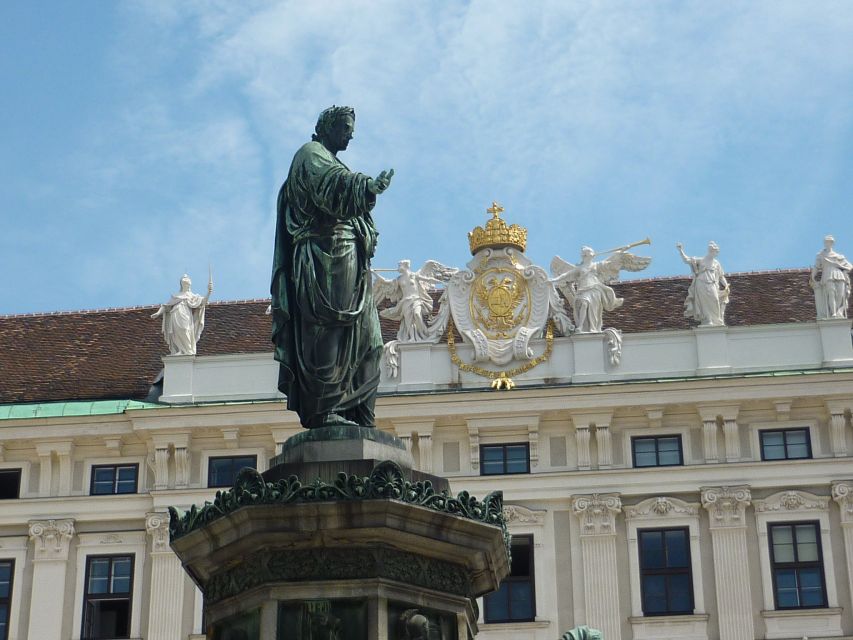
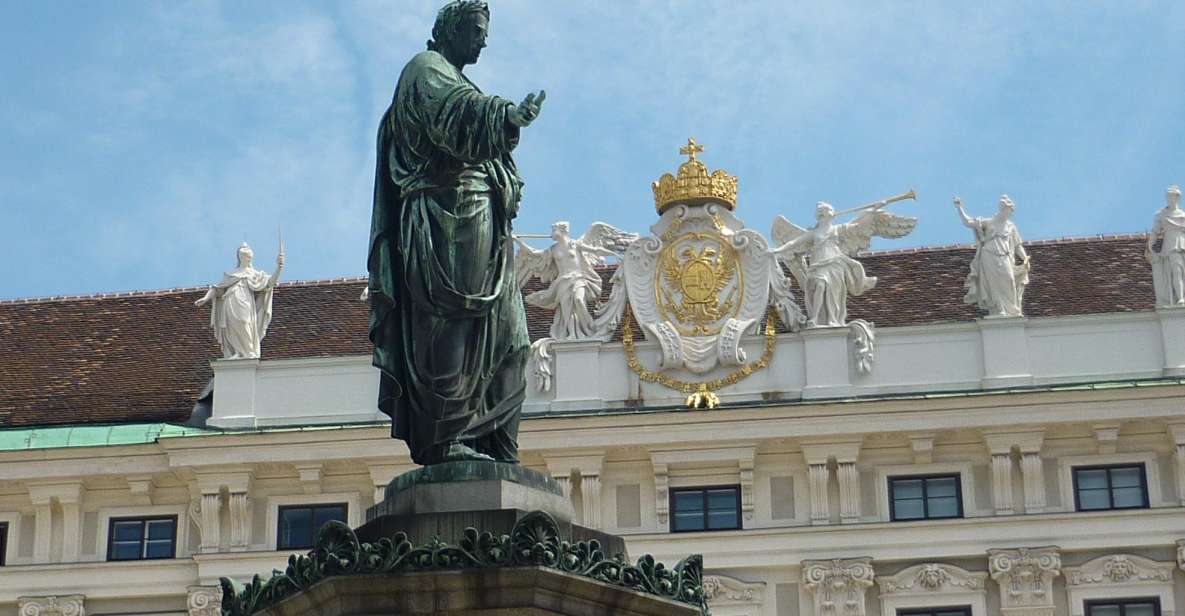
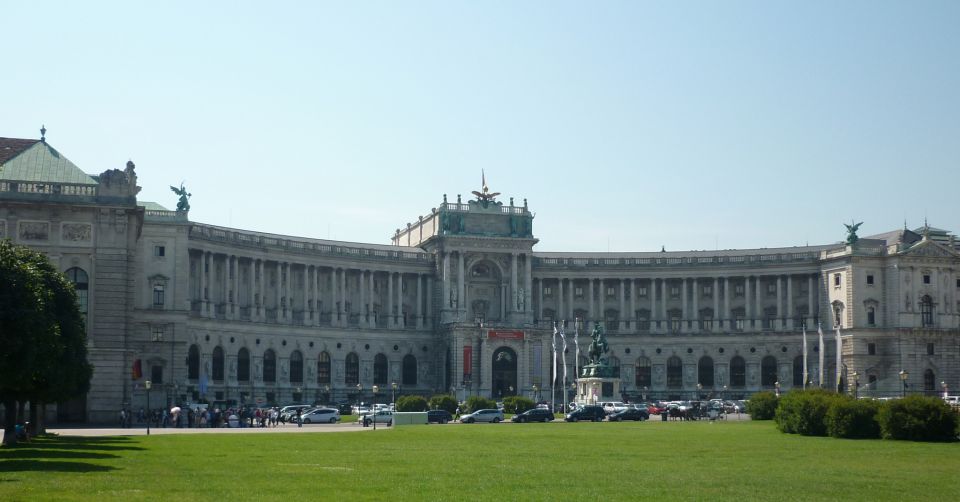
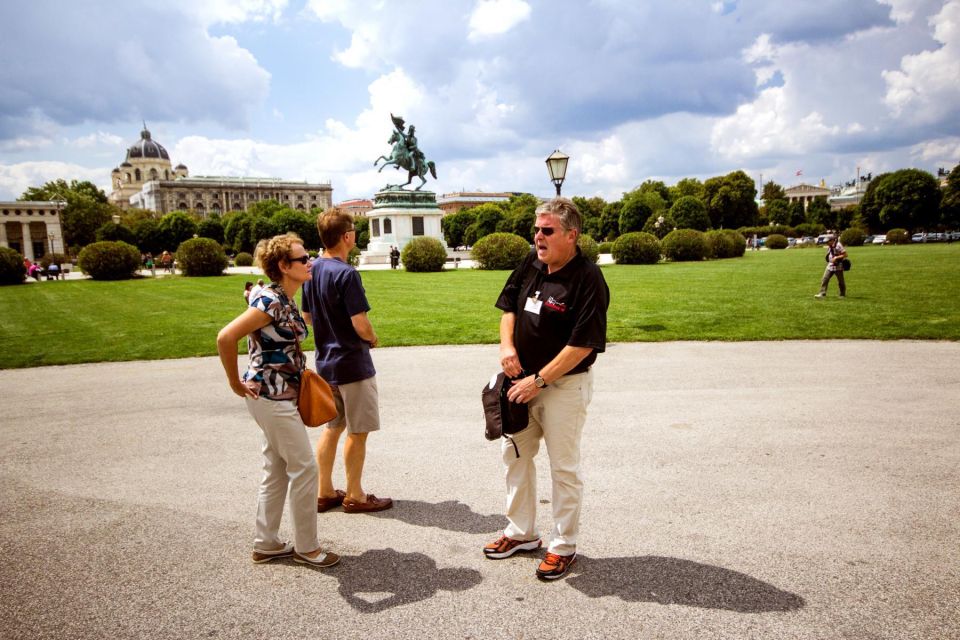
Once you reach the Hofburg Palace area, the tour becomes a guided tour of power—who lived here, who ruled, and how the city projected authority. The guide tells true stories about Empress Sisi, and you’ll also pass through the ceremonial spaces that made imperial presence visible.
From there, you cross into Heldenplatz, where the tour focuses on stories about Austrian heroes. It’s a sharp change from the intimate feel of courtyards and side lanes earlier. Here, Vienna wants you to feel the stage: the wide open space, the symbolism, and the sense that public life was meant to be witnessed.
Then you move to Josefsplatz, with stories about Josef II. This section also links the Habsburg world to key institutions around the square area, including references to the National Library and the Augustinian Church. If you like history that connects to architecture, this is a strong stretch because it’s not random trivia—it’s a tour of how the ruling class shaped Vienna’s public identity.
Albertina Museum Area and the Monument Against War and Fascism
The route continues toward the Albertina, known for being home to one of the largest graphic collections in the world. Even if you don’t go inside, the stop makes sense because it anchors the tour in Vienna’s long relationship with art and collecting, not just palaces and politics.
Nearby, you also encounter the Monument Against War and Fascism. Including a memorial like this is valuable on a walking tour because it forces the story to go beyond royalty and into the 20th century’s moral reckoning. It’s a reminder that Vienna’s monuments don’t only celebrate power—they also process it.
You can also read our reviews of more guided tours in Vienna
Hotel Sacher, the State Opera, and Vienna’s Talent for Reinvention
At some point you’ll pass the State Opera area, where the tour includes a story connected to its architect and his suicide. That’s heavy subject matter, but it’s presented as part of understanding why cultural buildings sometimes carry the weight of real human lives behind the stone.
Then you pivot to food and legend with the Hotel Sacher area and the story of Sachertorte being invented there. The tour also ties in how the building previously on the grounds fits into Vienna’s changing layers. Even if you never buy dessert on this walk, this stop is smart because it shows how Vienna’s identity shows up in everyday pleasures.
Neuer Markt and the Imperial Crypt: Habsburg Rituals and Mozart’s Name
Neuer Markt is one of those “don’t skip this” parts of a Vienna walk because it brings the Habsburg story down to burial traditions and eerie grandeur. The tour focuses on Imperial Crypt burial rituals of the Habsburgs and includes a mention of where Mozart died.
If interiors are part of your route that day, remember the rule: photography inside isn’t allowed. Also, this is a good section to slow down mentally. Crypt and memorial spaces work best when you’re not multitasking with constant pictures and quick stops.
Even if you’ve heard Mozart stories before, hearing it placed right next to Imperial burial history helps it land as more than a trivia line. Vienna keeps connecting culture and power in the same breath.
St. Stephen’s Cathedral Area Plus Old University Streets
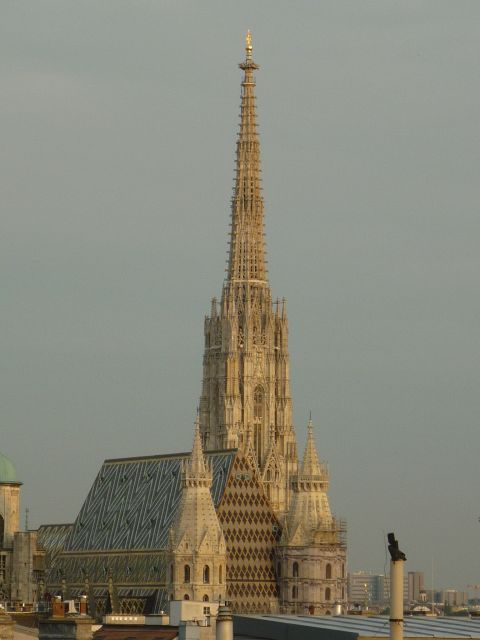
After the earlier imperial core, the route loops back toward St. Stephen’s Cathedral again, letting you reassess the area with fresher context. By then you’ve already walked through centuries of Habsburg influence, so cathedral time hits differently than it does on a first-day, first-views outing.
The tour also includes stops linked to legends of St. Stephen, plus time near Figlmüller for Wiener Schnitzel history. That’s a fun way to keep the day from becoming all marble and names. The food reference gives you a practical future plan too: you know where to eat when hunger arrives.
It also touches the old university district, so you get a more student-and-learning feel in between the grand civic monuments. If you like a city with institutions that shaped both art and politics, you’ll appreciate how the walk keeps shifting the lens.
Jesuit Baroque, Greek Quarter Streets, and St. Rupert’s Old Vienna
Later, the tour includes a Baroque church connected to the Jesuits, plus exploration of the Greek quarter area. It’s a change of pace that matters because it shows Vienna as a mix of communities, not only a single imperial storyline.
You also get a stop connected to St. Rupert’s Church, presented as Vienna’s oldest church. The tour then connects Vienna’s older chapters—Romans and Jews in the city—so you’re not stuck in 1700s palace territory the whole time.
This is also where you can feel the walking-tour advantage: you see how neighborhood character changes block to block. Vienna isn’t one uniform “historic district.” It’s multiple layers that keep turning over.
Food History Walks: Demel, Sachertorte, and Wiener Schnitzel
Vienna loves to turn history into something you can taste. This route does that in three distinct ways: Demel in the Kohlmarkt area, Sachertorte and Hotel Sacher, and the Wiener Schnitzel stop near Figlmüller.
You don’t have to eat during the tour to get value, but it helps to know where the landmarks are once you’re ready for a sit-down meal. I also like that the tour uses food as a shortcut into wider culture: pastry and schnitzel aren’t just tourist snacks here; they connect to the city’s everyday identity.
One caution: since entrance fees aren’t included, and some stops may involve interior viewing, build a little buffer into your schedule if you want to go inside any additional sites you spot.
Practical Tips: Meeting Point, Timing, and How to Make the Walk Enjoyable
This is a weather-included walking tour, so bring clothing that handles rain and cool wind. The route also isn’t friendly for big luggage or large bags, and it’s not set up for skateboards or skates.
Meeting works like this: if your hotel is within ZIP code zone 1010, pickup may be available. Otherwise, you meet at St. Stephan’s Square, at St. Stephan’s Square 8A (corner to Jasomirgottstrasse), next to the Lindt Chocolate Store. Public transport is easy: use U1/U3 at Stephansplatz exit Stephansplatz, or bus A1/A2/A3 at Stephansplatz.
Duration depends on the option you choose and availability, with the tour commonly running in the 2–4 hour range. A private format means you don’t rush as hard as group tours, but you still want to wear comfortable shoes—Vienna’s streets are a pleasure, but you’ll feel every cobble.
What Kind of Guide Style You Should Expect from Herbert Stojaspal
A big reason this tour earns strong ratings is the guide’s ability to mix history with personal, human details. Herbert Stojaspal (and guides working the same style) have a reputation for being friendly and professional, with humor that makes heavy topics easier to hold in your head.
One example from the tour approach: you may get a quirky opener involving a historic photo tied to a building that was once used as a brothel. That kind of detail isn’t there to shock you—it’s there to show how Vienna’s walls have always held change underneath the official story.
If you prefer storytelling that stays very light and emotional, you might find the tone a bit straightforward. Still, that plain style can be a plus when you want facts that connect cleanly to what you’re standing in front of.
Should You Book This Private Walking Tour?
Book it if you want a private guided route through Vienna’s core landmarks with room to ask questions and control the pace. It’s a strong fit for first-timers who want the city’s layout made clear fast, and also for repeat visitors who want the palace-and-square history but with side streets like Blutgasse and older neighborhood references.
Skip it if you need step-free routes or you strongly dislike walking in variable weather. Also, if you only want a museum day with lots of indoor time, this is still a walking tour, with interiors likely to be limited and subject to photography rules.
FAQ
How long is the private guided walking tour?
The experience is offered in different time options, with the tour duration listed as 2–4 hours and availability for starting times to match your selected length.
Is this tour private?
Yes. It’s a private group tour for you and your party, up to 10 people.
What languages are available?
The tour is available in English or German.
What’s included in the price?
A state licensed local tour guide is included, and the tour is conducted in German or English. Entrance fees are not included.
Where do we meet?
Meeting point is St. Stephan’s Square (1010 Vienna), at St. Stephan’s Square 8A at the corner to Jasomirgottstrasse next to the Lindt Chocolate Store. Hotel pickup may be available only if your hotel is in ZIP code zone 1010.
Can I take photos and record audio during the tour?
Photography inside is not allowed, and audio recording is also not allowed.