REVIEW · VIENNA
Big Tour of Gustav Klimt’s Art in Vienna: Belvedere, Secession & Leopold Museum with Skip-the-Line Tickets
Book on Viator →Operated by Art with me! — Art experience for the intellectually curious · Bookable on Viator
Vienna can feel like a museum buffet. This private Klimt route focuses on three sites tied to his most famous works, with skip-the-line entry and a guide who keeps the story clear as you move.
I especially like the way the tour connects Klimt’s paintings to the Vienna he lived in, so you are not just collecting highlights. Another standout is the art historian guide (Julia) style: structured, answer-ready, and built for questions; one possible drawback is that each stop is time-limited, so if you want to linger for an hour on just one canvas, you may feel rushed.
In This Review
- Key highlights you will actually feel during the tour
- A smart 3-hour Klimt plan for first-timers
- Belvedere Palace: The Kiss and Judith, right where they belong
- Secession Building: Beethoven Frieze in 30 minutes of focused attention
- Leopold Museum: Death and Life plus a reconstructed ceiling story
- MuseumsQuartier Wien: the one-minute regrouping stop
- Finding the meeting point at Belvedere the easy way
- Skip-the-line tickets and what they mean for your day
- Price and value: what $336.43 buys you in reality
- Who this tour fits best (and who might want a different pace)
- Should you book this Klimt tour?
- FAQ
- How long is the tour?
- Which museums are included?
- Are skip-the-line tickets included?
- Is the tour private?
- What language is the tour offered in?
- Where do we meet?
- Is cancellation free?
Key highlights you will actually feel during the tour
- Skip-the-line, mobile tickets, with the guide handling museum entry so you are not stuck in ticket lines
- Three major Klimt stops in one run: Belvedere, the Secession Building, and the Leopold Museum
- Beethoven Frieze context in the Secession, not just a quick photo stop
- The right pairings at the Leopold Museum, including Death and Life and a reconstruction tied to his Vienna ceiling work
- A short MuseumsQuartier pause, free and useful for regrouping before your next museum
- Private format, so you can ask questions without waiting for a huge crowd
A smart 3-hour Klimt plan for first-timers
This is a compact, focused way to see Klimt in Vienna without spending your day bouncing between unrelated sights. The tour runs about 3 hours, and you get a choice of departure times, which matters if you are also trying to fit in other Vienna classics like gardens, coffee stops, or a late evening concert.
Because it is a private tour, your group stays small. That tends to make the pacing feel calmer than big group tours, and it is easier to ask follow-up questions when a painting raises one more curiosity. There is also a practical note worth taking seriously: the tour is meant for travelers with a moderate physical fitness level, so plan on walking between locations and moving through museums at a steady pace.
You can also read our reviews of more tours and experiences in Vienna
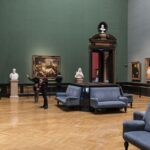
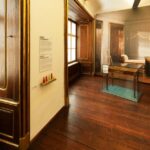
Belvedere Palace: The Kiss and Judith, right where they belong
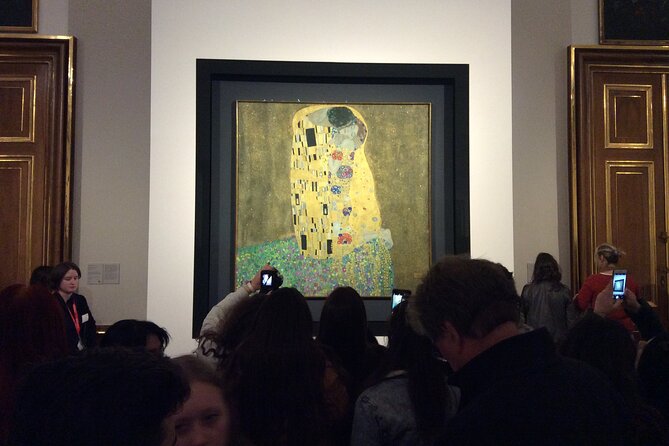
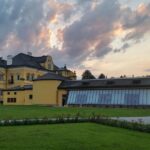
The day starts at the Belvedere Museum, in a setting that already feels like part of the experience. This stop is about 1 hour, long enough to see the works and still absorb what you are looking at instead of sprinting through rooms.
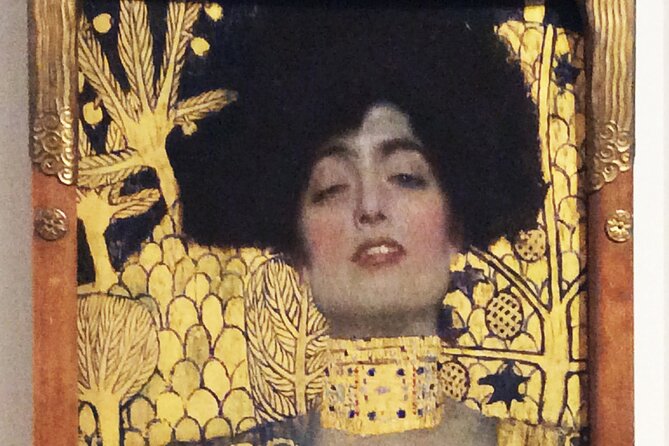
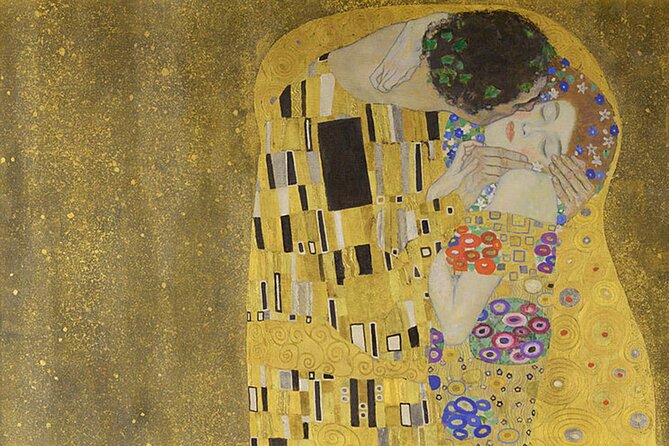
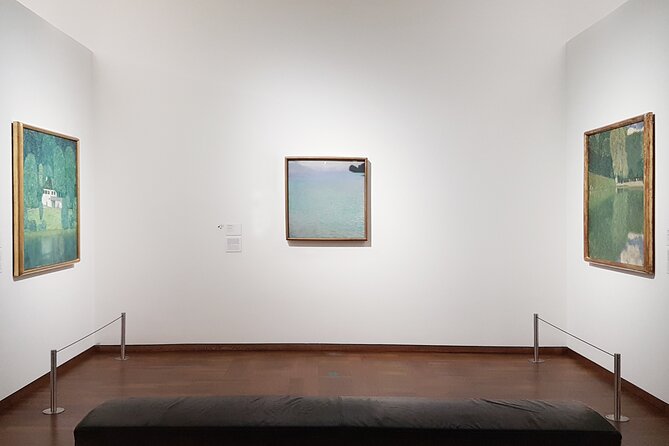
Belvedere is where you see Klimt’s famous Golden Period paintings, including The Kiss and Judith. What makes this start work well is that the Golden Period is not just a style label; it is a clue to how Klimt’s art met the mood of his era. With an art historian guide, you get the cultural and historic background that helps you notice details you might otherwise miss—patterns, symbolism, and why these paintings became so widely discussed.
Tip for your eyes: if you plan to photograph, do it after your first full look. That way you see the painting as a whole before you start framing details. If you love color and surface texture, this is the stop where your brain is most likely to start connecting dots.
Secession Building: Beethoven Frieze in 30 minutes of focused attention
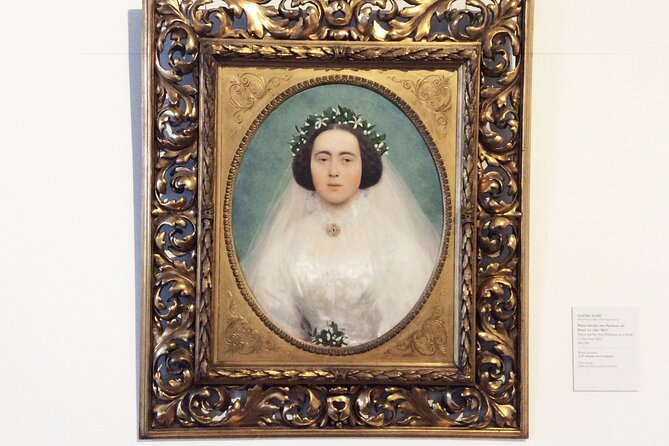
Next comes the Secession Building, the Secessionsgebaude, a place that feels built for artistic statements. You are there for around 30 minutes, and that short time is part of the design: it pushes you to be present rather than scatter your attention.
The star is the Beethoven Frieze, Klimt’s biggest work in this context. Here, the value is not only the scale. It is seeing the artwork in the environment meant to frame it, and hearing how the building and commission relate to the cultural currents of Vienna. This is one of those stops where a good guide makes the difference between I saw it and I understand why it matters.
One consideration: because the time here is tight, this is not the best stop to zone out. If you tend to drift when you feel rushed, go into this part ready to focus. You will get more from the frieze if you treat it like a short lecture you can walk through.
Leopold Museum: Death and Life plus a reconstructed ceiling story
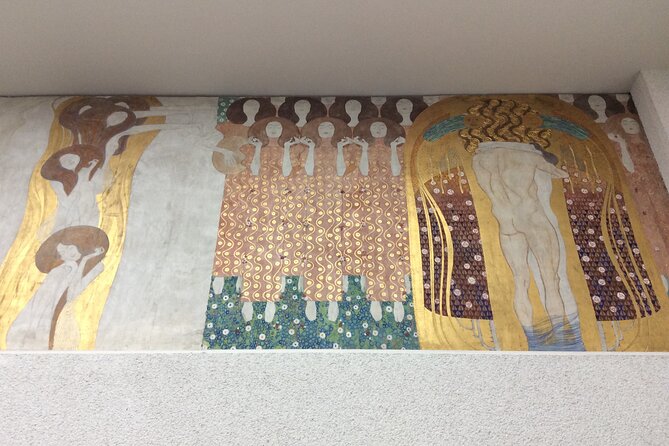
The Leopold Museum stop is about 59 minutes, and it is the most time you get after Belvedere. This gives you breathing room to shift from iconic paintings to Klimt’s broader visual ideas.
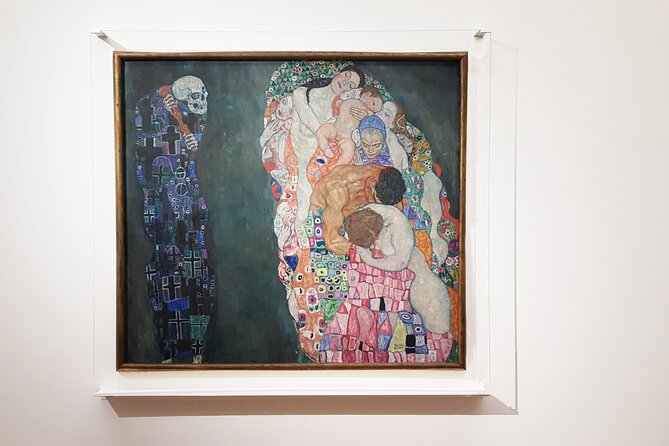
You are looking at Death and Life, one of Klimt’s most talked-about works, and you also see a reconstruction connected to his University of Vienna Ceiling Paintings. That second element matters because it helps you see Klimt as more than the painter of a few glamorous images. You start to notice the bigger pattern: his interest in allegory, human experience, and the way a visual theme develops across settings.
If you are the type who likes to compare artworks side by side, you will probably enjoy this stop most. The guide’s job here is to connect the dots without turning it into a textbook. The best art tour moments are when you start seeing how one idea echoes in another painting.
MuseumsQuartier Wien: the one-minute regrouping stop
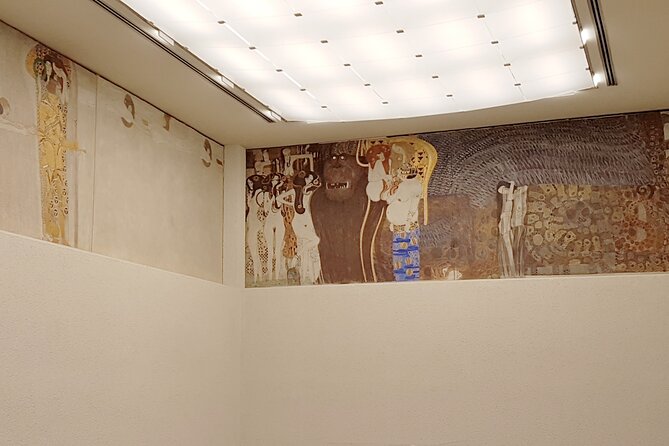
You get a quick, about 1-minute stop at MuseumsQuartier Wien, and it is listed as free. It sounds minor, but this tiny break can be helpful. It gives your eyes a reset between museums and makes the transitions feel smoother.
Think of it as a small pause to regroup before you move deeper into the final museum experience. It is also a reminder that Vienna is not just rooms and walls; the urban setting keeps the day from feeling like one long indoor sprint.
You can also read our reviews of more museum experiences in Vienna

Finding the meeting point at Belvedere the easy way
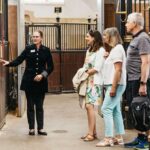
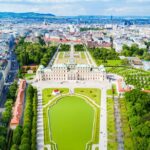
Logistics are where good tours quietly prove themselves. You meet at Austrian Gallery Belvedere, at Prinz-Eugen-Straße 27, 1030 Wien. The key detail is that you need to show up punctually at the main entrance of the Belvedere Palace, also called the Upper Belvedere.
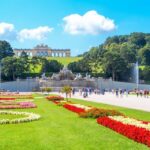
Your guide waits on the right side of the main entrance. There is also a neat way to verify you are at the correct spot: if you see a breathtaking view of Vienna, you are at the meeting point. If you see the palace but not the city view, move to the entrance on the opposite side and follow the Museum entrance sign.
The tour notes that your guide has the museum entrance tickets, so you are not scrambling for admission passes on the spot. If you run into trouble, you should use the contact details in your confirmation or voucher.
Skip-the-line tickets and what they mean for your day
The phrase skip-the-line can mean different things, so here is how to interpret it for planning: you should expect less waiting time at entry because the tour includes skip-the-line tickets and the guide brings the admission access. You also get a mobile ticket, which generally makes check-in easier.
This matters in Vienna because timing can get tricky during peak museum hours. When a tour is tight and the schedule depends on arriving at each museum on time, saved waiting time can be the difference between feeling rushed and feeling in control.
One practical note from the structure of the stops: the tour is designed to fit three museum experiences into a single morning or afternoon block. That is great for coverage, but it does mean your best strategy is to come with a few priorities in mind so you enjoy the time you have.
Price and value: what $336.43 buys you in reality
At $336.43 per person, this is not a budget tour. The value comes from what is bundled and how the experience is delivered.
First, the tour includes admission for the main stops. Each major museum segment lists admission as included, and the guide handles the tickets for you. Second, the private format matters: you are paying for a real art historian guide experience rather than just transportation and general entry.
Third, the specific mix of sites is unusually focused. You are seeing Klimt through three lenses: the Belvedere Golden Period works, the Secession Building’s Beethoven context, and the Leopold Museum’s darker, symbolic side plus reconstructed ceiling work. That is a lot of meaning for three hours, especially compared with doing museums on your own with no connecting narrative.
If you are traveling with someone who loves art, this also tends to be easier to justify. The “cost per painting” feels more reasonable when the guide helps you notice what is going on and you leave with more than a memory of a pretty image.
Who this tour fits best (and who might want a different pace)
This tour suits you if you are a Klimt fan and you want the context that turns artwork into something you can explain. It also fits well if you like structured museum time—clear stops, clear themes, and enough guidance that you feel oriented even if you are new to Vienna art history.
It is also a good option if you care about the human pace of a private tour. The tour is designed so you can ask questions, and that often leads to a more satisfying experience than quietly trying to read every label on your own.
If you are the type who wants to spend a lot of time in a single gallery, you may find the timeboxing at each stop limiting. You will see major works, but you will not have unlimited hours for one painting.
Should you book this Klimt tour?
If your goal is to see Klimt’s most important Vienna works in a tight, organized format, I think this booking makes sense. The pairing of Belvedere, the Secession Building, and the Leopold Museum is efficient, and the presence of Julia as the guide—bringing cultural and historic context in a structured way—is the kind of difference you feel while you are walking through the rooms.
I would book it when you value meaning over marathon museum time. I would consider a different option if you want long, quiet, uninterrupted viewing hours in only one collection.
Either way, if you show up on time at the Upper Belvedere meeting point and come ready to ask questions, this is the sort of tour that can turn famous Klimt images into something you actually understand.
FAQ
How long is the tour?
The tour lasts about 3 hours.
Which museums are included?
You visit Belvedere Museum, the Secession Building, and the Leopold Museum. There is also a brief stop at MuseumsQuartier Wien.
Are skip-the-line tickets included?
Yes. The tour is described as having skip-the-line tickets, and the guide has the museum entrance tickets.
Is the tour private?
Yes. It is a private tour/activity, so only your group participates.
What language is the tour offered in?
The tour is offered in English.
Where do we meet?
You meet at Austrian Gallery Belvedere, Prinz-Eugen-Straße 27, 1030 Wien. The guide waits at the main entrance of the Upper Belvedere, on the right side.
Is cancellation free?
Yes. Free cancellation is available up to 24 hours in advance for a full refund.