REVIEW · VIENNA
Private Vienna Highlights History Walk — WWII and Post War Vienna
Book on Viator →Operated by SCHINDL Local Services & Day Tours · Bookable on Viator
WWII echoes in Vienna every few blocks. This private history walk strings together imperial power, Nazi-era rupture, and the memory politics of the post-war city in one smart, walkable loop. I like that it mixes major landmarks—think Belvedere and St. Stephen’s—with quieter, high-impact sites like the Judenplatz Holocaust Memorial. You’ll also get hotel pickup so you spend your energy on the streets, not sorting logistics.
I love the way the route is built around clear visual “chapters.” Upper Belvedere’s terrace view sets the tone for Austria’s shift from empire to the Second Republic, and the later stops at Heldenplatz and the Hofburg show how power rewrites public space. Another plus: guides can tailor the flow to what you care about, and the experience is widely praised for being organized and responsive.
One thing to keep in mind: it’s still a 3-hour walking tour, with a moderate pace and outdoor time at multiple memorials and viewpoints. If you’re sensitive to cold/rain, plan for layers—and if you dislike tram/side-street walking, you’ll want to bring comfy shoes.
In This Review
- Key Highlights You’ll Feel on the Walk
- Why WWII and Post-War Vienna Changes How You See Every Block
- Belvedere Gardens: The Panorama That Explains Austria’s Shift
- Schwarzenbergplatz Soviet Memorial and the Complicated Meaning of Liberation
- Hochstrahlbrunnen, French Embassy, and the Ringstraße After Wartime
- Burggarten, Mozart, and the Dark Footnote by the Academy
- MuseumsQuartier, FLAK Towers, and Heldenplatz’s Anschluss Moment
- Hofburg and Judenplatz: From Seven Centuries of Power to a Name We Don’t Forget
- Colonna Della Peste and St. Stephen’s Cathedral: Art After Crisis, Fire at the End
- Price and Pacing: Hotel Pickup, Private Time, and Real Value Math
- Should You Book This WWII and Post-War Vienna Walk?
- FAQ
- Is this tour private?
- How long is the walking tour?
- What languages is the tour offered in?
- Where does hotel pickup happen?
- What time does the tour start?
- Are the main stops admission-free?
- Can I cancel for a full refund?
Key Highlights You’ll Feel on the Walk
- Belvedere Palace panoramas tied directly to Austria’s 1955 Second Republic symbolism
- Soviet War Memorial memory at Schwarzenbergplatz, right in the city fabric
- Ringstraße transfer by tram to connect WWII-era absence with rebuilt landmarks
- Heldenplatz and the Anschluss speech site explained through the square’s layout
- Judenplatz Holocaust Memorial and the Nameless Library on a destroyed community site
- Hofburg’s 7-century power story, from monarchy to modern republic
Why WWII and Post-War Vienna Changes How You See Every Block
Vienna can look polished and calm. But this walk is designed to remind you that the city was also a stage—first for imperial ceremony, then for dictatorship, and later for the arguments about what should be remembered and how. The result is not doom for doom’s sake; it’s pattern recognition. You start spotting why certain buildings look the way they do, and why public squares feel “set up” for speeches and ceremonies.
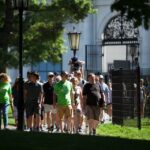
You’ll get a local guide who connects the dots between architecture, politics, and daily life. In past tours with guides such as Brigitte, Walter, Alex, Andrea, Hannes, and Dr. Stollhof, the common theme is clear: they keep things moving, they answer questions patiently, and they add enough story detail to make the city stick in your memory.
The format matters. This is a private tour for up to 10 people, so the pace and the emphasis can shift to your interests instead of sticking to a rigid group script. If you’re trying to make sense of WWII and its aftermath in a single afternoon, the structure helps.
You can also read our reviews of more walking tours in Vienna
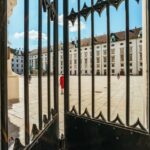
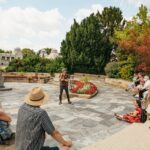
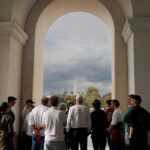
Belvedere Gardens: The Panorama That Explains Austria’s Shift
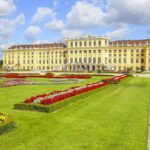
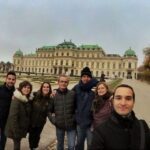
You start at the Upper Belvedere, where the terrace view is basically a lesson in perspective. Upper Belvedere was built by Prince Eugene, described here as a military genius who never ruled. That matters, because the story you’ll hear connects imperial ambition with later political meaning.
A key point your guide will underline: the palace became symbolic in the mid-20th century, including its association with Austria’s Second Republic in 1955. Standing on that terrace, you’re seeing a physical vantage point and a political one. The city’s change isn’t only in textbooks—it’s in where people stood, what they wanted to project, and how new authorities used old splendor.
Then you move down through the Belvedere Gardens and Lower Belvedere, reading the garden axis like a statement. In this kind of place, “beautiful” is never just decorative. The geometry points to order and hierarchy, and the gardens reinforce the idea that power can be arranged, displayed, and maintained.
Practical note: the garden route is mostly straightforward, but it’s still outside. If weather is bad, you’ll want to keep a small umbrella ready and take your time on photos—some stretches are wide open.
Schwarzenbergplatz Soviet Memorial and the Complicated Meaning of Liberation
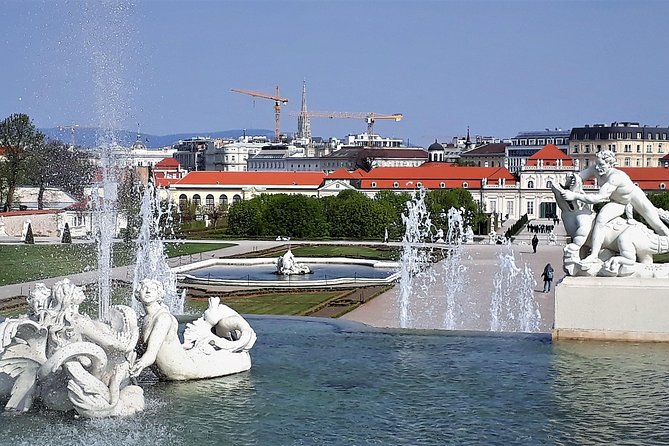
Next you’re at Schwarzenbergplatz, stopping at the Soviet War Memorial. This is one of the most emotionally direct parts of the walk. The monument honors thousands of Red Army soldiers who died ending Nazi rule in Vienna, and the guide frames it in a nuanced way: liberation and occupation can coexist in memory.
This stop works because it’s not placed in a museum bubble. It sits inside normal urban life—so you see how remembrance gets built into the everyday city. It also sets up the next sections of the tour, where Allied signals and post-war rebuilding sit right beside each other.
This is a short stop—enough time to look, read, and absorb. If you’re the type who likes to linger, you can ask the guide to slow down here. The whole tour is designed with a flexible itinerary, and this is the moment where that flexibility feels most useful.
Hochstrahlbrunnen, French Embassy, and the Ringstraße After Wartime
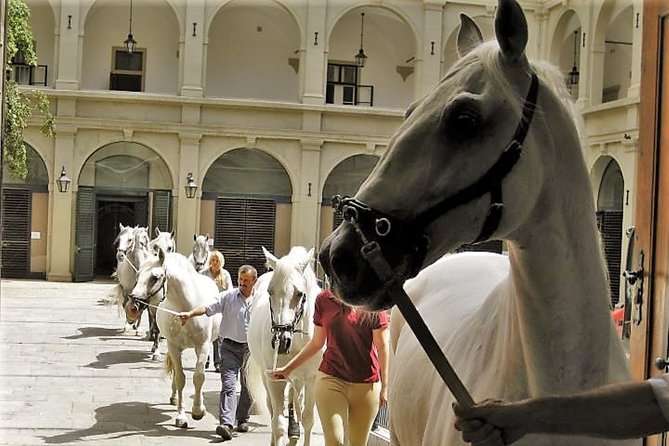
After the memorial, you head to Hochstrahlbrunnen, a monumental fountain celebrating Vienna’s alpine tap water, framed by the French Embassy. The pairing is smart because it’s not just about WWII—it’s about alliances and the messages governments choose to project in peacetime. You get two Allied presences with different architectural “voices.”
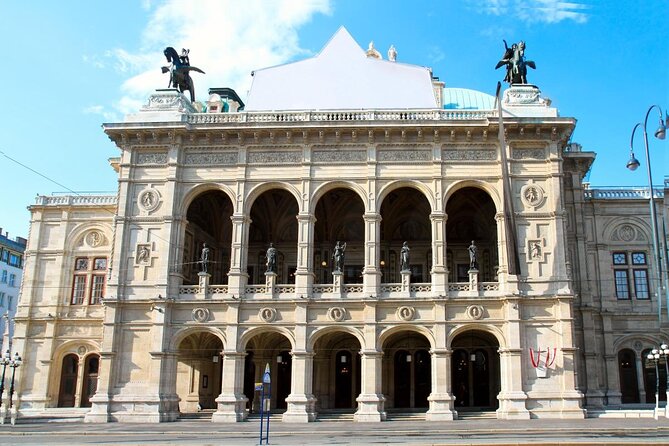
From there, the route includes a short tram ride along the Ringstraße—Vienna’s big 19th-century prestige boulevard. This section is where you start to feel the city’s timeline overlap. The tram gives you moving perspective while the guide explains how the boulevard functioned as a public stage, and how wartime destruction was later met with rebuilding and cultural continuity. You’ll pass the rebuilt State Opera, a symbol of how culture was treated as a long-term project, not a quick fix.
Important practical detail: the tour description notes that public transport to/from attractions is not included, even though a tram ride is part of the route. That doesn’t mean the guide won’t coordinate it—just that you should plan for the possibility of paying for tram fare. If you want zero surprises, ask what tickets you’ll need before you go.
Burggarten, Mozart, and the Dark Footnote by the Academy
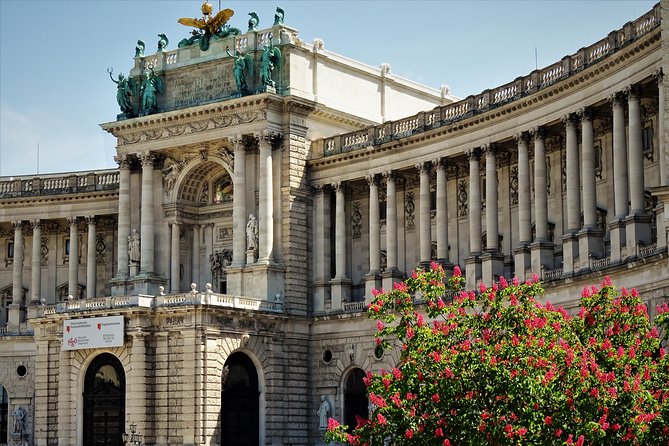
You reach Burggarten, where Mozart presides over a garden that once belonged to the imperial court. It’s the kind of image Vienna does well: a cultural icon placed right where political authority used to be close by. The guide connects the symbolism here to the rest of the route: how the appearance of culture can sit beside violent history.
Just steps away is the Academy of Fine Arts, and this is where the tour adds a sharply specific historical footnote: it’s noted that the academy rejected a young Adolf Hitler. It’s not a “gotcha” fact—it’s a reminder that history is shaped by decisions, institutions, and doors that open or close.
If you’re traveling with family or you like to keep things conversational, this stop often lands well. It gives a human scale to the broader story, without turning the walk into a single-topic lecture.
You can also read our reviews of more private tours in Vienna

MuseumsQuartier, FLAK Towers, and Heldenplatz’s Anschluss Moment
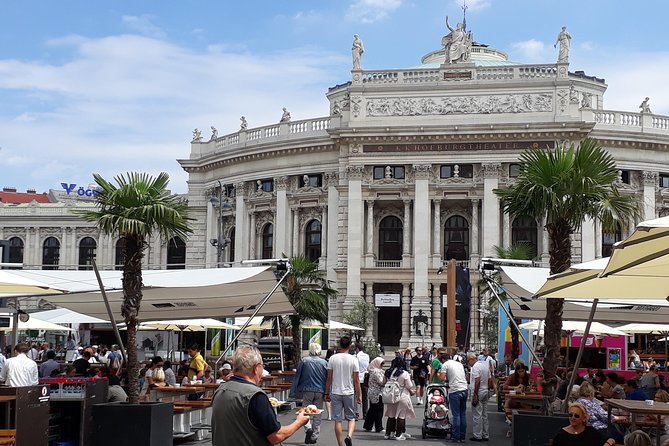
At MuseumsQuartier Wien, you’ll focus on Maria Theresa’s presence in the square and the twin museums that frame the area. It’s a lively setting on a normal day, but the guide will point your attention to something else in the background: one of Vienna’s six FLAK towers, described here as indestructible concrete witnesses from the city’s militarized final months.
This is a powerful contrast. A cultural district can still carry the physical traces of wartime strategy. The point isn’t to scare you; it’s to teach you how to read the city’s layers without needing a guidebook full of captions.
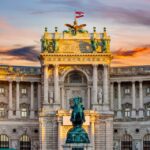
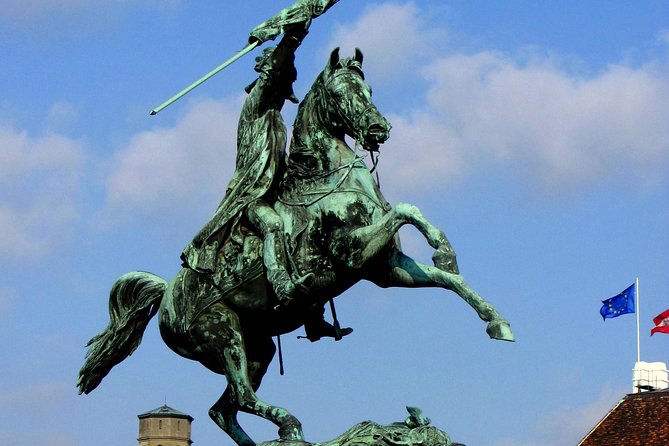
Then comes Heldenplatz, a square that served as a stage for imperial ceremony and military pride. The guide brings up March 1938 and the Anschluss speech by Hitler—because the square’s shape and surroundings helped make public power feel inescapable. Today you’re looking at a panorama of authority and fragility: parliament, city hall, museums, and the Burgtheater all frame the space.
This section is one of the best reasons to book the private format. In a larger crowd, people often miss the logic of the square. Here, your guide can point out how the layout reinforces the message.
Hofburg and Judenplatz: From Seven Centuries of Power to a Name We Don’t Forget
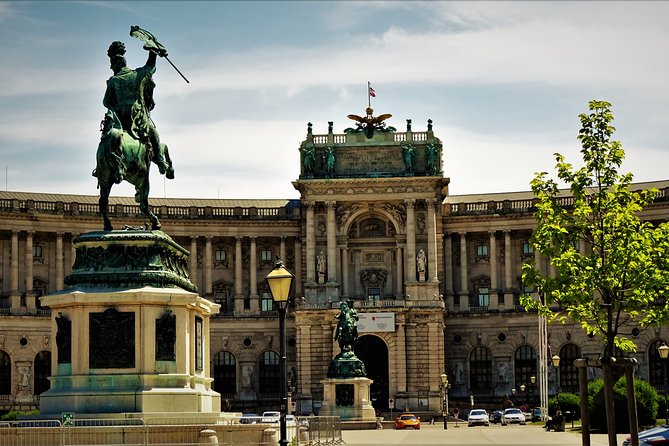
You move into the Hofburg, described as a palace-city and seat of power for seven centuries. The building’s long timeline matters. It connects dukes and emperors to Austria’s modern presidency, showing how the state rewrote itself without erasing the architecture that trained people to recognize authority.
Near the Hofburg area, the route also touches the blend of imperial façades and ecclesiastical grandeur, with today’s luxury boutiques in the mix. That’s not a distraction from history—it’s part of Vienna’s balancing act: ceremony, spirituality, and commerce often share the same streets.
Then you reach Judenplatz Holocaust Memorial, including the “Nameless Library,” placed on the site of Vienna’s medieval Jewish community, destroyed in 1421. This stop is described as commemorating 65,000 Austrian Jews murdered in the Shoah. It’s quiet on purpose. If you need a moment to breathe and process, you’ll be glad the walk makes room for that.
You’ll also benefit from a guide who can hold respect and context at the same time. Based on how guides like Brigitte and Walter have been praised for patience and careful answering, this is the kind of stop where tone matters as much as facts.
Colonna Della Peste and St. Stephen’s Cathedral: Art After Crisis, Fire at the End
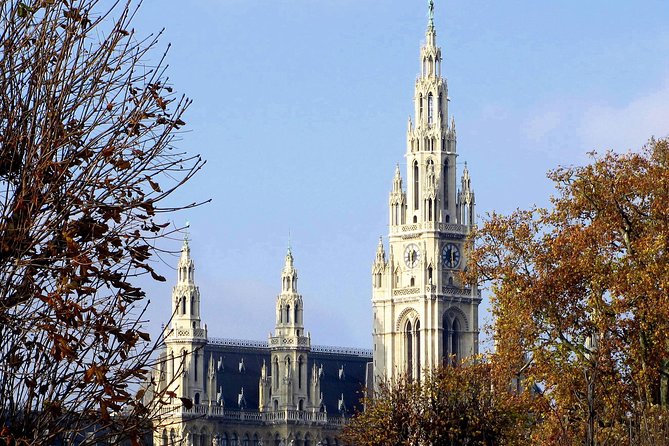
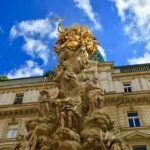
Next is Colonna Della Peste, also called the Pestsäule. The guide frames it as marble Counter-Reformation devotion—art used to reclaim a city after crisis. That’s a neat pairing after Judenplatz: you’re seeing how different eras respond to catastrophe. Some responses are memory-based; others are faith-and-art driven. Both are human.
Finally, you finish at St. Stephen’s Cathedral, Vienna’s Gothic heart. The story here includes a hard wartime detail: in April 1945, parts of the cathedral burned after looters set fire to nearby shops. It’s a tragic end note for a war that had already cost the city so much.
This stop works best if you let the guide point out small visual cues—where damage occurred, how later restoration shapes what you see today. Even when admissions are marked free, you still get value from the interpretation.
Price and Pacing: Hotel Pickup, Private Time, and Real Value Math
At $342.40 per group (up to 10 people) for about 3 hours, this tour is priced like a smart private deal—especially because it includes a private licensed Austria guide and hotel pickup. If you’re traveling with friends or family and can fill the group capacity, the per-person cost drops quickly.
Here’s the practical way to think about it:
- For 2 people, you’re paying mostly for the private guide and pickup, so it feels like a higher rate per person.
- For 6–10 people, the value starts to look excellent because you’re spreading the fixed costs across the group.
Pacing-wise, the itinerary uses short stops at several key sites and only slows down where it matters. You should still expect some outdoor standing, walking between stops, and stairs in older Vienna areas.
One more “value” point: the guide presence is what changes the experience. Guides like Walter, who’s noted for organization and even fitting in time for a coffee, tend to keep things running smoothly so you don’t just see highlights—you understand why they’re connected.
Also check your practical needs: the tour notes say moderate physical fitness is best, service animals are allowed, and pets are not permitted in certain areas.
Should You Book This WWII and Post-War Vienna Walk?
Book it if you want a focused, high-impact way to understand WWII and post-war Vienna without spending your vacation decoding history on your own. It’s especially worth it if you like stories that tie together architecture, public squares, and memorial meaning, and if you value the convenience of hotel pickup and a private format.
Skip or rethink if you hate walking outdoors for long stretches, or if you strongly prefer to avoid any uncertainty around tram/public transport costs since the tour notes say public transport isn’t included even though a tram ride is part of the route.
If you’re short on time and you want your first Vienna history day to have structure, this tour gives you that structure—plus guides who seem to treat the experience like a conversation, not a script.
FAQ
Is this tour private?
Yes. It’s a private tour/activity, and only your group participates.
How long is the walking tour?
The duration is about 3 hours.
What languages is the tour offered in?
It’s offered in English.
Where does hotel pickup happen?
Pickup is available at all hotels and vacation rentals in town, Reichsbruecke pier, or train stations like Vienna Hbf and Vienna West. Other meeting points can be arranged.
What time does the tour start?
The tour starts at 09:30 and 14:00.
Are the main stops admission-free?
The itinerary notes admission ticket free for each listed stop.
Can I cancel for a full refund?
Yes. Free cancellation is available up to 24 hours in advance for a full refund.