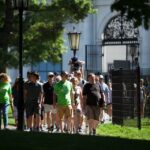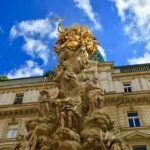
Vienna’s back lanes come with punchlines. In this 2-hour small-group walk, famous landmarks become story starters, mixing St. Stephen’s Cathedral with courtyard legends in the center. I love the humor and quiz-style storytelling and the way you visit local courtyards and side streets you would miss on your own.
One consideration: this is real city walking, so plan for comfortable shoes, and it is not suitable for people with mobility impairments or wheelchair users. It also runs in all weather, and large bags or luggage aren’t allowed.
In This Review
- Key things that make this tour worth your time
- Vienna’s hidden lanes, told like local gossip
- Price and pacing: what $33 buys you in 2 hours
- Meeting points and practical logistics that matter
- Stop by Stop: from St. Stephen’s to the historic center
- 1) St. Stephen’s Cathedral and Stephansplatz
- 2) The historic center: courtyards, legends, and narrow streets
- Palais Neupauer-Breuner and the buildings you’d never pick yourself
- Blutgasse, Ballgasse, and Domgasse: street names with real stories
- Mozart’s final residence: separating myth from the later chapter
- The Franciscan Church and Monastery area: a quieter kind of wow
- University of Vienna and the old university district: where ideas lived
- Traditional Viennese cuisine: the stories behind what you’ll taste later
- Humor, quizzes, and the guides who keep the group moving
- Weather, fitness, and who should choose it
- What to do before you go (so you get more out of it)
- Should you book Vienna Hidden Secrets and Local Stories?
- FAQ
- How long is the Vienna Hidden Secrets and Local Stories Walking Tour?
- What does the tour cost?
- What sites will I see during the tour?
- What’s included in the price?
- Is this tour suitable for children?
- Can I cancel and get a full refund?
Key things that make this tour worth your time
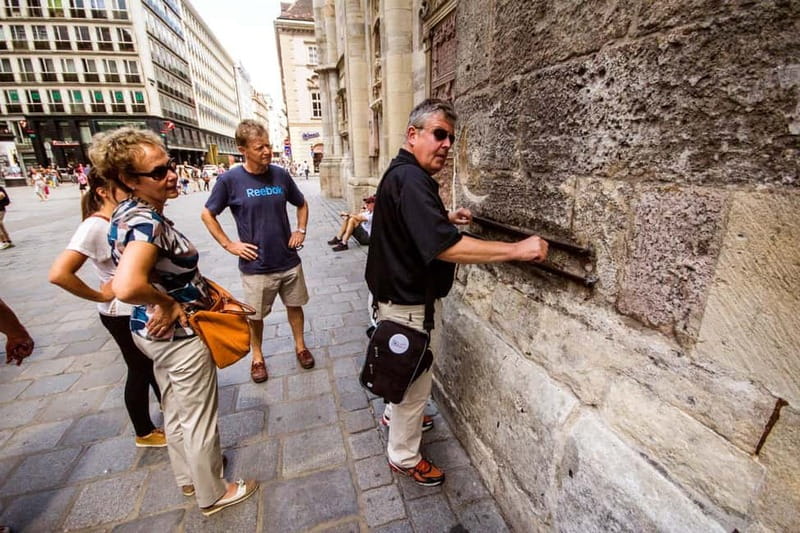
- Fun guide energy: expect lively commentary, with guides like Herbert Stojaspal and Wolfgang known for keeping you engaged
- Side streets with meaning: you’ll see areas like Ballgasse and Blutgasse, where street life connects to the city’s past
- Courtyards and legends: you’ll get stories tied to historical courtyards, not just big-ticket landmarks
- Mozart context without myth fog: you’ll check Mozart’s final residence and hear what’s real about his later life
- A smart route beyond the obvious: the walk continues through the old university area, plus church and city-wall sites
Vienna’s hidden lanes, told like local gossip
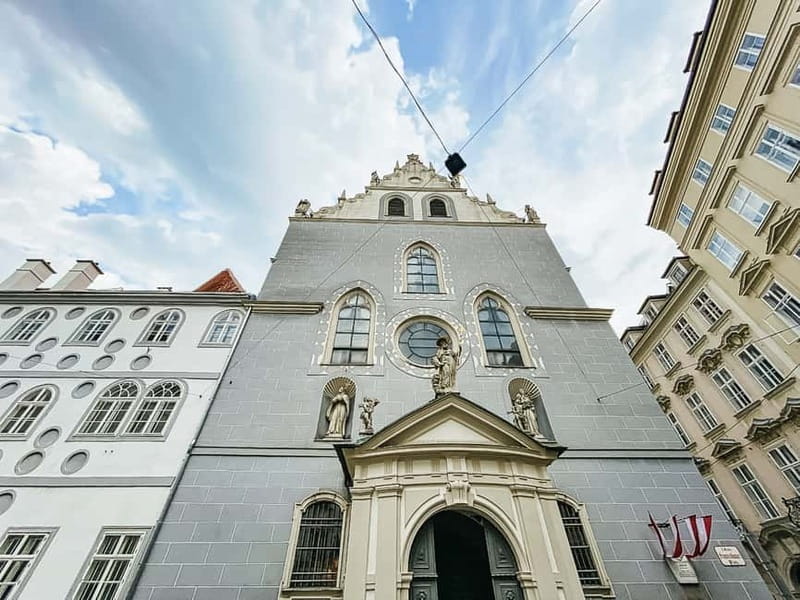
This tour works because it treats Vienna like a neighborhood, not a museum. You start in the center, then follow the human-scale details: narrow passages, little architectural quirks, and the kinds of courtyard spaces you’d never think to hunt down by yourself.
The best part is the story style. You’re not just collecting facts. You’re hearing how Viennese history got remembered through jokes, legends, and street names. It’s the kind of approach that helps you look at buildings and think, Okay, I get why this matters.
You can also read our reviews of more walking tours in Vienna

Price and pacing: what $33 buys you in 2 hours
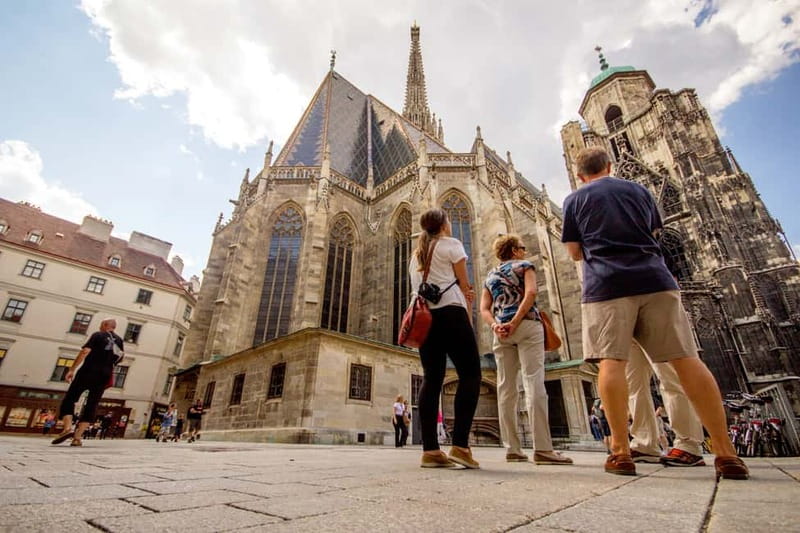
At $33 per person for a 2-hour guided walk, you’re paying for one thing: time with a certified local guide who can point out what you’d otherwise overlook. That’s a fair value in a city where many self-guided itineraries still leave you staring at details without knowing the story behind them.
Because it’s a small group, the pace feels more like a guided conversation than a lecture. That matters on a walking tour, since you’ll want to ask questions and react to the route as you go.
Meeting points and practical logistics that matter
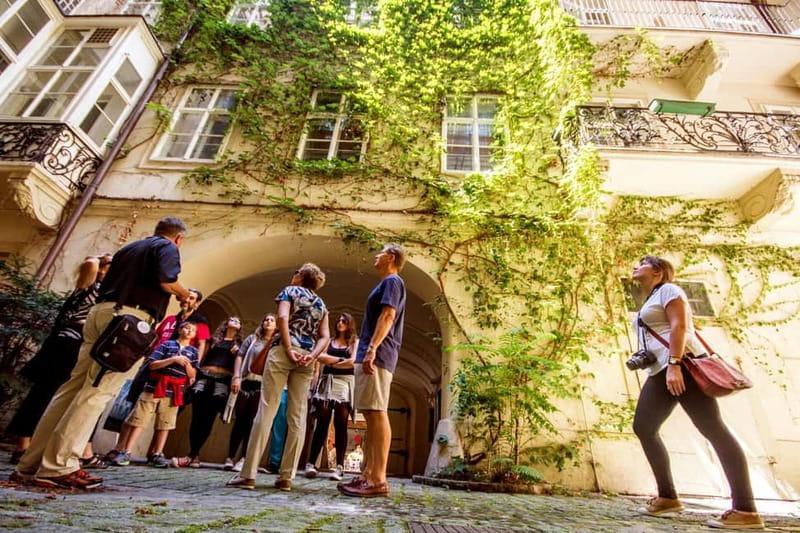
You’ll meet at a starting point that can vary by option, with Bankomat listed as an available option. The tour ends at/near Dr.-Karl-Lueger-Platz 3, 1010 Wien, though the activity description also notes that it ends back at the meeting point area.
Either way, bring a little patience and map-spotting skill. You’ll want to arrive a few minutes early so you can confirm you’re at the right Bankomat when you look up.
Two more practical notes:
- No luggage or large bags. Travel light.
- No audio recording. You’ll be taking notes the old-fashioned way.
Stop by Stop: from St. Stephen’s to the historic center
1) St. Stephen’s Cathedral and Stephansplatz
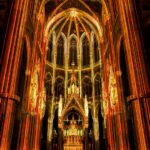
Your tour gets going with St. Stephen’s Cathedral near Stephansplatz, which is a smart start. This is one of those places where you can see the building without really understanding it—unless someone gives you a way to read the details.
On the guided portion, you should expect the kind of context that turns the cathedral from a landmark into a story engine. That makes the rest of the route easier, because you start noticing how Viennese buildings and spaces connect.


2) The historic center: courtyards, legends, and narrow streets
After the big first sight, the walk shifts into the stuff that makes Vienna feel like Vienna: courtyards and less-traveled streets. The tour focuses on the historical center’s hidden parts, so you’re not just walking past photos that already look like photos.
A key value here is the legend-to-place connection. The route is set up so that when you see a courtyard or a quirky street detail, you also get the story that people attach to it. That turns the architecture into something you can remember.
Palais Neupauer-Breuner and the buildings you’d never pick yourself
One of the standout scheduled stops is Palais Neupauer-Breuner. In a city like Vienna, palaces can blur together if you’re only looking at facades from the sidewalk. A guided stop helps you slow down and notice what makes a specific palace different—stylistically and historically.
You’ll also pass through the kind of streets where Vienna’s character shows up in everyday signage and building massing. The tour mentions Deutsches Haus as part of the route, which is the sort of detail that self-guided walkers often miss because it’s not always on the first page of typical itineraries.
Blutgasse, Ballgasse, and Domgasse: street names with real stories
The tour doesn’t treat street names like trivia. It uses them as prompts. When you walk along Blutgasse, Ballgasse, and Domgasse, you’re seeing how Vienna encodes meaning in everyday directions.
This is where the guide’s tone really helps. A funny guide makes you look up, not just forward. And when you learn why a street name exists, you stop thinking of these lanes as shortcuts and start thinking of them as chapters.
You’ll also hear about an odd local detail: the house described as Where the cow plays on the board. Even if you only catch it briefly, it’s the kind of visual detail that sticks once you know what it’s referencing.
Mozart’s final residence: separating myth from the later chapter
One of the highlights is checking Mozart’s final residence and learning the truth of his life. The phrasing here matters. This isn’t presented as a dramatic legend tour. It’s more about correcting the story so it fits what’s actually known.
That approach is valuable for you because Vienna tempts people into over-romantic versions of everything. When a guide connects a place to a later-life context, it helps you understand why the location matters and what you might see when you’re standing there.
Even if you already know Mozart basics, you’ll likely come away with a cleaner sense of his story in Vienna’s streets and addresses.
The Franciscan Church and Monastery area: a quieter kind of wow
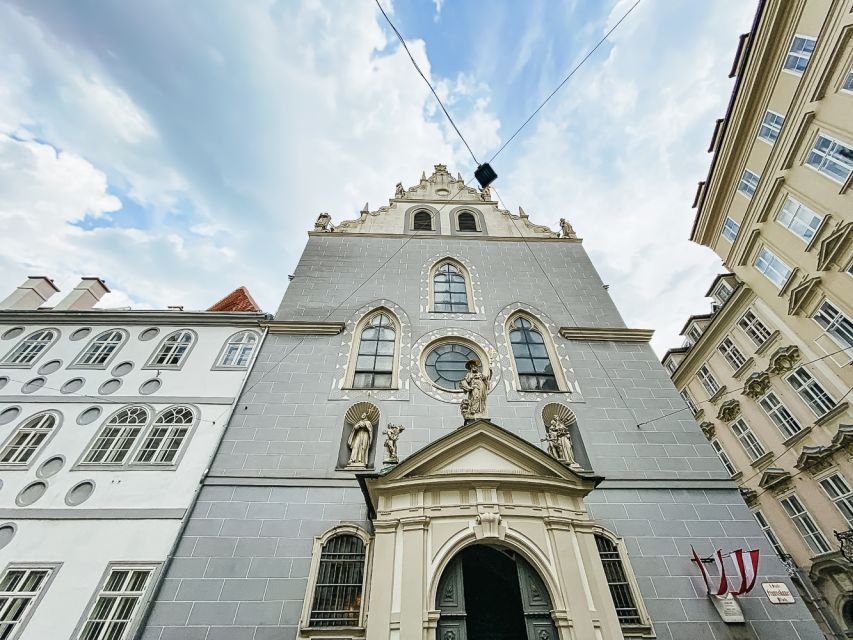
The tour highlights the Franciscan Church and Monastery, and this is a helpful change of pace. Big churches can feel loud and crowded. Monastery-adjacent spaces tend to feel more grounded, more about atmosphere than spectacle.
If you’re the type of traveler who gets tired of repeating major highlights on every itinerary, this portion is a nice counterweight. You’ll see something historically important without having to race the clock.
University of Vienna and the old university district: where ideas lived
The walk continues through the old university district, including the University of Vienna as a scheduled stop. This part makes the route feel bigger than a single sightseeing loop.
You’ll also run into the Jesuit Church and learn about the old city wall. These are the kinds of sites that help you understand Vienna as a city shaped by institutions—education, religion, and defense—rather than only by emperors and palaces.
Even on a short tour, the payoff here is mental. You start seeing Vienna as a system: where learning happened, where beliefs were reinforced, and how the city protected itself.
Traditional Viennese cuisine: the stories behind what you’ll taste later
The tour mentions traditional Viennese cuisine, which I like because it tees you up for what to eat afterward. You’ll get enough context to recognize that Viennese food isn’t random comfort—it has local roots and social meaning.
You might find yourself thinking differently while ordering strudel, schnitzel, or coffee later. Not just, What’s good?, but also, Why does it belong here?
Humor, quizzes, and the guides who keep the group moving
The best feedback you’ll want to pay attention to is the guide style. Names that come up include Herbert and Wolfgang. The tone is described as funny and engaging, with guides who keep you involved and not stuck in passive listening.
One guide style detail that stands out is the quiz approach—questioning you along the route in a playful way. That’s not just entertainment. It helps your brain lock onto what you just saw, which is exactly what you want from a walking tour.
Weather, fitness, and who should choose it
This tour happens in all weather conditions, so bring the gear you’d use for a regular city day. And it’s not a good match if you can’t handle uneven, packed-street walking for about two hours.
Also, it’s not suitable for children under 12, and it’s not suitable for wheelchair users. If you fall into either category, you’ll have a much better time with a different format.
If you enjoy:
- story-first sightseeing
- side streets and courtyards
- learning why street names and buildings matter
…this is likely a solid fit.
What to do before you go (so you get more out of it)
You don’t need to study Vienna like an exam. But you can make the tour land better with a small prep step.
Before you start, decide what you want most from your first day: cathedral context, Mozart context, or the street-story approach. Then, as you walk, listen for the guide’s links between place and story.
Since there’s no audio recording allowed, also plan to take quick notes on the spots you might revisit later—especially the ones with visual details like the house about the cow.
Should you book Vienna Hidden Secrets and Local Stories?
If you want the “Vienna feeling” fast, I’d book it. This tour is built to show you the center with explanations that make the city readable. St. Stephen’s, Mozart’s final residence, the Franciscan Church and Monastery, and the street-name route through Ballgasse and Blutgasse give you both the famous and the offbeat.
Skip it only if you need a fully accessible route or if you’re looking for a silent, self-paced photography loop. This is a guided storytelling walk, with small-group interaction and steady walking.
If your goal is to leave Vienna understanding why the city looks the way it does—and where to go next on your own—this one makes that easy.
FAQ
How long is the Vienna Hidden Secrets and Local Stories Walking Tour?
The tour lasts about 2 hours.
What does the tour cost?
The price is listed as $33 per person.
What sites will I see during the tour?
You’ll see highlights including St. Stephen’s Cathedral, Mozart’s final residence, Ballgasse, the Franciscan Church and Monastery, Palais Neupauer-Breuner, and the University of Vienna area. The route also includes streets like Blutgasse and Domgasse.
What’s included in the price?
You get a certified tourist guide and insider recommendations by a local Viennese, with a live guide speaking English and German.
Is this tour suitable for children?
It is not suitable for children under 12.
Can I cancel and get a full refund?
Yes. Free cancellation is available up to 24 hours in advance for a full refund.