REVIEW · VIENNA
The Ringstrasse Project Walking Tour
Book on Viator →Operated by Insight Cities · Bookable on Viator
Vienna’s Ringstrasse feels like a guided storybook. This walking tour threads together six of the city’s most famous streetscapes, from Vienna City Hall to a classic coffee-house finish, with a professional guide and built-in stops where entry is free. You also get to choose a morning or afternoon start, so you can fit it around museums and meals.
Two things I like a lot: first, this is capped at a maximum of 8 travelers, which makes it easy to ask questions and actually hear the explanation as you walk. Second, the guide experience sounds consistently strong—reviews specifically call out guides such as Sussana and Biljana for being friendly, professional, and funny while still delivering solid context.
One consideration: you’re on your feet for about 2.5 hours, and this isn’t a slow crawl with long indoor time. If you want to linger in each building for hours, you may find the pace a bit tight—and food and drinks aren’t included.
In This Review
- Key highlights to know before you go
- Why the Ringstrasse walk is such a smart first Vienna move
- The pace, the group size, and the departures that fit real travel days
- Price and what makes this value feel fair
- Rathaus: watching the city announce itself
- Wiener Staatsoper: why opera belongs on a grand boulevard
- Kunsthistorisches Museum Vienna: turning art into a public statement
- Postsparkasse and Otto Wagner: Art Nouveau that acts like a billboard
- Stadtpalais Todesco: salons, symbols, and aristocratic influence
- Café Schwarzenberg: coffee-house culture with the right kind of ending
- Who should book this walking tour (and who might not)
- Practical tips to get the most from your 2.5 hours
- Should you book the Ringstrasse Project Walking Tour?
- FAQ
- How long is the Ringstrasse Project Walking Tour?
- Where does the tour start and end?
- What is included in the price?
- What is not included?
- Is the tour offered in English?
- How many people are in a group?
- Are there admission tickets included for the stops?
- What is the cancellation window?
Key highlights to know before you go
- Morning or afternoon departures so you can match your day plan
- Maximum 8 travelers for a smaller, more personal feel
- Mobile ticket to keep check-in simple
- Six Ringstrasse-focused stops with free admission tickets listed for each
- Opera, museum, Art Nouveau, aristocratic salons, and coffee-house culture in one route
- Guides like Sussana or Biljana stand out for professionalism and humor
Why the Ringstrasse walk is such a smart first Vienna move
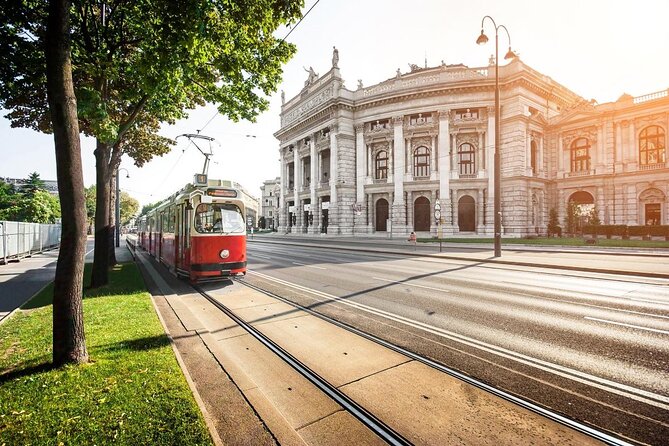
The Ringstrasse is Vienna’s grand boulevard idea made real: a full sweep of monumental buildings built to show power, culture, and style all in one long frame. The trick with tours like this is not just seeing pretty facades—it’s learning what each one was designed to signal.
What makes this one practical is the structure. You spend a chunk of time at each major landmark rather than doing a quick “photo-and-go” route. That matters in Vienna, because the buildings are visually busy. A guide helps you read them: which parts were meant to communicate status, civic importance, or cultural prestige, and why the Ring became the place where people wanted to be seen.
You’ll also get a built-in ending that fits Vienna’s everyday rhythm. Finishing at Café Schwarzenberg makes the last hour feel less like sightseeing and more like stepping into the city’s café culture that took off in the latter half of the 19th century.
You can also read our reviews of more walking tours in Vienna


The pace, the group size, and the departures that fit real travel days
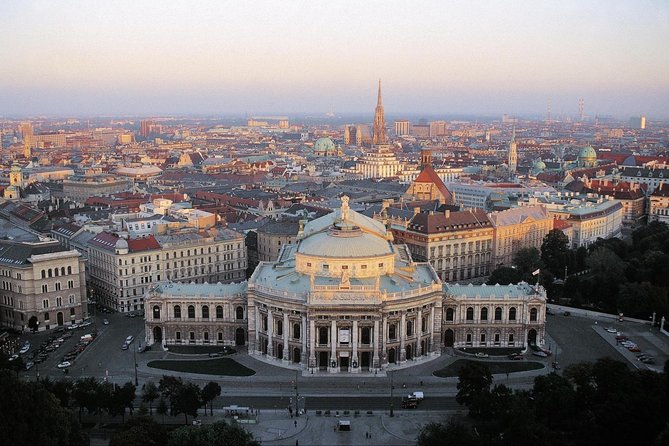
This tour runs about 2 hours 30 minutes, give or take based on how the group moves. The schedule is divided into focused time blocks at each stop, starting at Rathaus and ending at Café Schwarzenberg.
The biggest quality-of-life factor here is the small group: up to 8 travelers. On a Ringstrasse route, that size keeps the guide from having to shout over everyone and helps you stay oriented as you move from stop to stop.
You also get a choice of morning or afternoon departures. That’s more than convenience. If you do the morning slot, you can often keep the rest of your day flexible for indoor museums. If you do the afternoon slot, you can still catch evening dining without rushing.
The start and end points are also well-chosen for a city walk:
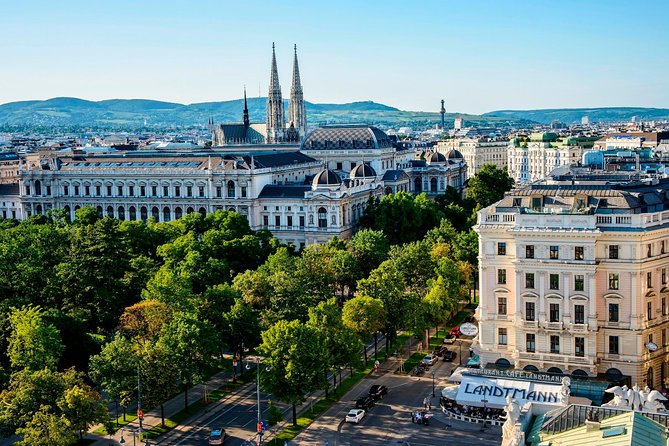
- Start: Café Landtmann, Universitätsring 4, 1010 Wien
- End: Café Schwarzenberg, Kärntner Ring 17, 1010 Wien
Since it’s near public transportation, you’re not trapped in one neighborhood if your plans shift.
Price and what makes this value feel fair
At $177.44 per person for about 2.5 hours, the price isn’t “budget tour” territory. But it can still feel like good value when you look at what’s included and how much ground it covers.
You get:
- A 2.5-hour guided tour of the Ringstrasse
- A professional guide
And for each landmark stop, the tour info lists admission ticket free. That’s a key point. In cities where individual museum or building entry can add up fast, having entry for the major stops included helps balance the cost.
What isn’t included: food and drinks, and there’s no hotel pickup/drop-off. So you’ll want to plan your café break and any snacks separately. The good news is the tour is designed so that Café Schwarzenberg is the natural finale, not an abrupt end with no context.
Rathaus: watching the city announce itself
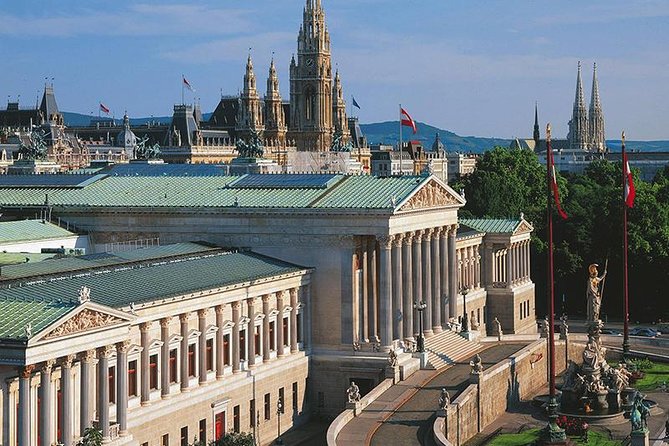
Your first major stop is Vienna City Hall at Rathausplatz—built from 1872 to 1883 in a Neo-Gothic style. The guide’s job here is to connect the architecture to what it does politically, because this isn’t just a pretty building.
Inside, it houses offices tied to local government, including the mayor’s office and chambers for the city council as well as the Vienna Landtag diet. In other words, the Ring isn’t only about art and culture. It’s also where the city shows who runs the show.
You’ll typically have around 15 minutes here. That’s enough time to get oriented—where Rathaus sits on the Ring, what makes its style feel “official,” and what to look for as you continue down the boulevard. If you’re the type who likes to study facades, don’t worry: this is one of the stops where the exterior alone can keep you busy even before you connect the meaning.
Wiener Staatsoper: why opera belongs on a grand boulevard
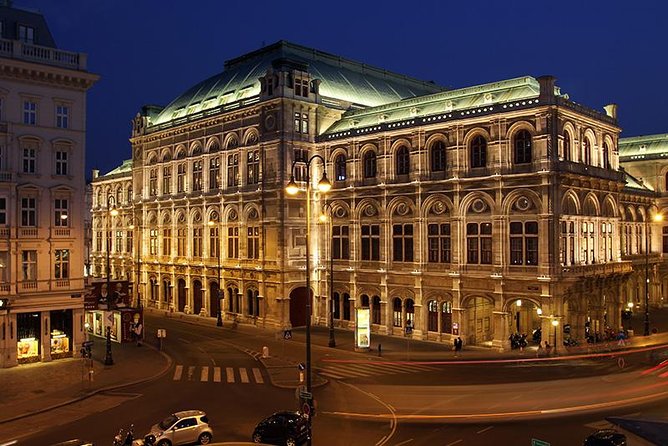
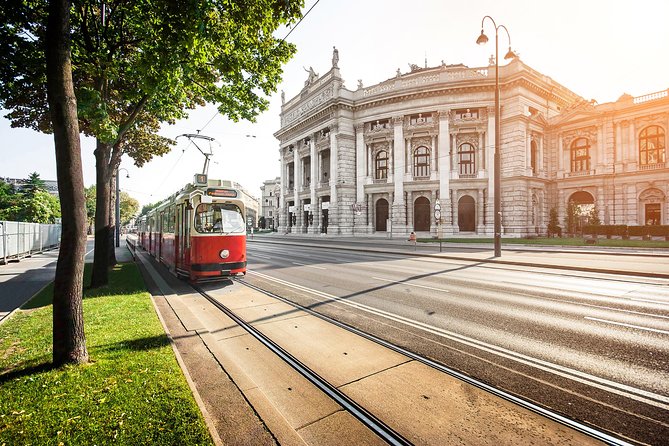
Next up is the Vienna State Opera, a building that matters because it was the first major structure on the Ring Road—built from 1861 to 1869. It’s not just about opera as a performance. The bigger point is how seriously Vienna treated music and theater as part of its identity.
The tour frames it with a simple, useful fact: the house holds about 1,709 seats. That number isn’t trivia for trivia’s sake. It helps you imagine scale and why this institution deserved a headline building right on the Ring.
You’ll spend about 20 minutes here. The most helpful part of a guided stop like this is learning what to notice quickly. Even if you don’t go inside, the exterior and setting give you the sense that the Ring is Vienna’s statement of culture, not only civic authority.


Kunsthistorisches Museum Vienna: turning art into a public statement
Then it’s on to the Kunsthistorisches Museum Vienna, where the building and the institution share the same name. The museum is described as the largest art museum in the country and one of the most important museums worldwide.
The value of this stop on a walking tour is not trying to master the entire museum in 20 minutes. Instead, you get the “why” behind its presence on the Ring: Vienna wanted art placed prominently in the public realm. This is where a guide helps you separate the facade impression from what the museum actually represents.
You’ll have around 20 minutes at this stop, and with entry listed as free, you can likely step into at least part of what’s accessible during your time. Even if you skim, you’ll leave with a clearer sense of what kind of museum this is and why it feels so central to Vienna’s self-image.
Postsparkasse and Otto Wagner: Art Nouveau that acts like a billboard
One of the most interesting stops is the Postsparkasse, the Austrian Postal Savings Bank building. It’s associated with architect Otto Wagner, and it’s regarded as an important work of Vienna Secession—part of the broader Art Nouveau movement.
Why you should care: Art Nouveau in Vienna isn’t just decorative swirl. It’s design used to communicate modernity and confidence. A building that once handled financial and postal functions now reads like a statement of modern urban identity.
You’ll get about 20 minutes here. In a short block, the guide’s commentary is what makes the stop click. You’ll want to keep an eye out for how Wagner’s style differs from the more “traditional” looks of civic or historic institutions. The Ring is like a comparison test—and Postsparkasse is one of the best answers.
Stadtpalais Todesco: salons, symbols, and aristocratic influence
Next comes Stadtpalais Todesco, a Ringstraßenplatz built from 1861 to 1864 for the aristocratic Todesco family. Here, the tour gives you a more social angle on the Ring—who lived here and what they used the space to do.
One highlighted figure is Baroness Sophie von Todesco, who established a renowned salon for artists and intellectuals. That detail changes how you see the building. It’s not only grandeur. It’s also conversation, ideas, and networks of creative life—hosted by people who had the resources and social reach to make it happen.
You’ll have about 15 minutes at this stop. That time is enough to understand the basic story: why this place exists on the Ring, and how salons helped shape cultural conversations behind the scenes. If you enjoy the social side of European history, this is one of the stops that tends to land hardest.
Café Schwarzenberg: coffee-house culture with the right kind of ending
Your final stop is Café Schwarzenberg, located on the Ringstraße boulevard. This is a traditional Viennese coffee house, and the tour info notes that the interior remained largely unchanged since it opened in the 19th century.
That’s the kind of detail that matters because Vienna’s cafés are not modern food courts. They are social rooms—places where people worked, talked, argued, and watched the street life go by.
You’ll spend about 25 minutes here, and this is where the tour becomes more relaxed by design. The tour’s concept is clear: the Ring became a place to see and be seen the moment it was completed, and cafés are a natural stage for that.
Also, because food and drinks aren’t included, you can keep control of your budget. Grab a coffee or a pastry if you want, but it’s your call, not part of the package.
Who should book this walking tour (and who might not)
This is a great fit if you want a guided way to get your bearings quickly on Vienna’s Ringstrasse and you like learning what buildings were designed to represent. If you’re visiting for the first time and you’re trying to stitch together civic life, culture, design, and everyday habits, this route does that in a tight window.
It’s especially good if you appreciate a guide who can explain in plain language while you’re moving. Reviews highlighted Sussana and Biljana for professionalism and humor, and that kind of energy can make architecture feel human instead of stiff.
It may be less ideal if you want a long, self-paced museum visit. The stops are short by necessity. You’re getting the story and the highlights, not a deep museum day.
There’s also a family option: the tour can be booked as a children’s family tour where the guide focuses on symbols on buildings and everyday life in Vienna around 1900. If you travel with kids who like to spot details, that angle can be a fun way to keep attention.
Practical tips to get the most from your 2.5 hours
A walking tour can be easy or annoying depending on details. Here’s how to set yourself up:
- Wear comfortable shoes. The stops are grouped, but you’re still walking a boulevard.
- Bring a phone with your mobile ticket ready. It’s designed to be used that way.
- If you’re sensitive to crowds, pick the departure that best matches your comfort level. Small group helps, but you’ll still be on a major street.
- Have a plan for breaks. The tour ends at Café Schwarzenberg, but food and drinks aren’t included, so decide ahead if you want a coffee stop at the end only or also earlier.
- Keep expectations realistic: 15–20 minute blocks are for orientation and key facts, not for full-on museum exploration.
If you do want deeper time in a specific place, treat this tour as your map. It’s the kind of experience that tells you where you’ll want to return afterward.
Should you book the Ringstrasse Project Walking Tour?
I’d book it if you want a focused, small-group way to understand Vienna’s Ringstrasse without spending your day juggling tickets and trying to read symbolism on your own. The mix of Rathaus, the Staatsoper, Kunsthistorisches Museum, Postsparkasse, Stadtpalais Todesco, and Café Schwarzenberg gives you a full picture of civic power, music, art, modern design, social life, and café culture—without feeling random.
I’d think twice if you’re the type who needs long indoor time at museums, or if you’re traveling with high mobility needs that make a walking route around a major boulevard challenging. In that case, you might prefer fewer stops with longer access.
But for most first-time visitors—and for repeat visitors who want a well-told route—the small group, professional guiding, and free entry listed for major stops make this feel like a solid way to spend a half-day in Vienna.
FAQ
How long is the Ringstrasse Project Walking Tour?
The tour lasts about 2 hours 30 minutes.
Where does the tour start and end?
It starts at Café Landtmann, Universitätsring 4, 1010 Wien, Austria, and ends at Café Schwarzenberg, Kärntner Ring 17, 1010 Wien, Austria.
What is included in the price?
The price includes the 2.5-hour guided tour of Vienna’s Ringstrasse and a professional guide.
What is not included?
Food and drinks are not included, and there is no hotel pickup or drop-off.
Is the tour offered in English?
Yes, the tour is offered in English.
How many people are in a group?
The tour has a maximum of 8 travelers.
Are there admission tickets included for the stops?
The tour information lists admission tickets as free for each stop.
What is the cancellation window?
You can cancel for a full refund if you cancel up to 24 hours in advance of the experience start time.