REVIEW · VIENNA
Vienna: History Highlight Walking Tour
Book on GetYourGuide →Operated by Viennatour Herbert Stojaspal · Bookable on GetYourGuide
Vienna history walks right in front of you. This 2-hour history highlight walking tour strings Roman-era clues to Habsburg power and then lands at St. Stephen’s Cathedral, with a guide who explains what you’re actually looking at. You’re not stuck staring at grand facades that blur together.
I really like two things about this experience. First, you get storytelling that makes the city feel personal, not just dates and dynasties. Second, the stops cover both the shiny imperial center and the harder moments, including WWII memory—so the tour tells the full picture instead of skipping the heavy parts.
One consideration: entrance fees are not included, and a few key sights may require extra payment once you’re there. Also, you’ll want to travel light since luggage or large bags aren’t allowed.
In This Review
- Key things you’ll notice on this Vienna history walk
- Starting at Michaelerplatz 3, right where Vienna’s layers begin
- Roman Vienna and the Hofburg: why this city built castles here
- Heldenplatz and the imperial facades you’re meant to look through
- St. Michael’s Church and the Habsburg wedding tradition
- Imperial Treasury and the National Library roof symbol
- Albertina, art scale, and confronting WWII memory
- Neuer Markt details, St. Stephen’s Cathedral, and what school leaves out
- Price, timing, and whether $33 is a smart trade
- Practical tips before you go (and who this tour suits best)
- Should you book this Vienna History Highlight Walking Tour?
- FAQ
- How long is the Vienna History Highlight Walking Tour?
- How much does the tour cost?
- Where does the tour start?
- Does the tour include entrance fees?
- What languages are available?
- Is the tour suitable for children?
- Is it wheelchair accessible?
- Can I record video or audio during the tour?
Key things you’ll notice on this Vienna history walk
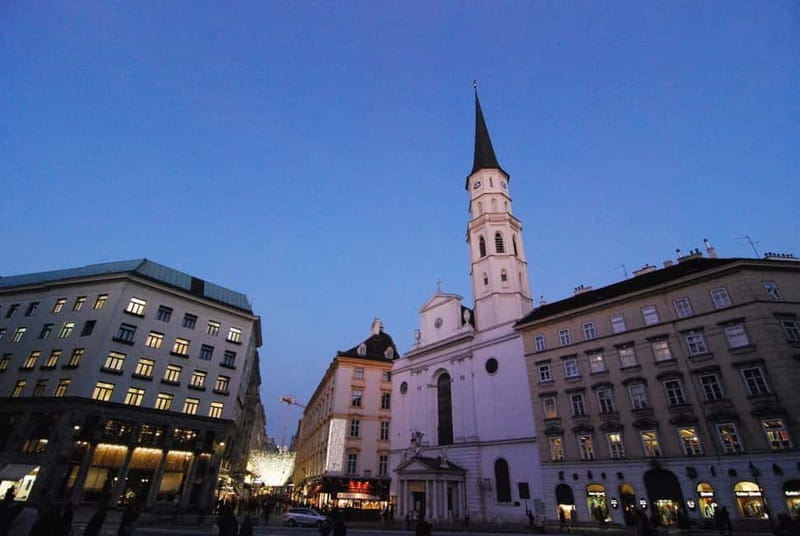
- Loos Haus start at Michaelerplatz 3 with an easy metro connection at Herrengasse (U3)
- Hofburg grounds of 555,000 m² explained in a way that actually helps you picture the scale
- Austrian National Library state room plus the meaning of the roof symbol
- Albertina Museum and why it’s linked to one of the world’s biggest graphical collections
- WWII reminders at the Albertina area, Monument Against War and Fascism, and St. Stephen’s Cathedral
- Imperial Crypt burial rituals—small details that turn into big context
Starting at Michaelerplatz 3, right where Vienna’s layers begin
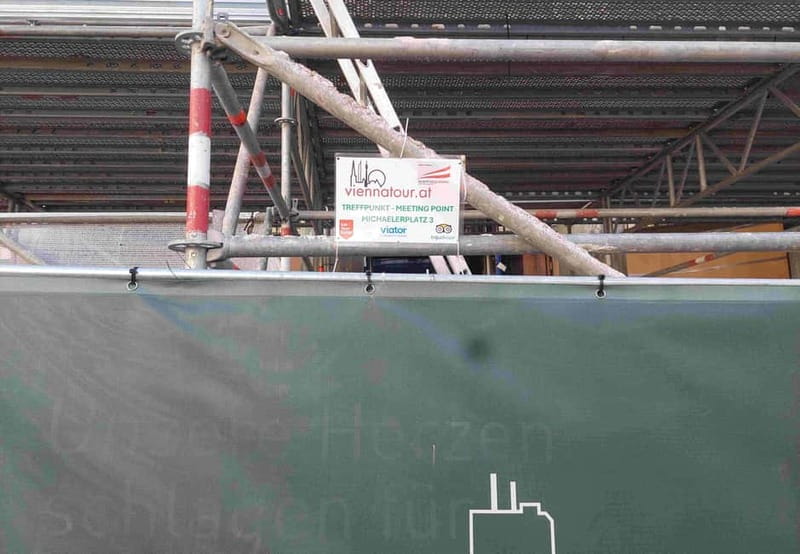
This tour starts in front of Loos Haus at Michaelerplatz 3, tucked between Kohlmarkt and Herrengasse. On the facade you’ll spot the name Raiffeisenbank, which makes the meeting point easier to find once you’re on the right block. If you’re arriving by public transit, the meeting area is only about a 3-minute walk from Herrengasse station (U3).
What I like about starting here is simple: you’re placed in the center of everything. This area sets you up to understand why Vienna’s history isn’t linear. Roman foundations, medieval power, imperial grandeur, and 20th-century trauma all show up in the same small radius. You’ll see how the guide connects those dots as you walk.
You can also read our reviews of more walking tours in Vienna

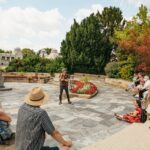
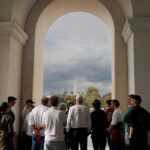
Roman Vienna and the Hofburg: why this city built castles here
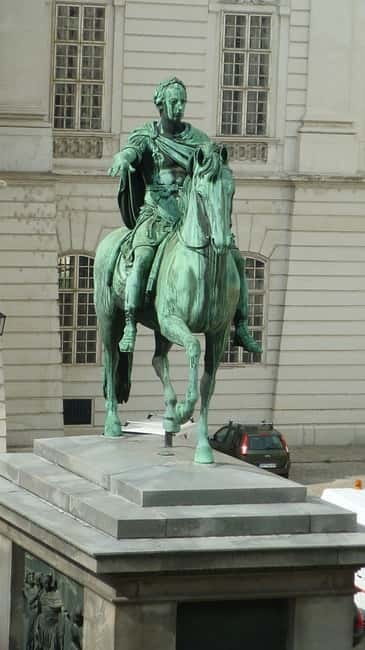
A big early theme is Roman Vienna—and the guide’s central question about why a castle was built in this spot. That framing matters, because it turns your first ten minutes into more than a warm-up. You start looking for origins: not just buildings, but reasons.
From there, you move into the Michaelerplatz Excavations. Expect a guided walk through the idea that you’re standing above earlier Vienna, not beside it. Even if the visible remains feel subtle from street level, the explanation gives them a purpose. It’s the kind of stop that makes you feel smarter without requiring you to be a history student.
Then comes the Hofburg Palace and the scale of imperial rule. The guide puts special emphasis on the enormous 555,000 m² grounds. That number sounds abstract until someone shows you how that footprint affected the city—where power lived, how it moved, and why Vienna’s center feels designed around rulers.
Heldenplatz and the imperial facades you’re meant to look through
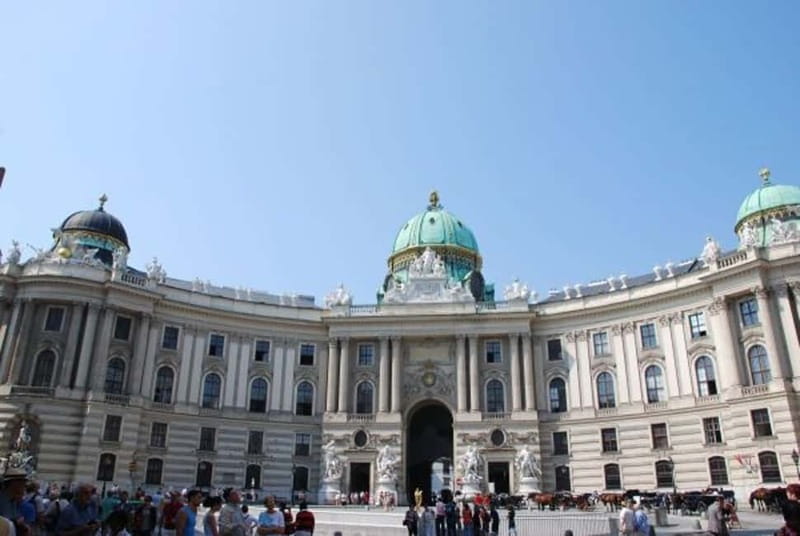
At Heldenplatz, you’ll get help reading the square like a document. The tour highlights the size of Heroes’ Square and then shifts to what lies behind the facades. That’s a key moment for first-time visitors: you stop treating these buildings as scenery and start treating them like communication.
This is also where the “small group” format helps. When you’re walking, questions come up naturally, and the guide can answer in real time without derailing the flow. The best part is how the guide ties architecture to people—rulers and court life—so the place stops feeling frozen in stone.
St. Michael’s Church and the Habsburg wedding tradition
One of the tour’s standout religious stops is St. Michael’s Church, described as Vienna’s third oldest church and known for a combination of three different architectural styles. You’ll likely notice the complexity more once someone points out what to look for. It’s a relief when a guide doesn’t just say the church is old, but shows you how the building reveals different eras.
The tour also visits the church where all Habsburg weddings took place. There’s an important practical note here: that church is closed on Sundays and public holidays. So if your schedule lands on one of those days, you may not get the full experience at that exact stop.
You’ll hear a detail that adds real texture to royal ceremony: at some weddings, the groom was not even present. That kind of anecdote does a lot of work. It nudges the story away from fairytale monarchy and toward how power, politics, and logistics actually shaped personal life.
Imperial Treasury and the National Library roof symbol
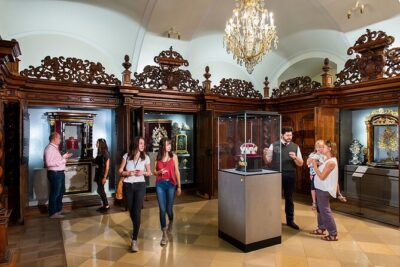
After the Hofburg area, the tour brings you to the Imperial Treasury. The guide’s message is straightforward: for many visitors, this is where you understand why imperial Vienna mattered. Even if you’ve seen palace rooms in photos, a treasury context gives you a different angle—what wealth looked like, how it was displayed, and what it meant symbolically.
Next up is the Austrian National Library, including its state room. You’ll also get two specific interpretation points that most visitors miss:
- what the symbol on the roof means
- why a square is named after Emperor Joseph II
This is where the tour pays off for “I only have limited time” travelers. Instead of treating the library like a postcard, you learn how to decode the city’s visual language.
You can also read our reviews of more historical tours in Vienna
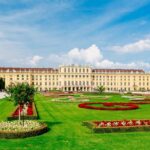

Albertina, art scale, and confronting WWII memory
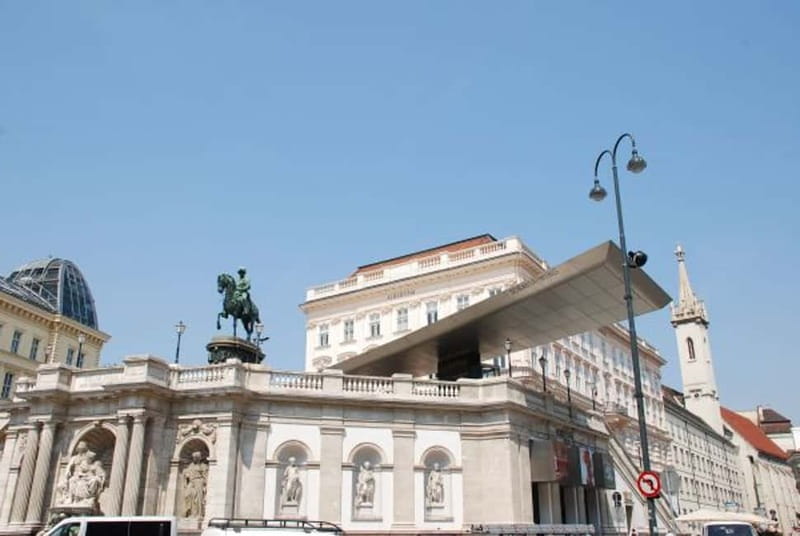
You’ll reach Albertina Museum after the National Library. The headline here is size and scope: Albertina is home to the largest graphical collection in the world. That matters because it explains why this isn’t just another museum stop. It’s a big deal for anyone who cares about art as an archive, not only as finished masterpieces.
But the tour doesn’t stay in 19th-century comfort. As you walk past the Albertina and the Monument Against War and Fascism, you’ll be confronted with WWII horrors. It’s handled as a guided confrontation rather than a random photo stop. For me, that balance is one reason the tour earns high marks: it respects the city’s beauty while still acknowledging what happened here.
You’ll also stop at the State Opera area and hear why the Hotel Sacher now stands in place of the Carinthian Gate Theatre. It’s the kind of city-change story that makes you look around differently the rest of your trip—because you start asking what used to be there and what replaced it.
Neuer Markt details, St. Stephen’s Cathedral, and what school leaves out
Near Neuer Markt, the tour includes the Providentia Fountain and its anecdotes. The value isn’t the fountain itself. It’s what the guide helps you understand about how Vienna tells stories in public spaces—through naming, symbolism, and repeated motifs.
Then you reach the Imperial Crypt, where you’ll hear about Habsburg burial ritual details. When someone connects funeral practice to power structure, it stops being morbid curiosity and becomes historical context.
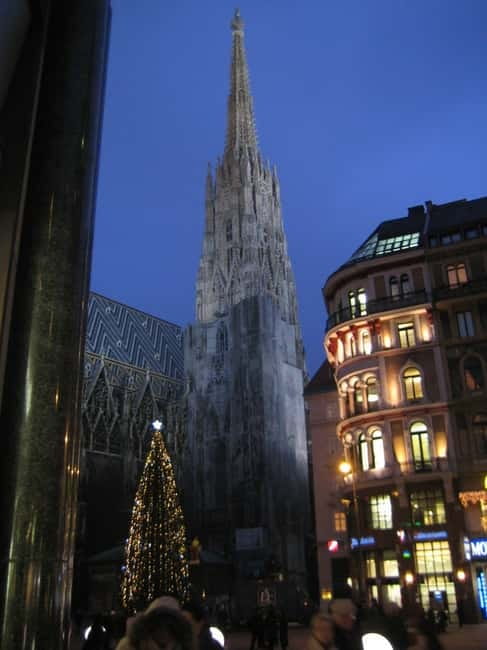
The walk ends at St. Stephen’s Cathedral, Vienna’s landmark. You’ll hear about the cathedral’s partial destruction during WWII, and you’ll get an angle that’s more interesting than a simple damage recap. The guide also points out why not everything you might learn in school about the war and the city is fully correct. That takeaway is useful because it trains your instincts: don’t treat history as a single version. Ask how stories were told and why.
Price, timing, and whether $33 is a smart trade
At $33 per person for 2 hours, this tour fits a very specific travel need: you want a guided orientation that makes the imperial center readable without spending half a day in museums. Entrance fees are not included, so think of the price as paying for the route and the explanations, not guaranteed indoor admissions.
The time structure matters too. Two hours is long enough to get through major sites—Hofburg, treasury/library/albertina area, plus the WWII memory stops—without turning into a marathon. It’s also short enough that you can still use the afternoon for independent browsing.
The small-group nature is another value lever. Many people say they felt like the tour moved quickly, almost too quickly at first. That usually means the guide is keeping a steady pace while still answering questions. You should come with flexible expectations: you’ll cover a lot, but you won’t linger for deep museum hours.
Practical tips before you go (and who this tour suits best)
This walk happens in all weather. Bring what you need for wet streets and cold wind, because the route is outdoors most of the time.
A few more practical notes based on the tour rules:
- No luggage or large bags
- No video recording
- No audio recording
- Not suitable for children under 12
- Not suitable for people with mobility impairments
If you’re a first-time Vienna visitor with limited time, this is a strong match. You get a guided route through the imperial core plus a clear thread of WWII memory and aftermath. It’s also great if you like architecture but don’t want to guess what details mean.
If you’re the type who prefers silent strolling and museum-only afternoons, you might find the walking pace and guided focus a little more structured than you want. In that case, you could skip this and build your own route.
One extra bonus from guide-led tours like this: the guide often shares pointers you can use immediately. For example, one tip you can carry forward is that the Lipizzaner stallions don’t do their full show in summertime, which can affect how you plan your other evenings. That’s the kind of practical, local awareness that makes a guide worth the price.
Should you book this Vienna History Highlight Walking Tour?
I’d book it if you want Vienna’s big-picture story in a tight format: Roman clues, Hofburg power, Habsburg wedding tradition, major imperial sites, and WWII memory—without spending days piecing it together. The small-group feel and the guide’s humor plus city pride show up repeatedly, and that combination helps the tour stay engaging even when the topics get heavy.
Skip it or rethink it if you need museum entrances included in one ticket price, if you travel with large luggage, if accessibility needs are a factor, or if your schedule lands on a Sunday or public holiday when the Habsburg wedding church is closed.
If your goal is to get your bearings fast and come away knowing what you’re looking at, this is a solid use of two hours.
FAQ
How long is the Vienna History Highlight Walking Tour?
The tour lasts 2 hours.
How much does the tour cost?
The price is $33 per person.
Where does the tour start?
It starts in front of Loos Haus, Michaelerplatz 3, 1010 Vienna, about a 3-minute walk from Herrengasse station (U3).
Does the tour include entrance fees?
No. Entrance fees are not included.
What languages are available?
The live guide is available in English and German.
Is the tour suitable for children?
No. It is not suitable for children under 12.
Is it wheelchair accessible?
No. It is not suitable for people with mobility impairments.
Can I record video or audio during the tour?
No. Video recording and audio recording are not allowed.