REVIEW · VIENNA
Vienna: Time Travel and Magic Vienna History Tour
Book on GetYourGuide →Operated by Time Travel in Vienna · Bookable on GetYourGuide
A story you walk through in 60 minutes. Vienna Time Travel turns the city’s past into hands-on rooms—Roman-era beginnings, imperial glamour, and WWII-era fear—wrapped in interactive multimedia and VR tech. It’s set in the cellars linked to St. Michael’s monastery, so the walls feel historic while the show feels very modern.
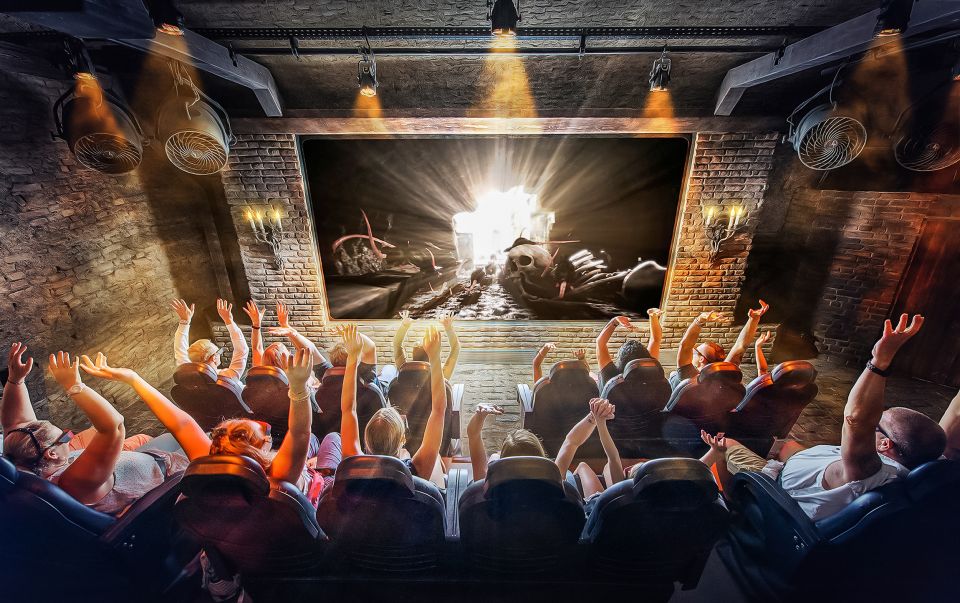
What I like most is the 5D cinema and effects: you’re not just watching, you’re reacting with your whole body. I also love the VR moments, especially the simulated world that tracks Viennese music history, making names and eras feel less like homework. The pacing keeps families engaged, but it moves fast in places.
One consideration before you book: it’s not set up for people with mobility impairments or wheelchair users, since there’s no elevator and about 50 steps across two levels. If stairs are a dealbreaker for your group, plan an alternate attraction.
In This Review
- Key Points You’ll Care About
- Vienna Time Travel: What the Experience Feels Like
- Where It Is and How You Fit It Into Your Day
- The 2000-Year Timeline: Vindobona to Modern Vienna
- St. Michael’s Cellars and the Room-by-Room Format
- 5D Cinema: Effects That Make You Pay Attention
- VR Glasses for Viennese Music History
- Wartime Vienna: Bomb Shelter and Chancellor Figl
- The Final Flights Over Vienna and the Horse-Drawn Landing
- Price and Value: Is $27 Worth It?
- Who This Is Best For (and Who Should Skip It)
- Should You Book Vienna Time Travel?
- FAQ
- How long is the Vienna Time Travel experience?
- How much does it cost?
- What’s included with the ticket?
- Where is the meeting point?
- What languages are available?
- Is it wheelchair accessible?
- Are pets allowed?
- What’s the last admission time?
Key Points You’ll Care About
- Hofburg-area meeting point: you’re at Habsburgergasse 10A, steps from the old center and major sights.
- 5D + VR combo in one hour: multiple tech formats so the experience doesn’t get repetitive.
- A timeline that spans Vindobona to modern Vienna: you get the big arc without a long museum slog.
- WWII segments included: bomb shelter and Chancellor Figl’s speech moments give the story emotional weight.
- Built into historic cellars: St. Michael’s monastery setting adds atmosphere even when the visuals are futuristic.
- Not wheelchair accessible: two levels with around 50 steps and no elevator.
Vienna Time Travel: What the Experience Feels Like
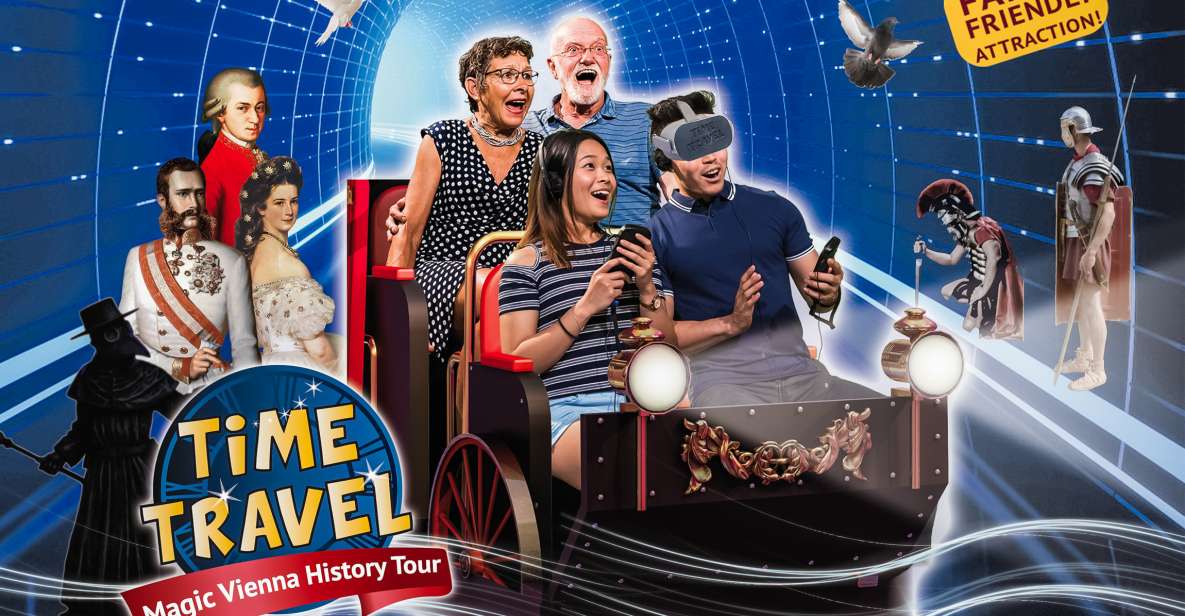
This is one of those Vienna activities that works even if your travel style is more “quick and fun” than “slow and museum-y.” In about an hour, you move through a series of themed areas that mix projection, multimedia portraits, 5D effects, and VR headsets. The result is a fast tour of the city’s major turns—without asking you to read a wall of text.
You also get a structure that helps you mentally place Vienna’s timeline. You start far back, with the Roman camp of Vindobona, then gradually shift toward imperial power, court life, and the cultural branding Vienna became famous for. After that, the story doesn’t avoid the 20th century; you get wartime scenes that feel deliberately chosen, not random “scare effects.”
The “why it works” part is the mix of delivery. Instead of treating history like a lecture, Vienna Time Travel uses showmanship: scenes you can see, hear, and feel through effects (like 5D), then resets your attention as you walk to the next room.
You can also read our reviews of more historical tours in Vienna

Where It Is and How You Fit It Into Your Day
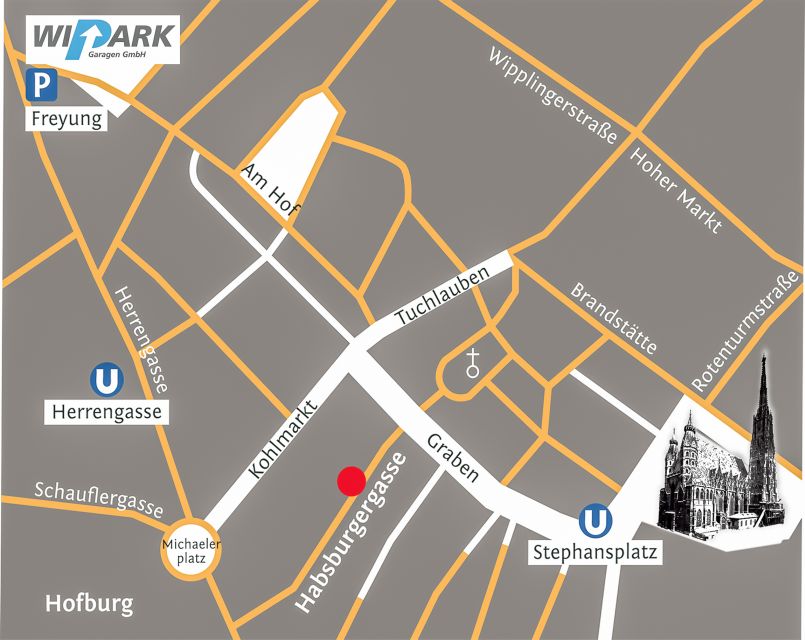
Location matters here because it’s in Altstadt, close to the city’s core. The meeting point is Habsburgergasse 10A, 1010 Vienna, and it’s about 200 meters from the Hofburg and roughly 100 meters from Graben, Kohlmarkt, and Stephansplatz. That means you can pair it with a morning or afternoon of classic sightseeing without big transit time.
Getting there is straightforward. Use the underground on U1 (Stephansplatz) or U3 (Herrengasse). If you’re driving, the garage “Freyung” is available at a reduced price. And since the attraction is only 1 hour, you can slot it between major sights without losing half a day.
My practical tip: if you’re in Vienna for the first time, do this early. You’ll pick up a mental map of what happened and why Vienna looked the way it did later, which makes the outdoor sights start to connect.
The 2000-Year Timeline: Vindobona to Modern Vienna
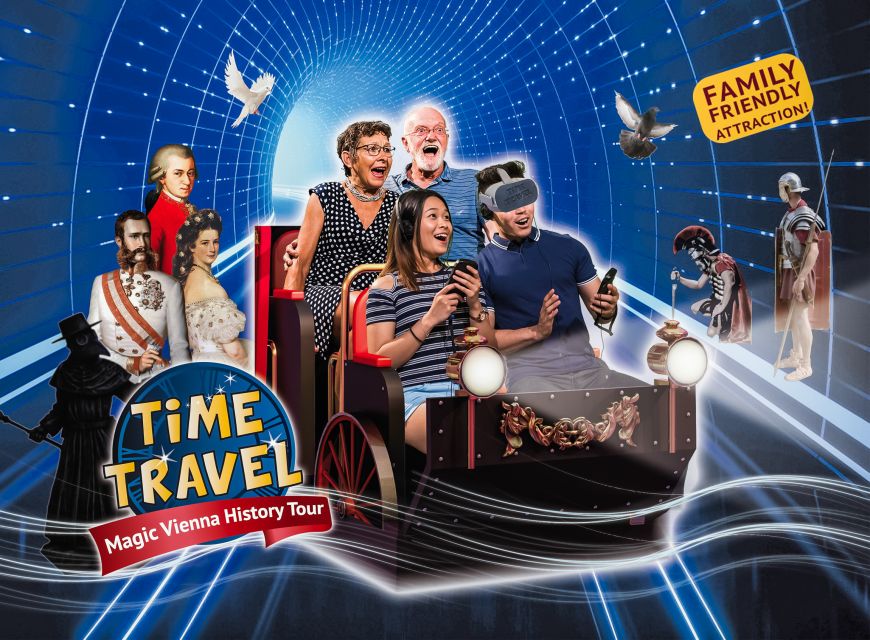
The show is built like a time machine you walk through, not a single continuous movie. It starts with the earliest chapter: the Roman camp of Vindobona. Even if you know nothing about Roman Vienna, the experience frames it clearly—this wasn’t just a place on a map; it became a foundation that later life built on.
From there, the pacing pushes forward in leaps. You don’t linger in one century for long, but the rooms are designed to give you “recognizable anchors.” Imperial Vienna is presented with attention to the nobility and the feel of court life. The point isn’t to teach every detail; it’s to help you understand the storyline—how Vienna grew into a cultural and political center.
There’s also a portrait-gallery element where you meet key people from Viennese history and hear what they represent. The format gives you quick context on who mattered, without turning it into a dry biography track.
If you’re the kind of person who likes to connect history to what you’ll see outside, this timeline helps. Afterward, when you’re looking at grand buildings or central streets, the show gives you the “backstory engine” to interpret it.
St. Michael’s Cellars and the Room-by-Room Format
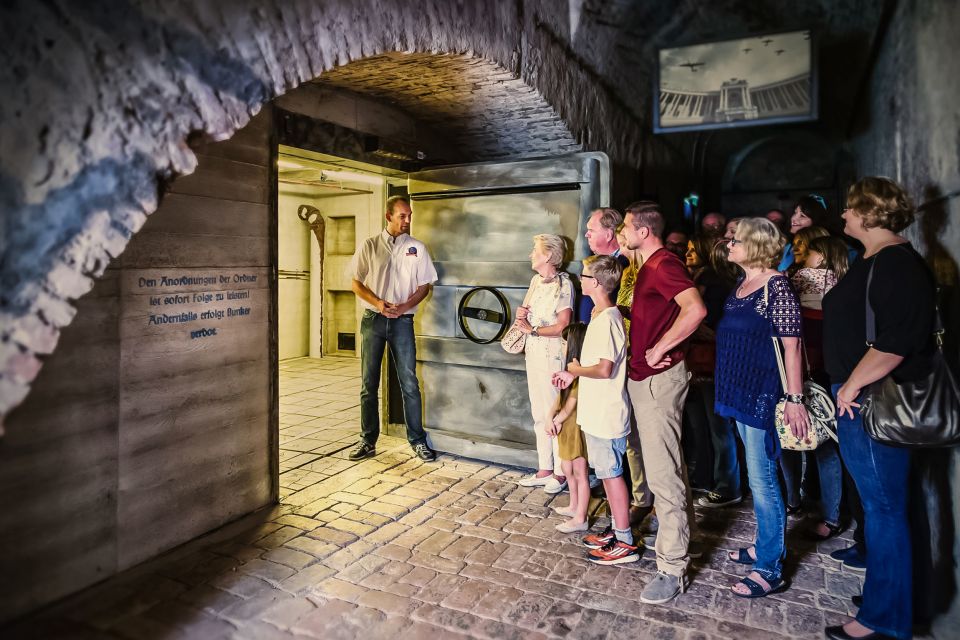
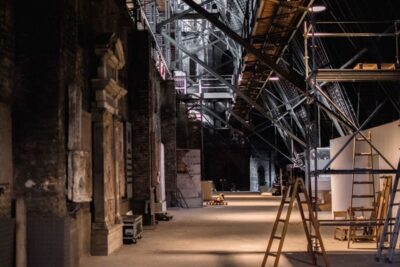
One reason this attraction feels memorable is where it’s housed. You’re led through spaces in the extensive cellars associated with St. Michael’s monastery. That matters more than it sounds: historic architecture makes the whole show feel grounded, even when the visuals go futuristic.
The experience moves through different themed rooms, each one a different way of telling the story. You’ll get interactive multimedia moments and cinematic segments, then transition onward so your attention doesn’t stall. Reviews consistently point out that walking from section to section is part of the fun—there’s always a new setup ahead.
Drawback to keep in mind: it can feel like a lot of “input” for a short duration. If your group prefers slow and quiet learning, you might want to treat this as the engaging opener and then spend your real deep time in museums afterward.
Still, for most people—including kids—it’s the right formula: action first, context second, then a “wait, I get it now” payoff.
5D Cinema: Effects That Make You Pay Attention
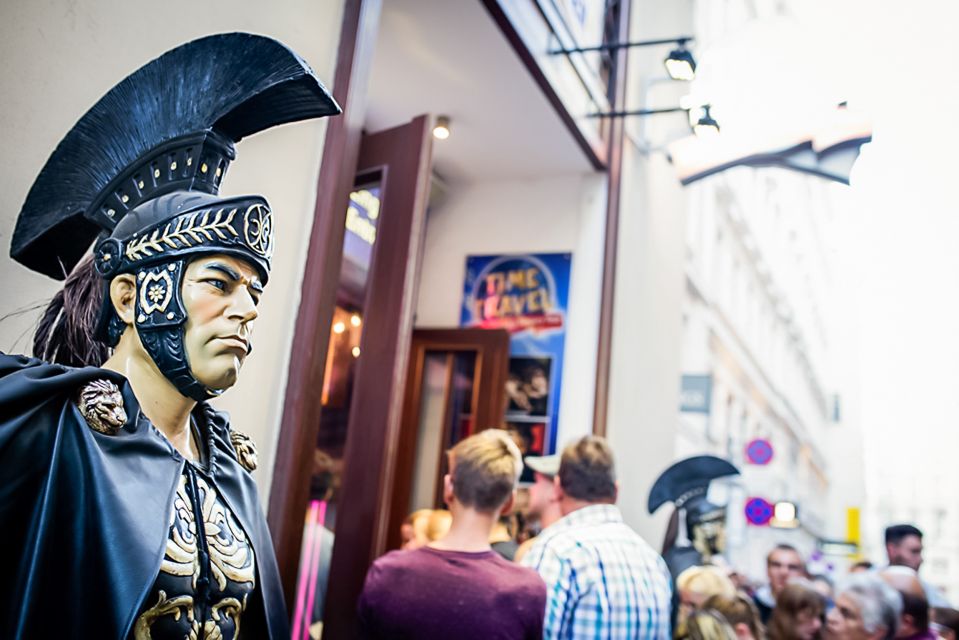
The centerpiece for many visitors is the 5D cinema. This is where the show uses effects to create the sensation that you’re physically present in ancient Vienna. It’s not just a screen-and-speakers situation; the experience is designed to trigger reactions through the environment around you.
In practice, that means you stay alert. Your brain can’t drift while something is happening at “you’re there” scale. It also helps explain why the attraction works across age groups: kids get the sensory stimulation, adults get the historical framing.
Some visitors even call out the 5D portion as a highlight worth planning for. If you’re the type who hates anything rushed, I’d still manage expectations: it’s an hour total, so the best strategy is to arrive ready to watch closely. You’ll get more out of it.


VR Glasses for Viennese Music History
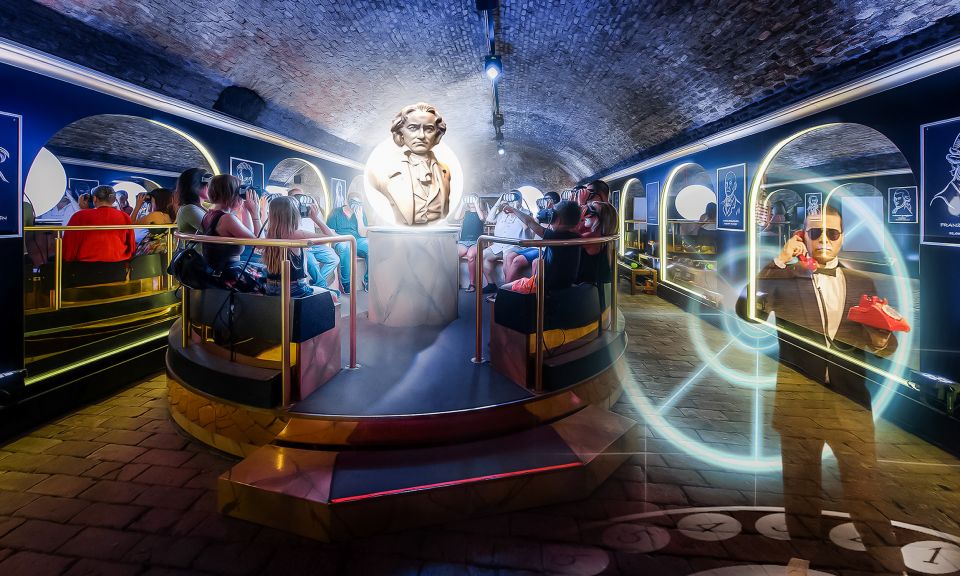
If the 5D film grabs your attention, the VR segments give you something different: a simulated world tied to the course of Viennese music history. You put on VR glasses and follow a story that connects eras and ideas through sound and visuals.
This part is especially useful if you’re the kind of traveler who wants culture, not just politics and war stories. Vienna’s musical identity is one of its biggest exports, but it can be hard to grasp on a normal sightseeing day. Here, the show turns that abstract “music history” into a guided path through time.
It’s also a strong option for families. It doesn’t require reading captions. You participate. And participation tends to be the difference between learning that sticks and learning that fades by the next tram ride.
Wartime Vienna: Bomb Shelter and Chancellor Figl
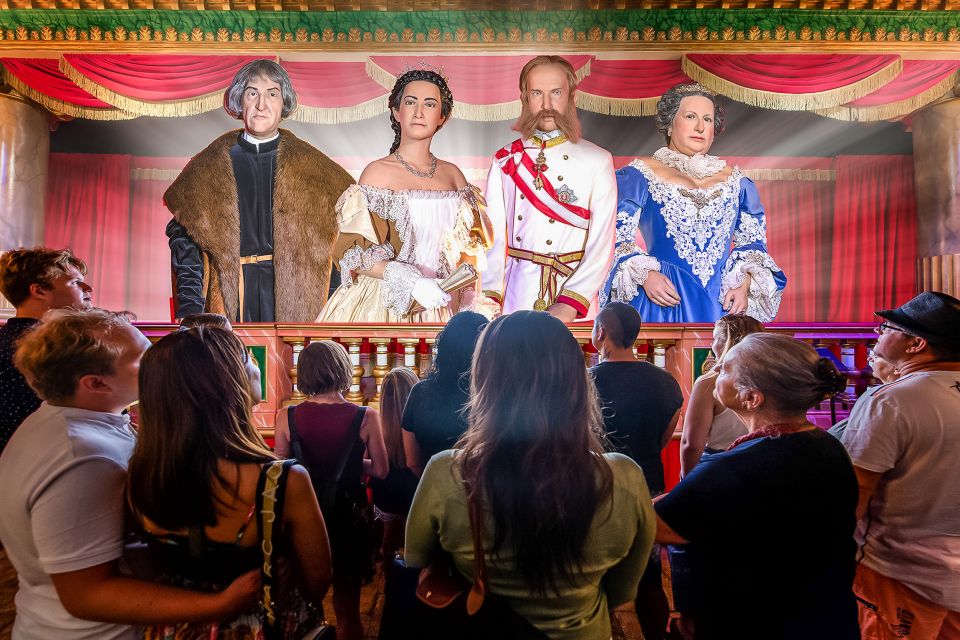
The attraction doesn’t skip the hardest chapter. One of the standout segments is a WWII bomb shelter sequence, described with the feeling of World War II raging all around you and you being inside a shelter. It’s dramatic, and it’s meant to make the situation emotionally clear, not just historically labeled.
Right after that, you’ll hear a moving speech by Chancellor Figl within the battered remnants of Vienna. This is another moment that adds emotional context to the timeline—relief after destruction, and the human need to rebuild.
I appreciate that the show uses sensory storytelling instead of trying to summarize everything in dates. If you’re going to see Vienna’s beauty and you want the full picture, these wartime scenes give you the contrast that makes the post-war city feel meaningful.
The Final Flights Over Vienna and the Horse-Drawn Landing
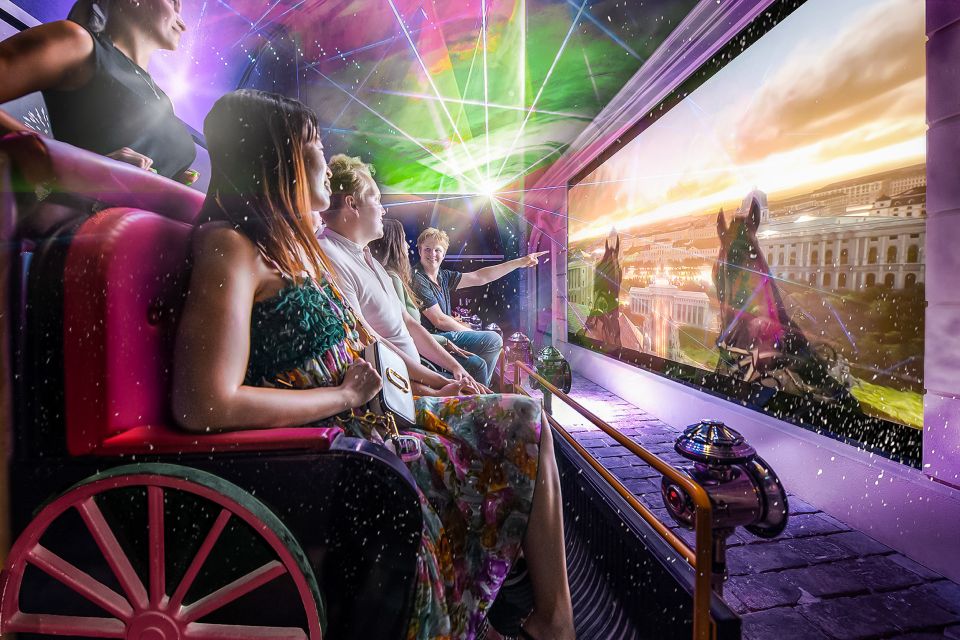
The ending is basically a reward scene. You get simulated flying over the roofs of Vienna, a kind of “look down and see the city” finale that wraps up the timeline you’ve been moving through. Then the journey finishes with a virtual horse-drawn carriage flight over present-day Vienna.
This closing structure helps you connect past to present fast. After the Roman camp, the court, and the wartime rooms, it’s satisfying to end with the modern city view. It’s also a good mental transition: you can step outside and immediately start noticing what fits the story you just learned.
One more practical point: since it’s only 1 hour, don’t plan on using this as your only activity. Think of it as a high-energy orientation to Vienna—then go do a walk in the neighborhood with your new context switched on.
Price and Value: Is $27 Worth It?
At about $27 per person for a 1-hour experience, the value depends on your goals.
If you want a museum without the time cost, it’s hard to beat. You get multiple formats—interactive rooms, multimedia portraits, 5D cinema, and VR—without buying separate tickets for each kind of attraction. The experience is also set in a historic cellar setting, which adds atmosphere you don’t usually get from tech-only shows.
It’s not a substitute for major Vienna museums, and it won’t replace a guided historical walking tour. But that’s not what it’s trying to do. It’s designed to give you a fast, structured understanding of the city’s evolution.
If your group includes kids, the price-to-entertainment ratio usually looks even better. The show is built for attention spans, with movement between rooms and multiple tech moments to reset focus.
Who This Is Best For (and Who Should Skip It)
This works best if you want:
- an introduction to Vienna’s major historical eras in a short time
- a family-friendly, tech-forward way to learn
- a way to get context before you start walking sights
It’s less ideal if you:
- hate stairs and mobility barriers (there’s no elevator and about 50 steps across two levels)
- prefer slow, quiet reading and museum time
- don’t enjoy high-effects environments like 5D cinema and wartime special effects
It’s also worth considering if your group includes anyone who needs wheelchair access. This attraction isn’t able to accept wheelchair users due to structural rules, but there’s another attraction across from Time Travel called Sisi’s Amazing Journey that’s mentioned as the alternative.
Should You Book Vienna Time Travel?
I’d book it if you’re in Vienna for a first visit and want a fast orientation that’s actually fun. The 5D cinema plus VR music-history segment is a strong pairing, and the wartime scenes add depth instead of turning the show into pure spectacle.
Skip it or plan differently if stairs are a problem for your group, since the two-level layout and no-elevator setup are real constraints. Also, if you want history in its quietest form, you’ll likely prefer museums and walking tours—but you can still use this as the energy boost that gives everything else meaning.
If you do book, go with a simple plan: arrive a little early, start the show promptly, and don’t treat it like background entertainment. Watch it like an intro class—then take the city seriously afterward.
FAQ
How long is the Vienna Time Travel experience?
It lasts about 1 hour.
How much does it cost?
The price is listed as $27 per person.
What’s included with the ticket?
You get an entry ticket to the attraction and a multilingual audio guide.
Where is the meeting point?
The meeting point is Habsburgergasse 10A, 1010 Vienna.
What languages are available?
The audio guide is multilingual.
Is it wheelchair accessible?
No. There is no elevator, and the exhibition includes about 50 steps across two levels, so it is not accessible for wheelchair users.
Are pets allowed?
No, pets are not allowed.
What’s the last admission time?
The last admission is at 19:00, and you should be on time.