REVIEW · VIENNA
Vienna: House of Strauss Museum Entry Ticket
Book on Viator →Operated by House Of Strauss - Museum Concert Restaurant Vienna · Bookable on Viator
Vienna’s waltz story starts indoors. This is a straightforward ticket to the House of Strauss Museum in Vienna, with skip-the-line access so you can get into the music story faster. You’ll also end in the impressive Strauss Concert Hall, where the museum saves its biggest moment for the end.
What I like most is that the visit is built for real learning without dragging you through a textbook. You’re guided by a museum app, and the exhibits cover the Strauss family’s legacy plus related composers like Strauss, Ziehrer, and Lanner. One thing to consider: this is a focused music-and-family story, so if you’re expecting something broader on imperial Vienna, you may find it narrower than you want.
In This Review
- House of Strauss Museum in Vienna: Fast Entry to a Dedicated Waltz World
- Gartenpalais Zögernitz: 2000 m² of Interactive Rooms to Walk Through
- The Strauss Family Legacy: How the Story Lands
- The Music You’ll Meet: Strauss, Ziehrer, and Lanner in Context
- Strauss Concert Hall Finale: The Big Moment at the End
- Using the Museum Guide App: Practical Tips That Improve Everything
- Price and Booking Timing: Is $27.61 Good Value?
- Who Should Book the House of Strauss Ticket (and Who Might Not)
- Should You Book This House of Strauss Entry Ticket?
- FAQ
- How long does the House of Strauss Museum entry take?
- Is this ticket mobile?
- Does the ticket include skip-the-line entry?
- Is the experience available in English?
- What will I see inside the museum?
- Is there a guide app?
- Is cancellation free?
- Are service animals allowed?
House of Strauss Museum in Vienna: Fast Entry to a Dedicated Waltz World
If you want a Vienna stop that’s fun even when the weather is poor, the House of Strauss Museum is a solid choice. It’s dedicated to Johann Strauss Jr., the so-called Waltz King, and the whole experience is designed around that “one family, many talents” idea.
The practical win is the skip-the-line entry. You’re not standing around hoping the museum staff move quickly enough for your schedule. With a mobile ticket, it’s also easy to manage on the go. The site is near public transportation, so it fits well into a day that already includes Vienna’s major walking routes.
Timing matters here. The experience is listed at about 1 hour to 1 hour 30 minutes, which is just long enough to feel like you did something meaningful without eating half your day. That makes it a good companion to bigger sights nearby, or a way to break up a museum-heavy itinerary.
Value-wise, the price is about $27.61 per person. For Vienna, that’s not cheap-cheap, but you’re paying for organized entry plus a structured museum visit that uses interactive exhibits and a guide app. If you like museums that explain culture through stories and objects, not just rooms and plaques, you’re likely to feel the value.
Gartenpalais Zögernitz: 2000 m² of Interactive Rooms to Walk Through
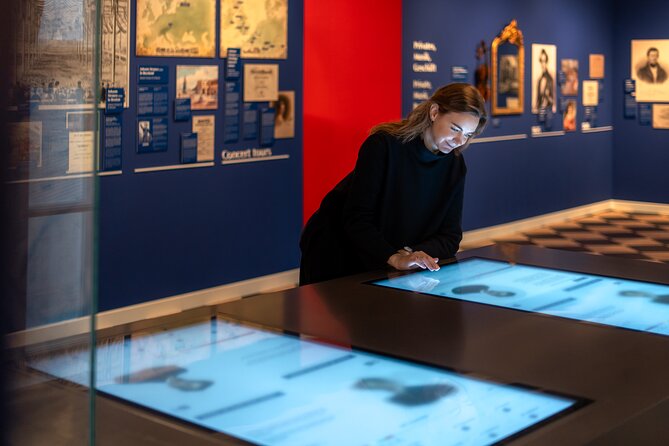
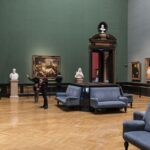
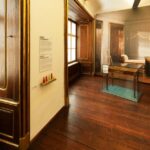
The museum sits in Gartenpalais Zögernitz, and the building matters. When the setting feels grand, even a shorter visit can feel like more than a quick stop. Expect you’ll spend time in the museum’s main spaces, then move through the exhibit areas built to keep you engaged.
A standout detail is the sheer exhibit area: 2000 m². That’s plenty of space to spread the story out and avoid a rushed, “here are five rooms, now go” layout. Instead, you can expect a paced flow where you’ll see how the Strauss family shaped the music world over time.
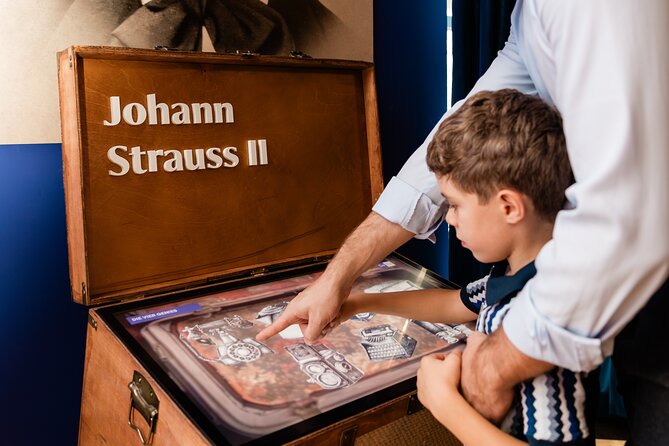
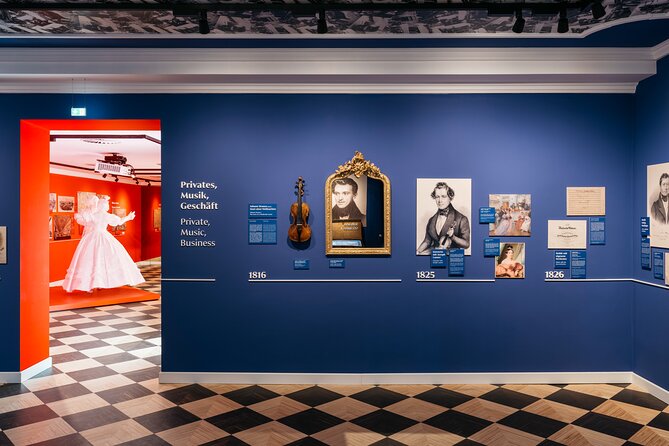
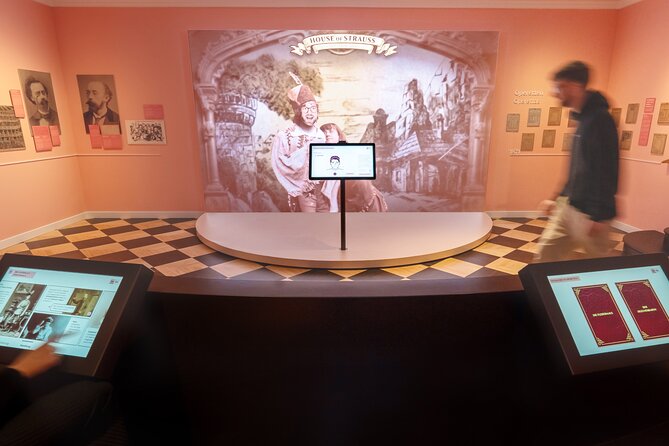
The museum leans into interactivity. You’re not just reading dates. You’re expected to interact with exhibits that tell the story of the Strauss dynasty and how its musicians developed. That’s ideal for visitors who learn better with visuals, audio, and guided prompts rather than long explanations.
One more practical note: because it’s interactive and app-supported, you’ll get more out of it if you slow down at each stop. If you try to speed-run everything, you might miss the connection between sections. I’d treat it like a curated walking route rather than a checklist.
You can also read our reviews of more tours and experiences in Vienna

The Strauss Family Legacy: How the Story Lands
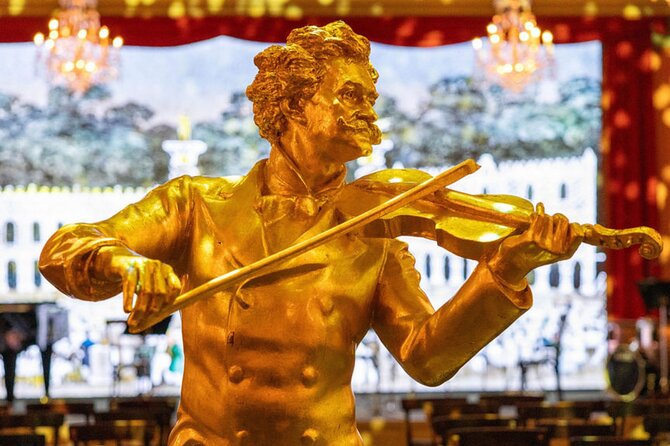
The main theme is the Strauss family’s legacy, and the way it’s presented is meant to give you a clear mental map. In a good music museum, the challenge is turning names into meaning. Here, the focus is on how talent shows up early, how musical life worked, and how the family’s influence shaped what audiences wanted and loved.
I especially like that the museum doesn’t only talk about Johann Strauss Jr. It also points to the musical ecosystem around him. You’ll see how Strauss, Ziehrer, and Lanner are connected through Vienna’s ballroom tradition and the waltz culture the city is famous for.
Another reason the story works: it’s structured around a family line. When you learn music history through relationships—who influenced who, who came first, who continued the tradition—you remember it better. It’s a museum format that helps you walk out with something you can actually explain to friends.
If you’re traveling with kids or teens, this kind of narrative can be easier than a standard exhibition. The museum’s format is designed for visitors to participate, not just observe.
The Music You’ll Meet: Strauss, Ziehrer, and Lanner in Context
Vienna’s waltz scene can feel like a blur of names until you get context. This museum does something helpful: it links the famous composer you came for with other major figures tied to the same tradition.
You’ll encounter the sound world associated with:
- Johann Strauss Jr., the Waltz King
- Franz von Ziehrer
- Joseph Lanner
Even if you don’t know their differences yet, you’ll likely leave with a clearer sense that Vienna’s dance music wasn’t one person’s project. It was a social and artistic machine—ballrooms, composers, performance culture, and audience appetite all working together.
This matters for value. Many music attractions are passive. You listen to a track, you see a portrait, you move on. Here, the museum gives you something more practical: a mental soundtrack. You’ll walk through sections that match the story to the era, so when you hear a waltz later in Vienna, you’ll understand why it mattered.
The only drawback is the same one that helps: the museum is very centered on this topic. If you want a broad survey of Vienna’s art history, this will feel too narrow. But if you’re in Vienna for music, dance, and the Strauss name, it’s a strong fit.
Strauss Concert Hall Finale: The Big Moment at the End
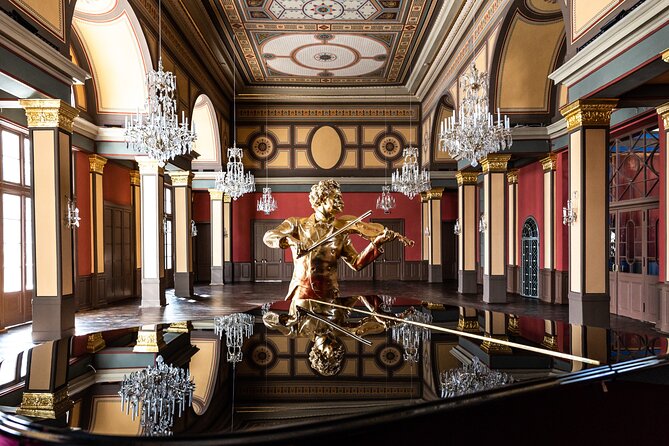
The highlight for many visitors is saved for the final stage: the Strauss Concert Hall. This is where the museum aims to land the experience with a visual and auditory payoff connected to Johann Strauss Jr.
Why that ending matters: it changes the rhythm of your visit. Instead of ending with the last exhibit panel, you end with a show-like moment. That makes the overall time feel more complete, even though the visit is only around 1–1.5 hours.
The experience is designed to feel like a revival of the Waltz King—so think less lecture, more performance energy. If you’re the type who gets more from experiencing music than reading about it, this part can be the reason you paid.
I also like that the museum structure builds toward this. You spend the earlier time learning the family and musical context, then the concert hall gives you the payoff. That sequence is how you turn “information” into “I get it now.”
Tip for timing: plan your schedule so you’re not rushing to catch another reservation immediately after the museum ends. Even with skip-the-line entry, you’ll enjoy the finale more when your next stop isn’t looming.
Using the Museum Guide App: Practical Tips That Improve Everything
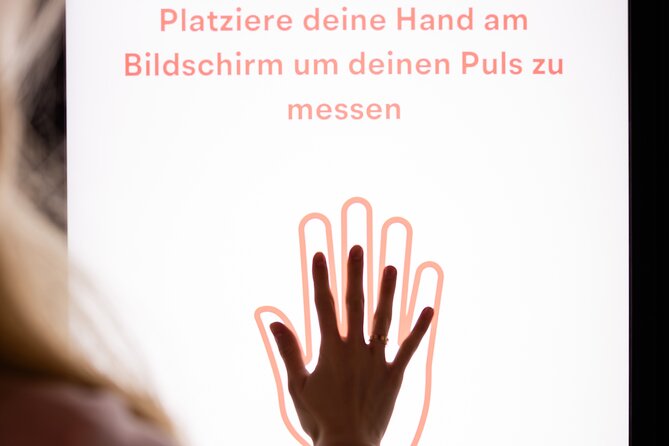
The museum experience is built around the museum’s guide app. That’s not just a nice extra. In a museum like this, the app helps you connect exhibits into one story.
Here’s how to make it work well:
- Start the app as soon as you enter so you’re not hunting for information mid-visit.
- Use the app to keep your attention moving from one section to the next, especially when the story shifts from composers to the family narrative.
- If you’re traveling with more than one person, agree on a pace so nobody gets stuck reading while others move ahead.
English is offered, which is important if you don’t want to rely on translations on the fly. Since you have limited time (about an hour to 1.5 hours), you’ll want the experience to run smoothly. The app format helps you do that.
Also, plan for a phone dependency. The ticket is mobile, and the guide app is part of the flow. If your phone battery is fragile, bring a charger or power bank. It’s one of those boring details that makes the whole visit easier.
You can also read our reviews of more museum experiences in Vienna






Price and Booking Timing: Is $27.61 Good Value?
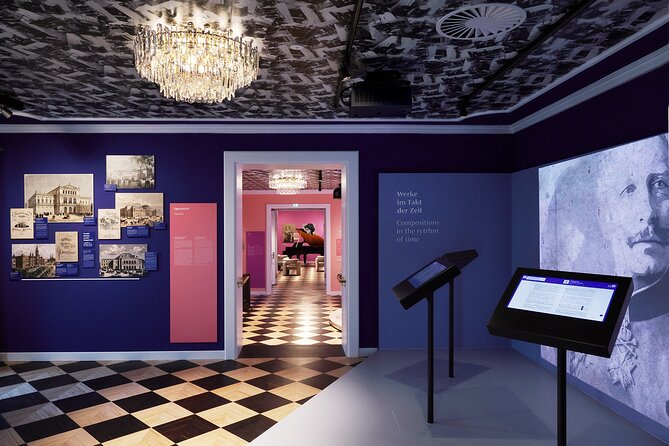
At $27.61 per person, this ticket sits in the mid-range for a Vienna museum experience. The price isn’t just “entry to rooms.” You’re buying structured time: skip-the-line access, interactive exhibits across 2000 m², and app support that helps you get meaning from the visit.
Why that can be good value: the museum lasts long enough to feel satisfying, but short enough to stay manageable. Vienna can be expensive, and it’s easy to waste a half-day on something that doesn’t deliver. Here, the format is built to deliver a clear storyline and a closing concert hall moment.
Booking timing also matters. This ticket is listed as being commonly booked about 37 days in advance on average. That’s not a hard rule, but it’s a hint: if you’re traveling in busy season or on a tight schedule, it’s smart to reserve early so you can lock in your preferred day.
If you like experiences that focus on one theme and do it well, I think you’ll feel the value more than if you treat museums as “just something to do.”
Who Should Book the House of Strauss Ticket (and Who Might Not)
This ticket is a great fit if:
- You’re a fan of Viennese waltzes or you want to understand them fast
- You like museums with interactive sections, not just display cases
- You want a Vienna stop with a clear ending at the Strauss Concert Hall
- You’re traveling with people who enjoy a family-story approach to music history
You might want a different kind of museum if:
- You’re looking for a broad survey of Vienna beyond music and dance culture
- You prefer long, scholarly museum lectures over guided, short-format exhibits
- You don’t want phone-based extras, since the app is part of the experience
Should You Book This House of Strauss Entry Ticket?
Yes, you should book it if you want a smooth, focused Vienna museum experience that mixes story, interactivity, and a proper finale. The skip-the-line entry and app guidance help you use your time well, and the Strauss Concert Hall ending gives the visit a satisfying close.
If you’re on the fence, use this quick test: if you’d be happy spending about 90 minutes learning how the Strauss family shaped Vienna’s ballroom music, this ticket is a strong match. If you need variety across many topics, you may be happier choosing a different museum.
FAQ
How long does the House of Strauss Museum entry take?
It’s listed as about 1 hour to 1 hour 30 minutes.
Is this ticket mobile?
Yes. The ticket is a mobile ticket.
Does the ticket include skip-the-line entry?
Yes. You get swift access with a skip-the-line online ticket.
Is the experience available in English?
Yes. The ticket is offered in English.
What will I see inside the museum?
You’ll visit the House of Strauss Museum, view grand interiors in Gartenpalais Zögernitz, and see interactive exhibitions about the Strauss family legacy, ending at the Strauss Concert Hall.
Is there a guide app?
Yes. You’ll use the museum’s guide app during your visit.
Is cancellation free?
Yes. Free cancellation is offered, and you can cancel up to 24 hours in advance for a full refund.
Are service animals allowed?
Yes. Service animals are allowed.