REVIEW · VIENNA
Vienna: Private Jewish Walking Tour
Book on GetYourGuide →Operated by Austria Tours & Travel · Bookable on GetYourGuide
Vienna tells its Jewish story in real streets. This private walking tour threads together centuries of community life with key Vienna landmarks, from the earliest Jewish presence to the darker chapters of banishment and the Holocaust. I like that the tour also points you toward how this shaped art and ideas in 1900s Vienna, not just monuments on a postcard.
My favorite part is the way the route leans intellectual and cultural: you’ll hit Sigmund Freud’s favorite coffee house, Café Landtmann, and you’ll connect that café stop to the larger Vienna of artists, doctors, and scientists. The second thing I really like is the balance of “beautiful Vienna” and “hard history,” including public-memory stops like the Memorial against War and Fascism.
One thing to consider: it’s a 2.5-hour walk with a lot of story density. If you prefer slow, easygoing sightseeing with minimal context, this might feel like more thinking than drifting.
In This Review
- Key highlights you’ll actually care about
- Starting at Helmut-Zilk-Platz: war, fascism, and getting oriented
- Café Landtmann and Vienna’s thinkers: where ideas meet streets
- The University of Vienna stop: schooling, careers, and everyday impact
- Palais Ephrussi: the art-and-culture angle in motion
- Judenplatz and Joseph’s Square: public life and shared space
- The State Opera area: cultural prestige in the same map
- Seitenstetten Synagogue outside only: seeing without turning it into a box-check
- Memorial against War and Fascism: why the story lands differently after the hard start
- Private guide experience: the value of pacing and Q&A
- Price and who this private tour is best for
- What to do with it afterward: turn the walk into a stay
- Should you book the Vienna Private Jewish Walking Tour?
- FAQ
- Where is the meeting point for the tour?
- How long is the Vienna private Jewish walking tour?
- Is this tour private or shared with strangers?
- What languages are available?
- Which major sites does the tour include?
- Do you enter Seitenstetten Synagogue?
- How much does it cost?
- Is hotel pickup and drop-off included?
- Is the tour wheelchair accessible?
- Where does the tour end?
Key highlights you’ll actually care about
- A private group format (up to 20) for questions and pacing
- Café Landtmann, tied to Freud, plus major cultural stops
- Judenplatz and Joseph’s Square for the public-life angle
- Memorial against War and Fascism to frame the darker periods
- Seitenstettengasse Synagogue viewed outside only
- A guide you can follow easily (red and white striped umbrella at the start)
Starting at Helmut-Zilk-Platz: war, fascism, and getting oriented
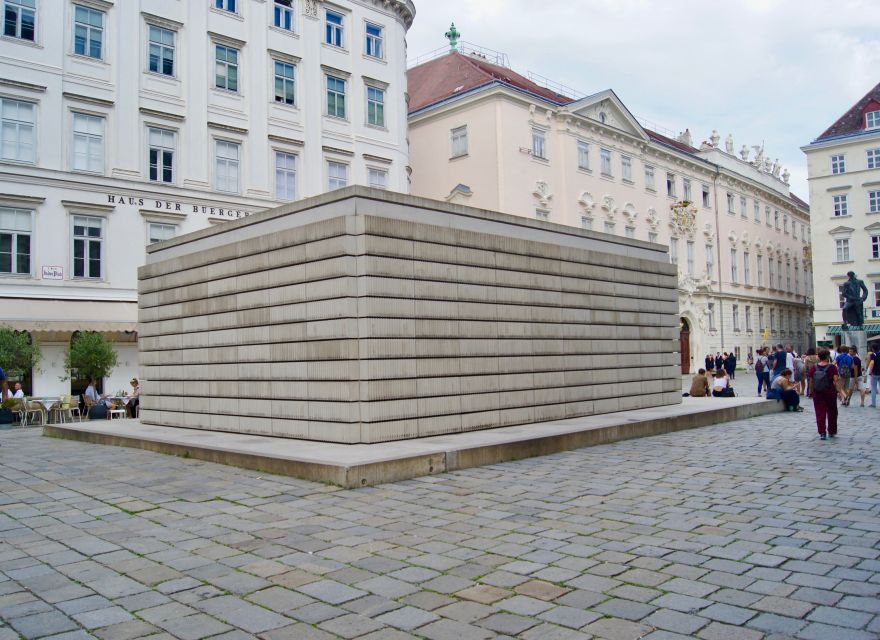
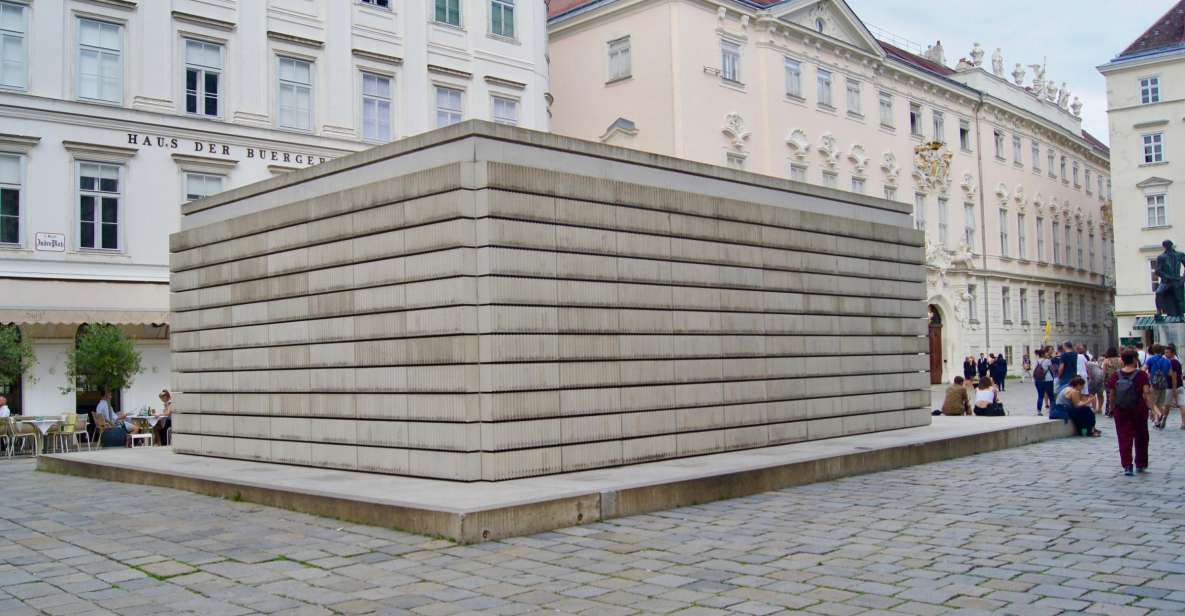
The tour begins at Helmut-Zilk-Platz, in front of the Memorial against War and Fascism. If you’re the kind of person who likes to know why you’re standing somewhere, this is a strong opening. You’re not just “starting a walk.” You’re getting the context for why Vienna’s Jewish story includes both creativity and coercion.
You’ll meet your guide there holding a red and white striped umbrella, which makes it easy to spot them in a city full of people and coffee cravings. From that first moment, the tour sets a tone: the Jewish community’s story in Vienna is treated as part of the city’s identity, not an isolated side chapter. You’ll also notice the route is designed so that later stops make sense. The memorial framing isn’t a random detour. It’s the mental lens you carry into the sightseeing.
Because it’s a private group, your guide can slow down when someone has questions. That matters here. Jewish Vienna history includes timeline shifts—periods of inclusion, exclusion, and catastrophe—so having a guide who can adjust to your group keeps it from turning into a history lecture you can’t absorb.
You can also read our reviews of more walking tours in Vienna
Café Landtmann and Vienna’s thinkers: where ideas meet streets
After you’ve been oriented at the memorial, the tour’s “Vienna of minds” section starts to click. One of the anchor stops is Café Landtmann, presented as Sigmund Freud’s favorite coffee house. Even if you’re not a Freud superfan, a café stop works because it’s real life: you can picture conversation, debate, and daily routine.
What I like about this stop is that it’s not just a name drop. Your guide connects it to the broader picture of how Jewish residents contributed to Vienna’s cultural and intellectual flowering—especially around the early 1900s, when artists, doctors, and scientists helped shape the city’s reputation. In practice, this makes the tour feel less like memorizing dates and more like understanding a mood.
Also, café stops are great for pacing. You may not be sitting for a long break on a walking tour, but it gives your brain a chance to switch gears from heavy topics to human-scale daily life. And if you’re the type who wants to re-create the experience later, you’ll know exactly where to go afterward.
The University of Vienna stop: schooling, careers, and everyday impact
The tour includes the University of Vienna, which gives the Jewish story a “future-facing” angle. Universities represent training, professional pathways, and public influence. Even though you’re walking past buildings instead of entering classrooms, your guide is using this location as a way to talk about how education and careers factored into the Jewish presence in Vienna.
This is one of those stops that can go two ways on a tour: either it becomes a generic “big university” photo stop, or it becomes a meaningful link in the chain. Here, it’s used to connect the community’s story to the intellectual and professional life of the city—especially during the era when Vienna’s cultural reputation was rising.
If your group includes students, teachers, or anyone who likes “how people got there,” this stop usually lands well. You’ll come away seeing Vienna not just as beautiful architecture, but as a system that pulled talent in and shaped careers.
Palais Ephrussi: the art-and-culture angle in motion
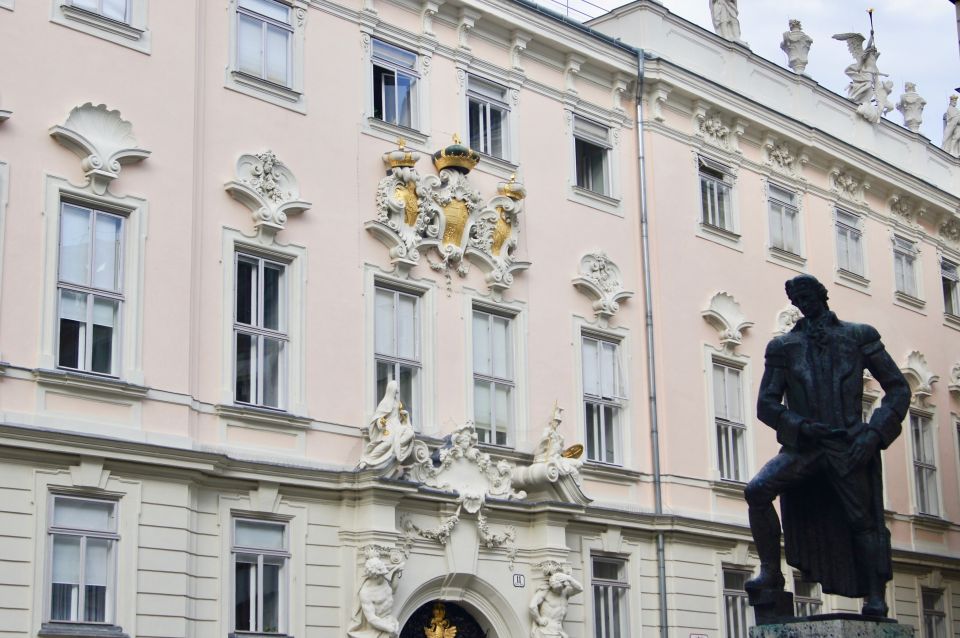
Next up is Palais Ephrussi, which helps balance the story. This isn’t only “science and schools” Vienna; it’s also how wealth, taste, and cultural influence show up in buildings. Your guide uses places like this to keep the tour from becoming all hardship with no texture.
What I find practical about stopping at a palace on a Jewish walking tour is that it helps you see how Jewish Vienna wasn’t only present in institutions. It was also present in the look and feel of the city—its collections, its social spaces, and its artistic world.
And because you’re walking, you experience the city’s scale. These are not museum sets behind glass. They’re still part of Vienna’s street life. That turns the history from something distant into something you can locate in your own route planning.
Judenplatz and Joseph’s Square: public life and shared space
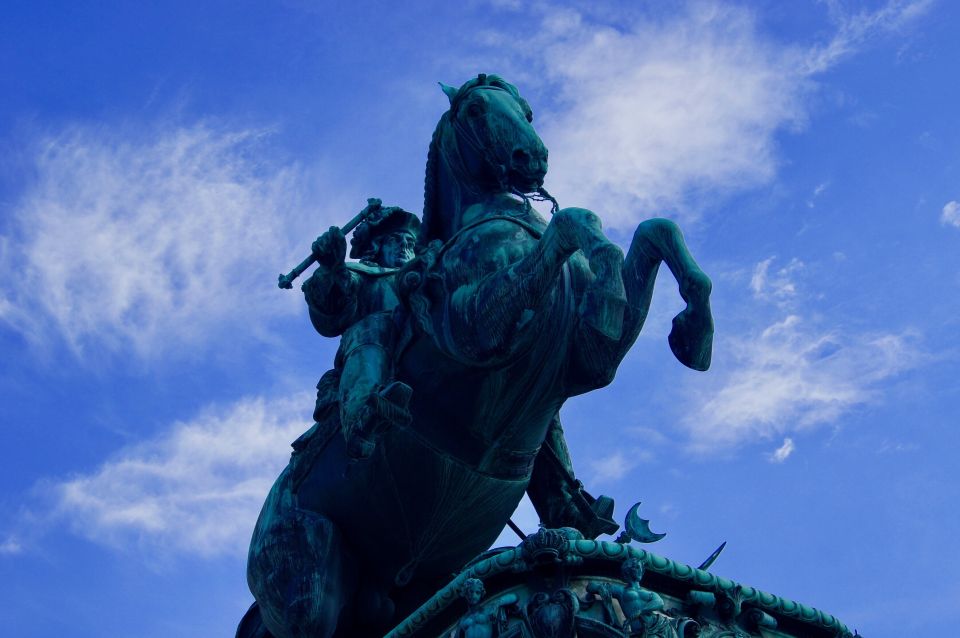
Two standout landmarks on the route are Judenplatz and Joseph’s Square. These stops are valuable because they highlight Jewish life in public space—where history doesn’t hide, it sits right in the middle of the city’s daily movement.
Judenplatz is especially important on a Jewish Vienna itinerary because it ties together memory and continuity. Your guide uses it to help you understand how the community’s presence shaped the city and how the city, in return, became a stage for both belonging and rupture.
Joseph’s Square also adds variety. Instead of repeating the same “monument mood,” the tour shifts back toward how Vienna’s streets operate: people pass through, routines continue, and yet the meaning of the location carries a deeper layer. If you’re trying to understand not only what happened, but where it happened, these squares are the kind of anchors that help you keep track.
If you like tours that make you feel oriented—like you can later walk these streets on your own—public squares are the best kind of way to get there. After this tour, you’ll likely recognize the areas instantly.
You can also read our reviews of more private tours in Vienna


The State Opera area: cultural prestige in the same map
The itinerary includes the Vienna State Opera, and that stop isn’t random. It signals the point that Jewish residents were part of the cultural mainstream in Vienna—artists and audiences didn’t live in separate worlds.
Even if you don’t go inside (the tour data doesn’t say you do), the Opera building is a powerful reference point. It’s the kind of landmark people associate with high culture, and your guide uses it to connect that cultural scene to the broader story of contributions from the Jewish community.
For a lot of visitors, this is where a tour becomes “wow, I didn’t realize the city worked like this.” You’re seeing how the same city map contains both artistic prestige and historical violence. That contrast is not added for drama. It’s a key to understanding why Vienna’s Jewish story matters.
Seitenstetten Synagogue outside only: seeing without turning it into a box-check
The tour visits Seitenstetten Synagogue with an outside-only approach. That’s important to know upfront. You’re not being promised an interior visit, so the experience is set up for observation: architecture, street presence, and location-based storytelling.
Outside-only visits can still be meaningful, especially when a guide uses the site to talk about religious and community life across different periods. In this case, it supports the tour’s broader goal: showing how Jewish Vienna included faith and institutions, not only celebrities and events.
One practical consideration: because it’s outside only, what you “get” depends heavily on your guide’s explanations. The good news is that the guides connected to this tour have been praised for being professional, engaging, and able to answer questions. That kind of guided interpretation is exactly what makes an outside-only stop worth your time.
Memorial against War and Fascism: why the story lands differently after the hard start
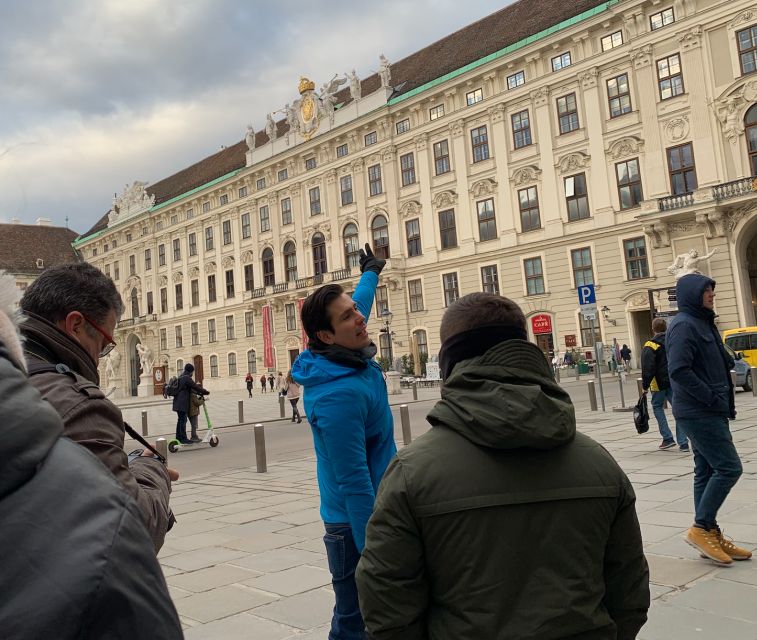
You start at the Memorial against War and Fascism, and it returns in the tour’s overall framing. That repetition in your route matters because it’s part of the tour’s structure: you’re guided to connect the lighter, cultural stops with the darker reality.
This is the moment where the tour’s promise becomes real. The Jewish community’s story in Vienna is presented as a full arc: a presence that goes back hundreds of years, followed by periods where the community was banished from Vienna, and later the Holocaust, then the present-day Jewish community.
If you’ve ever visited a city where history feels chopped into “good old days” and “dark chapters,” this tour’s approach may help you hold it together. It’s not only about what happened; it’s about how Vienna kept carrying that story forward into the present.
Private guide experience: the value of pacing and Q&A
This is a private group tour, and that changes the feel fast. Instead of rushing through points while keeping one ear on the crowd behind you, you can ask questions and get answers tailored to your interests. The tour runs 150 minutes, which is long enough to cover multiple major landmarks without feeling like you’re sprinting.
The guide quality is consistently highlighted in the experience, with multiple guides named in feedback—Lisa stands out for thoroughness, and Dr. Reinhard Travnicek is described as experienced and excellent at combining human warmth with large-scale historical knowledge. There’s also a mention of Horlando as clear and articulate. Even if you don’t get the same guide, the theme is consistent: you should expect a guide who can keep the story organized and adjust to the group.
A small but smart tip for your group: decide your “two favorites” early. Maybe yours are Café Landtmann and Judenplatz. Then you can steer your questions toward those stops. Your guide will be able to connect them to the bigger timeline in a way that feels personal.
Price and who this private tour is best for
The tour costs $530 per group for up to 20 people, with hotel pickup and drop-off within the inner city included. That pricing structure is unusual in a good way: it’s group-based. If you book as a couple, the cost per person can be high compared with typical group tours. If you have a friend couple (or a small team) who also wants a structured Jewish Vienna overview, the math starts to make sense.
Think of it like this: you’re paying for (1) private guidance, (2) a carefully connected route through major landmarks, and (3) the time saving of not having to stitch together your own “Jewish Vienna” itinerary. Also, the tour is wheelchair accessible, which is a big practical benefit for mixed-mobility groups.
This tour is usually strongest for people who want more than surface-level sightseeing. If you like understanding how Vienna got to where it is today—through culture, institutions, and memory—this gives you a clean, guided framework.
What to do with it afterward: turn the walk into a stay
When the tour ends at 1010 Vienna, you’ll be in a central area where it’s easy to keep exploring. The best use of your remaining time is to do one “repeat walk” and one “contrast walk.”
Repeat walk: go back to one of your emotional anchors—Judenplatz or the memorial area—and look at it again without your guide talking. You’ll catch details you missed the first time, and you’ll feel how the meaning sticks.
Contrast walk: head toward a cultural landmark you saw on the route, like the Vienna State Opera area or the neighborhood around Café Landtmann, and see how the city’s everyday life continues right alongside the history you just learned. That contrast is the whole point of a guided Jewish Vienna walk: the past isn’t archived. It’s visible.
Should you book the Vienna Private Jewish Walking Tour?
If you want a structured, respectful overview of Jewish Vienna that connects major places—Café Landtmann, Judenplatz, Joseph’s Square, Palais Ephrussi, and Seitenstetten Synagogue outside only—this is a strong choice. I’d book it if your group values context and appreciates a guide who can connect culture with history rather than separating them into two different tours.
I’d hesitate only if your group hates walking, prefers very light commentary, or wants museum-style stops with lots of interior time. This is a walking tour with story density. When it matches your style, it’s excellent.
FAQ
Where is the meeting point for the tour?
You meet at Helmut-Zilk-Platz, in front of the memorial against war and fascism. Your guide will be holding a red and white striped umbrella.
How long is the Vienna private Jewish walking tour?
The duration is 150 minutes (about 2.5 hours).
Is this tour private or shared with strangers?
It’s a private group tour.
What languages are available?
The tour is offered in English and German.
Which major sites does the tour include?
You’ll see stops such as Café Landtmann, Judenplatz, Joseph’s Square, Palais Ephrussi, the University of Vienna, Vienna State Opera, and a look at Seitenstettengasse Synagogue from outside. The route also includes Memorial against War and Fascism.
Do you enter Seitenstetten Synagogue?
No. Seitenstettengasse Synagogue is visited outside only.
How much does it cost?
The price is $530 per group, with a maximum group size of up to 20 people.
Is hotel pickup and drop-off included?
Yes. Hotel pickup and drop-off within the inner city are included.
Is the tour wheelchair accessible?
Yes, the tour is wheelchair accessible.
Where does the tour end?
The tour finishes at 1010 Vienna, Austria.