REVIEW · VIENNA
Vienna Private Walking Tour including State Opera
Book on GetYourGuide →Operated by Travmonde OÜ · Bookable on GetYourGuide
Vienna’s best stories start inside a theater. This private walking tour connects Roman Vindobona, the Habsburg era, and the birth of the Second Republic to the city you see today. I especially like how it keeps one foot in big-political history and the other in Vienna’s music world, from Mozart’s orbit to Mahler’s legacy.
The most practical win for you is the pace: it’s long enough to get your bearings around the old center, but short enough to stay upbeat. One possible drawback to plan for is that the State Opera stop may be more limited than you expect, and schedules can change the timing of what you actually access.
In This Review
- Key things that make this tour worth your time
- First stop: the State Opera, and why it matters
- A practical heads-up about what you’ll see inside
- The Habsburg storyline you can actually walk
- Mozart Monument, the Art History Museum area, and the Hofburg zone
- Michaelertor and St. Michael’s: emperor church energy
- Roman ruins, medieval walls, and traces of the old Burg Theatre
- Der Graben (the Graben) and Richard Lionheart’s city entry
- Peterskirche to Stephansplatz: from early church to Roman-Gothic wow
- Group size and pacing: the value equation
- Who this tour suits best (and who should be cautious)
- Practical tips before you go
- Should you book this Vienna private walking tour with State Opera?
- FAQ
- How long is the Vienna Private Walking Tour including State Opera?
- Where is the meeting point?
- Is the State Opera visit included in the price?
- Are entrance fees included?
- Is this a private tour?
- What languages is the live guide available in?
- What should I bring?
- Is the tour suitable for people with mobility impairments?
- What’s the cancellation policy?
- Can I reserve without paying immediately?
Key things that make this tour worth your time
- State Opera as the anchor: you start at the Vienna Court Opera roots (1860s) and the 1920 name change under the early Republic.
- A Habsburg-to-modern timeline: Roman roots, Holy Roman Empire context, Austro-Hungarian rule, two world wars, and the Second Republic.
- Music names used as wayfinding: Mozart, Haydn, Beethoven, Schubert, Strauss, Brahms, and Mahler show up as part of the city map, not just trivia.
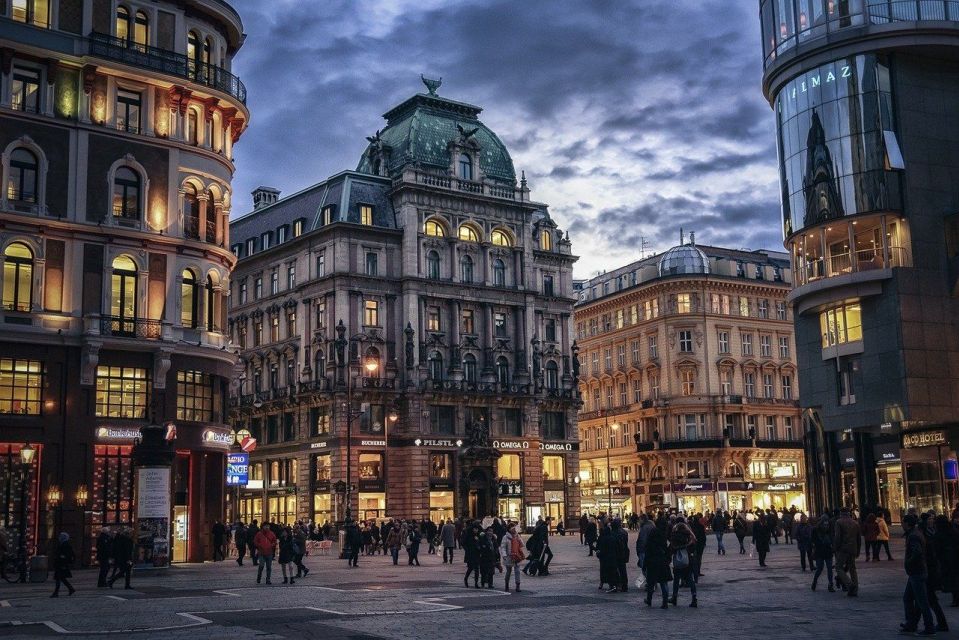
- Iconic stops in one loop: Hofburg area, Michaelertor, St. Michael’s Church, the Graben, Peterskirche, and Stephansdom.
- You get to “read” the buildings: Roman ruins in the square, medieval walls, and surviving traces like the old Burg Theatre site.
- Comfort matters: this is a walking tour, and comfortable shoes are a must.
First stop: the State Opera, and why it matters
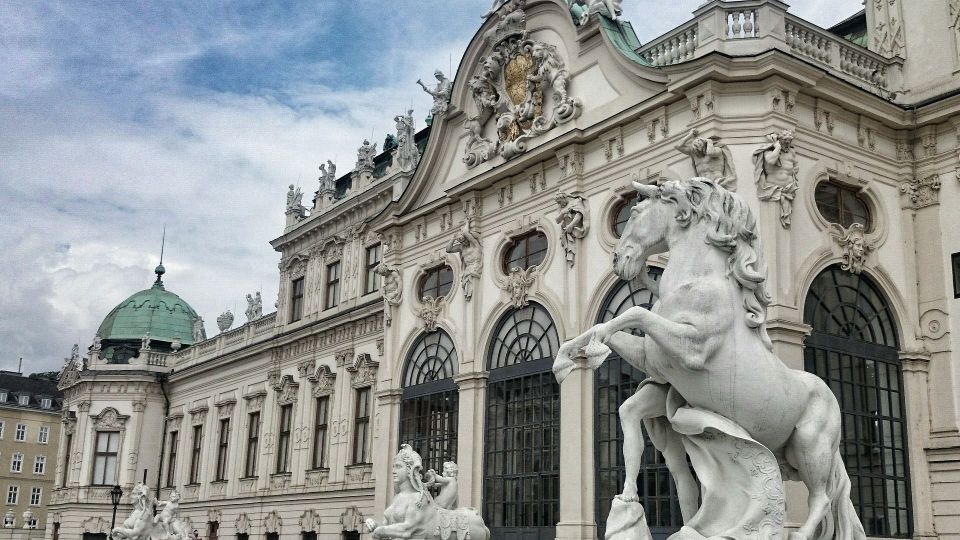
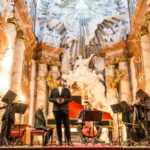
If you care about classical music, starting at the State Opera makes the whole walk snap into focus. The tour begins at one of Vienna’s most recognizable stages, but the story isn’t just about performances. It’s about how power, culture, and identity got branded onto a building over time.
You’ll hear how the opera’s roots trace back to the 1860s, when it was called the Vienna Court Opera, and how the name changed in 1920 as Austria’s early Republic took shape. That shift is more than a label—it’s a reminder that Vienna’s culture keeps reinventing itself even when politics rewrites the rules.
Before you move on outside, you’ll also get a sense of the kind of place this is: an opera house tied to major works like La Traviata, La Clemenza di Tito, and Verdi’s Don Carlo. The tour also links famous directors tied to the house, including Gustav Mahler, Herbert von Karajan, and Claudio Abbado, so you’re not walking through an empty facade. You’re walking with names that helped define what “Vienna music” means.
You can also read our reviews of more walking tours in Vienna
A practical heads-up about what you’ll see inside
The tour includes a visit to the State Opera, but don’t assume it’s the same experience as a full backstage tour. In at least one case, the opera portion was described as a lobby visit, which usually means you’re seeing the public areas rather than going deep into rehearsal or stage access. If you’re hoping for more than the front-of-house experience, it’s smart to ask ahead what areas are included on your exact day.
The Habsburg storyline you can actually walk
After the opera, the tour turns into a “history you can point at” walk. Vienna can feel like one giant postcard, but this route gives you anchors: buildings that explain why the city looked the way it did, and how it got that reputation.
You’ll follow a broad arc that starts with Roman Vindobona, the city’s earlier identity before the Habsburg imprint became dominant. From there, the guide frames Vienna’s role in the Holy Roman Empire and then the Austro-Hungarian Empire—big political structures that helped shape court life, architecture, and the kinds of public rituals that made Vienna feel unmistakably grand.
You’ll also cover the rougher chapters: the World Wars and the birth of the Second Republic. It’s useful because it stops Vienna from being only a museum city in your head. Instead, you start to see the present-day skyline as a survivor of major upheavals.
Mozart Monument, the Art History Museum area, and the Hofburg zone
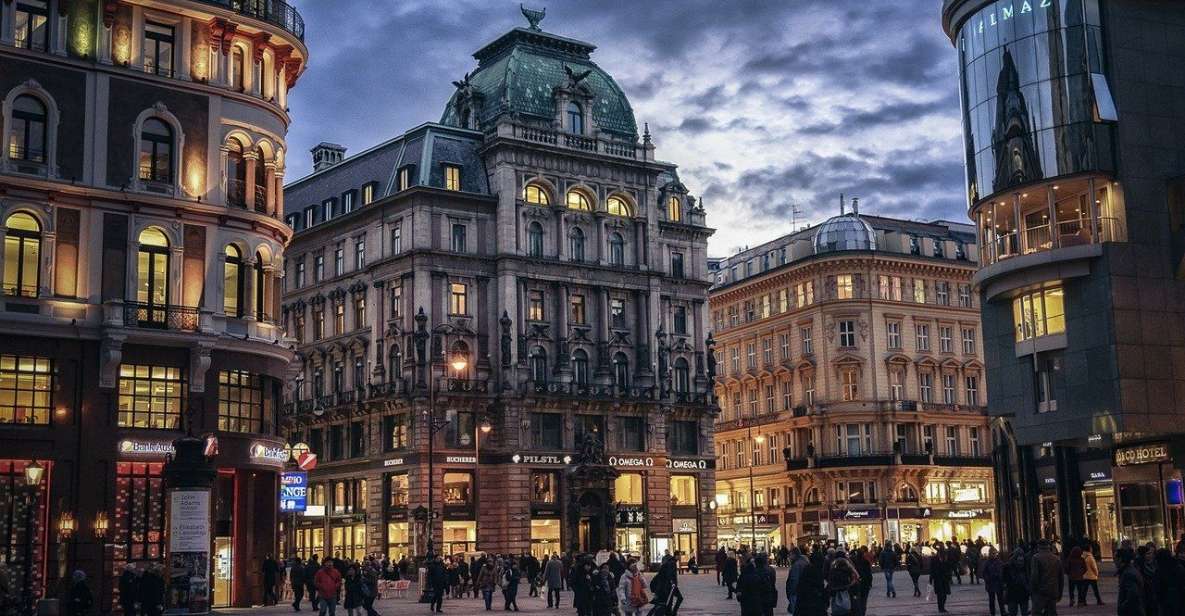
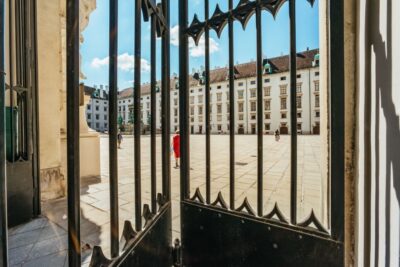
Once you’re in the Hofburg orbit, you’ll start seeing how Vienna’s center works as a stage for power. The tour’s route brings you past the Mozart Monument and toward the Art History Museum and the Hofburg, so you’re seeing two sides of the same coin: cultural prestige and imperial authority.
What I like here is that the stops connect without feeling rushed. The Mozart Monument isn’t treated like a standalone photo spot. It’s used to keep you aware that Vienna’s musical identity isn’t separate from its imperial setting—it developed right alongside it.
The Hofburg area, in particular, helps you understand why Habsburg rule left such deep physical traces. Even if you don’t go inside every building on your own, seeing the facades and locations in sequence gives you a better sense of how the court shaped where people gathered, where ceremonies happened, and how the city organized itself.
Michaelertor and St. Michael’s: emperor church energy
Next comes a quieter but meaningful shift: you’ll pass the Michaelertor gate and look toward the Church of St. Michael, known as the Michaelerkirche. This is the official church of the Emperors for years, and that fact changes how you see it.
Instead of treating it like another pretty church stop, the guide puts it in context—an emperor church is tied to ceremonies and legitimacy, not just worship. It also helps you build a “map in your head” of what mattered to the court, which makes later stops like Peterskirche and Stephansdom feel less random.
You can also read our reviews of more private tours in Vienna

Roman ruins, medieval walls, and traces of the old Burg Theatre
One of the smartest parts of the route is how it refuses to let the story be only Habsburg. In the central square area, you’ll spot ancient Roman ruins, along with older medieval walls and remnants connected to the former Burg Theatre.
These are small clues, but they matter because they show layering. Vienna did not get built once. It was rebuilt, reshaped, and rebranded again and again. When you’re walking, that layering becomes obvious—especially when you can see where Roman-era traces meet later structures.
This section is also where the guide’s focus on the big dynastic timeline helps. You’re not just viewing relics; you’re seeing continuity and change.
Der Graben (the Graben) and Richard Lionheart’s city entry
Then you move into the Graben, Vienna’s classic central street—“Der Graben.” The guide frames it as dating back to the Roman Empire and notes its use by Richard Lionheart to enter the city.
Even if you treat the anecdote with the healthy caution you’d use for any historical storytelling, the point still lands: this street has been a major pathway for centuries. When you walk it, you’re not only strolling—you’re traveling along a route people used when Vienna’s political status and economy were evolving fast.
If you’re the kind of traveler who likes streets more than museums, this is a strong segment. It gives you a living feel for the city while keeping the history threaded in.
Peterskirche to Stephansplatz: from early church to Roman-Gothic wow
As you continue, you’ll reach Peterskirche (St. Peter’s Church), which has been around since the 4th century. That’s a staggering time span, and the guide’s emphasis makes it easier to appreciate what “old” means here. When a church is that old, you’re not just seeing architecture; you’re seeing a long record of what the city kept choosing to protect.
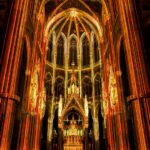
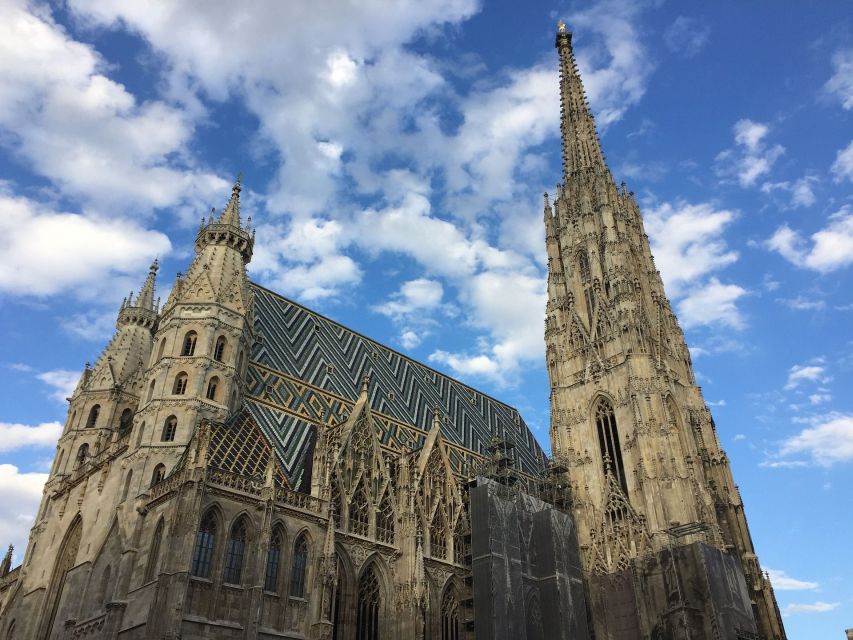
Finally, you end up at Stephansplatz with Stephansdom—Vienna’s cathedral. The tour highlights it as one of the tallest churches in the world and describes it as a majestic Roman-Gothic masterpiece. The way these points are presented matters: Stephansdom isn’t just a final photo. It becomes the moment where Vienna’s medieval and imperial identities overlap in one skyline.
Group size and pacing: the value equation
This is priced at $323 per group up to 15 for a 3-hour private walk. That price structure is the key value lever. If your group reaches the full cap, you’re looking at roughly $22 per person—often cheaper than piecing together multiple separate guided visits for a few landmarks.
The private format also changes the experience. You can ask follow-up questions when you get curious—especially with a theme like opera plus empire-plus music. And because the route is compact, your guide can keep the story coherent instead of bouncing you between far-flung neighborhoods.
The pace is also practical: 3 hours is long enough for context, but short enough that you’re not turning the walk into a day-long slog.
Who this tour suits best (and who should be cautious)
I think this tour is a great match if you want a tight, narrative walk through Vienna’s core with a strong music-and-power theme. It’s especially good for first-timers who need orientation and a second layer of meaning on top of what they see in photos.
It’s also a solid choice if you like history that connects to real buildings. The route hits the Hofburg orbit, the imperial church area, old Roman traces, and the cathedral zone in one flow—so the city feels less like separate attractions and more like one connected story.
Be cautious if you’re expecting guaranteed, deep interior access at the opera itself. The tour includes a State Opera visit, but at least one reported experience described it as limited to the lobby. And in one instance, a schedule adjustment happened and the opera tour didn’t take place afterward, which is the kind of mismatch that can ruin a day if you’re counting on a specific interior program.
Practical tips before you go
- Wear comfortable shoes. You’ll be walking across the center for a full 3 hours.
- Start with the opera mindset. Give the building a minute before you rush to the next stop. The whole tour builds on that first anchor.
- Bring your questions about music history. This tour names key composers (Mozart, Haydn, Beethoven, Schubert, Strauss, Brahms, Mahler), and the guide can help you connect why those names matter in the city.
- Manage expectations on the opera access. Plan for a public-area visit rather than assuming full backstage access.
Should you book this Vienna private walking tour with State Opera?
I’d book it if you want a story-driven, three-hour overview of Vienna’s core with the State Opera as the start point and major landmarks along the way. The value math is strong for groups up to 15, and the mix of Roman, Habsburg, and modern context is the kind of framework that helps Vienna click fast.
I wouldn’t book it blindly if opera access is your top priority and you’re expecting a full inside production-style experience. It sounds like the “included” opera stop can be limited, and timing can shift. If opera access is crucial for you, confirm exactly what areas are included on your date before you commit.
If you book, you’ll get a satisfying walk that links music and monarchy—then lands you at Stephansdom with a better sense of how Vienna became Vienna.
FAQ
How long is the Vienna Private Walking Tour including State Opera?
The tour lasts 3 hours.
Where is the meeting point?
The meeting point is Stephansplatz 8A, 1010 Wien, Austria.
Is the State Opera visit included in the price?
Yes. The experience includes a visit to the State Opera.
Are entrance fees included?
No. Entrance fees are not included.
Is this a private tour?
Yes. It’s a private group tour.
What languages is the live guide available in?
The live tour guide is available in English and German.
What should I bring?
You should bring comfortable shoes.
Is the tour suitable for people with mobility impairments?
No. It is not suitable for people with mobility impairments.
What’s the cancellation policy?
You can cancel up to 24 hours in advance for a full refund.
Can I reserve without paying immediately?
Yes. You can reserve now & pay later.