REVIEW · VIENNA
Chocolate workshop in Chocolate Museum Vienna “BO-YO”
Book on Viator →Operated by Chocolate Experience GmbH · Bookable on Viator
Chocolate can be educational and fun. At Chocolate Museum Vienna BO-YO, you’ll work with tempering and leave with treats, while also getting museum admission built into the same ticket.
I love the hands-on format: you learn the theory behind making better chocolate, then you apply it right away. I also like the mix of creations, especially getting to make three chocolate bars plus Xocolatl.
One thing to keep your expectations grounded: this is not bean-to-bar. You’re working with melted chocolate and molds, so it feels more like a craft workshop than a full production class.
In This Review
- Key things to know before you go
- Chocolate Museum Vienna BO-YO: a sweet workshop with an included museum
- Finding the meeting point on Schönbrunner Strasse 99
- Tempe ring 101 and the workflow you’ll follow in 1 hour 15 minutes
- Three chocolate bars: your choices, your hands-on time, your results
- Xocolatl hot chocolate: chili, vanilla, cinnamon, and what it tastes like
- The “Chocolate Museum” part: small displays, quick context, good photo stops
- Group size, timing, and how to get the smoothest experience
- Price and value: what you’re really paying for at about $56.72
- Who this fits best: families, birthdays, and beginners
- Should you book Chocolate Museum Vienna BO-YO?
- FAQ
- How long is the Chocolate workshop in Chocolate Museum Vienna BO-YO?
- Where is the meeting point?
- Is the workshop offered in English?
- What do I make during the workshop?
- Does the price include Chocolate Museum admission?
- Is there a minimum age for children?
- Do children need an accompanying adult?
- Are food or drinks allowed outside the museum?
- Is there free cancellation?
Key things to know before you go
- Tempering basics in a short session: you’ll hear the theory and do the hands-on steps.
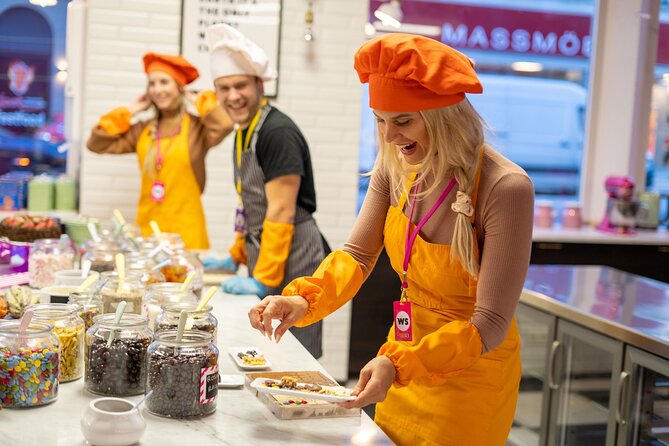
- Three bars are part of the deal: you design them with toppings of your choice.
- Xocolatl is the drink highlight: chili, vanilla, and cinnamon show up in the hot chocolate recipe.
- Museum admission is included: you’ll get access to the Chocolate Museum as part of the experience.
- Group size can hit 30: expect a lively room, not a private class.
- Not bean-to-bar: you won’t be making chocolate from cacao beans here.
Chocolate Museum Vienna BO-YO: a sweet workshop with an included museum
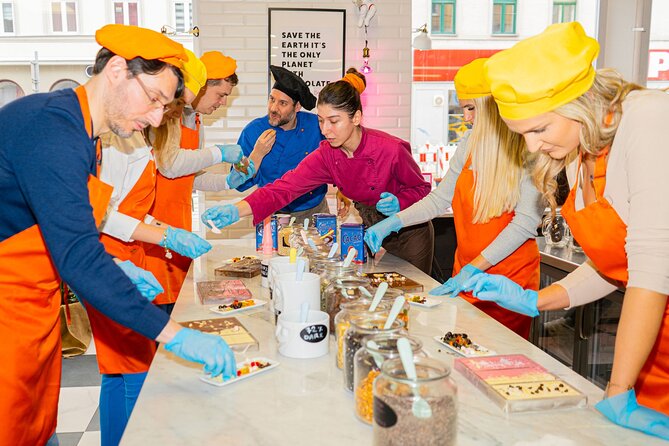
This is the kind of Vienna activity that breaks up sightseeing without turning into a “sit and watch” show. You’re in a classroom-and-kitchen setup where the chocolate work is the main event, and the museum part is a bonus. The tone is casual, friendly, and made for beginners, which matters if you’re traveling with kids or you just don’t want a steep learning curve.
The museum angle also helps you connect what you’re doing to why it works. You’ll hear about the history of chocolate and different sides of it, then you’ll get the practical logic behind making chocolates that set properly. That’s the bridge between trivia and actually getting good results.
And yes, it’s built for celebration moments too. If you’re planning a birthday or a sweet family outing, this format tends to land well because everyone makes something.
You can also read our reviews of more museum experiences in Vienna


Finding the meeting point on Schönbrunner Strasse 99
Your start point is Schönbrunner Str. 99, 1050 Wien. The area is described as near public transportation, which is a big deal in Vienna where you don’t want to burn time figuring out parking or long walks.
Here’s a practical navigation tip from real-world comments: people sometimes struggle with the street numbers around there, and some have noted the building is pink and on a corner. If you arrive a few minutes early, you’ll have time to get your bearings without rushing.
The session ends back at the same meeting point, so you won’t need to plan a separate stop for getting home after the class.
Tempe ring 101 and the workflow you’ll follow in 1 hour 15 minutes
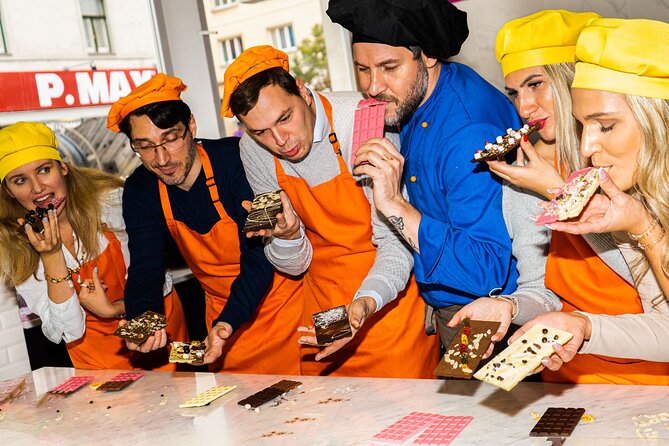
The workshop is structured to take you from first steps to finishing, even if you’ve never cooked or worked with chocolate before. They provide what you need: cookware, ingredients, and recipes. That setup is part of the value. You don’t need to pack tools. You also don’t need to gamble on what “tempering” even means.
The flow typically goes like this:
- a short introduction (history, chocolate basics, and what you’re about to do),
- an explanation of the theory behind making better chocolates,
- then the practical part: starting with tempering,
- and finishing with assembly and decorating.
Tempering is the skill that usually separates chocolate that snaps and shines from chocolate that’s dull or sets oddly. Even if you only get the basics, the workshop makes tempering feel approachable instead of technical and scary.
That said, keep in mind the realistic model: the workshop isn’t pretending you’re running a full chocolate factory. You’ll be working within the time limit, using melted chocolate ready for the molds, then tuning the final look with toppings and design choices.
Three chocolate bars: your choices, your hands-on time, your results
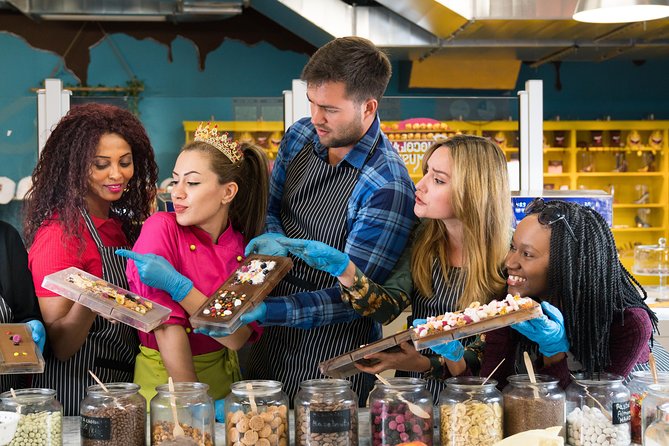
The workshop includes a sample “menu” built around take-home treats:
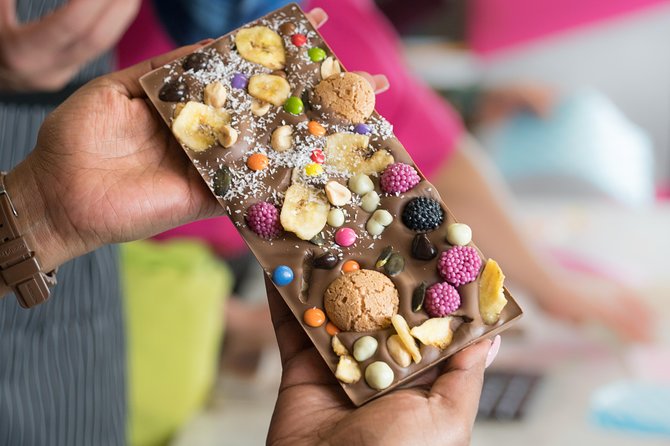
- Three chocolate bars decorated by your preferences.
This is where the class becomes personal. You’re not just tasting. You’re making. And because the bars are yours to decorate, you get to aim for the flavor style and look you like. Some people appreciate that freedom; others find the choices can feel limited depending on what’s on offer during your specific session.
A useful way to think about it: your bar outcome depends on two things you control:
1) the chocolate base you’re working with,
2) the topping and decoration decisions you make.
If you’re the type who likes trying different strengths of chocolate, consider paying attention to what’s available during your class. One practical tip that came up in comments: the darkest option can taste extremely bitter compared to milk and lighter dark options, so choose the “bite” you want.
Xocolatl hot chocolate: chili, vanilla, cinnamon, and what it tastes like
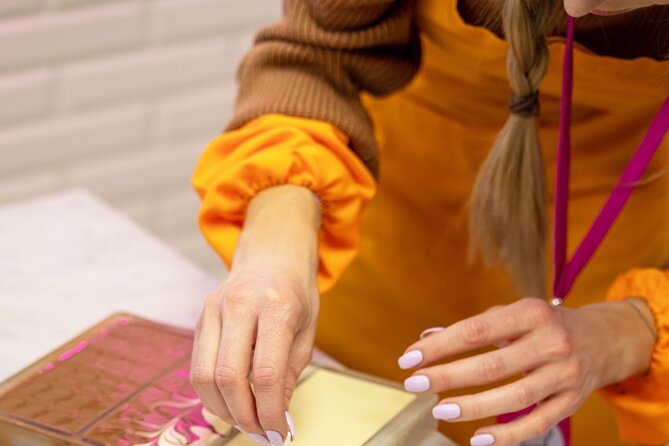
You’ll also make Xocolatl, described as an ancient Aztec and Mayan hot chocolate recipe served hot or cold. The flavor profile is the key part: chili, vanilla, and cinnamon.
That matters for two reasons. First, it gives you an experience that feels tied to culture rather than just “sweet cocoa in a cup.” Second, it teaches you that chocolate can be a base for spice and aroma, not only sugar-forward desserts.
There’s a small expectation check worth making. Some comments note the drink can be made with powdered milk and cocoa rather than the thick, fully homemade drinking-chocolate style you might expect at a European café. If you’re picky about that difference, ask or look closely at what’s included for the drink component when you book—because the recipe concept is one thing, and the final texture can be another.
You can also read our reviews of more tours and experiences in Vienna






The “Chocolate Museum” part: small displays, quick context, good photo stops
Your price includes admission to the Chocolate Museum as part of the experience. Just don’t think of it like a big, multi-floor museum day. In practice, it’s more like a small museum section with some chocolate-related displays and a few informational spots.
That’s not automatically bad. For many people, it’s the right size companion to a hands-on workshop: you get a little context, you learn the story beats, then you return to what you actually came for—making and tasting.
If your goal is a deep cultural museum visit, you might find you finish it quickly. But if your goal is to combine learning with a fun, interactive sweet-making moment, the museum portion works fine as an add-on.
Group size, timing, and how to get the smoothest experience
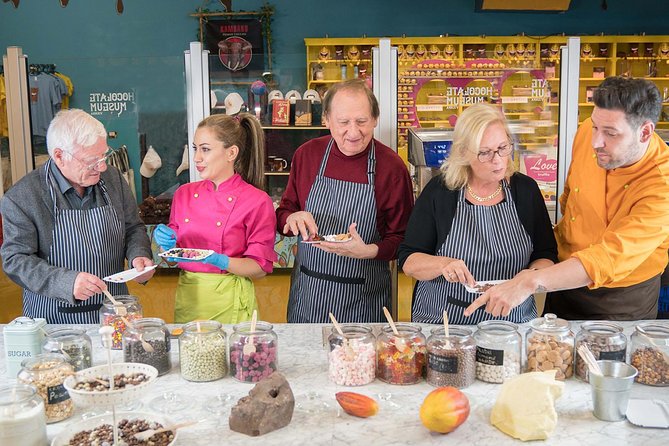
This activity has a maximum of 30 travelers, so it’s not a tiny private kitchen. The good news is the workshop is designed to be beginner-friendly, and the structure includes step-by-step guidance from start to finish.
The time block is about 1 hour 15 minutes. In reality, plan for around 1.5 hours total so you’re not stressed about arriving late, finding the location, or settling in with kids.
A couple practical tips that can save you time:
- Arrive a few minutes early and don’t rely on your first attempt at the street number.
- If you’re traveling with young children, be prepared for more energy and shorter attention spans. The class is designed for small chocolics, but it still moves.
- If you bring a baby who gets unsettled, you may need to step outside for a moment until they calm down.
The pacing matters. The hands-on chocolate part is where you’ll spend most of your time, so you want everyone settled enough to focus during the tempering and assembly stage.
Price and value: what you’re really paying for at about $56.72
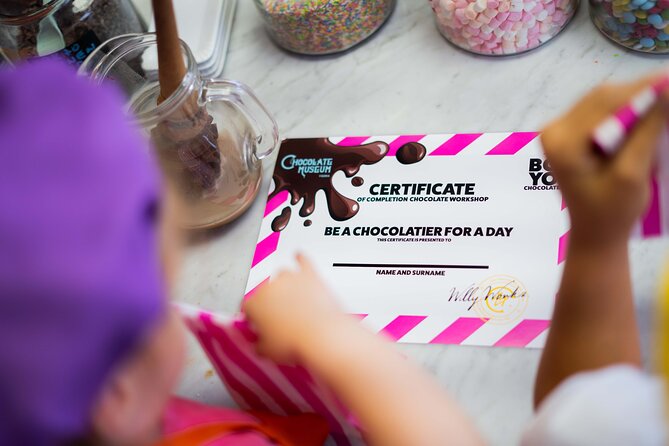
At $56.72 per person, you’re paying for three things together:
1) instructor-led chocolate work,
2) materials and ingredients provided for your creations,
3) museum admission bundled in.
That bundling is usually where the value lands. If you were to pay for a separate museum ticket plus a paid workshop, you’d likely spend more overall and lose the convenience of a single timed experience.
The balanced truth is that this workshop is short, and the final outcome is craft-style chocolate making. It’s not a bean-to-bar journey. If you’re looking for a long, detailed course where you control every ingredient and process step, this will likely feel limited. If you want a fun, well-scaffolded, beginner experience with clear take-home results, it’s a pretty fair deal.
So think of it this way: you’re buying “chocolate making plus context” for a one-session event, not “a full education in chocolate production.”
Who this fits best: families, birthdays, and beginners
This workshop is positioned for beginners and for families. It’s also popular for birthdays and other occasions because everyone can leave with something they made.
Age guidance is clear:
- Children must be accompanied by an adult.
- Smallest participants are from age 3–5.
- Children under ten must be accompanied by one adult, and that adult also needs a ticket.
So if you’re traveling with a mixed group—say adults who want something fun and kids who need hands-on activity—this is one of those rare experiences that satisfies both groups.
It also helps that the tour is offered in English, and you’ll receive confirmation at booking time. Add the fact that the group size is capped and the session is timed, and you’ve got a predictable experience day.
If you’re an adult chocolate nerd hoping for advanced technique practice, you might find it more basic than you expected. But even then, tempering basics and the spice-and-history angle of Xocolatl can still be a pleasant change from pure sightseeing.
Should you book Chocolate Museum Vienna BO-YO?
Book it if you want:
- a hands-on chocolate tempering experience without prior skills,
- take-home treats (three decorated bars plus Xocolatl),
- an activity that’s friendly for kids and teens,
- and the convenience of museum admission included.
Skip it or adjust expectations if you:
- want bean-to-bar production from cacao beans,
- expect a large museum day,
- or prefer highly customizable toppings and ingredient choices.
For many people, the best use is to schedule it as a break from Vienna walking. You get a warm, sweet, creative reset without needing to commit to a whole day of museum wandering.
FAQ
How long is the Chocolate workshop in Chocolate Museum Vienna BO-YO?
It lasts about 1 hour 15 minutes.
Where is the meeting point?
Meet at Schönbrunner Str. 99, 1050 Wien, Austria, and the activity ends back at the same point.
Is the workshop offered in English?
Yes, it’s offered in English.
What do I make during the workshop?
You’ll make three decorated chocolate bars and Xocolatl (an Aztec hot chocolate recipe with chili, vanilla, and cinnamon).
Does the price include Chocolate Museum admission?
Yes, Chocolate Museum admission is included in the tour cost.
Is there a minimum age for children?
The smallest participants who can attend are from age 3–5.
Do children need an accompanying adult?
Yes. Children must be accompanied by an adult. Children under ten must be accompanied by one adult, and that adult also needs a ticket.
Are food or drinks allowed outside the museum?
No. Food or drinks outside of the museum are not allowed.
Is there free cancellation?
Yes. You can cancel for a full refund up to 24 hours in advance. Within 24 hours, the amount paid is not refunded.