REVIEW · VIENNA
Historical Hitler Walking Tour of Vienna
Book on Viator →Operated by Good Vienna Tour GMBH · Bookable on Viator
One of Vienna’s most uncomfortable stories runs right through its landmarks. This walk follows how Hitler’s rise reshaped Austrian public life and the arts, then pushes you toward Jewish memorial sites that still stand in the city today. I like that the route mixes major monuments with smaller reminders, so you see how propaganda and persecution worked on a human scale.
I also love the practical guide-led pacing. Guides such as Dieter and Wolfgang are repeatedly praised for keeping things moving, answering questions, and using extra visuals (some even bring tablets or iPads) to make the context click fast. One fair consideration: the name can feel misleading, because the tour is really about Vienna’s social and historical setting around Hitler, not just a nonstop Hitler spotlight.
Expect a brisk, 2.5-hour walk in varying weather, with multiple moments focused on war, fascism, and Holocaust remembrance. If that’s not your comfort zone, you may want to choose a lighter history theme.
In This Review
- Key stops and why they matter
- Starting at Albertinaplatz: Where Vienna’s Famous Arts Scene Meets Its Dark Pivot
- Vienna State Opera: Don Juan, Mozart, and the 1938 Cultural Purge
- The Memorial Against War and Fascism at Albertinaplatz: A Public Brake on Forgetting
- Akademie der bildenden Kunste: The Art School That Rejected Hitler
- Heldenplatz and March 15, 1938: The Balcony Speech That Became a Symbol
- Judenplatz Holocaust Memorial: Paying Respect in the Heart of the City
- Morzinplatz: When the Former Metropole Hotel Became a Gestapo Headquarters
- Infopoint Jewish Vienna and the Seitenstettentempel: Worship Hidden Behind Tenement Buildings
- Practical Side: 2.5 Hours, Max 25 People, and Staying Comfortable
- What $32.65 Gets You in Vienna: Value Beyond the Free Admissions
- So, Is It Really About Hitler?
- Who Should Book This Tour (and who might skip it)
- Should You Book the Historical Hitler Walking Tour of Vienna?
- FAQ
- How long is the Historical Hitler Walking Tour of Vienna?
- Where does the tour start and end?
- Is the tour offered in English?
- What is included in the price?
- What should I bring for the walk?
- What kind of cancellation options are available if the weather turns bad?
Key stops and why they matter
- Albertinaplatz to the Vienna State Opera: art in the spotlight, then artists pushed out after 1938
- Memorial Against War and Fascism (Alfred Hrdlicka): a clear public reckoning in a central square
- Akademie der bildenden Kunste: a pointed early-life stop tied to Hitler’s rejection
- Heldenplatz: the setting of the March 15, 1938 balcony speech and its lasting trauma
- Judenplatz Holocaust Memorial: remembrance for more than 65,000 Austrian Jewish victims
- Seitenstettentempel/Synagogue hiding rules: a physical clue to how Jewish worship was forced out of view
Starting at Albertinaplatz: Where Vienna’s Famous Arts Scene Meets Its Dark Pivot
The tour starts at Albertinaplatz (right by the Albertina Museum area). From the very first stretch, you’re anchored in the center of Vienna—easy to reach, and close to the big-city landmarks that make the story hit harder.
You’ll begin with the Vienna State Opera and move outward through the historical center. That matters, because the sites don’t feel random. They form a path showing how a thriving arts and civic culture could be bent toward exclusion, control, and violence.
One more thing I appreciate: the route ends at Schwedenplatz, which is convenient if you want to grab dinner after. It’s also well connected (the U line 1 and 4 run through that area), so you can roll right into the rest of your day.
You can also read our reviews of more walking tours in Vienna
Vienna State Opera: Don Juan, Mozart, and the 1938 Cultural Purge
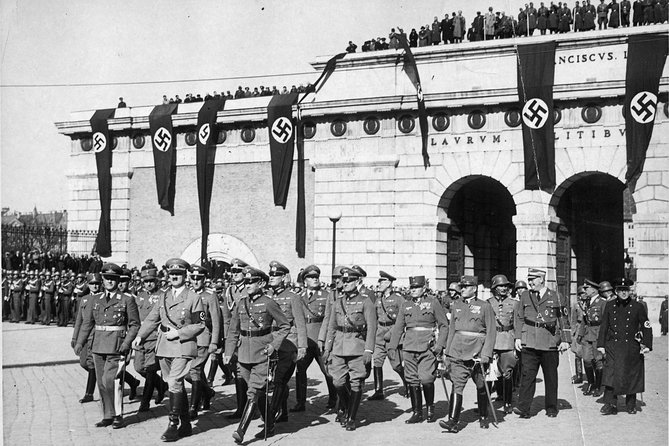
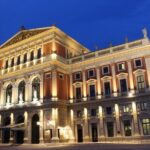
The first major stop is the Vienna State Opera. The story starts with a grand musical origin: the opening was celebrated in the presence of Emperor Franz Joseph and Empress Elisabeth on May 25, 1869, with Mozart’s Don Juan.
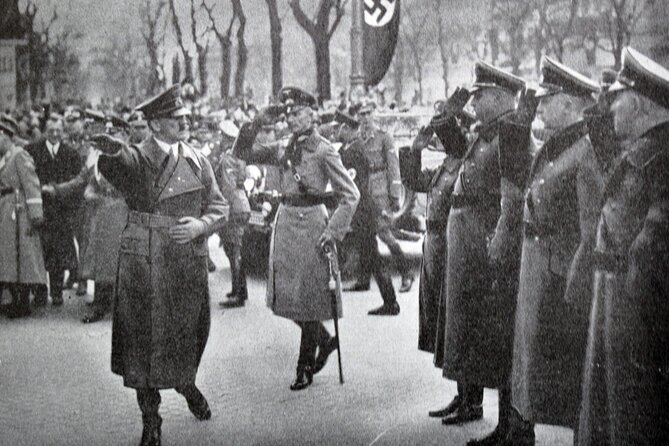
Then the tour shifts the mood sharply. After the Anschluss in 1938, Adolf Hitler is connected to the opera in two specific visits: June 19, 1938 and October 27, 1938. From there, your guide explains the cultural cost. Under National Socialism, artists and employees faced departure, persecution, and murder, and some works were banned from performance.
If you’re wondering why an opera building belongs in a Nazi-era tour, this stop gives you the answer. This is where propaganda meets prestige. When regimes control cultural institutions, they control what a city publicly celebrates—and what it quietly erases.
Practical note: this stop is listed as about 10 minutes, and admission is free. That means you’ll get the context without spending your limited time stuck in queues.
The Memorial Against War and Fascism at Albertinaplatz: A Public Brake on Forgetting
Next up is the Memorial Against War and Fascism on Albertinaplatz. It’s the work of Austrian sculptor Alfred Hrdlicka and has stood since 1988. The memorial is dedicated to all victims of war and fascism—a simple message, but delivered in a very central, very visible location.
It also carries a small civic detail that your guide may point out: the square is Albertinaplatz, and it was named after Helmut Zilk in 2009. That kind of fact is more than trivia. It reinforces how Vienna keeps revisiting its identity, decade after decade, in public spaces.
This is a good moment to slow down. You’re not just taking photos—you’re letting the story reset before it gets even more specific about Austrian society’s involvement and the human consequences.
Akademie der bildenden Kunste: The Art School That Rejected Hitler
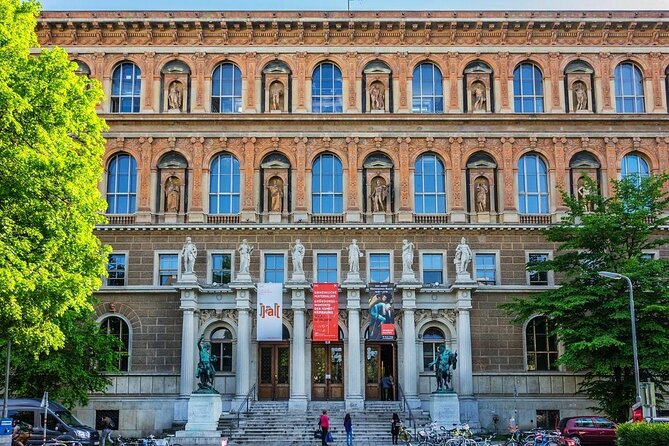
One of the more surprising stops is the Akademie der bildenden Kunste (the Academy of Fine Arts). You’ll visit the art school tied to the idea that Hitler was rejected when he tried to attend.
This stop works because it changes the question from what happened later to how rejection, identity, and ideology can feed into a future political catastrophe. Your guide connects this early-life angle to the broader Vienna environment where these ideas gained ground.
The listed stop time here is 10 minutes, with free admission. In a tour like this, short stops are often intentional—they keep you moving while still landing key story beats.
Heldenplatz and March 15, 1938: The Balcony Speech That Became a Symbol
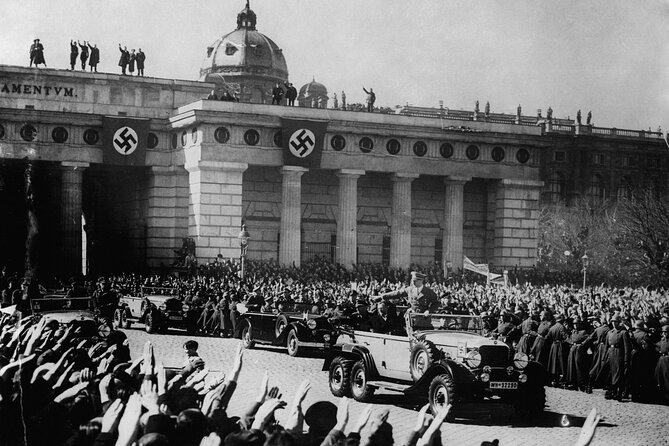
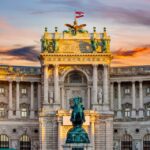
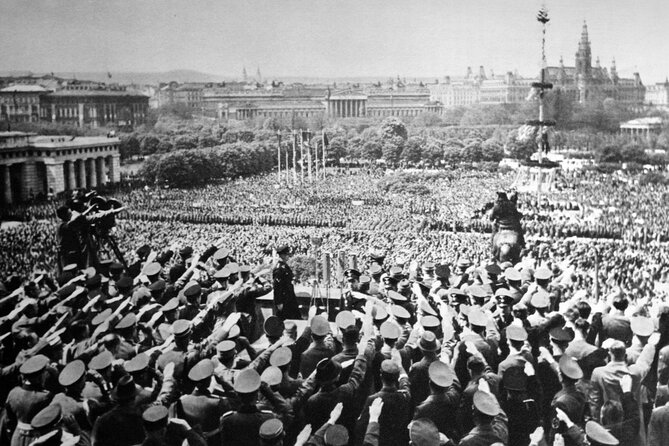
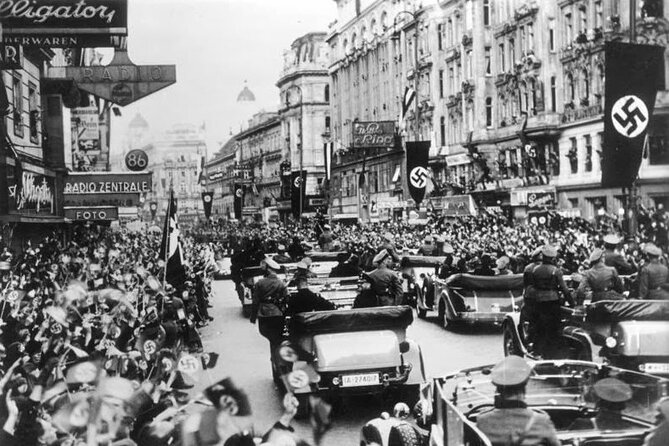
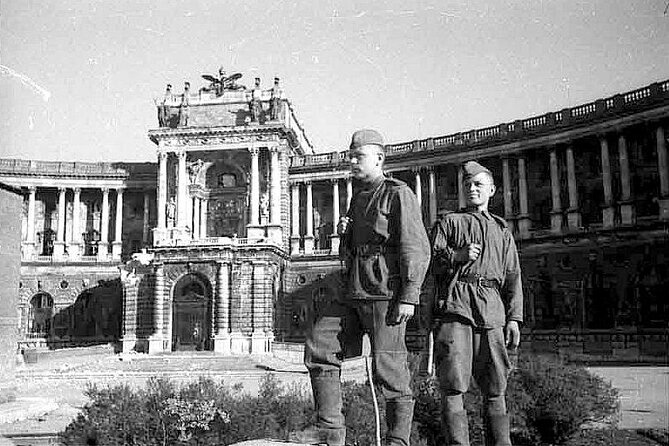
Then comes Heldenplatz. This stop is tied to one date: March 15, 1938. You’ll learn about Hitler’s speech from the balcony of the Neue Hofburg, and how it became a kind of shorthand for the National Socialist seizure of power—and the trauma that followed in the Second Republic.
Heldenplatz is visually impressive, but the tour doesn’t treat it as a postcard. It pushes you to see the place as a stage: a powerful speech plus a public reaction equals a political turning point. If you’ve ever read about propaganda, this stop translates the paper facts into a real geographic location.
Again, this stop is about 10 minutes and free.
You can also read our reviews of more historical tours in Vienna

Judenplatz Holocaust Memorial: Paying Respect in the Heart of the City
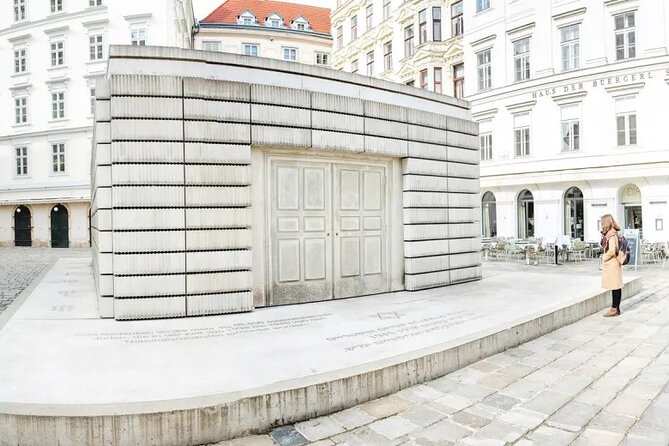
The tour crosses toward Judenplatz for the Holocaust Memorial for Austrian Jewish victims (Mahnmal für die österreichischen jüdischen Opfer der Schoah).
The memorial honors more than 65,000 Austrian Jews murdered by National Socialists between 1938 and 1945. That number is so large it can feel abstract—until you stand in a place that holds memory in stone and space.
This is one of the most emotionally heavy parts of the walk. I recommend giving it your full attention. Don’t rush through it, even if you feel the urge to keep moving with the group. This is the point where the tour stops being about political events and becomes about lives.
This stop is listed as 10 minutes, with free admission.
Morzinplatz: When the Former Metropole Hotel Became a Gestapo Headquarters
On the way through the smaller reminders, you’ll reach Morzinplatz, where there is a memorial connected to the former luxury hotel Metropole.
Here’s the key contrast your guide will underline: a place designed for comfort and status was transformed into one of the most brutal Gestapo headquarters in the Third Reich. Even without extra explanation, the idea lands—systems of power didn’t just use camps and borders. They used everyday city infrastructure.
The stop is 10 minutes and free, but it carries major weight. If you want one takeaway from Vienna’s Holocaust-era architecture, this kind of location is it: the city’s surface beauty doesn’t protect you from what happened underneath.
Infopoint Jewish Vienna and the Seitenstettentempel: Worship Hidden Behind Tenement Buildings
One of the most quietly fascinating parts of the tour is the lesson about Jewish Vienna’s visibility—especially how it was restricted.
You’ll visit the Infopoint Jewish Vienna area and learn about the Seitenstettentempel (the main synagogue of Vienna is associated with Seitenstettengasse 4). The important detail: the synagogue was hidden behind tenement buildings because, according to regulations at the time, non-Catholic places of worship had to be concealed from the street.
Look for the inscription above the entrance gate. It includes the line: Come to his gates with thanksgiving, to his courts with praise. That small text becomes a powerful contradiction—private worship rooted in faith, made physically invisible in public space.
This stop is listed as about 10 minutes, free, and it rounds out the Holocaust theme with a pre-and-during history lens: not only what happened later, but how discrimination shaped what people could even see.
Practical Side: 2.5 Hours, Max 25 People, and Staying Comfortable
The tour runs about 2 hours 30 minutes, in English, with a maximum of 25 travelers. That smaller group size is part of why it feels personal. You’re not just being streamed from one curb to another.
You’ll have a mobile ticket, and you’ll meet at Albertinaplatz and finish near Schwedenplatz. The walking pace is described as relaxed by multiple guides in practice, but you should still plan on a proper city walk.
A few smart comfort tips based on the experience format:
- Wear comfortable shoes—Vienna’s center is great, but the cobbles and turns add up.
- Bring water, sunblock, and a raincoat or umbrella. Weather changes fast.
- Keep moderate physical fitness in mind. This isn’t a sit-down museum day.
- Service animals are allowed.
Also: the tour sometimes includes indoor stops to help with cold weather. That’s not a guarantee, but it’s a common approach your guide may use if conditions are rough.
Finally, a quick listening tip. Some people find it tricky to hear the guide when a device is involved. If you end up farther back, move slightly into the sound field when you can.
What $32.65 Gets You in Vienna: Value Beyond the Free Admissions
At $32.65 per person, this is not priced like an all-day, premium private tour. What makes it feel like good value is the mix of:
- a licensed guide
- access to major landmarks across the historical center
- multiple stops where admission is free (State Opera ticket free, memorial stops free)
You’re paying mainly for interpretation—connecting the dots between places like the State Opera, Heldenplatz, Judenplatz, and the reminders at Morzinplatz, plus making the city’s role in this era understandable.
For history lovers, that guide-led context is the difference between seeing buildings and understanding what they represent. Multiple guide names come up strongly—Dieter, Wolfgang, Stephan, Charles, and Siggy/Sigee—and the consistent theme is clear storytelling and staying organized at a pace that keeps a group together.
So, Is It Really About Hitler?
Here’s the balanced truth you should expect. The tour is called a Historical Hitler Walking Tour, but it doesn’t run as a pure biography of the man. It focuses on Hitler’s relationship with Vienna and the environment around him, then anchors that context in where Austria—and its institutions—fit into the Nazi rise.
That’s actually useful. You’ll learn how the arts world changed, how public messaging took shape in a specific place like Heldenplatz, and how Jewish life faced both visible and forced invisibility—like the synagogue tucked behind apartment buildings.
If you only want battlefield dates or a WWII-only timeline, this might feel broader than you expected. But if you want Vienna’s role in the story, this tour aims straight at that.
Who Should Book This Tour (and who might skip it)
This tour fits best if:
- you’re a history buff who likes real places tied to major events
- you want a guided walk that connects political ideology, cultural life, and Holocaust remembrance
- you prefer a city-center route that ends somewhere convenient for dinner
You might want a different option if:
- you find Holocaust and Gestapo-related topics hard to process in public spaces
- you’re looking for an only-Hollywood version of history without the uncomfortable civic context
One more note: the subject is heavy. Even with a smart pace and indoor warmups, you should mentally prepare for that.
Should You Book the Historical Hitler Walking Tour of Vienna?
I think it’s a solid yes for the right traveler. You’re paying modestly for a guided route that hits major Vienna landmarks and remembrance sites in a tight window. The value comes from the interpretation: the way the guide explains why the State Opera, Heldenplatz, Judenplatz, and the hidden synagogue story belong together.
If you’re in Vienna for a few days and you want one experience that makes the city’s 20th-century story real, book it. Just go in prepared: comfortable shoes, weather gear, and the willingness to pause at the memorials without rushing.
If you’re unsure whether the name matches your expectations, treat it as a Vienna-and-Hitler context walk with Holocaust remembrance at the core. That’s exactly the tone the stops set.
FAQ
How long is the Historical Hitler Walking Tour of Vienna?
It’s about 2 hours 30 minutes.
Where does the tour start and end?
It starts at Albertinaplatz and ends a few minutes’ walk from Schwedenplatz.
Is the tour offered in English?
Yes, the tour is offered in English.
What is included in the price?
The price includes a licensed guide. Free entry is listed for the stops, but food and drinks are not included.
What should I bring for the walk?
Wear comfortable shoes. Bring water, and consider sunblock and a raincoat or umbrella since Vienna weather can be unpredictable.
What kind of cancellation options are available if the weather turns bad?
The experience requires good weather. If it’s canceled due to poor weather, you’ll be offered a different date or a full refund.