REVIEW · VIENNA
Vienna: 2-Hour Secrets of Vienna Walking Tour
Book on GetYourGuide →Operated by Secret Vienna Tours · Bookable on GetYourGuide
Vienna can feel like a photo back-drop unless you slow down. This 2-hour Secrets of Vienna walking tour keeps you near Stephansplatz but steers you away from the main crowd lines into narrow lanes, courtyard passages, and story-rich corners. I like that it’s built for a calm pace with time to look closely, and I also like that guides (including Wolfgang and Kathi) can answer real questions as you go, not just recite a script. A consideration: since it’s a walking tour with historic streets, you should expect uneven old-street surfaces and some tight turns.
You’ll start in a practical spot near public transport and an easy landmark, then follow a route that’s designed to feel like Vienna’s “other side.” The tour highlights include the Jesuits church, the infamous Blutgasse, and a stop at the Mozart House, plus hidden courtyards you might not notice even if you walk nearby on your own. The one potential drawback is also the point: it’s off the beaten track, so if you only want the big names in rapid-fire order, this may feel quieter than you expected.
In This Review
- Key points I’d plan around
- Stephansplatz as your shortcut to real Vienna
- Meeting point that actually helps: Schwedenplatz and Hafnersteig
- The walking style: relaxed pace, tight streets, real stories
- Jesuits church stop: why this kind of landmark is worth slowing for
- Blutgasse: a notorious lane you experience, not just read about
- Mozart House: how Vienna links composer stories to street corners
- Hidden courtyards and off-the-map passages
- What makes this tour feel personal (small-group energy matters)
- Timing and stamina: 2 hours is perfect if you plan for it
- Language options: English, German, and Hebrew
- Price and value: why $57 makes sense for a guided off-track route
- Who this tour suits best
- Should you book this Secrets of Vienna walking tour?
- FAQ
- How long is the Vienna Secrets walking tour?
- How much does the tour cost?
- Where is the meeting point?
- What is included in the price?
- Are entrance fees included?
- What languages is the tour available in?
- Is there free cancellation?
- Can I book without paying right away?
- Is a private group available?
- What main areas and sights does the tour cover?
Key points I’d plan around
- Stephansplatz focus: you stay central, yet you escape the main tourist crush
- Courtyards and alleyways: you get small-space Vienna that doesn’t show up on most maps
- Specific stops: Jesuits church, Blutgasse, and Mozart House anchor the stories
- Guides who adapt: in small groups, questions stay easy and conversations stay personal
- Off-the-radar angle: you learn things even locals may not have heard
Stephansplatz as your shortcut to real Vienna
Stephansplatz is one of those places you’ve probably seen in photos. The difference here is how you approach it. Instead of bouncing between famous landmarks, the route starts in the same area and then peels away into narrower streets that feel older, more intimate, and far less rushed.
That matters because Vienna can be “all façade” when you visit on a tight schedule. This tour is about what happens in the spaces between the landmarks: the little connectors, the courtyards you’d never spot from the street, and the streets where history feels local rather than museum-like.
You can also read our reviews of more walking tours in Vienna

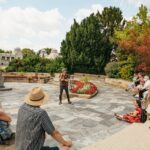

Meeting point that actually helps: Schwedenplatz and Hafnersteig
You meet at the corner of Schwedenplatz and Hafnersteig, near the ice-cream shop Eissalon am Schwedenplatz. I like this because it’s clear and visual, and it’s not buried inside a complicated maze of directions.
Since the tour lasts about 2 hours, your timing window is short enough that getting lost at the start can mess with the whole experience. Use the ice-cream shop as your anchor, then get comfortable with the fact that the walk will move through narrow lanes soon after you begin.
The walking style: relaxed pace, tight streets, real stories
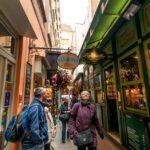
The tour description is direct about its goal: skip the common, hectic routes and walk at a calmer speed. Expect narrow streets, little alleyways, and occasional hidden courtyards. This isn’t a “keep moving or you’ll miss the next stop” kind of outing. It’s a “look around and listen” approach, which is exactly what you want in Vienna if you care about details.
One of the best things I see in how the tour is described is that the guide leads you step-by-step into places that feel forgotten or overlooked. That’s how you start noticing the city’s layering: different eras not only show in buildings, but also in street patterns, courtyards, and where people built for everyday life.
Jesuits church stop: why this kind of landmark is worth slowing for
A major anchor on the route is the Jesuits church. Even if you’ve passed churches before, this stop is positioned as part of a story chain, not a quick exterior photo moment.
Churches like this one tend to reward attentive looking: how the space is tucked into its surroundings, what the neighborhood feels like around it, and how the area’s power and influence show up in plain sight. In tours of this kind, you often learn why certain institutions mattered to everyday Vienna, not just to rulers or grand visitors.
In at least one small-group experience, Wolfgang was especially strong at keeping the route lively and answering unexpected questions. That kind of flexibility matters here because a church visit becomes far more interesting when the guide can adjust to what you want to know in real time.
Blutgasse: a notorious lane you experience, not just read about
Then comes Blutgasse, described as notorious. I like stops like this because they take the edge off the “pretty streets only” stereotype. Vienna has darker notes in its past, and lanes with reputations tend to make those stories feel concrete rather than abstract.
The way this tour handles it is important: you’re walking, seeing the scale of buildings close up, and moving through the lane as part of a guided narrative. That makes the stop feel like a scene in a city story rather than a fact you forget five minutes later.
If you like architecture, street layout, or urban legends, this is the part where the city starts talking back. And if you prefer lighter topics, the guide’s job is to frame it so you can enjoy the atmosphere without getting lost in grim details.
You can also read our reviews of more tours and experiences in Vienna



Mozart House: how Vienna links composer stories to street corners
Another listed highlight is the Mozart House. This is where Vienna’s “composer brand” becomes physical. Instead of treating Mozart as a distant name on a concert program, you connect him to a specific area and the way the city presents his story.
For me, the value of stops like this is that they help you stop walking like a checklist. You start noticing how culture is embedded in neighborhoods and buildings, not just performed on stages.
Also, this tour is designed to show you different angles of Vienna, and the Mozart House stop fits that idea perfectly. It’s still recognizable, but it’s visited as part of a route that includes lesser-seen streets and courtyards, so it doesn’t feel like an isolated tourist stop.
Hidden courtyards and off-the-map passages
One of the strongest promises here is hidden courtyards and little alleyways. This is the “where did this come from?” part of the experience. Courtyards in old cities often function like the city’s secret lungs: quieter, smaller, and full of visual clues about everyday movement—doors, access points, and how buildings face inward.
The tour also explicitly aims for places that are often closed to the public. You won’t need to know in advance which exact spots those are to benefit from the concept. You’re essentially getting guided access to the idea of Vienna beyond street views.
A detail that made me especially curious from guide stories is that renovations sometimes uncover historical drawings on existing buildings. Even without specifics spelled out, that’s the kind of moment where a careful guide turns a regular street corner into a time machine: you look at the current façade, then understand there’s been more going on under the surface than you would guess.
What makes this tour feel personal (small-group energy matters)
The reviews point to guides like Wolfgang and Kathi making the tour feel personal. One example described a group of four, with the guide adapting to what the group wanted to focus on. That’s a big deal for a walking tour because it changes the “tone” of the time.
When a guide can shift gears, you’re more likely to ask questions like: Why did people build this way? What changed later? Why does this neighborhood feel different from nearby streets? That’s how a 2-hour tour becomes memorable instead of merely informative.
You also get a stronger sense that the guide knows Vienna in the way residents do, not just like someone who memorized a route. In practical terms, it means you spend less time wondering if you’re seeing the point of things, because the explanation connects to what you’re looking at right now.
Timing and stamina: 2 hours is perfect if you plan for it
This tour lasts about 2 hours. That’s long enough to feel like you’re getting somewhere beyond one or two stops, but short enough that you won’t feel trapped if you’re tired.
It’s also enough time to change your perspective. You’ll start near major squares, then gradually feel the city tighten into older lanes and quieter spaces. By the end, Vienna feels less like a grid of famous points and more like a connected neighborhood system.
Just be realistic: old Vienna streets mean uneven surfaces and close turns. If you’re traveling with mobility issues, I’d treat this tour as a “check first” situation rather than assume it will be smooth.
Language options: English, German, and Hebrew
You can get the tour in English, German, or Hebrew with a live guide. If your group includes non-English speakers, this is a nice advantage because you don’t have to break up.
And if you’re an English-only traveler, don’t worry about depth being watered down. The structure is story-focused, and the guide is part of the experience, not a background voice.
Price and value: why $57 makes sense for a guided off-track route
At $57 per person for 2 hours, this isn’t the cheapest way to spend an afternoon. But the price starts to make sense when you look at what’s included and what’s not.
You do get an English-speaking tour guide. Entrances are not included, so if any church stop requires paid access, you’ll pay separately. Still, for $57, you’re paying for guidance, pacing, and the “how to see this city” skill—especially because the route targets areas most visitors miss.
If you’ve already done a standard highlights walk and feel like Vienna is still surface-level, this price is a reasonable pivot. You’re essentially buying time with someone who knows where the quiet doors are and how to connect the street layout to stories.
Who this tour suits best
This is a great fit if you:
- want Vienna that feels calmer than the major squares
- like narrow streets, courtyards, and architectural atmosphere
- enjoy specific stops with stories, not only big landmark exteriors
- want a guide who can respond to your questions, especially in smaller groups
It’s also a good choice for first-timers because it teaches you how to read the city while you’re still learning where everything sits. And it can work for locals for the same reason: you’re walking the same center area but seeing parts you might not usually notice.
If your travel style is “maximum sights, minimum walking,” this might not match your priorities. But if you enjoy the feeling of a city with side streets and hidden spaces, you’ll get a lot out of it.
Should you book this Secrets of Vienna walking tour?
I’d book it if you want the Vienna experience that happens between the headline attractions: a short walk, real stories, and specific stops like the Jesuits church, Blutgasse, and Mozart House, all connected by courtyards and lanes most people skip. The fact that guides like Wolfgang and Kathi have a reputation for adapting and keeping things engaging is exactly what you want for a 2-hour format.
Skip it if you’re set on a high-speed “see everything” itinerary or you dislike walking on older streets. Otherwise, this is the kind of tour that helps Vienna stop being a postcard and start feeling like a place.
FAQ
How long is the Vienna Secrets walking tour?
It lasts about 2 hours.
How much does the tour cost?
The price is listed as $57 per person.
Where is the meeting point?
Meet at the corner of Schwedenplatz and Hafnersteig, near the ice-cream shop Eissalon am Schwedenplatz.
What is included in the price?
An English-speaking tour guide is included.
Are entrance fees included?
No, entrances are not included.
What languages is the tour available in?
The tour is offered in English, German, and Hebrew.
Is there free cancellation?
Yes, you can cancel up to 24 hours in advance for a full refund.
Can I book without paying right away?
Yes, it offers a reserve now & pay later option.
Is a private group available?
Yes, private group options are available.
What main areas and sights does the tour cover?
You’ll walk around Stephansplatz and visit the Jesuits church, Blutgasse, and the Mozart House, with stops in hidden courtyards and narrow alleyways.