REVIEW · VIENNA
Private Vienna Art Nouveau Walking Tour
Book on Viator →Operated by Insight Cities · Bookable on Viator
Vienna’s Art Nouveau hides in plain sight. This private, 3-hour walk takes you to design-lovers’ favorites like the Secession Building, Otto Wagner station buildings, and major metro stops tied to the city’s modern look. I especially like that the guide connects the dots between architecture and art, not just facts on a plaque. I also like the route’s focus on transit design, where the city’s style shows up in everyday spaces.
The one catch is budget: key stops have separate entrance fees, and the Otto Wagner Pavillon visit depends on the museum being open (April–October). If you’re the type who hates ticket hassle, factor that time and cost in when you plan.
In This Review
- Key things you’ll enjoy about this Art Nouveau route
- Private Vienna Art Nouveau: why metro stations belong on your list
- Meeting at Operngasse and pacing a 3-hour design walk
- Secession Building (Secessionsgebaude): where the movement got its manifesto moment
- Stadtpark and Karlsplatz: Art Nouveau shows up on the way to real life
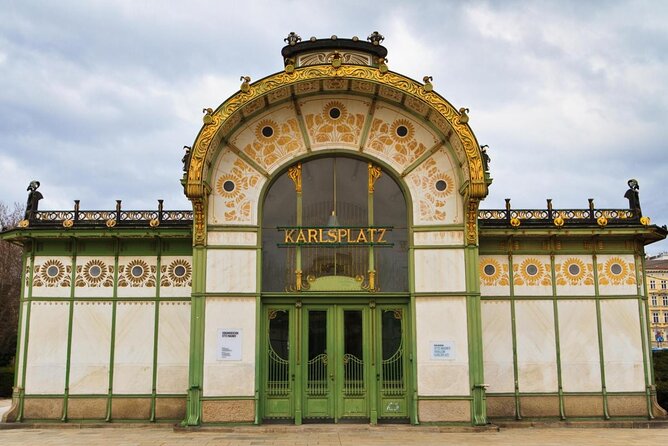
- Otto Wagner’s Karlsplatz Pavilion: a station building turned into a modern story
- Postsparkasse: when banking architecture goes full Vienna Secession
- Naschmarkt and the Otto Wagner apartment-house side of Vienna
- Ending at two metro stations, including the Emperor’s tiny stop
- Guide quality makes or breaks an architecture tour
- Price and value: what $490 covers, and what extra you should plan for
- Who should book this Art Nouveau private walking tour?
- Should you book this Art Nouveau Vienna tour?
- FAQ
- How long is the Private Vienna Art Nouveau Walking Tour?
- How much does the tour cost?
- Is this tour private?
- Where do we meet and where does the tour end?
- Is hotel pickup included?
- Are entrance fees included?
- What are the entrance fees for the Secession House?
- Is there a time of year when the Otto Wagner Pavillon can be visited?
Key things you’ll enjoy about this Art Nouveau route
- Private group up to 10 with real flexibility to ask questions and slow down where you care most
- Expert guide who explains Vienna Secession and Jugendstil in plain language
- Metro stations as architecture set pieces, including Otto Wagner-designed elements you’d never notice on a quick walk
- Klimt’s Beethoven Frieze stop at the Secession Building (with paid admission)
- Otto Wagner’s Pavillon + Postsparkasse bring Art Nouveau into transportation and everyday institutions
- A fun mix of design and Vienna life, including time at the Naschmarkt food market
Private Vienna Art Nouveau: why metro stations belong on your list
Most Vienna walks skim the big palaces and call it a day. This one does something smarter: it shows you Art Nouveau (in Vienna you’ll often hear Vienna Secession and Jugendstil) where you actually move through the city—on foot, in and around transit stations, and in buildings tied to daily routines.
You start with architecture that looks like it has a personality, not just a function. Then the tour keeps shifting perspective, moving from an art manifesto you can step into, to street-level station buildings above the tracks, and finally to metro stations where design is quietly built into the experience. It’s a good reminder that Vienna’s style wasn’t only for museums and wealthy homes—it was part of modernization.
You can also read our reviews of more walking tours in Vienna
Meeting at Operngasse and pacing a 3-hour design walk
This is a private tour for your group only, priced at $490 per group (up to 10 people), for about 3 hours. You’ll meet at Operngasse 7, 1010 Wien. Pickup is offered (so check what’s available when you book), and you’ll get a mobile ticket.
What this pacing means for you: you’ll have time to stop, look up, and ask questions without a hurry-hurry feeling. You won’t be sprinting from one “photo spot” to the next. Still, it’s a walking tour, so wear comfy shoes—this kind of architecture trip works best when you can actually take your time with details.
Also keep in mind: some parts are inside and some are outside. If you plan around paid entry times (especially for the Secession Building and the Otto Wagner Pavillon), you’ll get a smoother day.
Secession Building (Secessionsgebaude): where the movement got its manifesto moment
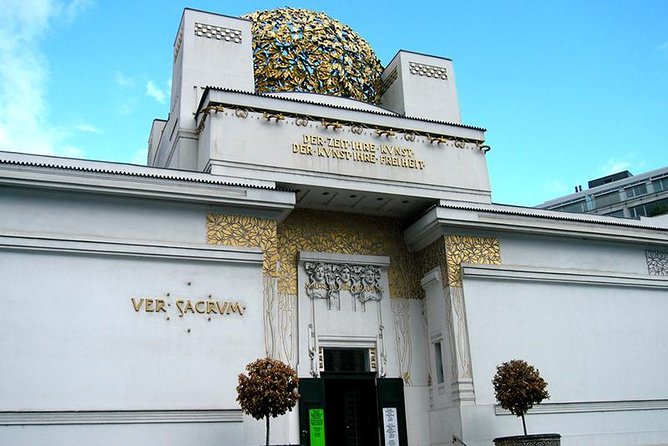
Your first design anchor is the Secession Building, completed in 1898 by Joseph Maria Olbrich. It’s more than an exhibition hall. It was built as an architectural statement for the Vienna Secession, a group of artists who broke away from the older, established art institution.
Here’s what makes this stop worth your time: inside, you’ll see the famous Beethoven Frieze, painted by Gustav Klimt for one of the original Secession exhibitions. Even if you only know Klimt from postcards, seeing the work in context helps you understand why the Secessionists wanted their art to feel modern, bold, and a little stubborn.
Plan for about 30 minutes here. Admission isn’t included. If you’re touring Tuesday to Sunday, the Secession House ticket is listed as €9.50 for adults and €6 for students and seniors. The price info also notes discounts for holders of the Vienna Card and persons with disabilities, and your guide helps you with payment.
Stadtpark and Karlsplatz: Art Nouveau shows up on the way to real life
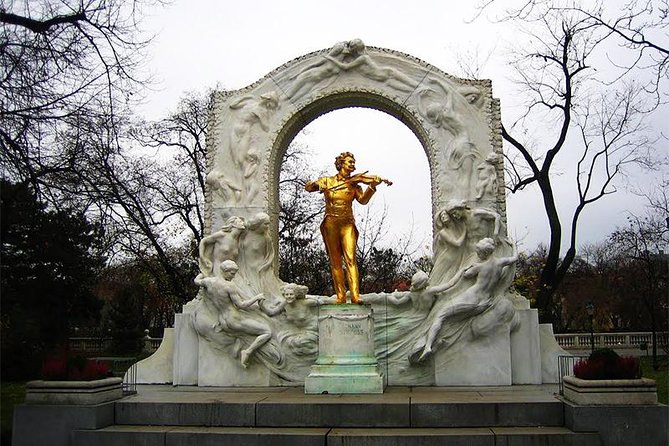
Next comes Stadtpark, Vienna’s municipal City Park. It’s not an “Art Nouveau museum stop.” It’s a pause—time to breathe, reset your eyes, and get a calmer feel before you hit the station architecture.
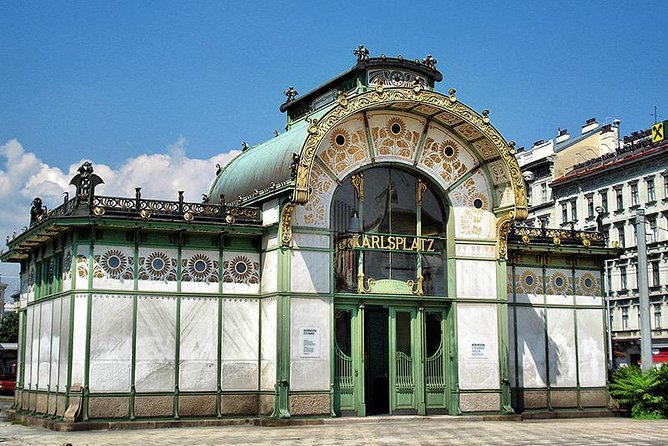
Then you move into Karlsplatz, including the Karlsplatz Stadtbahn Station area. The buildings above ground here are a standout example of Jugendstil architecture, designed by Otto Wagner, with Joseph Maria Olbrich also involved. This is one of those places where the city’s modern identity shows up in a practical structure. The ornament isn’t just decoration—it’s part of how the space works and how the city wanted to look as it modernized.
Expect about 15–20 minutes around Stadtpark and Karlsplatz. No admission is listed for these outdoor breaks.
Otto Wagner’s Karlsplatz Pavilion: a station building turned into a modern story
Right after Karlsplatz, you’ll look at the Otto Wagner Pavillon Karlsplatz. This is presented as an exhibit on Otto Wagner’s life and work, housed in an 1898 station building that he designed.
This stop is why I like this tour for design nerds and for first-timers alike. Wagner wasn’t doing Art Nouveau for decoration alone. He was shaping how people experienced modern life—movement, transit, public space, and the look of a city becoming “new.”
Time here is around 15 minutes, and admission is not included. There’s also a season note: the tour incorporates the pavilion visit when the museum is open, from April to October. The listed admission is €5 general and €4 for senior citizens, students, Vienna Card holders, and persons with disabilities.
If you’re visiting outside April–October, don’t panic—just know this is the kind of stop that may shift. The tour details explicitly tie it to opening dates.
You can also read our reviews of more private tours in Vienna

Postsparkasse: when banking architecture goes full Vienna Secession
One of the tour’s strongest “wow, really?” moments is Postsparkasse—the Austrian Postal Savings Bank building, designed and built by Otto Wagner. This structure is regarded as an important work in the Vienna Secession branch of Art Nouveau.
What you’re getting here is a real-world lesson: Art Nouveau in Vienna wasn’t only for art galleries. It showed up in institutions people used. Banks, postal services, transit infrastructure—these were the stages where modern design became part of everyday life.
You’ll spend about 25 minutes at this stop. The tour lists no admission fee for this point, which helps keep the day’s costs a bit more predictable.
Naschmarkt and the Otto Wagner apartment-house side of Vienna
Then you hit Naschmarkt, Vienna’s best-known food market. It’s not a food tour, but it’s a smart choice on a design day because it grounds the architecture you’ve been learning about in real street life.
The market has around 120 colorful market stands and lots of lively restaurant options. The tour time here is short—about 10 minutes—so think of it as a design-and-people-watching break. If you want a longer snack stop, that’s the point where you can ask your guide what’s practical for quick bites nearby.
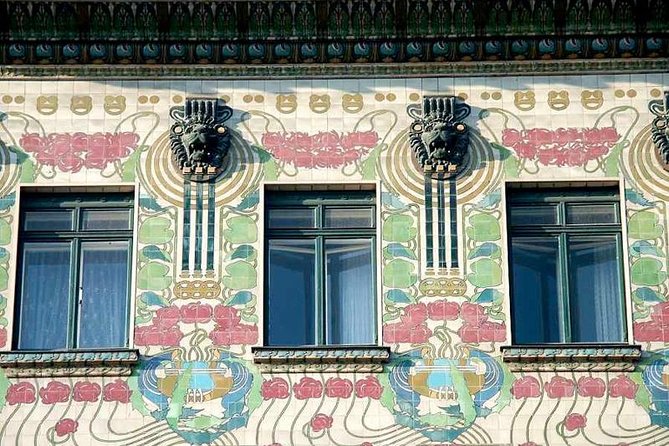
This part also connects to the apartment-house angle in Otto Wagner’s work. Your route is set up to highlight two Otto Wagner apartment houses. The tour’s Art Nouveau focus makes those buildings feel less like random facades and more like an extension of the same ideas you saw at Secession and the station buildings.
If you’re hoping to spot Wagner’s style from a distance, Naschmarkt is a good area to do it. You’ll be surrounded by color and motion, which makes the ornament you’re hunting for stand out more clearly.
Ending at two metro stations, including the Emperor’s tiny stop
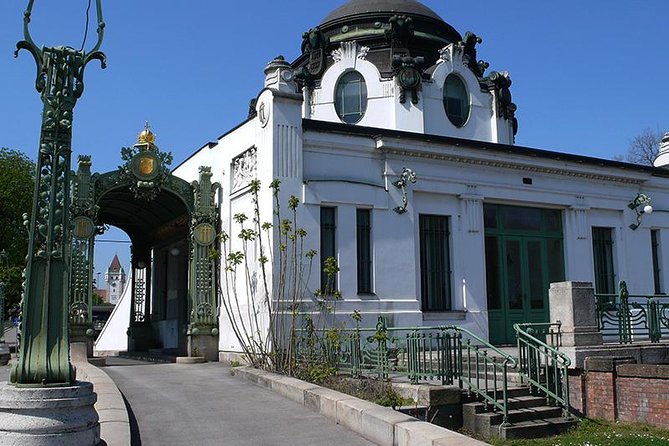
The tour wraps up at a pair of beautiful metro stations. One includes a tiny stop built just for the Emperor—a detail that’s both historical and wonderfully specific. It’s the kind of city story that doesn’t show up if you only look at major monuments.
I like this ending because it brings you back to the central theme: Vienna’s Art Nouveau isn’t only in big-ticket landmarks. It’s in the way the city designed movement, access, and status into its infrastructure.
The exact sequence of the final stations isn’t laid out with names here, but the concept is clear: you finish in transit spaces that feel crafted, not utilitarian.
Guide quality makes or breaks an architecture tour
This tour is built around one big ingredient: the professional guide. The differences between a good architecture walk and a great one usually come down to how well someone explains context and stays flexible with your interests.
Based on guide experiences you’ll likely notice in this program, the guides here do a solid job of connecting Vienna Secession and Jugendstil to how Vienna actually worked then—and how it still works now. One guide, Barbara, is highlighted for historical background and for answering a wide range of questions. Another, Wolfgang, gets praise for making the Art Nouveau movement feel like a real education rather than a quick history lecture. Annelie is noted for being a wealth of information about Vienna Secessionism.
The practical takeaway for you: come with questions, even simple ones. Ask why a building form looks the way it does, or how Secession artists broke from older institutions. With this kind of tour, your questions are part of the experience.
Price and value: what $490 covers, and what extra you should plan for
Let’s talk value like adults.
You pay $490 per group for up to 10 people for about 3 hours. That price includes the guided tour and a professional guide. It also includes a mobile ticket.
What’s not included is important:
- Entrance fees to the key paid stops.
- Hotel pickup and drop-off are not included as standard (though pickup is offered as a feature—so confirm what’s covered).
- Food and drinks aren’t included.
For budget planning, the two fee-based moments you should expect are:
1) Secession Building (Beethoven Frieze): €9.50 adults and €6 students/seniors for Tuesday to Sunday (and discounts for Vienna Card holders and some accessibility cases). Your guide helps with payment.
2) Otto Wagner Pavillon: €5 general and €4 discounted categories, and it depends on being within April–October museum opening season.
If you’re going as a couple, the per-person cost can feel steep compared with group tours. But for a private, design-focused route with a guide handling context and pacing, it can still be a fair deal—especially when you compare it to spending time piecing together entrances yourself in a city that loves tickets, lines, and fine print.
A smart move: decide early whether you really want Klimt’s Beethoven Frieze stop and the Wagner pavilion. If those are your top priorities, this tour is easier to justify.
Who should book this Art Nouveau private walking tour?
Book it if:
- You love architecture and design more than broad, generic sightseeing.
- You want Art Nouveau explained through the places Vienna actually uses—stations, public institutions, and city buildings.
- You like tours where the guide will actually answer questions, not just recite a script.
Skip it (or consider a different format) if:
- You want a free-and-easy walk with no paid entries.
- You’re not interested in transit architecture and prefer big monument sites only.
If you’re traveling with mixed tastes—maybe one person who loves buildings and another who just likes being on vacation—this is a good compromise because the route includes a human break at Naschmarkt while keeping the architecture focus intact.
Should you book this Art Nouveau Vienna tour?
Yes, if you want Vienna’s Art Nouveau to feel specific, not vague. The combination of the Secession Building, Otto Wagner’s station and institutional architecture, and a close-up look at the city’s design in transit spaces makes this more than a quick sightseeing highlight reel.
I’d book it especially if you’re the kind of traveler who enjoys learning how movements spread—how an art breakaway like the Secessionists influenced what the city built. Add in a guide who’s ready to answer questions (Barbara, Wolfgang, Annelie-style energy), and you’re set for a smart, enjoyable 3 hours.
If entrance fees bother you, plan for them up front—your guide can help with ticket payment for the Beethoven Frieze stop, and the Wagner pavilion is season-dependent (April–October).
FAQ
How long is the Private Vienna Art Nouveau Walking Tour?
It lasts about 3 hours.
How much does the tour cost?
The price is $490 per group, up to 10 people.
Is this tour private?
Yes. It’s private, so only your group participates.
Where do we meet and where does the tour end?
The meeting point is Operngasse 7, 1010 Wien. The end point is Vienna (final area at the metro stations).
Is hotel pickup included?
Hotel pickup and drop-off are not included as standard, but pickup is offered as a feature—confirm what’s available when booking.
Are entrance fees included?
No. Entrance fees for places like the Secession House (to see the Beethoven Frieze) and the Otto Wagner Pavillon are not included.
What are the entrance fees for the Secession House?
For Tuesday to Sunday, the Secession House admission is listed as €9.50 for adults and €6 for students and seniors (with discounts noted for Vienna Card holders and persons with disabilities). Your guide will help you pay.
Is there a time of year when the Otto Wagner Pavillon can be visited?
Yes. The tour incorporates a visit to the Otto Wagner Pavillon when the museum is open, noted as April to October.